Inchworm
Inchworm is a bodyweight floor-walkout that starts from standing, folds the torso toward the floor, and moves the hands forward until you reach a long plank. In many versions, the plank is followed by a push-up before you walk the hands back and stand up again. The exercise looks simple, but it asks for a lot of control from the hamstrings, shoulders, core, and upper back at the same time.
The main training value comes from linking a standing hinge to a strong braced plank. That transition teaches you how to keep the trunk organized while the shoulders load in an overhead-like position and the hips extend behind you. It is useful for warm-ups, conditioning circuits, mobility work, and bodyweight sessions because it wakes up the posterior chain without requiring equipment.
Setup matters because the first fold decides how clean the whole rep will feel. Start with feet about hip-width apart, soften the knees, and reach the hands toward the floor with a long spine rather than a collapsed lower back. Walk the hands forward in small steps until the shoulders stack over the wrists in a firm plank. If the variation calls for a push-up, lower the chest between the hands with control before pressing back up.
On the way back, keep the hands and feet moving deliberately so the hips do not twist and the shoulders do not shrug. Once the hands are back under the torso, bring the feet toward the hands or reset from the folded position, then stand tall by driving through the feet and extending the hips. Breathing should stay organized: exhale as you brace into the floor, keep the trunk tight through the plank, and breathe again as you return to standing.
Inchworm is best used when you want a bodyweight drill that builds coordination, shoulder stability, and trunk control at the same time. It is a good option for beginners if the walkout stays short enough to keep the back neutral, and it can be progressed by adding the push-up, slowing the walkout, or pausing in the plank. The key is to keep every rep smooth enough that the floor path stays deliberate instead of rushed.
Fitwill
Log Workouts, Track Progress & Build Strength.
Achieve more with Fitwill: explore over 9600 exercises with images and videos, access built-in and custom workouts, perfect for both gym and home sessions, and see real results.
Start your journey. Download today!




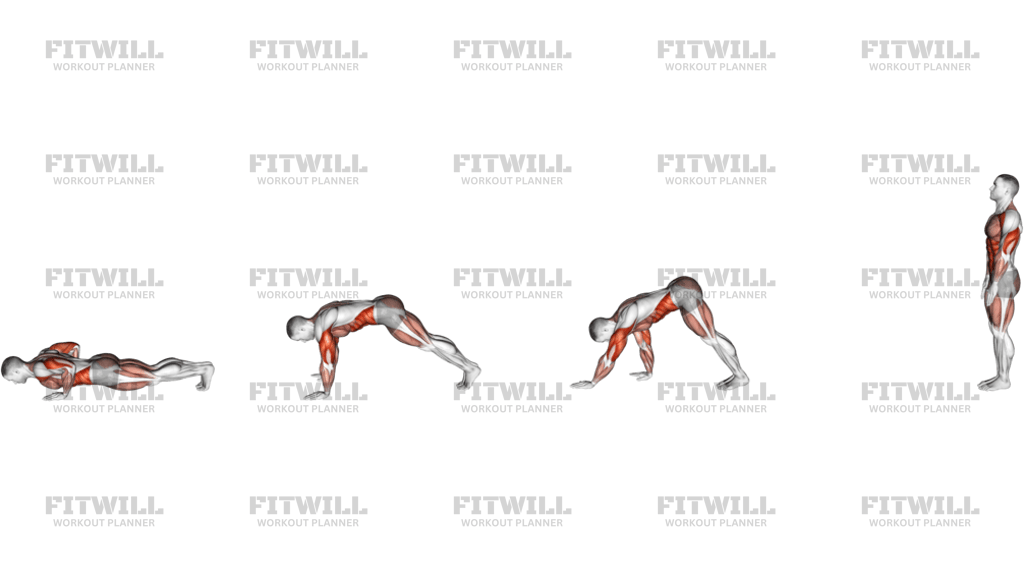
Instructions
- Stand tall with your feet about hip-width apart and a soft bend in the knees.
- Hinge at the hips and reach both hands to the floor in front of your toes while keeping the spine long.
- Walk your hands forward in short steps until your shoulders stack over your wrists in a strong plank.
- Brace your abs and squeeze your glutes so your body stays in one long line from head to heels.
- If your version includes a push-up, lower your chest between your hands with the elbows tracking back.
- Press the floor away and return to the top of the push-up without letting the hips sag.
- Walk your hands back toward your feet in short steps while keeping the hips steady.
- Once your hands are close to your feet, fold up through the hips and stand to finish the rep.
- Reset your breathing at the top, then repeat for the planned number of reps.
Tips & Tricks
- Take small hand steps so the plank arrives under control instead of with a sudden drop into the shoulders.
- If your hamstrings pull hard on the fold, bend the knees slightly more and keep the spine long rather than forcing the reach.
- Keep the wrists under the shoulders in plank so the push-up stays stacked instead of drifting forward.
- During the push-up portion, keep the elbows angled back and the chest moving between the hands, not toward the floor first.
- Squeeze the glutes in the plank to stop the lower back from sagging when the hands are walking out or back.
- Move slowly enough that the hips do not twist from side to side while you travel across the floor.
- Use the return phase to control the whole rep; rushing back to standing usually means the core lost tension.
- Keep the neck neutral and look slightly ahead of your hands instead of tucking the chin hard into the chest.
- If the floor feels slippery, shorten the walkout before trying to make the movement faster or longer.
Frequently Asked Questions
What muscles does the inchworm work?
It mainly challenges the core, shoulders, hamstrings, and upper back, with the chest and triceps working if you add the push-up.
Is the push-up part required?
No. Many people use inchworms as a walkout to plank only, while others add the push-up to make the drill more demanding.
How do I keep my back from rounding on the way down?
Soften the knees, hinge from the hips, and stop the reach before the lower back starts to collapse.
Where should my hands land in the plank?
They should end up under the shoulders, with the wrists stacked so you can hold a strong line before the push-up or return walk.
Can beginners do inchworms?
Yes. Beginners usually do best with a shorter walkout, a gentler knee bend, and no push-up until the plank feels stable.
Why does this exercise feel like a warm-up?
The movement takes the body from standing into a loaded plank, which wakes up the shoulders, trunk, and posterior chain before harder training.
What is the most common mistake?
Rushing the walkout and letting the hips sway or the lower back sag instead of keeping a long, controlled body line.
How can I make inchworms harder?
Add the push-up, slow the walkout and walk-back, or pause for a moment in the plank before returning to standing.