Kneeling Bent Leg Kickback
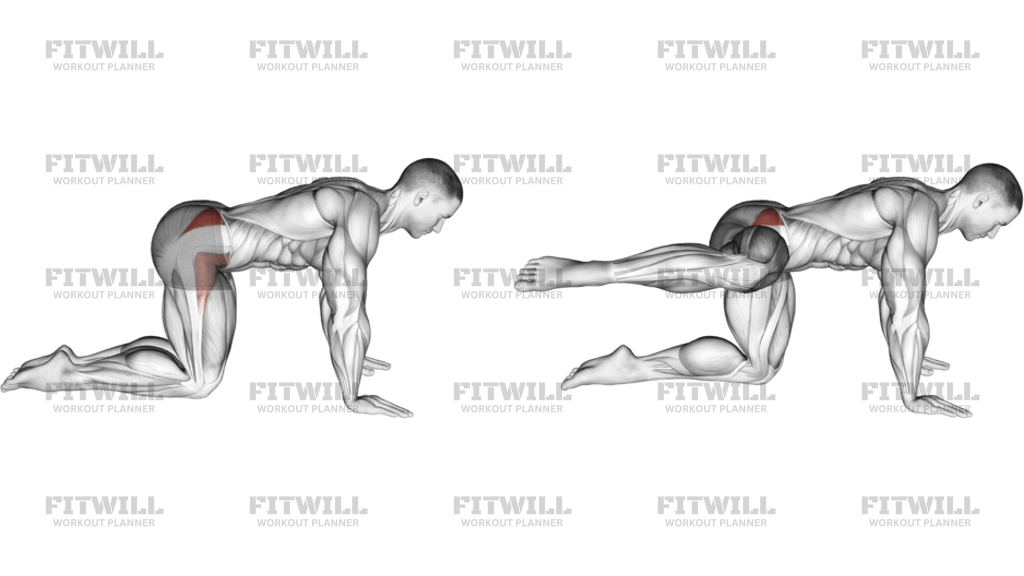
Kneeling Bent Leg Kickback is a floor-based glute exercise performed from hands and knees. With one knee bent, you extend the hip by driving the foot back and up while keeping the pelvis steady, so the glute on the working side does the bulk of the work instead of the lower back.
The setup matters because this movement is easy to turn into a low-back arch or a hip twist if the ribcage and pelvis are loose. A strong rep keeps the shoulders stacked over the hands, the supporting knee under the hip, and the working thigh moving in a clean arc without swinging. That makes the exercise useful for glute activation, accessory work, and higher-rep lower-body sessions where you want tension without heavy spinal loading.
Although the exercise uses body weight, the quality of the contraction depends on how well you stabilize the torso. Keep the abs gently braced, press the floor away with both hands, and avoid shifting your weight into the supporting side as the leg lifts. The bent-knee position helps bias hip extension toward the glutes, but only if the knee angle stays consistent and the pelvis stays square.
The top position should feel like a glute squeeze, not a back bend. Lift only as high as you can without the lumbar spine changing shape or the hip opening to the side. A controlled return matters just as much as the lift, because dropping the leg quickly removes tension and makes it easier to lose position on the next rep.
This exercise fits well in warmups, activation blocks, rehab-style accessory work, or as a finisher when you want a simple glute movement that can be done anywhere. Beginners can learn it easily because the loading is light, but the exercise still rewards careful setup and deliberate tempo. If you want more challenge later, add an ankle weight or a light band only after you can keep the trunk quiet and the working hip isolated.
[ Workout Log & Planner ]
Put your next workout in Fitwill
Keep your plan and training log ready when you are.


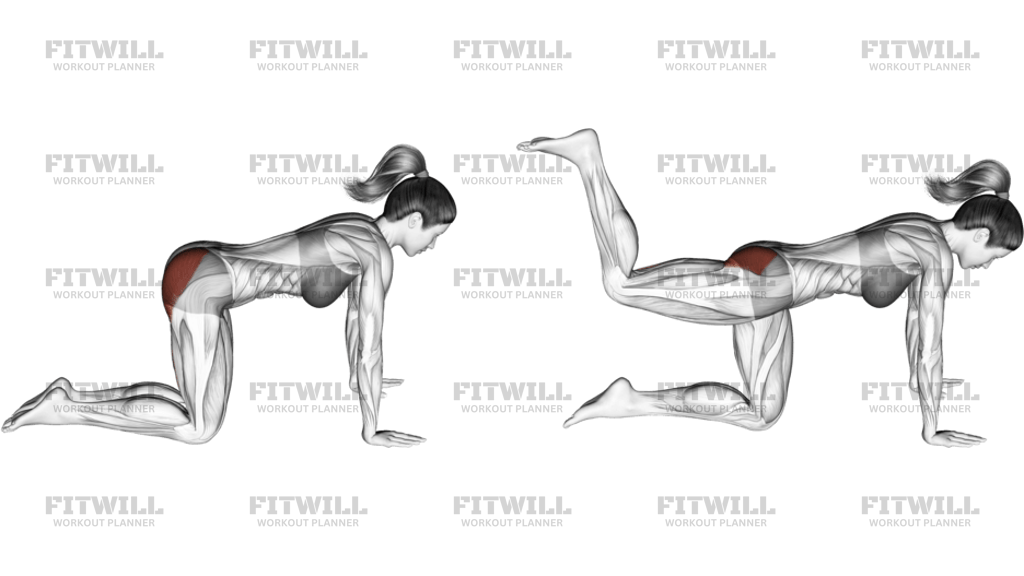
Instructions
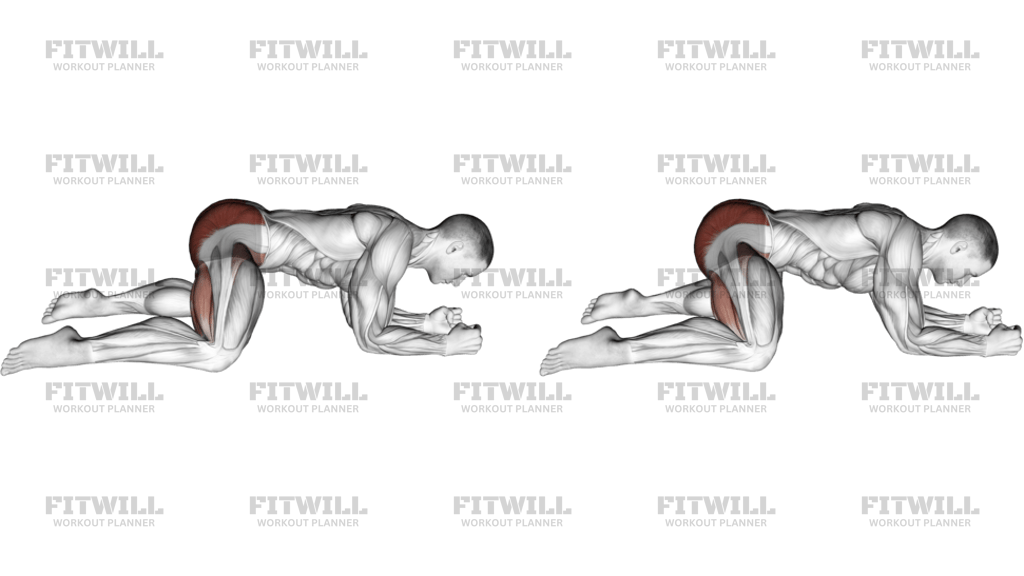
- Get on all fours with your hands under your shoulders and your knees under your hips.
- Keep your spine long, your ribs stacked over your pelvis, and your gaze down at the floor.
- Bend one knee to about 90 degrees and hold the thigh in line with your torso.
- Brace lightly through your midsection before the leg moves.
- Drive that bent leg back and slightly up by squeezing the glute, not by arching your lower back.
- Stop the lift when your hip is fully extended but your pelvis is still square to the floor.
- Pause briefly at the top and keep the working foot pointed back rather than turning the hip open.
- Lower the knee under control until the thigh returns near the starting line without letting the hips rock.
- Reset your brace and repeat all reps on the same side before switching legs.
Tips & Tricks
- Think about pushing the sole of the foot toward the ceiling while the knee stays bent, rather than straightening the leg.
- If your lower back arches at the top, shorten the range until the pelvis stays level.
- Keep both hip bones facing the floor; if one side rolls open, the glute is losing tension.
- Press firmly through the support hand on the working side to keep the torso from collapsing into the shoulder.
- A small posterior pelvic tilt at the start helps keep the movement in the glute instead of the lumbar spine.
- Exhale as you lift and pause for a moment in the top position to make the contraction clearer.
- Lower the leg slowly; the return should stay controlled instead of snapping back to the floor.
- Do not chase height if the movement turns into a back extension pattern.
- If body weight feels too easy, add a light ankle weight or band only after your alignment is consistent.
Frequently Asked Questions
What muscle does Bent Leg Kickback (kneeling) target most?
The glute on the working side is the main target, especially gluteus maximus.
Can beginners perform this exercise?
Yes. It is one of the easier glute exercises to learn because the setup is simple and the load is just body weight.
Should my knee stay bent the whole time?
Yes. Keep that working knee around 90 degrees so the rep stays a hip extension pattern instead of turning into a straight-leg swing.
Why do my hips rotate when I lift the leg?
Usually the leg is lifting too high or the torso is not braced enough. Keep both hip points facing the floor and stop the rep earlier.
Where should I feel the exercise?
You should feel a strong squeeze in the working glute, with some support from the core and shoulder girdle.
What is the most common form mistake?
The biggest mistake is arching the lower back to get the foot higher instead of extending the hip under control.
How can I make it harder without changing exercises?
Add a light ankle weight, slow the lowering phase, or hold the top squeeze longer while keeping the pelvis still.
Can I do this as part of a warm-up?
Yes. It works well before squats, lunges, or deadlift variations when you want to wake up the glutes without fatiguing them.