Kneeling Straight Leg Kickback
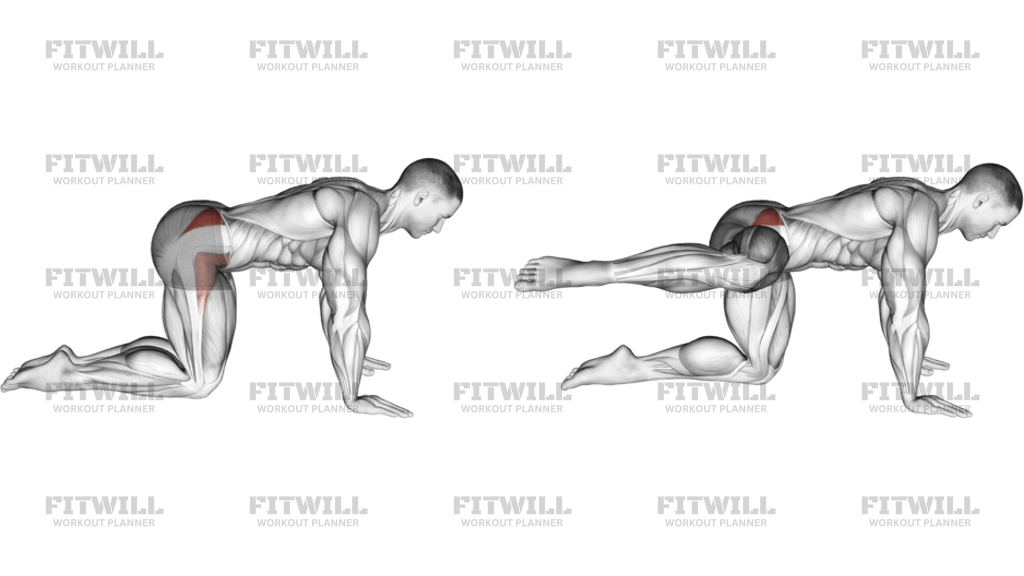
Kneeling Straight Leg Kickback is a bodyweight glute exercise done from a hands-and-knees position. It trains hip extension with a long lever, so the glutes have to do the work while the torso stays quiet. Because the leg stays straight, the movement is a little more demanding than a bent-knee donkey kick and usually exposes poor pelvic control quickly.
The main target is the glutes, especially the gluteus maximus, with the hamstrings helping to extend the hip. The core and lower back work hard to keep the pelvis from tipping, twisting, or arching as the leg lifts. That makes Kneeling Straight Leg Kickback useful not only for glute development, but also for learning how to separate hip motion from lower-back motion.
Set up on a mat or firm floor with your hands under your shoulders and your knees under your hips. Keep the support knee bent and planted, then extend the working leg straight back so the thigh starts in line with the torso. Square your hips to the floor before you begin. If your ribs flare or your lower back arches in the setup, the rep will turn into a back extension instead of a clean kickback.
From there, reach the straight leg back and slightly up until you feel a strong glute contraction without losing the position of your pelvis. The lift should come from the hip, not from swinging the leg or throwing the chest forward. Pause briefly at the top, then lower the leg under control until you are back in the long, aligned starting position. Keep breathing steady and repeat with the same path on every rep.
Kneeling Straight Leg Kickback fits well in glute-focused sessions, warmups, activation work, or higher-rep accessory blocks. It is also a useful choice when someone wants to train the hips without loading the spine. The exercise works best when each rep looks almost identical, with the torso stable, the leg long, and the range of motion controlled rather than exaggerated.
The most common problems are arching the lower back, opening the hips toward the ceiling, and bending the working knee as fatigue builds. If you cannot keep the pelvis square, reduce the lift height and slow the lowering phase. Beginners can use this exercise, but they should focus on precision first, because this movement rewards control much more than speed or range.
[ Workout Log & Planner ]
Put your next workout in Fitwill
Keep your plan and training log ready when you are.


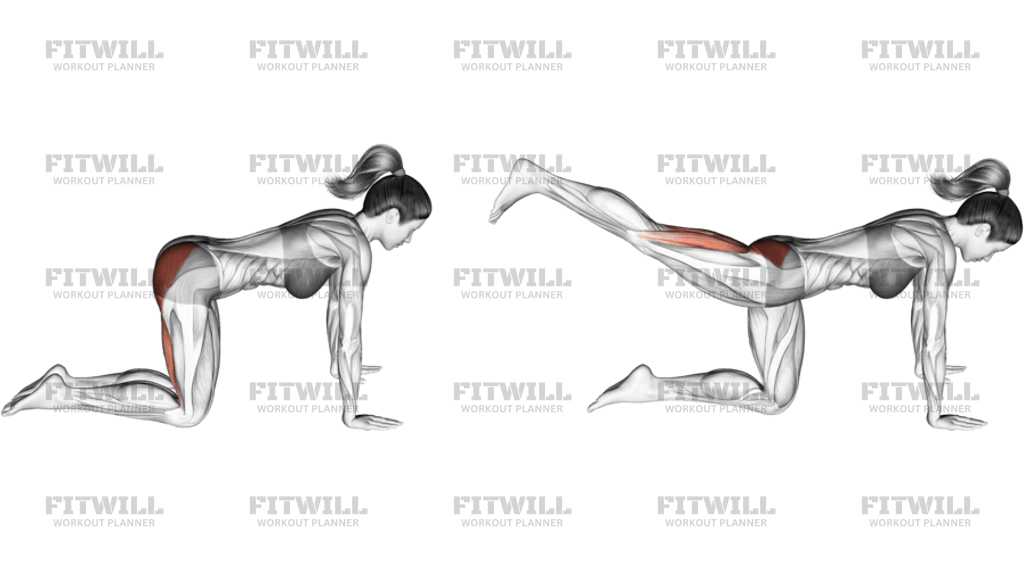
Instructions
- Kneel on a mat with your hands under your shoulders and your knees under your hips.
- Keep one knee and shin on the floor, then extend the working leg straight back behind you.
- Square your hips to the floor and stack your ribs over your pelvis before lifting.
- Brace your midsection, keep the working knee straight, and reach the leg back from the hip.
- Lift the straight leg until you feel the glutes contract without letting your lower back arch.
- Pause briefly at the top with the hips level and the torso still.
- Lower the leg slowly to the start position, keeping tension in the glutes on the way down.
- Reset your pelvis and breathing before the next repetition or before switching sides.
Tips & Tricks
- Think about reaching the heel back instead of kicking the foot up; that cue helps keep the leg long and the glutes in charge.
- Stop the lift as soon as your low back wants to arch, because extra height usually comes from lumbar extension rather than hip extension.
- Keep your weight evenly spread through both hands so you do not shift onto the support side as the leg rises.
- A slight pause at the top makes this movement more effective than chasing a bigger swing.
- If your hamstrings cramp, shorten the top range and keep the working leg a little lower.
- Do not let the lifted hip rotate open; both hip points should stay aimed at the floor.
- Use a slower lowering phase to keep tension on the glutes instead of dropping the leg between reps.
- On higher-rep sets, keep the neck long and look at the floor to avoid turning the rep into a full-body brace.
Frequently Asked Questions
What muscle does Straight Leg Kickback (kneeling) target most?
Kneeling Straight Leg Kickback mainly targets the glutes, especially the gluteus maximus. The hamstrings help, but the best reps still feel like hip extension from the back of the hip, not a swing from the lower back.
Can beginners perform this exercise?
Yes. Beginners usually do best with a short range, a slow tempo, and a focus on keeping the pelvis square while the leg stays straight.
Where should my hands and knees be in Kneeling Straight Leg Kickback?
Place your hands under your shoulders and your knees under your hips. That stacked position gives you a stable base and makes it easier to keep the pelvis level while the working leg moves.
Why does Kneeling Straight Leg Kickback hit my lower back instead of my glutes?
Usually the leg is lifting too high or the ribs are flaring, which turns the rep into a back extension. Lower the lift, tuck the ribs slightly, and keep the movement coming from the hip.
Should the working leg stay straight the whole time?
Yes, the working leg should stay long with only a soft bend if needed to keep the knee comfortable. Bending the knee too much changes the exercise into a different kickback pattern.
How high should I lift the leg?
Lift only until the glute contracts hard and the pelvis stays square. If the leg keeps rising after that point, the extra range is usually coming from the lower back.
What if I feel my hamstrings cramping during Kneeling Straight Leg Kickback?
Shorten the top range and slow the tempo. Keeping the leg slightly lower and focusing on the heel driving back usually shifts more of the work into the glutes.
Is this exercise good for glute activation before heavier lifting?
Yes, it works well as a warm-up or activation drill before squats, deadlifts, or lunges because it teaches you to extend the hip without letting the spine take over.
What is the easiest way to make Kneeling Straight Leg Kickback harder?
Slow the lowering phase, add a one-second pause at the top, or use a smaller but stricter range of motion. All three increase glute tension without needing momentum.