Shoulder Stand Yoga Pose
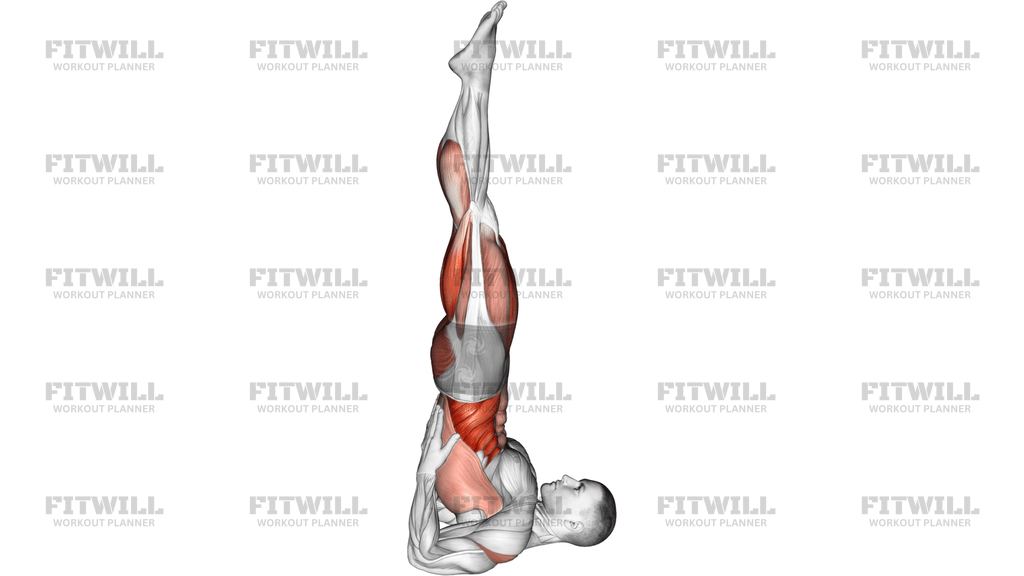
Shoulder Stand Yoga Pose is a bodyweight inversion that asks you to support the pelvis with the hands while the shoulders, upper back, core, and hips work to keep the body stacked and quiet. It is less about speed or load and more about positioning: once the base is set, the pose should feel balanced through the shoulders, upper arms, and trunk instead of compressed into the neck.
The exercise is often used to build control in an inverted position while stretching the back of the body and challenging the midsection to keep the legs aligned overhead. In this record, the main emphasis is on the obliques, with the abs, lower back, and deep core helping stabilize the line from ribcage to ankles. That makes the pose useful when you want anti-extension control, hip awareness, and a strong midline without external resistance.
Setup matters more here than in many other bodyweight drills. A poor entry usually puts too much weight into the neck or lets the elbows drift wide, which makes the pose unstable before the legs even leave the floor. The best version starts from a controlled roll onto the shoulders, with the upper arms close to the torso, the hands supporting the lower back, and the chin tucked so the neck stays long and quiet.
Once you are up, the goal is a vertical, stacked position rather than a loose kick-up. The legs should reach toward the ceiling with the hips lifted and the torso firm, and the breath should stay smooth enough to prevent bracing so hard that the shoulders collapse. If the pose wobbles, shorten the hold, reset the hands, or bend the knees rather than forcing a deeper line.
Use this pose as a controlled strength-and-mobility drill in yoga practice, core work, or a cool-down sequence when inversion is appropriate. It is especially useful for people who need better trunk organization under their own bodyweight. Avoid it if the neck is irritated, if you cannot keep the weight off the head, or if you lose the ability to lower out of the pose slowly and with control.
[ Workout Log & Planner ]
Put your next workout in Fitwill
Keep your plan and training log ready when you are.


Instructions
- Lie on your back on a mat with your arms alongside your body and your palms ready to support your lower back.
- Bend your knees and bring them toward your chest, then press your hands into the floor to lift your hips.
- Roll onto your shoulders and upper arms so the weight stays off the neck; keep the elbows tucked in near your sides.
- Place your hands on the lower back or pelvis for support and keep the chin gently tucked without turning the head.
- Straighten the legs upward until the body is stacked, with the hips lifted and the toes reaching toward the ceiling.
- Hold the position while breathing steadily and keeping the ribs from flaring away from the pelvis.
- If balance shifts, bend the knees or adjust the hand position before the neck or shoulders start to strain.
- Lower out of the pose slowly by bringing the knees back toward the chest and placing the spine down one segment at a time.
Tips & Tricks
- Keep most of your weight on the shoulders and upper arms, not on the back of the head.
- A folded blanket under the shoulders can make the entry feel more stable and reduce neck strain.
- Press the elbows toward each other so the hands can support the pelvis without the chest opening too wide.
- Keep the legs active all the way to the toes; passive feet often make the pelvis drift and the pose wobble.
- If the low back arches, bend the knees slightly instead of forcing the legs straighter.
- Use slow nasal breathing so the ribs do not flare and the trunk stays organized.
- Do not turn the head once you are up; neck rotation in the pose creates unnecessary shear.
- Come down slowly and in control, because the return phase is where many people rush and lose position.
Frequently Asked Questions
What muscle does Shoulder Stand Yoga Pose target most?
The obliques are listed as the primary target here, with the abs, lower back, and deep core helping keep the pose stacked and steady.
Where should my weight be during the shoulder stand?
Most of the load should sit on the shoulders and upper arms, with the hands supporting the pelvis and the neck staying light and relaxed.
Do my legs need to be perfectly straight?
No. Straight legs are ideal if you can keep the pelvis stacked, but bending the knees slightly is better than losing control through the lower back or neck.
What is the most common mistake in this pose?
Letting the body sink into the neck or letting the elbows drift wide usually causes the pose to collapse and makes balance much harder.
Is Shoulder Stand Yoga Pose suitable for beginners?
Beginners can practice it, but only with a controlled setup, a short hold, and a careful exit. If the entry feels unstable, use a simpler inversion first.
Can I turn my head while holding the pose?
No. Keep the head still and the chin gently tucked. Turning the head while inverted can strain the neck.
What should I do if I feel pressure in my neck?
Come out of the pose right away, shorten the hold next time, and consider a folded blanket or a different inversion if the neck still feels loaded.
What is a useful way to progress this pose?
Progress by holding the stacked position longer with smoother breathing, cleaner entries, and a slower, more controlled descent.