Band Pushdown
Band Pushdown is a standing triceps isolation exercise performed with a resistance band anchored overhead. It trains the triceps through elbow extension while the upper arms stay close to the torso, so the movement is simple on paper but very dependent on setup. The band creates a different strength curve than a cable: tension is usually lightest near the top and highest as you press the handles toward your thighs, which makes control on both ends of the rep especially important.
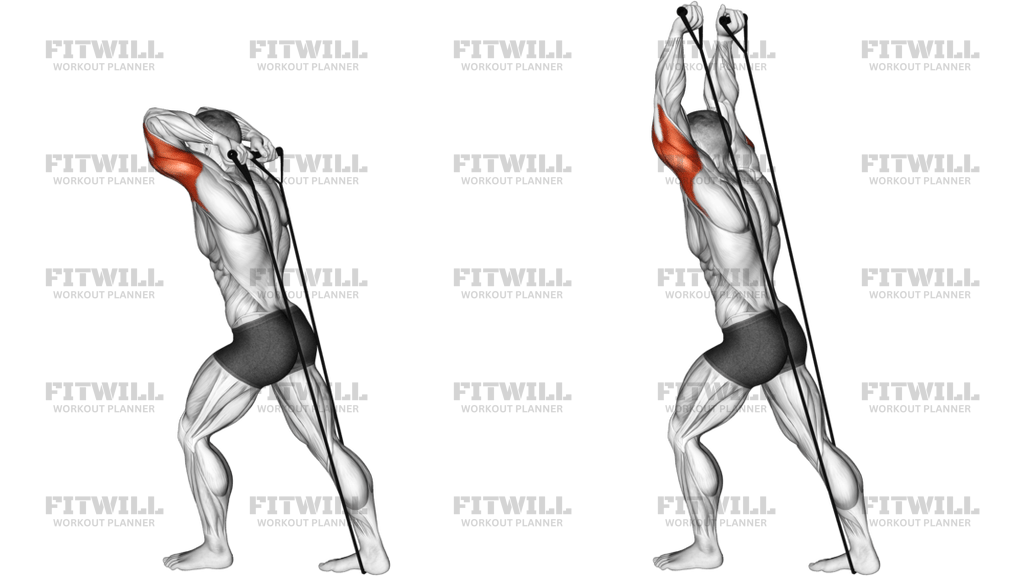
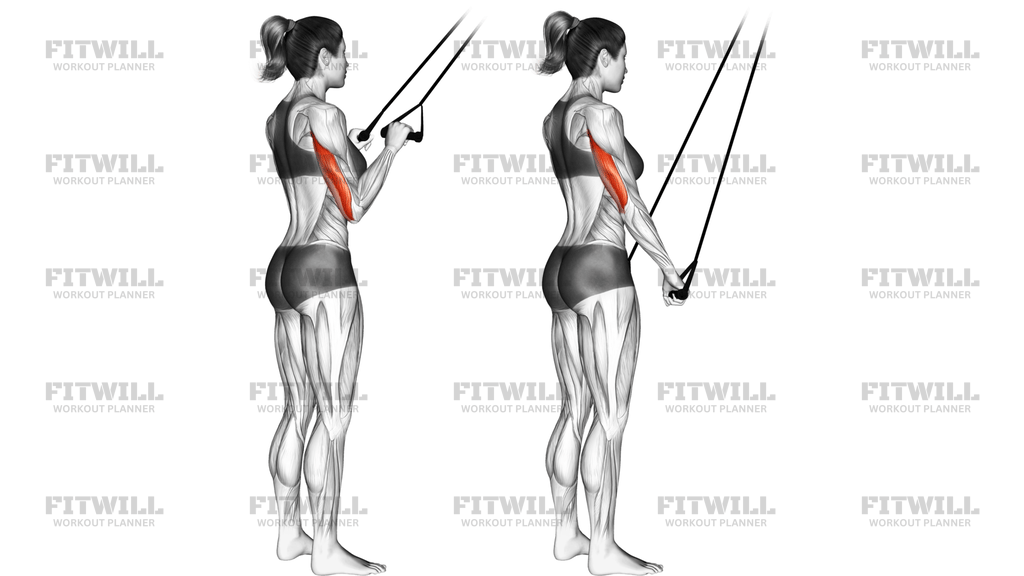
The main target is the triceps brachii, with the forearms, shoulders, and trunk working to keep the body still and the wrists stacked. In the image, the lifter faces away from the anchor, keeps the elbows tucked, and uses a slight forward lean and staggered stance to stay balanced against the band. That position matters because it lets the elbows move straight through the line of pull instead of turning the exercise into a shoulder-driven pressdown or a bodyweight sway.
This exercise is useful when you want triceps work without a machine or heavy free weights. It fits well in upper-body accessory work, arm-focused sessions, home training, warm-ups that prepare the elbows for pressing, or higher-repetition finishers. Because the band loads the top and bottom differently, the rep should feel smooth and deliberate rather than explosive. The goal is to keep tension on the triceps while the shoulders stay relaxed and the rib cage does not flare.
Good execution starts before the first rep. Set the anchor high enough that the band pulls from above head level, set your feet so you can resist the upward pull, and begin with the hands near the upper chest and the elbows bent in front of the ribs. Press the handles down by straightening the elbows until the arms are long beside the thighs, then return slowly until the triceps are loaded but the shoulders have not drifted forward. If the torso rocks, the elbows drift wide, or the wrists bend back, the band is too heavy or the setup is too loose. Use a band that lets you keep the same body position from the first rep to the last.
[ Workout Log & Planner ]
Put your next workout in Fitwill
Keep your plan and training log ready when you are.


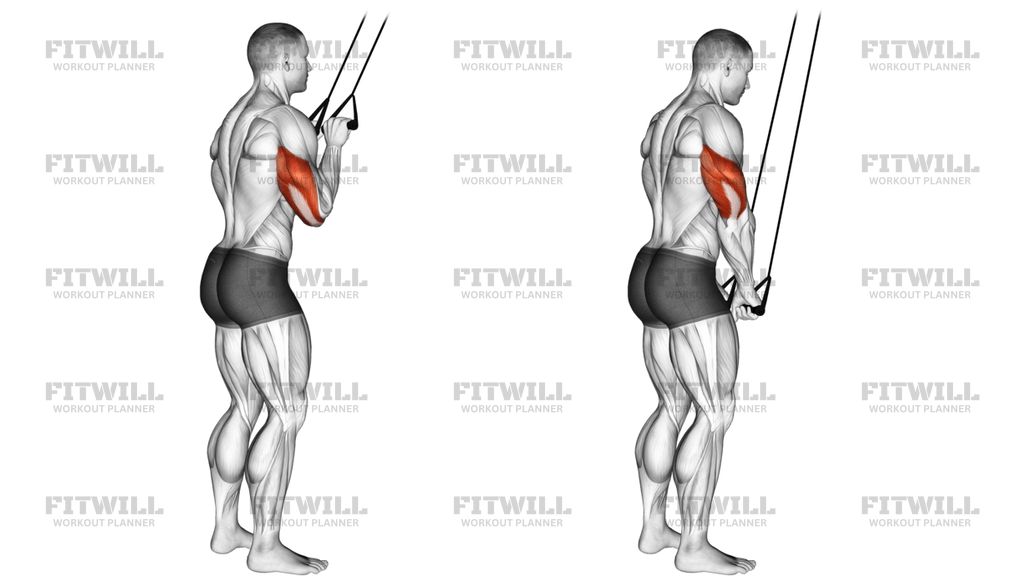
Instructions
- Anchor the band overhead and face away from the attachment point with the handles in both hands.
- Stand in a staggered stance or hip-width stance so the band cannot pull you off balance.
- Bring your hands to upper-chest height with your elbows bent and tucked close to your ribs.
- Set your shoulders down, keep your chest quiet, and keep your wrists straight behind the handles.
- Exhale and press the handles straight down by extending only the elbows.
- Finish with your arms long beside your thighs and your triceps fully contracted.
- Pause briefly at the bottom without letting the shoulders shrug or the torso swing.
- Inhale and let the handles rise slowly until the elbows are bent again and tension is restored.
- Repeat for the planned number of reps, then step forward carefully to release the band.
Tips & Tricks
- A high anchor is essential; a low attachment changes the line of pull and turns the movement into a different exercise.
- If the band tries to pull you forward, shorten the stance by putting one foot in front of the other and leaning only slightly.
- Keep the upper arms pinned near the torso so the elbows do not drift forward or flare out as you press.
- Let the handles travel straight down toward the outer thighs instead of sweeping in an arc in front of your body.
- Choose a band that is challenging near the bottom but still allows a controlled return to the start.
- Keep the wrists stacked over the handles so the forearms, not the hands, transmit the force.
- Slow the way up more than the way down if you want more triceps tension and less band bounce.
- Stop the set when your shoulders start to shrug or your torso starts to hinge to chase the next rep.
Frequently Asked Questions
What muscle does Band Pushdown target most?
The triceps are the primary target, especially when you keep the elbows tucked and press the handles straight down.
Where should the band be anchored for this exercise?
Anchor it overhead, above head height, so the resistance comes from above your hands and you can press the handles down beside your thighs.
Should my elbows move during the rep?
They should stay close to your ribs with only a small amount of natural travel; the forearms should do most of the moving.
Why do I feel this in my shoulders or upper back?
That usually means the shoulders are shrugging, the chest is flaring, or the torso is helping too much instead of letting the triceps finish the press.
Is this the same as a cable pushdown?
The movement pattern is the same, but the band changes resistance through the rep and usually feels lighter at the top and harder near lockout.
Can beginners do band pushdowns?
Yes. Start with a light band and practice keeping the elbows fixed, the wrists straight, and the torso still before adding resistance.
How do I make band pushdowns harder?
Step farther from the anchor, use a thicker band, or add a pause at the bottom so the triceps have to hold the press longer.
What should I do if the band snaps me back up too fast?
Use a lighter band or shorten the range so you can control the return without losing shoulder position.