Bar Band Standing Triceps Extension
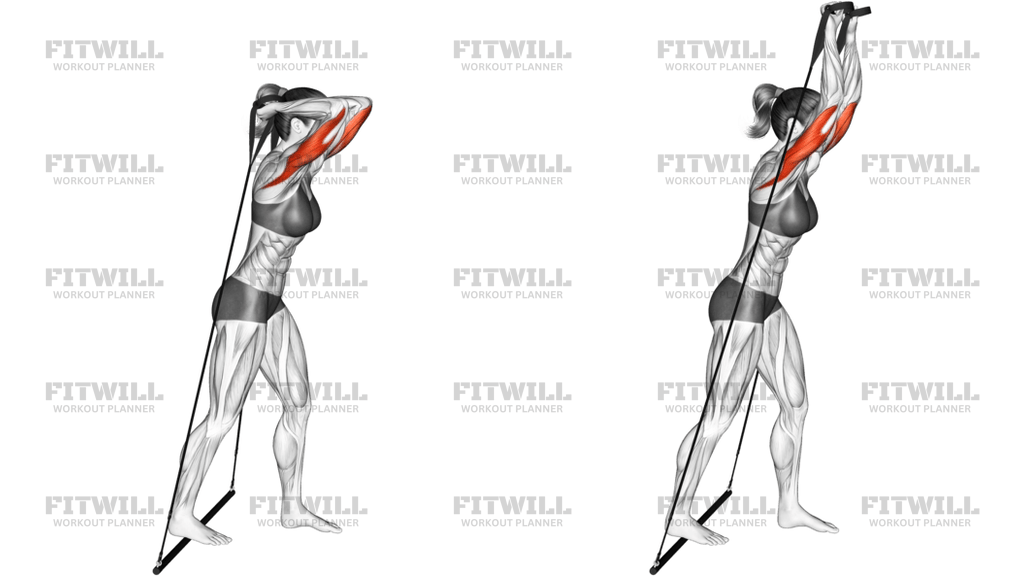
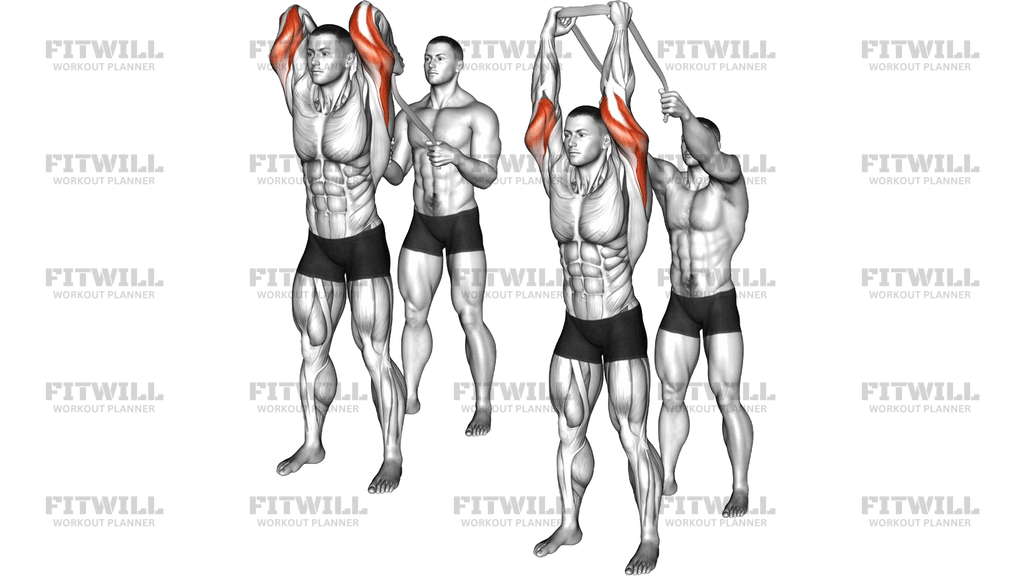
Bar Band Standing Triceps Extension is a standing overhead triceps movement that uses a band and bar or handle to load elbow extension while you stay upright. It is useful when you want direct triceps work without lying on a bench, and the band keeps tension on the muscle through the whole rep. The exercise is especially helpful as accessory work after presses, for higher-repetition arm work, or for lifters who want a smooth, joint-friendly way to train the lockout.
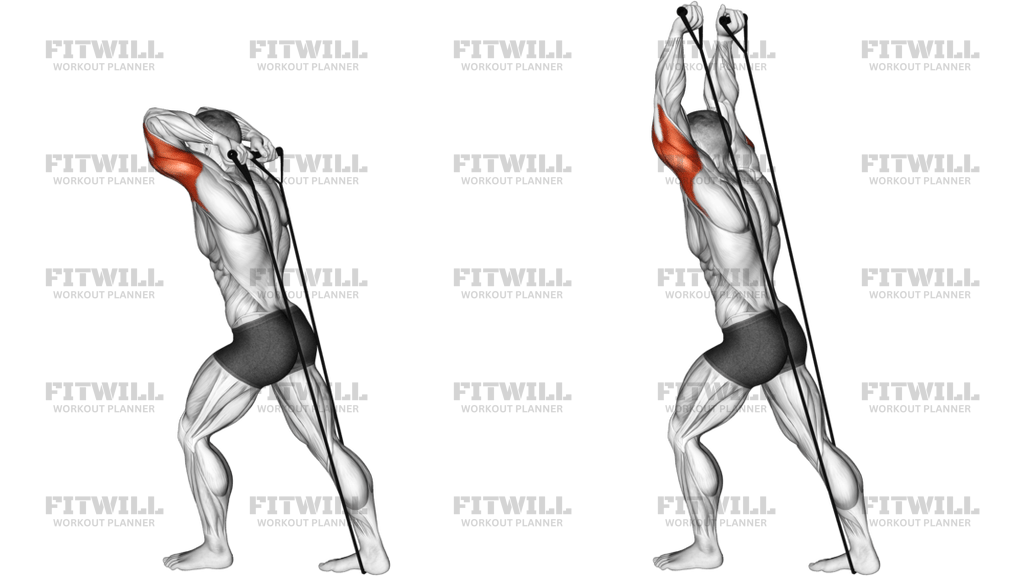
The setup matters because the band needs to stay under control from the first inch of motion. Stand with a stable base, hold the bar with a shoulder-width overhand grip, and bring the hands overhead so the elbows point forward rather than flaring wide. Keep the ribs stacked over the pelvis and avoid leaning back to steal range from the shoulders or lower back. The goal is to create a solid overhead line so the triceps do the work instead of your torso swinging the load.
On each repetition, bend only at the elbows and let the bar travel behind the head under control. The upper arms should stay mostly fixed near the sides of the head while the forearms fold and extend around the elbow joint. Press the bar upward until the elbows are straight or nearly straight, then return slowly to the stretched position without bouncing out of the bottom. Breathing should stay calm and rhythmic: inhale as the elbows bend, exhale as you extend.
Because the band gets harder as it stretches, the exercise rewards clean reps more than heavy load. A lighter band with strict positioning usually gives better triceps tension than a band that yanks you into a back arch or forces the elbows to flare. If shoulder mobility is limited, reduce the range slightly and keep the elbows just in front of the ears instead of reaching for an extreme overhead position.
Bar Band Standing Triceps Extension fits well in upper-body accessory blocks, arm circuits, or warmups before pressing sessions. It trains the triceps through a long lever and a smooth resistance curve, which makes it a practical option for building control and endurance as well as strength. Keep the movement deliberate, reset your stance if the band pulls you off balance, and stop the set once you can no longer keep the elbows steady and the torso quiet.
[ Workout Log & Planner ]
Put your next workout in Fitwill
Keep your plan and training log ready when you are.


Instructions
- Stand on the band and take a shoulder-width overhand grip on the bar or handle.
- Step one foot slightly forward, bring the hands overhead, and let the bar travel behind your head until the elbows bend comfortably.
- Keep your feet planted, ribs stacked over your pelvis, and neck long before starting the first rep.
- Pin your upper arms near your ears so the elbows stay pointed forward instead of flaring out.
- Extend the elbows to press the bar up until your arms are straight or nearly straight overhead.
- Pause for a moment at the top without shrugging your shoulders toward your ears.
- Lower the bar back behind your head in a slow, controlled arc while keeping tension on the band.
- Breathe out as you extend and breathe in as you bend the elbows back into the stretch.
- Reset your stance and end the set if the band pulls you into a back arch or the elbows drift wide.
Tips & Tricks
- A narrower stance usually makes it easier to keep the band centered and stop your torso from twisting.
- Keep the wrists stacked over the forearms so the bar does not fold back into your hands at the top.
- If the band yanks you forward, step a little farther from the anchor or use a lighter band.
- Do not turn the movement into a shoulder press; the upper arms should stay mostly fixed while the elbows move.
- Let the bar travel just behind the head so the triceps stay loaded in the stretched position.
- Slow the lowering phase to two or three seconds if you want more tension without adding resistance.
- Keep the elbows slightly in front of the ears instead of forcing them wide when shoulder mobility is limited.
- If your lower back starts arching, soften the knees and squeeze the glutes before the next rep.
Frequently Asked Questions
What muscles does Bar Band Standing Triceps Extension train most?
The triceps do most of the work, with the forearms, front shoulders, and core helping keep the bar stable overhead.
Where should the band be anchored for Bar Band Standing Triceps Extension?
The band should create tension from low under your feet or a low anchor point behind you so it loads the movement as your arms extend overhead.
Should my elbows flare out during Bar Band Standing Triceps Extension?
No. Keep the elbows pointed forward and close to the line of your head so the triceps extend the elbows instead of the shoulders taking over.
How far should I lower the bar behind my head?
Lower only until you feel a controlled triceps stretch and can still keep the upper arms steady. If the shoulders or low back take over, shorten the range.
Is Bar Band Standing Triceps Extension good for beginners?
Yes, as long as the band is light enough to keep the torso still and the elbows from drifting wide. A short, controlled range is better than forcing a heavy stretch.
Why do I feel this in my shoulders too?
A little shoulder work is normal because the arms stay overhead, but the load should still be driven by elbow extension. If the shoulders are dominating, lighten the band and reduce the arch in your back.
What is the main mistake in Bar Band Standing Triceps Extension?
The most common mistake is turning it into a standing press by leaning back and flaring the elbows. Keep the torso quiet and let only the elbows open and close.
How can I make Bar Band Standing Triceps Extension harder without changing the band?
Step farther from the anchor, slow the lowering phase, or add a brief pause in the stretched position behind your head.