Barbell Split Clean
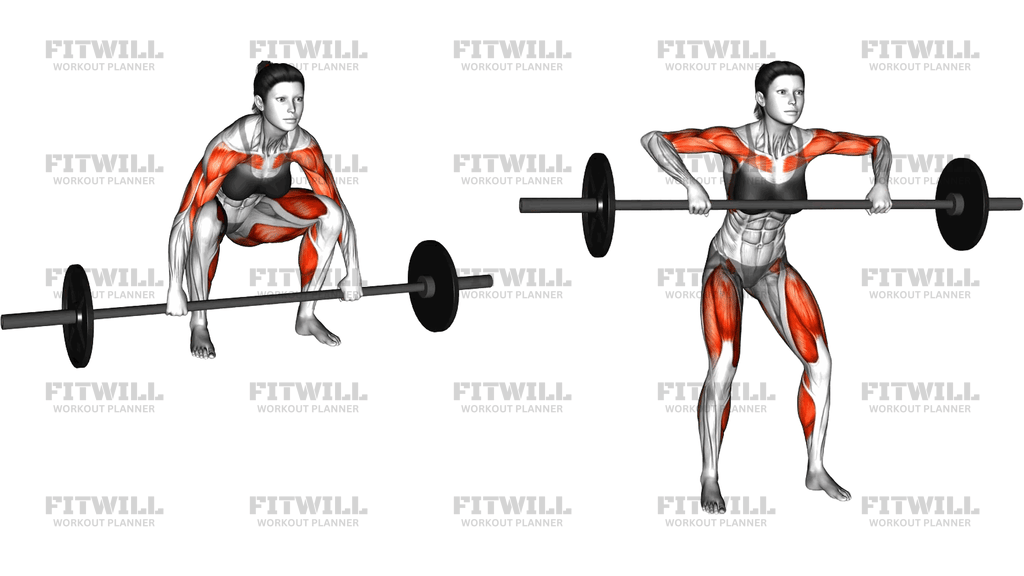
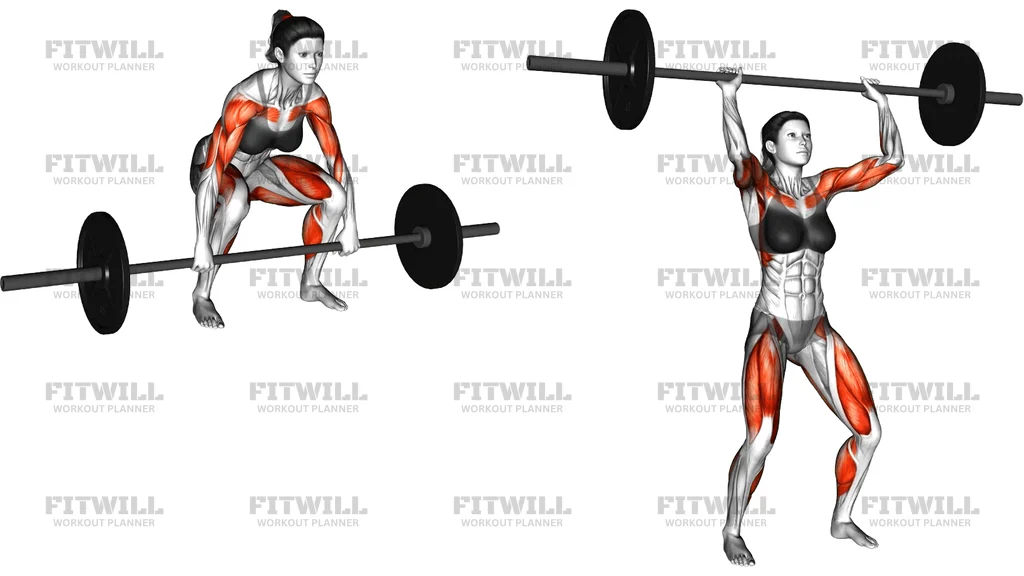
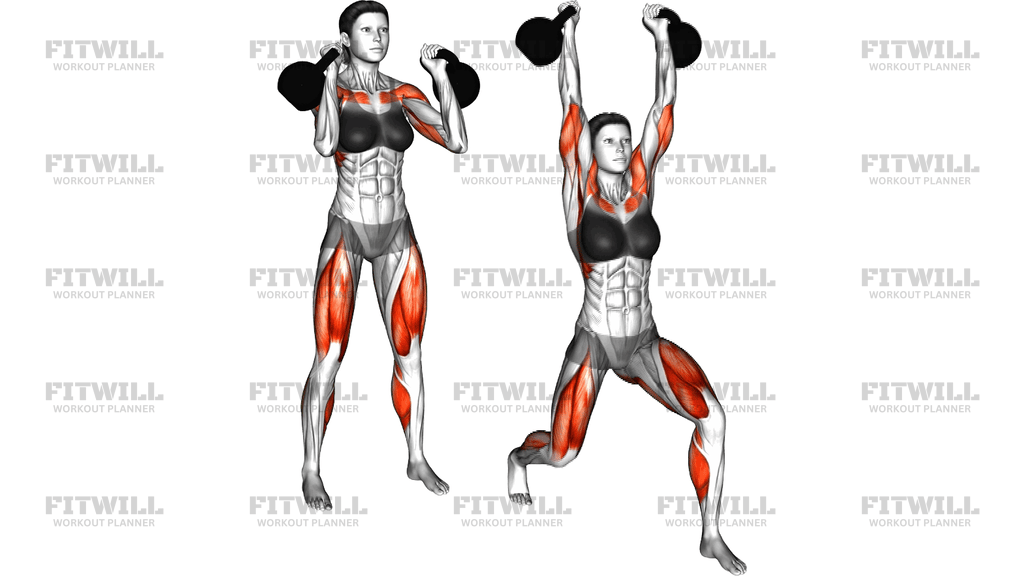
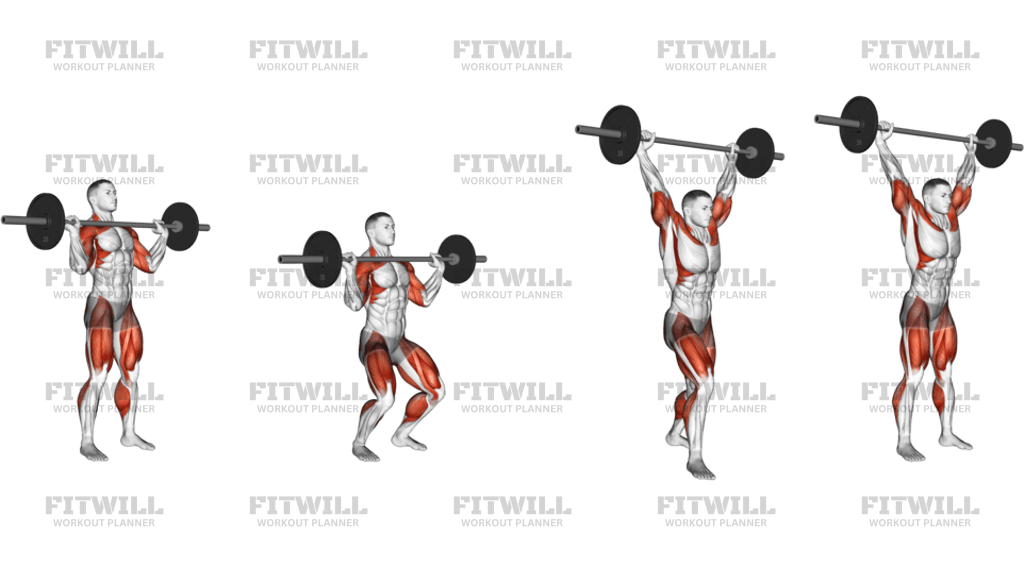
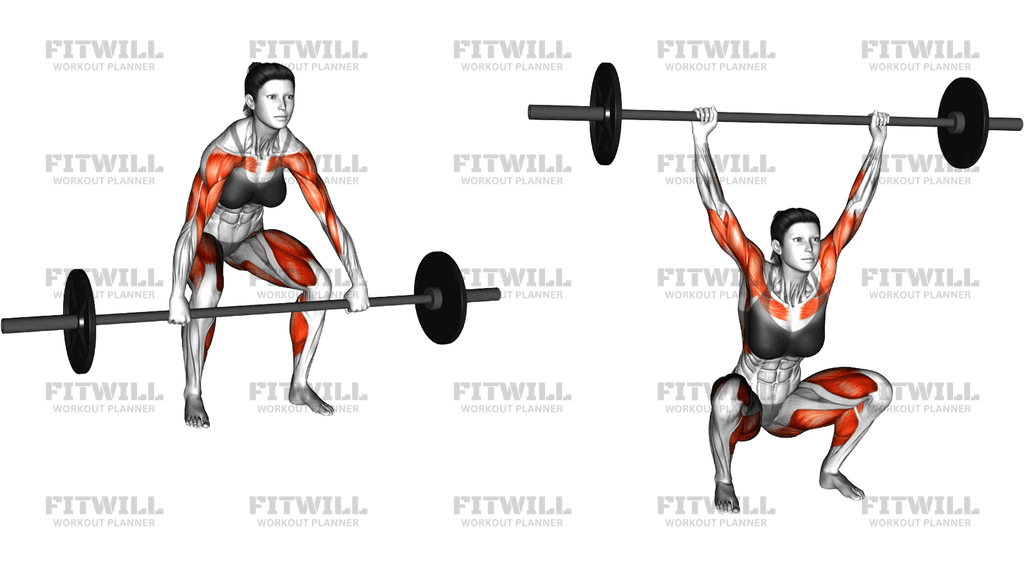
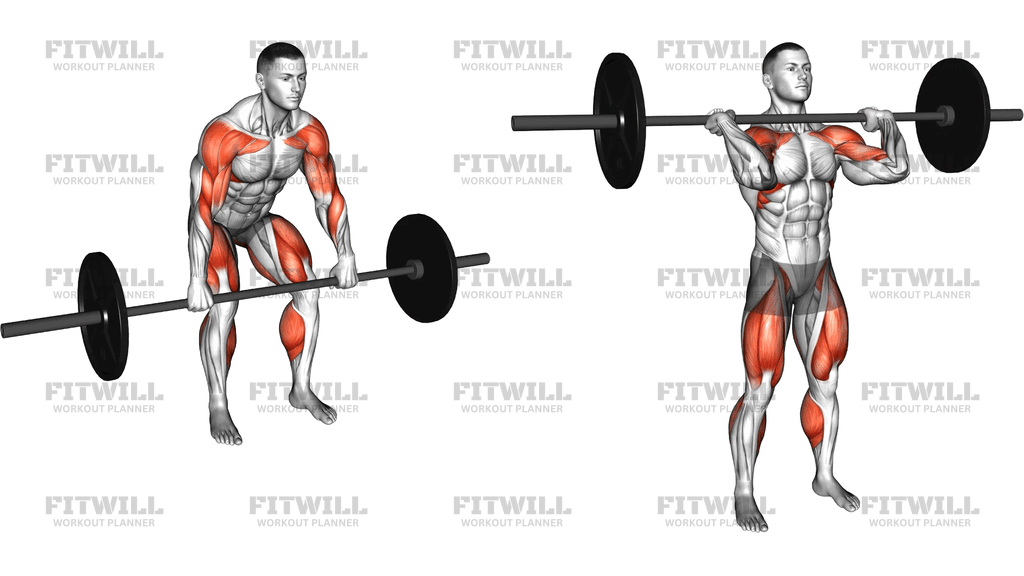
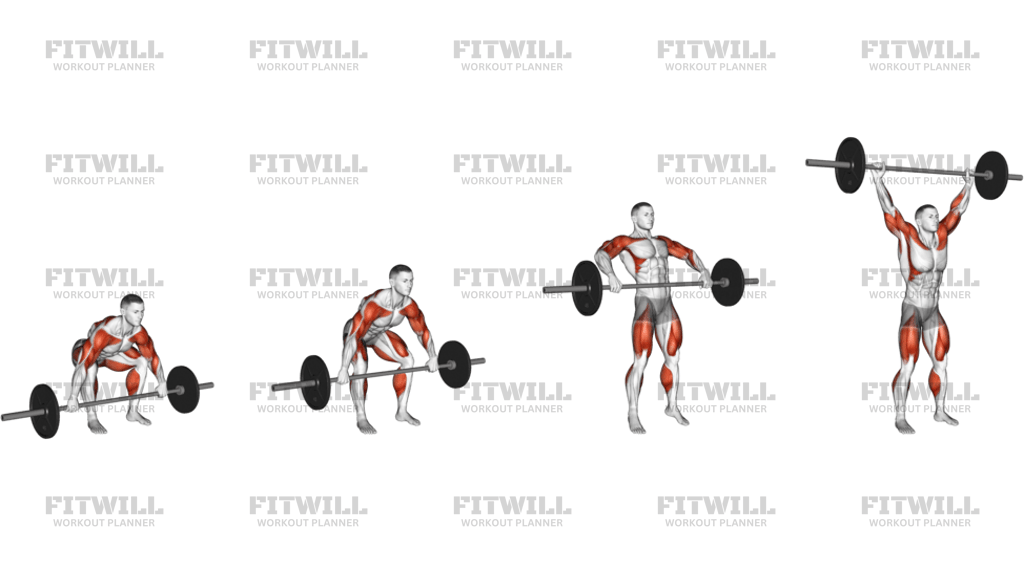
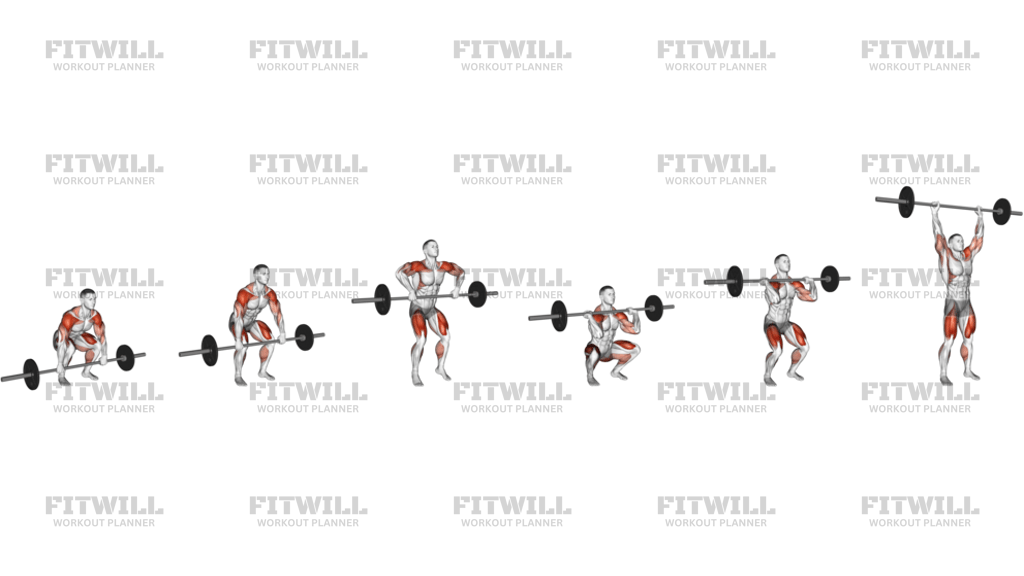
Barbell Split Clean is a weightlifting movement built around an explosive pull and a fast split catch in the front rack. It trains the transition from a loaded hinge into a powerful triple extension, then asks you to get under the bar quickly and receive it with enough control to hold the position. In the image, the bar stays close to the torso, the elbows turn over fast, and the feet separate to absorb the catch.
The exercise is useful when you want to build barbell speed, coordination, and footwork together. The legs and hips create the drive, the upper back keeps the bar path efficient, and the core stabilizes the torso when you land. Quads, glutes, hamstrings, calves, traps, upper back, shoulders, and arms all contribute, but the quality of the rep depends most on timing rather than brute force.
Start each rep with the bar over the midfoot, shins close to the bar, hips hinged, and shoulders slightly in front of the bar. That setup matters because the split clean only feels crisp when the bar starts in a balanced position and the back stays tight as you drive off the floor or from the hang. If the bar drifts forward before you extend, the catch becomes heavy and unstable.
The catch should feel like a quick drop under the bar, not a slow squat. Split one foot forward and the other back, keep the torso tall, and receive the bar on the front of the shoulders with the elbows up. The front foot should land flat enough to support the load, while the back heel stays lifted. Recover by bringing the front foot halfway back first, then the rear foot forward to finish the rep.
Barbell Split Clean works well in strength and power sessions, Olympic lifting practice, and athletic warmups where you want crisp reps without grinding. It is usually trained with light to moderate loads so the bar can still move fast and the feet can land cleanly. When the bar path loops away, the elbows turn over late, or the catch feels like a lunge collapse, the load is too heavy or the timing needs more practice.
[ Workout Log & Planner ]
Put your next workout in Fitwill
Keep your plan and training log ready when you are.


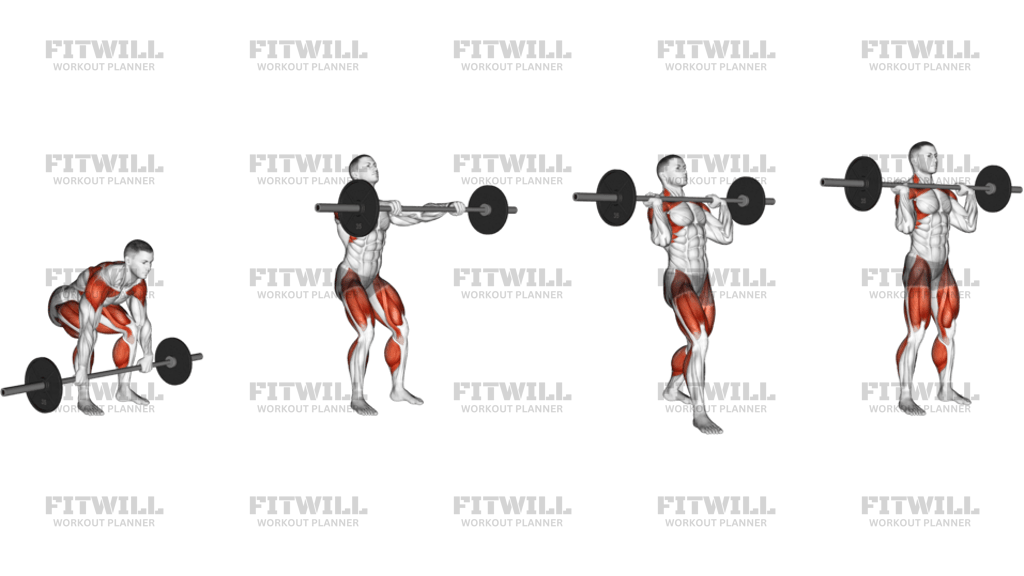
Instructions
- Stand with the bar over your midfoot, feet about hip-width apart, and hands just outside your legs.
- Hinge down to the bar, keep your shins close, flatten your back, and set your shoulders slightly in front of the bar.
- Brace your trunk and keep your lats tight so the bar starts close to your body.
- Drive the floor away and let the bar rise up your thighs without swinging forward.
- Extend hard through the hips, knees, and ankles, then shrug as the bar becomes weightless.
- Pull yourself under the bar and turn the elbows through fast as you drop into the split stance.
- Receive the bar on the shoulders with one foot forward, one foot back, and the torso tall.
- Stabilize the catch, then recover by bringing the front foot back halfway before stepping the rear foot forward.
- Reset the feet, breathe, and repeat for the next rep.
Tips & Tricks
- Keep the bar close enough that it brushes the shirt on the way up; any looping forward makes the split catch unstable.
- Finish the leg drive before the arms bend aggressively, or the clean turns into an early curl.
- Land in a true split, not a long lunge: the front shin should stay near vertical and the torso should stay stacked over the hips.
- Let the front foot contact the floor firmly and keep the back heel lifted so you can absorb the bar without collapsing.
- Turn the elbows through fast and high; a slow turnover usually leaves the bar resting too low on the chest.
- Recover from the split in the same order every rep: front foot halfway back, then back foot forward.
- Use light to moderate loads while learning the footwork so the bar speed stays high enough to catch cleanly.
- If the bar crashes onto the shoulders, lower the load and practice the pull-to-rack timing before adding more weight.
- Stop the set when the split becomes inconsistent, because sloppy footwork is the first thing to break down.
Frequently Asked Questions
What does the Barbell Split Clean train most?
It trains explosive hip extension, bar path control, fast footwork, and front-rack stability.
Why is the split catch used instead of a regular stance?
The split stance gives you more room to receive a fast bar and helps you stabilize heavy or quick pulls.
Where should the bar end up at the catch?
It should land on the front of the shoulders in the front rack with the elbows turned through and the chest tall.
How wide should my split be?
Wide enough to catch the bar solidly, but not so wide that your torso leans forward or your feet feel disconnected from the floor.
Can beginners learn this exercise?
Yes, but it is best taught with an empty bar, a hang start, or tall split clean drills before adding load.
What is the biggest technique mistake?
Letting the bar drift away from the body or turning the arms over too late, which makes the catch heavy and unstable.
How heavy should I go on split cleans?
Use a load that keeps the pull fast and the split catch crisp; if the bar slows down, the weight is too high for clean practice.
How do I finish each rep safely?
Hold the catch, then recover to standing by stepping the front foot back first and the rear foot forward second.