Barbell Snatch Balance
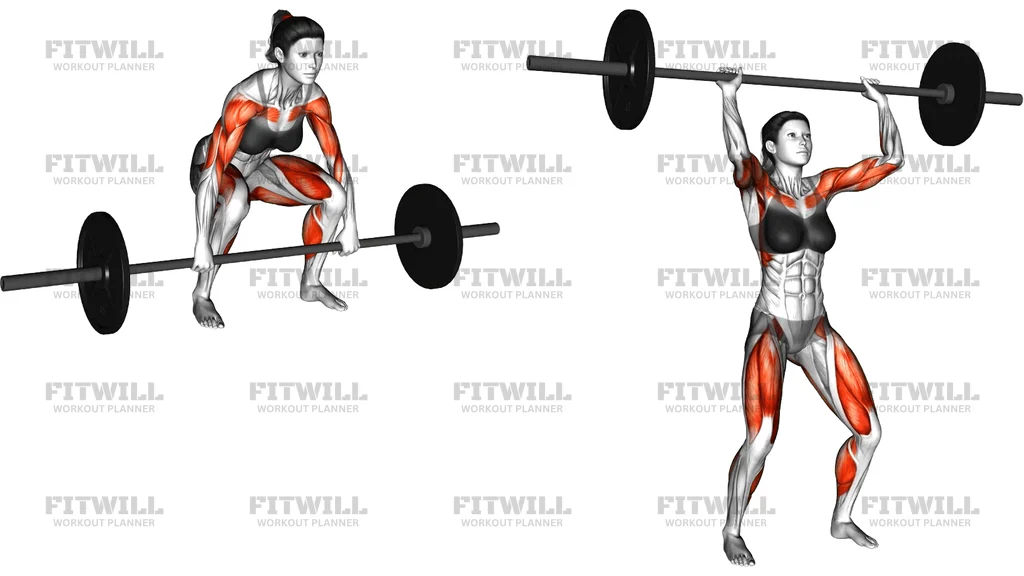
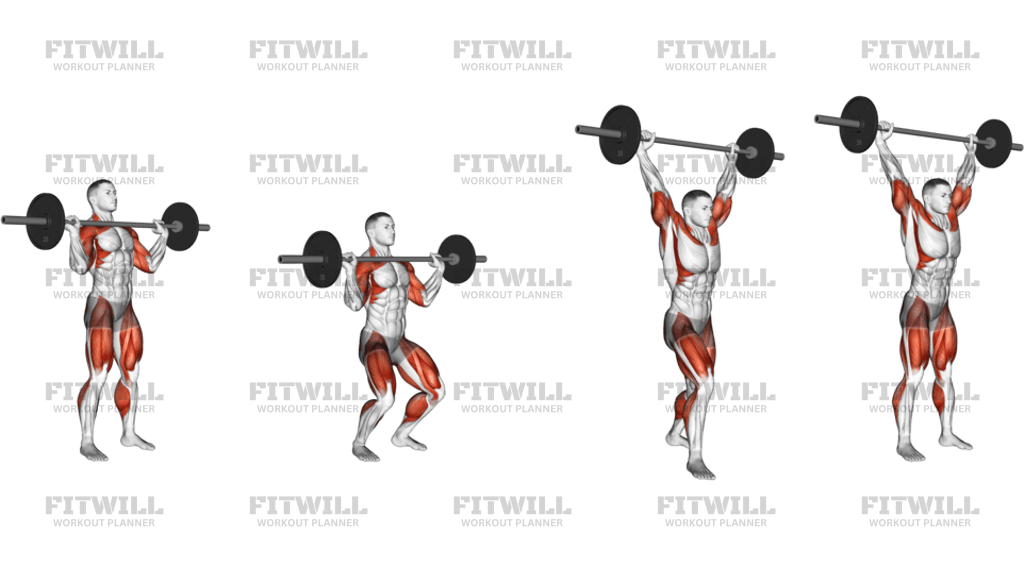
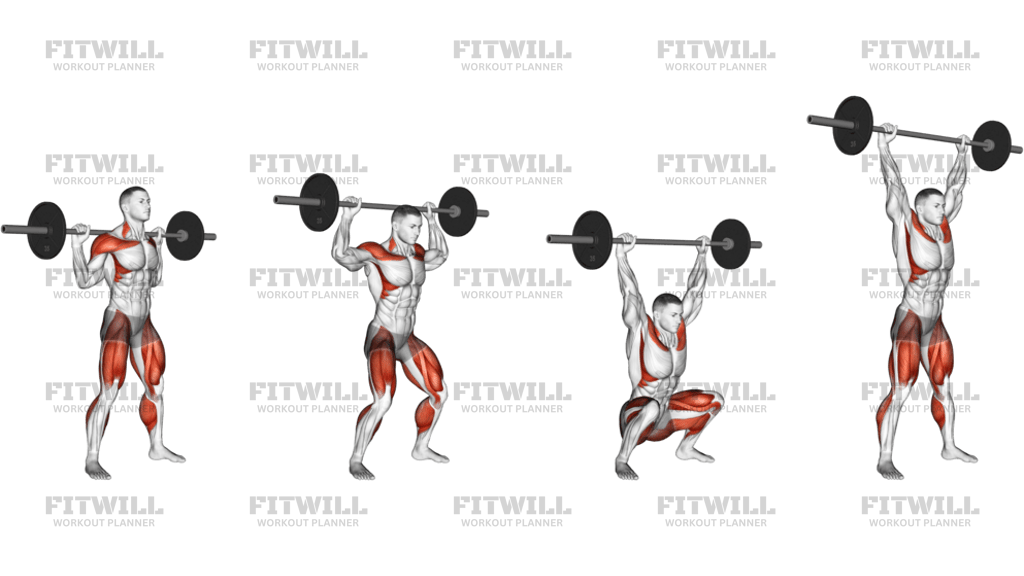
The Barbell Snatch Balance is a weightlifting drill that teaches you to receive a snatch bar quickly and confidently from the back rack. You start with the bar across the upper traps, use a short vertical dip, then drive the bar upward as you punch under it and catch in a locked-out overhead squat position. The movement is less about pressing the weight and more about timing, speed under the bar, and solid overhead stability.
Because the bar starts behind the neck, the setup matters. A good snatch balance begins with a snatch-width grip, an upright torso, and enough shoulder and thoracic mobility to keep the bar balanced over the mid-foot. The dip should stay short and vertical so the bar does not drift forward. If the dip turns into a squat or the chest collapses, the catch becomes unstable and the lift loses its purpose.
This exercise trains the receiving position of the snatch, along with leg drive, foot speed, and the ability to lock the shoulders overhead while the body drops under the bar. It is useful for weightlifters, but it also works as an accessory for overhead confidence, timing, and front-to-back bar awareness. The legs and glutes help drive the bar, while the shoulders, upper back, trunk, and stabilizers keep it stacked overhead.
On each rep, think about driving straight up, then moving straight down under the bar. The bar should stay close and finish over the back of the head, with elbows locked and the rib cage controlled so the bar sits over the mid-foot. A clean catch is quiet and balanced, not a frantic press-out. If your shoulders, wrists, or ankles restrict the bottom position, reduce the load and work through a smaller receiving squat until the position is consistent.
Use the snatch balance when you want more confidence in the overhead catch, better speed under a snatch, or a stronger and more stable receiving position. It is a technique exercise first, so lighter loads and crisp execution usually produce the best results. If the bar path or footwork breaks down, the set is too heavy for the goal of the movement.
[ Workout Log & Planner ]
Put your next workout in Fitwill
Keep your plan and training log ready when you are.


Instructions
- Set the bar on the upper traps or rear delts with a snatch-width grip, then stand tall with your feet about hip-width and your chest lifted.
- Step back, plant your feet flat, and brace your trunk so the bar stays centered over the middle of your feet.
- Take a short, vertical dip by bending the knees a few inches while keeping the torso upright and the heels down.
- Drive hard through the legs to send the bar upward, but keep the bar path close to your body instead of letting it arc forward.
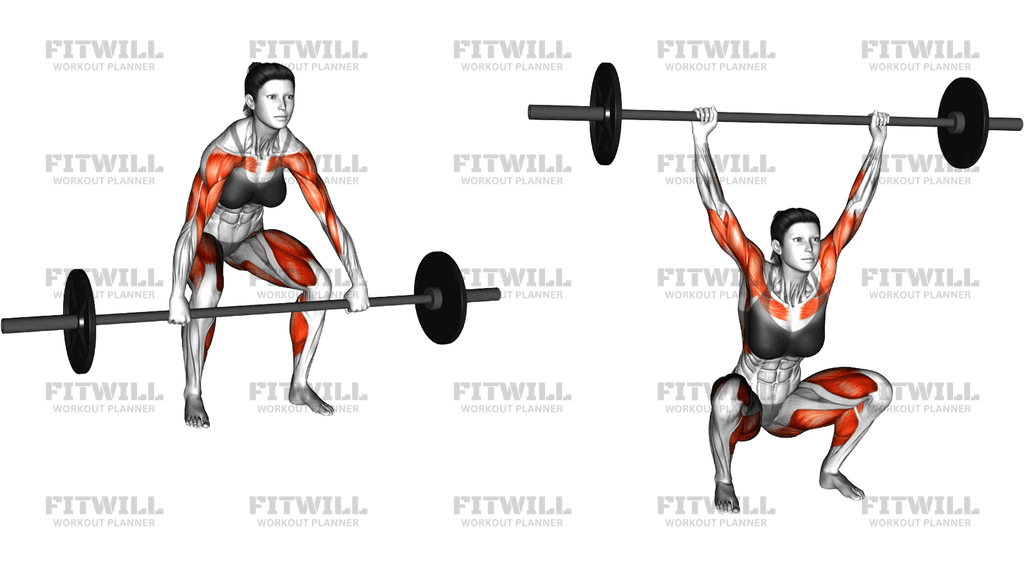
- As soon as the bar leaves the shoulders, punch the arms straight up and move the body down under it.
- Catch the bar overhead in a shallow squat or overhead squat with locked elbows, active shoulders, and the bar stacked over the mid-foot.
- Freeze for a moment to confirm balance, then stand up by driving through the feet while keeping the bar fixed overhead.
- Lower the bar back to the back rack or re-rack it under control before the next repetition.
Tips & Tricks
- Keep the dip short and vertical; if your hips shift back, the bar will drift forward and the catch will feel heavy.
- Use a snatch grip wide enough to lock the bar overhead without forcing a press-out.
- Think about punching up and then sitting under the bar, not pressing it to lockout after the catch.
- Land in your snatch stance with the feet flat and quiet so you can absorb the bar without wobbling.
- Keep the elbows fully locked and the shoulders active at the bottom so the load sits on the skeleton, not on the arms.
- If the bar crashes forward, lower the load and practice the dip-and-drive pattern before chasing speed.
- A clean rep usually feels explosive on the way up and controlled in the catch; if either part is slow, the load is too heavy.
- Use bumper plates and enough overhead space because the bar is meant to travel quickly and return under control.
Frequently Asked Questions
What does the Barbell Snatch Balance train?
It trains the overhead receiving position for the snatch, plus leg drive, foot speed, and shoulder stability under a bar.
Where should the bar sit before the dip?
The bar should rest across the upper traps or rear delts with a snatch-width grip and an upright torso.
Do I press the bar overhead after the drive?
No. The goal is to drive the bar up and then move yourself under it fast enough to catch it locked out.
How deep should the catch be?
Most lifters catch in a shallow squat or overhead squat, deep enough to receive the bar safely but not so deep that the torso collapses.
What are the most common mistakes with this lift?
Letting the dip drift forward, pressing the bar out instead of punching under it, and catching with soft elbows or a loose trunk.
Is the snatch balance good for beginners?
Yes, if it is loaded lightly and used as a technique drill. Beginners should first be comfortable with the overhead squat and snatch grip.
What should I do if the bar lands forward?
Reduce the load and make the dip more vertical. The bar should finish over the middle of the feet, not in front of the toes.
How do I progress the exercise safely?
Progress with small jumps only after every rep looks crisp, the catch is stable, and the bar speed stays fast.