Barbell Close-Grip Larsen Bench Press
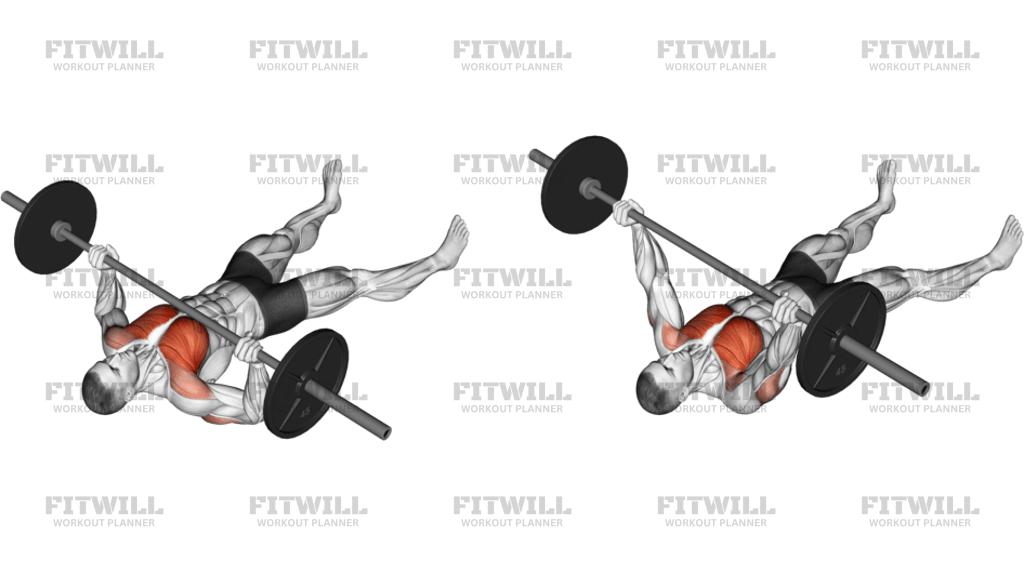
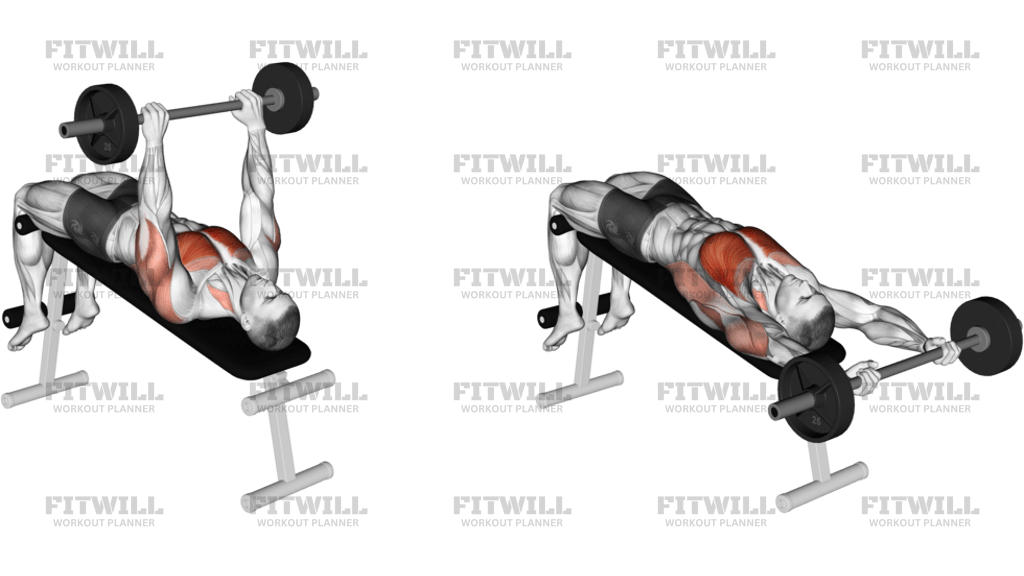
Barbell Close-Grip Larsen Bench Press is a strict horizontal press performed on a flat bench with the legs held up on the bench instead of driving into the floor. That Larsen position removes leg drive, so the upper body has to do the work cleanly through the chest, triceps, and front shoulders. The closer grip shifts more demand toward elbow extension while still letting the pecs contribute strongly to the press.
The setup matters more here than on a standard bench press because there is no lower-body help to stabilize the rep. Lie with your eyes under the bar, upper back firmly planted, shoulder blades squeezed back and down, and feet resting on the bench with the legs extended. A tight, organized setup keeps the bar path consistent and prevents the shoulders from rolling forward as fatigue rises.
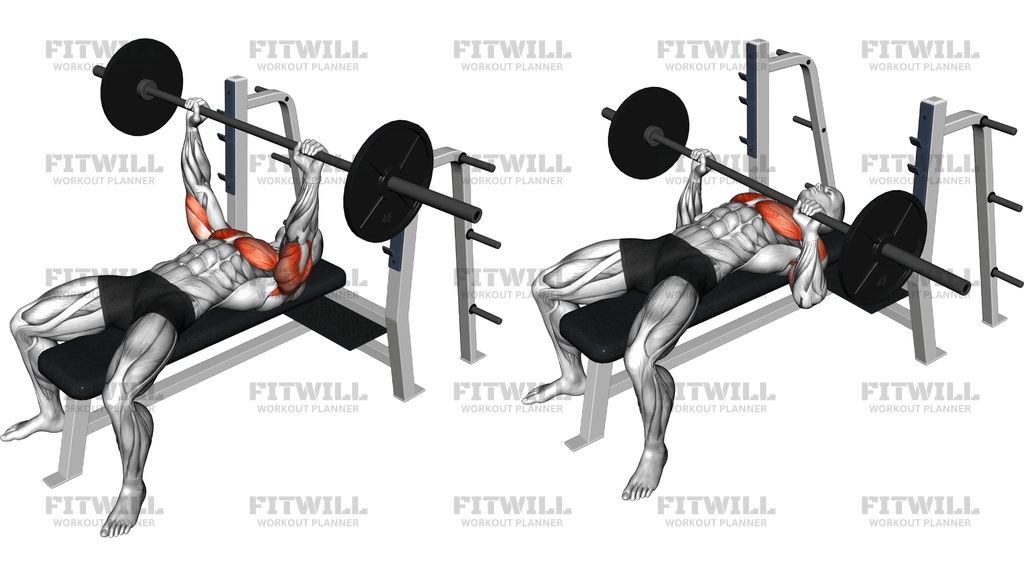
During each repetition, lower the bar under control to the lower chest or upper sternum with the wrists stacked over the elbows and the elbows tucked at a comfortable angle. Touch lightly, stay braced through the torso, then press the bar back up in a steady line until the elbows lock out without shrugging the shoulders. The goal is a smooth, repeatable press that keeps tension on the target muscles instead of bouncing the bar or turning the movement into a heave.
This exercise is useful when you want a more honest close-grip bench variation for strength, triceps development, or pressing technique. It is often used as an accessory after a heavier bench press or as a main press when you want to reduce leg drive and emphasize upper-body control. Because the bench setup is strict and the grip is narrow, it is usually best performed with moderate loads and a deliberate tempo.
Keep the rep quality high: stable upper back, quiet legs, no excessive arching, and no bounce off the chest. If the wrists drift back, the elbows flare hard, or the shoulders lose position, the load is too heavy or the setup is too loose. A well-executed set should feel demanding in the chest and triceps while still looking controlled from the first rep to the last.
Fitwill
Log Workouts, Track Progress & Build Strength.
Achieve more with Fitwill: explore over 9600 exercises with images and videos, access built-in and custom workouts, perfect for both gym and home sessions, and see real results.
Start your journey. Download today!




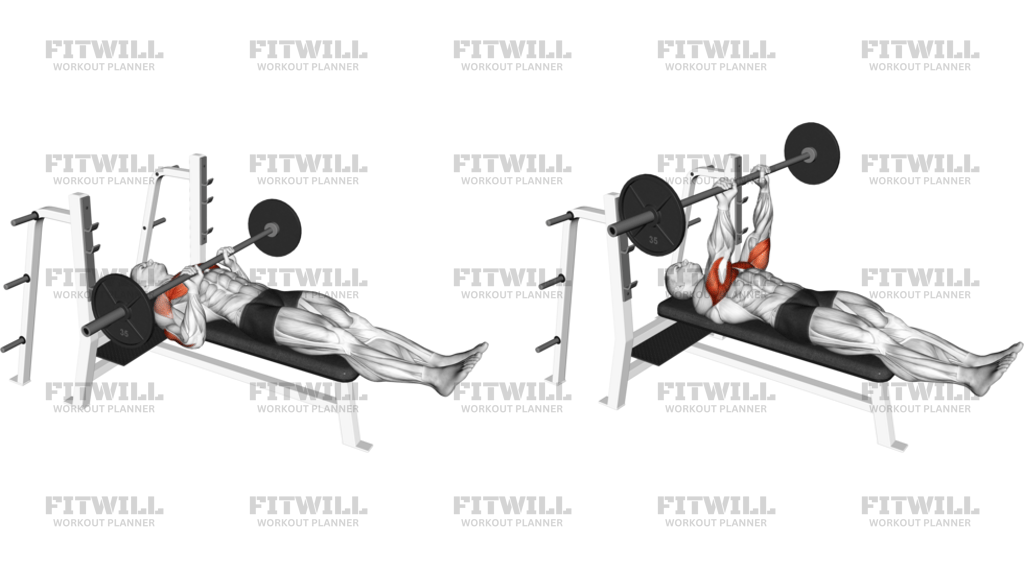
Instructions
- Lie on a flat bench with your eyes under the bar, then take a grip just inside shoulder width and squeeze your shoulder blades back and down.
- Keep your feet on the bench with your legs extended for the Larsen setup, and plant your upper back firmly into the pad before unracking.
- Unrack the bar over the shoulders with straight wrists and stacked forearms, then hold it steady above the mid-chest.
- Lower the bar under control toward the lower chest or upper sternum while keeping the elbows tucked at a comfortable angle.
- Lightly touch the bar to the chest without bouncing or sinking into the shoulders.
- Press the bar back up in a smooth line until the elbows are straight and the shoulders stay packed.
- Keep the legs quiet on the bench and avoid any leg drive, hip lift, or torso twist.
- Inhale on the way down, exhale as you drive the bar up, and re-rack only after the last rep is fully controlled.
Tips & Tricks
- A slightly narrower-than-bench-width grip usually feels strongest; if the wrists bend back, widen the grip a little.
- Keep the bar over the forearms at the bottom so the wrists, elbows, and shoulders stay stacked.
- Think about lowering to the lower chest or upper sternum, not drifting the touch point toward the stomach.
- Keep the elbows tucked enough to protect the shoulders, but not so tight that the bar path turns awkward or the wrists collapse.
- Because Larsen bench removes leg drive, expect to use less load than a standard close-grip bench press.
- Keep the upper back tight the whole set; if the shoulders slide forward, the rep becomes harder on the front of the shoulder.
- Pause briefly on the chest if you want to reduce bounce and make the triceps work harder out of the bottom.
- Stop the set when the bar path slows enough that you start losing shoulder position or wrist alignment.
Frequently Asked Questions
What muscle does Barbell Close Grip Larsen Bench Press target most?
The chest is still the main mover, but the close grip and no-leg-drive setup also put a lot of work on the triceps and front shoulders.
What makes the Larsen bench version different from a regular close-grip bench press?
In the Larsen setup your legs stay on the bench, so you cannot use leg drive to help the press. That makes the movement stricter and more demanding on upper-body control.
Where should the bar touch on this press?
Aim for the lower chest or upper sternum. If the touch point keeps drifting higher or lower, the shoulder and elbow path usually needs adjusting.
Should my elbows stay tucked the whole time?
They should stay tucked at a comfortable angle, usually a bit closer to the body than in a standard bench press. Hard flaring tends to make the press less stable and more shoulder-dominant.
Is this a good beginner exercise?
It can be, but only if the lifter already knows how to set the shoulders on a bench and can keep the bar under control with light weight. The narrower grip and no-leg-drive position make it more technical than it looks.
Why are my wrists getting sore on this movement?
The grip may be too narrow or the bar may be sitting too far back in the hand. Keep the knuckles up and the wrists stacked over the forearms, and widen the grip slightly if needed.
How much weight should I use?
Usually less than you would use on a standard bench press. If the rep quality depends on bouncing, shoulder shifting, or leg tension, the load is too heavy.
What is the most common mistake?
The biggest mistake is letting the body turn the rep into a regular bench press by driving through the legs or losing upper-back tightness.