Reclining Big Toe Pose With Rope
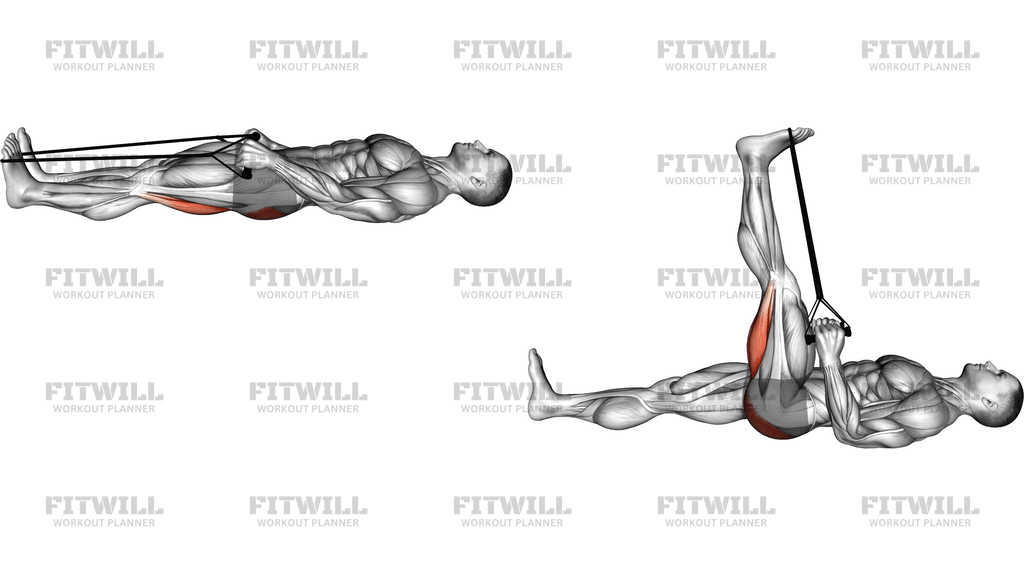
Reclining Big Toe Pose With Rope is a supine hamstring and hip mobility stretch done with the rope as a strap around one foot. Lying on your back takes the load out of the lower back and lets you focus on the back of the raised thigh, the calf, and the line of the hip without needing to fight balance. The rope gives you a cleaner way to control the leg angle than reaching for the shin or forcing the foot closer to your face.
The pose is most useful when the goal is to improve posterior-chain length, reduce stiffness after lower-body training, or open up the hamstrings before squatting, hinging, running, or kicking work. It also asks the pelvis and trunk to stay quiet while one leg moves, so the core and opposite hip contribute to the position even though this is primarily a mobility exercise. The better the setup, the easier it is to feel the stretch in the right place instead of pulling on the knee or rounding the low back.
Set the rope so it sits securely over the arch of the lifted foot, then keep both shoulders heavy on the floor and the opposite leg long and relaxed. As you raise the working leg, straighten it only as far as you can keep the pelvis level and the low back from arching. A small knee bend is fine if the hamstrings are tight; the goal is a smooth stretch line, not a locked-out competition position.
During the hold, breathe slowly and let each exhale soften the back of the thigh without jerking the leg higher. You can adjust the foot angle to change the emphasis, but the pelvis should stay square and the head, shoulders, and free leg should remain relaxed. If you feel sharp pain, tingling, or a strong pull behind the knee, back off the angle and shorten the stretch immediately.
This is a controlled flexibility drill, not a speed movement. Use it as a warm-up, cooldown, or recovery drill, and switch sides with the same level of tension and control. When done well, the stretch feels steady and repeatable, with the rope guiding the leg rather than your hands yanking it into position.
[ Workout Log & Planner ]
Put your next workout in Fitwill
Keep your plan and training log ready when you are.


Instructions
- Lie on your back and loop the rope over the arch of one foot.
- Keep the other leg long on the floor, or bend that knee slightly if your lower back needs help staying flat.
- Hold both ends of the rope with relaxed elbows and keep both shoulders pressed into the floor.
- Draw the working leg upward until it points toward the ceiling and the pelvis stays level.
- Flex the raised foot and use the rope to create a steady stretch behind the thigh and calf.
- Soften the knee a little if the hamstring tugs hard or the back starts to round.
- Breathe slowly and let each exhale ease the leg a little farther without yanking.
- Lower the leg under control, remove the rope, and repeat on the other side.
Tips & Tricks
- Keep the sacrum heavy on the floor; if your pelvis peels up, lower the leg a few degrees.
- Use the rope as a guide, not a lever. The stretch should build gradually, not snap into position.
- A slight bend in the raised knee is better than locking it hard and pulling from behind the knee.
- Flexing the foot usually increases the hamstring and calf stretch; pointing the toes reduces it.
- Keep the opposite leg quiet. If it floats or twists, the stretch is becoming a whole-body strain.
- Relax the jaw, neck, and hands so you do not accidentally add tension to the pose.
- If the line of pull moves into the knee joint or sciatic nerve area, shorten the range immediately.
- Match both sides carefully; one tighter side often needs more knee bend and less leg height.
Frequently Asked Questions
What does Reclining Big Toe Pose With Rope stretch most?
It mainly stretches the hamstrings, with the calf and the back of the hip also getting work.
Should my lifted knee stay perfectly straight?
No. A small bend is often better, especially if your hamstrings are tight or your pelvis wants to tilt.
Why use the rope instead of grabbing my foot or shin?
The rope lets you keep the shoulders down and control the leg angle without crunching the neck or tugging on the knee.
What should I feel during the stretch?
You should feel a steady pull behind the thigh or calf, not a sharp pain, tingling, or a hard pinch in the knee.
How long should I hold each side?
Most people do better with a controlled hold for several breaths or 20-60 seconds, depending on the goal.
Is this a good warm-up before lower-body training?
Yes, if you keep the range gentle. It can help loosen the hamstrings before hinging, squatting, or running.
What is the most common mistake with this pose?
Most people pull the leg too high and let the low back arch instead of keeping the pelvis heavy and square.
Can I use this if one hamstring feels tighter than the other?
Yes, but keep the tight side lower and bend the knee a bit more so you stretch it without forcing the position.