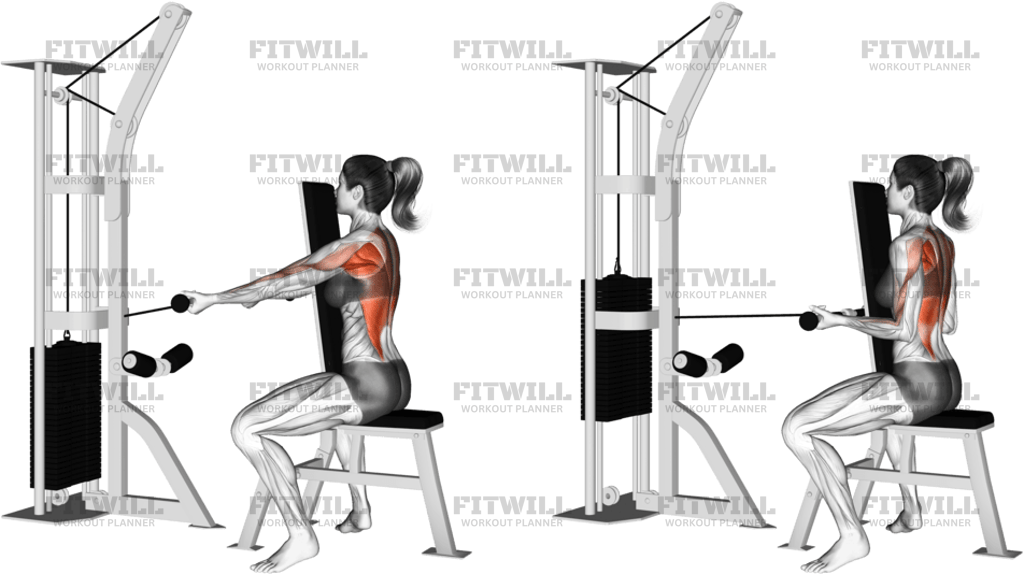
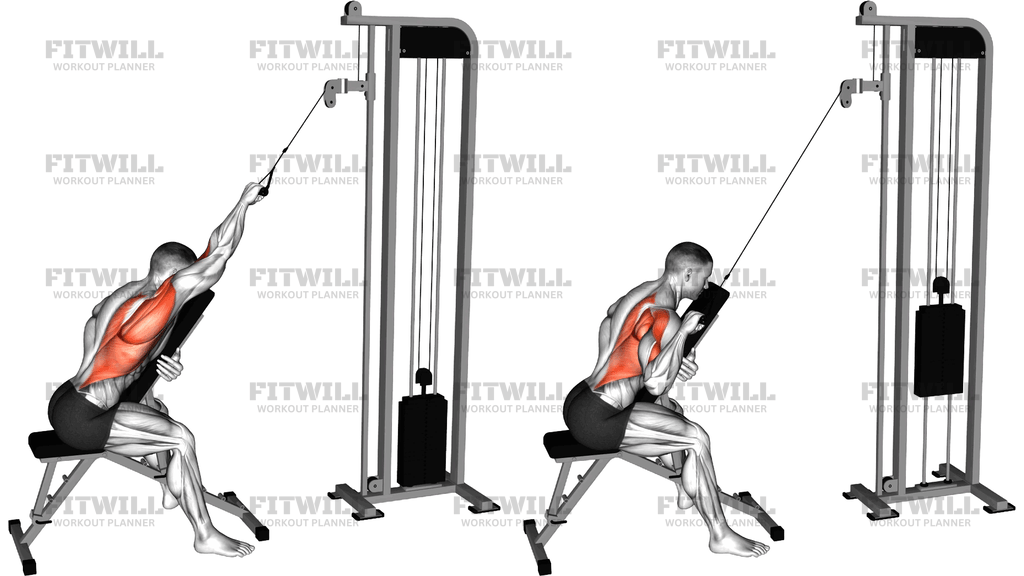
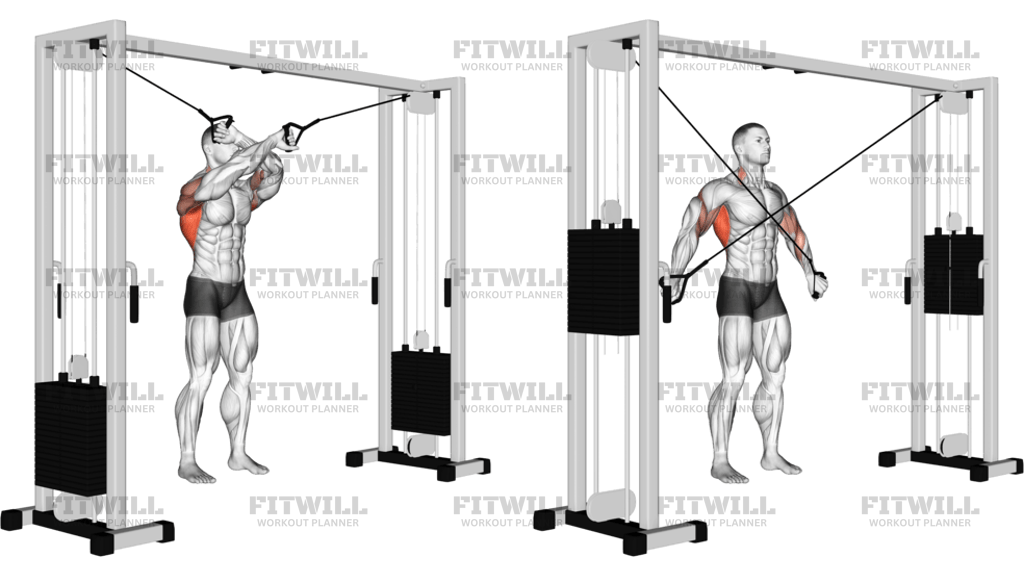
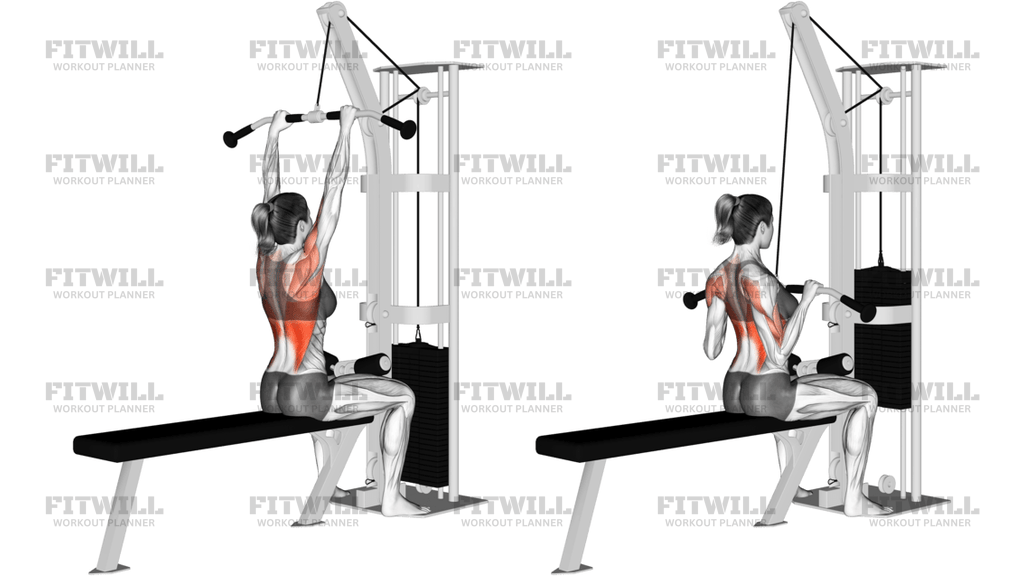
Cable Rope Standing Lat Pushdown
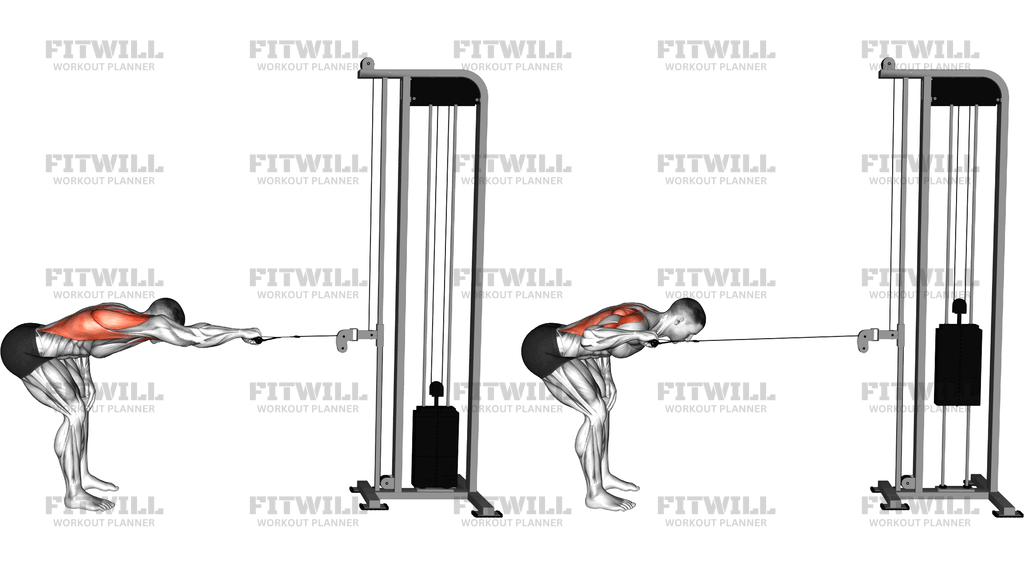
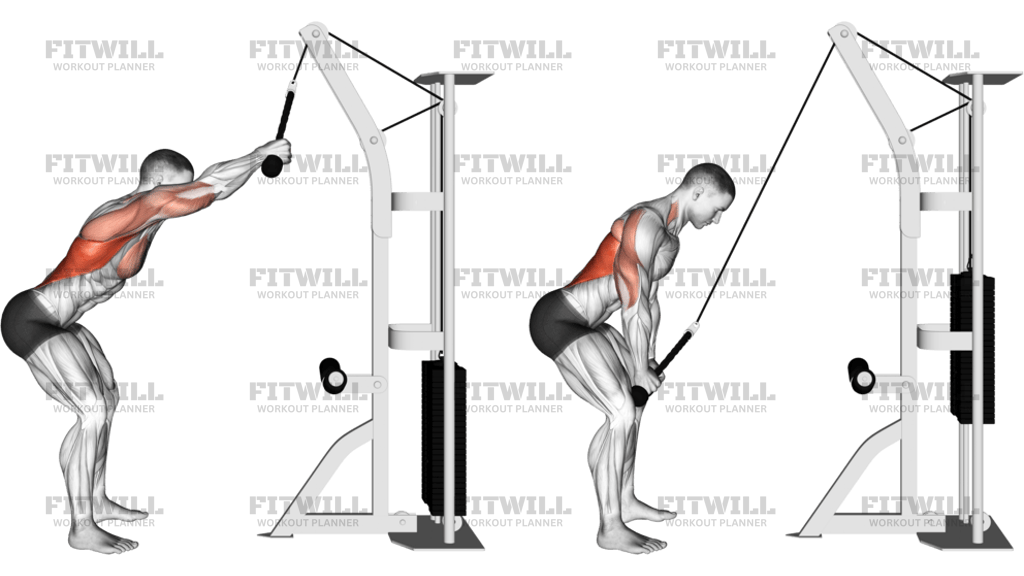
Cable Rope Standing Lat Pushdown is a standing cable exercise built around shoulder extension from a hip hinge. With the rope attached to a high pulley, you keep a slight bend in the knees, tip the torso forward, and drive the hands from an overhead reach down toward the thighs. That line of pull keeps the lats working through a long range while the upper back, rear shoulders, biceps, and forearms help stabilize the movement.
The exercise is useful when you want to train the lats without relying on a pull-up bar or a heavy rowing pattern. Because the cable keeps tension on the rope the whole time, the setup matters a lot: if you stand too upright, the load shifts toward the arms and triceps; if you round the lower back, the hinge gets sloppy and the lats lose a clean path. A controlled forward lean, stacked ribs, and quiet shoulders make the rep feel much more specific.
Think of the pull as bringing the upper arms down and back rather than just yanking with the hands. The elbows stay softly bent, but they do not turn the rep into a pressdown. As the rope travels toward the thighs, keep the chest from diving and let the shoulder blades move down naturally instead of shrugging up toward the ears.
Cable Rope Standing Lat Pushdown works well as accessory volume after heavier pulling or pressing, or as a lat-focused drill when you want less spine loading than a barbell row. It is also helpful for beginners learning how to feel the lats without using momentum. The best repetitions look smooth and deliberate, with the torso angle staying almost unchanged from the first inch of the pull to the last inch of the return.
Use a load that lets you hold the hinge, keep the rope path clean, and return the handles overhead without losing control. If the stack drags you upright, the weight is too heavy or you are standing too close to the pulley. Stop the set when the shoulders start to shrug, the low back starts to round, or the movement turns into an arm-dominant swing.
[ Workout Log & Planner ]
Put your next workout in Fitwill
Keep your plan and training log ready when you are.


Instructions
- Set the pulley high and clip on a rope attachment, then stand facing the machine with your feet about hip-width apart.
- Step back until the cable is taut, hinge forward from the hips, and keep a slight bend in your knees with your torso angled forward.
- Grip the rope ends with neutral palms, let your arms reach forward and overhead, and keep your elbows softly bent.
- Brace your ribs down, lengthen your neck, and set your shoulders away from your ears before the first rep.
- Pull the rope down in a wide arc toward your outer thighs, driving your upper arms down while keeping the elbow bend almost unchanged.
- Keep your chest and lower back steady so the movement comes from the shoulders rather than a big torso swing.
- Finish with the rope near your hip line and squeeze the lats without shrugging or leaning back.
- Let the rope travel back overhead under control until you feel the lats lengthen again, then repeat for the planned reps.
Tips & Tricks
- If the stack pulls you upright, step farther back so the cable stays loaded while you keep the hinge.
- Keep the elbows softly bent, but do not turn the rep into a triceps pressdown with a hard lockout.
- Think about sending the upper arms toward your back pockets; that cue keeps the lats doing the work.
- Let the rope separate slightly at the bottom so the hands finish beside the hips instead of in front of the thighs.
- If your shoulders creep up, reduce the load and reset with the shoulder blades down before each rep.
- A moderate tempo works best here: smooth pull, brief squeeze, and a slower return to the overhead stretch.
- Do not chase extra range by rounding the upper or lower back when the rope reaches overhead.
- Stop the set when the movement starts to become a hinge-and-swing instead of a shoulder-driven pull.
Frequently Asked Questions
What muscles does Cable Rope Standing Lat Pushdown target most?
The lats do most of the work, with the upper back, biceps, and forearms helping to stabilize the rope and control the path.
Can beginners perform this exercise?
Yes. It is beginner-friendly if you keep the hinge small, use a light rope load, and focus on moving the upper arms instead of swinging the torso.
How far should I hinge over on Cable Rope Standing Lat Pushdown?
A moderate hip hinge is enough. You want room for the arms to travel overhead without rounding your lower back or turning the rep into a row.
Should my elbows stay straight during the pull?
Keep a soft bend in the elbows, but do not change that bend much. The goal is to drive the upper arms down, not to press the rope with a triceps lockout.
Where should the rope finish at the bottom of Cable Rope Standing Lat Pushdown?
The rope should travel to your hip line or upper thighs. If it ends much lower, you are probably leaning back or using too much arm extension.
Why do I feel this more in my arms than my lats?
That usually means the elbows are doing too much of the work or the shoulders are shrugging. Use less load and think about pulling the upper arms down while keeping the shoulders depressed.
Can I use a straight bar instead of a rope attachment?
You can, but the rope usually gives a cleaner line to the hips and makes it easier to keep the lats loaded without forcing the wrists or shoulders.
Is Cable Rope Standing Lat Pushdown the same as a triceps pushdown?
No. A triceps pushdown stays more upright and is elbow-dominant, while this version uses a hip hinge and a long shoulder-driven arc to bias the lats.