Barbell Standing Wide-Grip Biceps Curl
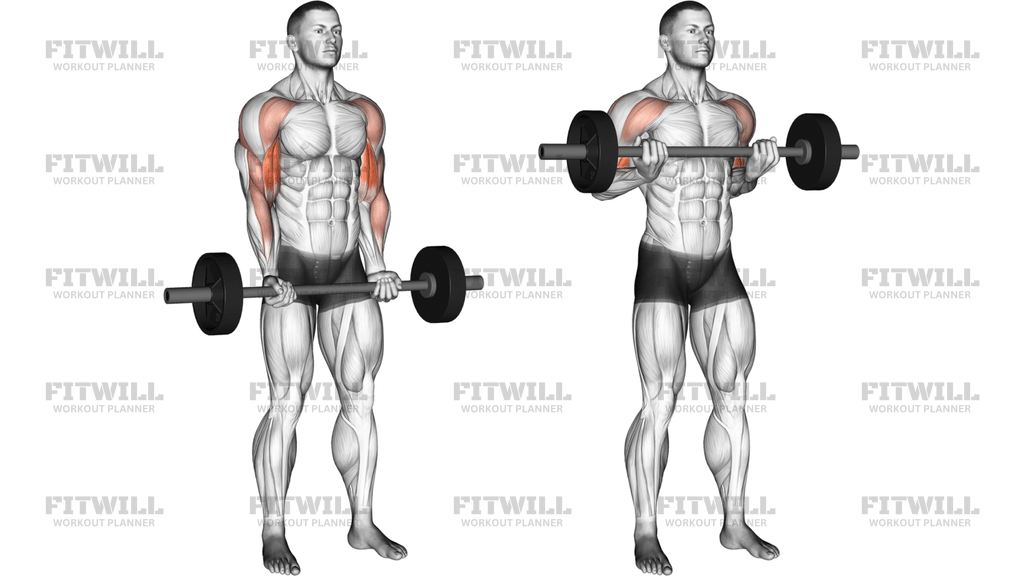
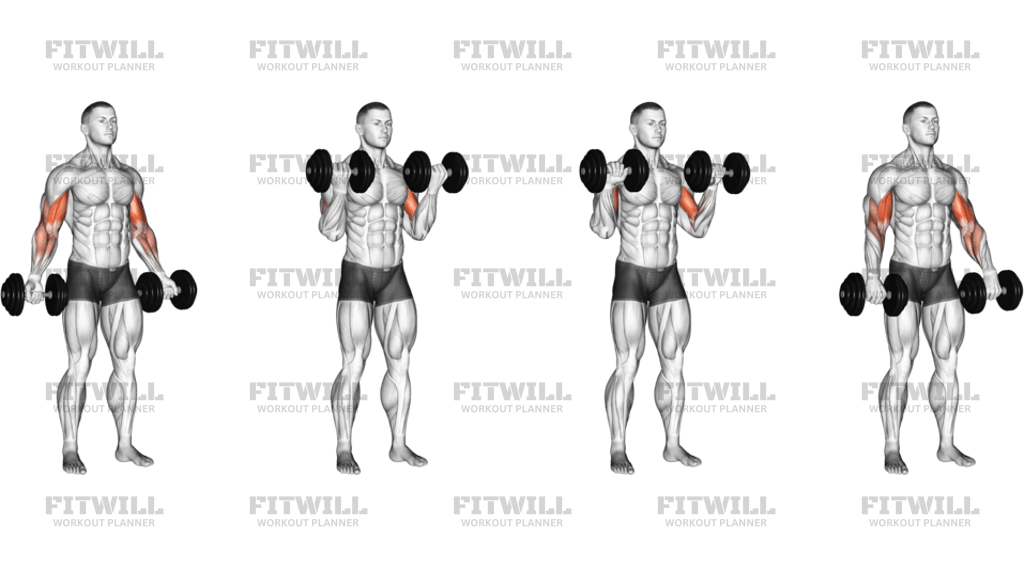
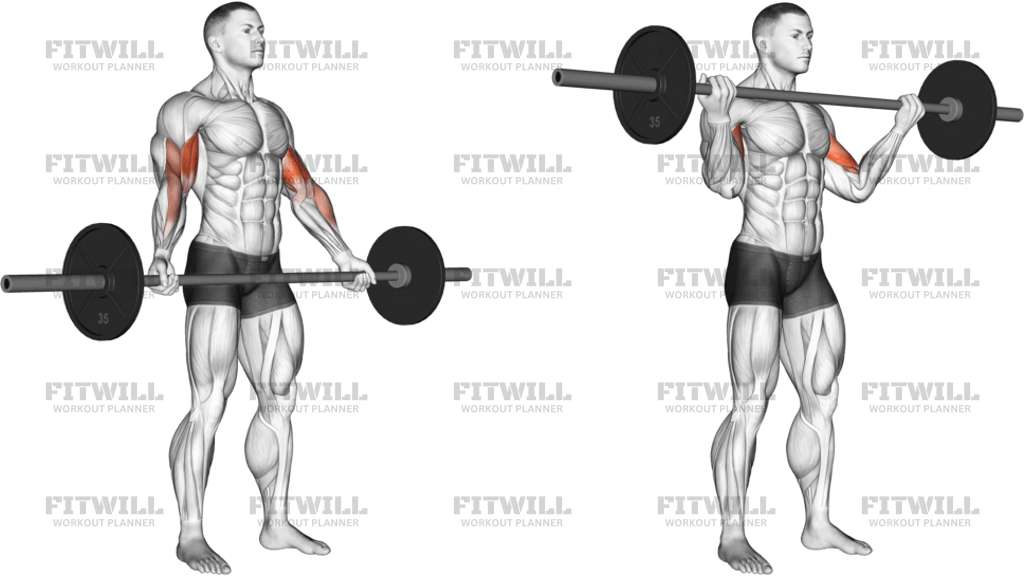
Barbell Standing Wide-Grip Biceps Curl is a standing elbow-flexion exercise that loads the biceps with a fixed barbell and a noticeably wider-than-shoulder-width hand position. The wider grip changes the feel of the curl compared with a standard-width barbell curl: the upper arms still do the work, but the setup can make it easier to keep the chest tall and the elbows slightly in front of the ribs without turning the rep into a shrug or swing.
The main target is the biceps brachii, with the brachialis, brachioradialis, and forearm flexors helping to control the bar and stabilize the wrists. Because the movement is simple but easy to cheat, the setup matters. A clean wide-grip curl starts with the feet planted, knees soft, ribs stacked over the pelvis, and the bar held with a supinated grip so the wrists stay straight instead of bent back.
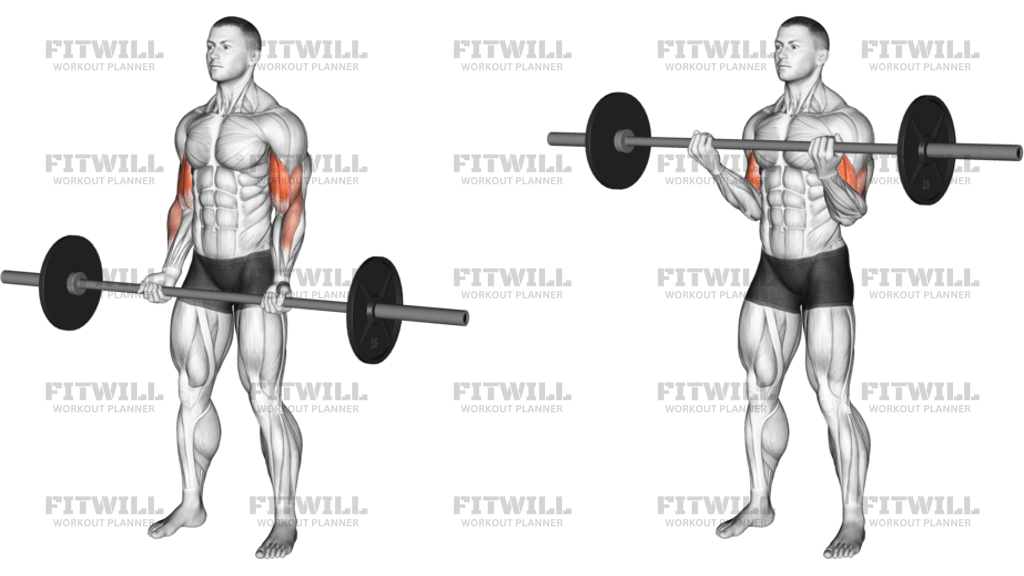
From the bottom position, the bar should travel in a smooth arc from the thighs toward the upper chest or front of the shoulders while the upper arms stay mostly quiet. The elbows should not drift behind the body, and the torso should not lean back to force the bar up. The best reps look deliberate: curl up under control, squeeze briefly near the top, then lower the bar slowly until the elbows are almost straight again.
This variation is useful for direct arm work when the goal is biceps size, elbow-flexion strength, or clean accessory volume without needing a bench or machine. It works well in upper-body sessions, arm-focused finishers, or as a lighter hypertrophy movement after heavier pulling work. The wide grip is only useful if it remains comfortable for the wrists and shoulders, so keep the hands as wide as you can while still maintaining a stacked wrist and a natural bar path.
The main risks are using too much load, swinging the torso, or letting the wrists collapse backward as fatigue builds. Those faults move tension away from the biceps and into the lower back, front delts, and forearms. Use a load that lets every rep start from the same dead-stop position and finish with the same elbow and torso position. If the bar starts drifting forward, the shoulders roll, or the body has to rock to complete the rep, the set is too heavy or the range is too aggressive.
[ Workout Log & Planner ]
Put your next workout in Fitwill
Keep your plan and training log ready when you are.


Instructions
- Stand tall with your feet about hip-width apart and hold the barbell in front of your thighs with a wide underhand grip.
- Set your hands wider than shoulder width, keep your wrists stacked over the bar, and let your arms hang fully extended without locking the elbows hard.
- Pin your upper arms close to your sides, lift your chest slightly, and keep your ribs down so your lower back does not arch.
- Curl the bar upward in a smooth arc toward your upper chest or the front of your shoulders.
- Keep your elbows mostly still and do not let them drift behind your torso as the bar rises.
- Squeeze the biceps briefly at the top without shrugging your shoulders or bending your wrists back.
- Lower the bar slowly until your arms are nearly straight again and the bar returns to the start position in front of your thighs.
- Breathe out as you curl up, breathe in as you lower, and repeat for the planned number of reps with the same body position each rep.
Tips & Tricks
- Choose a hand width that feels natural on your wrists; wider is not better if your wrists twist outward or your shoulders lift.
- Keep the bar close to your body on the way up so the set stays on the biceps instead of turning into a front-delt swing.
- If your torso rocks backward, the bar is too heavy for strict wide-grip curls.
- Stop the ascent before your shoulders roll forward or your elbows travel far in front of your ribs.
- Use a deliberate lowering phase; the eccentric is where this variation often loses tension first.
- A slight pause near the top helps prevent momentum from carrying the bar through the next rep.
- Do not hard-lock the elbows at the bottom if that pulls tension into the joints instead of the biceps.
- If your forearms fail before your biceps, lighten the load and keep your wrists neutral instead of curling them back.
Frequently Asked Questions
What does the wide grip change on this curl?
A wider hand position changes the feel of the lift and can make the curl easier to keep strict, as long as the wrists stay stacked and the shoulders stay relaxed.
Which muscles work hardest in Barbell Standing Wide-Grip Biceps Curl?
The biceps do most of the work, while the brachialis, brachioradialis, and forearms help control the bar.
Should my elbows stay tucked at my sides?
Yes, keep them close to your torso and only allow a small natural drift forward as the bar approaches the top.
How wide should my grip be?
Wide enough to feel stable and comfortable, but not so wide that your wrists flare outward or your shoulders tense up.
What is the most common mistake with this exercise?
Using hip drive or leaning back to finish the curl is the biggest error because it shifts tension away from the biceps.
Can beginners use this barbell curl variation?
Yes, but start light and focus on a still torso, straight wrists, and a controlled lowering phase.
Where should I feel the rep at the top?
You should feel the biceps shorten strongly near the front of the upper arm, not the lower back or shoulders.
Can I swap this for an EZ-bar curl?
Yes, an EZ-bar is a good option if the straight bar and wide grip bother your wrists or elbows.
How should I load it for hypertrophy?
Use a weight that lets you keep the same elbow position and tempo for every rep instead of chasing momentum.