Cable Concentration Curl
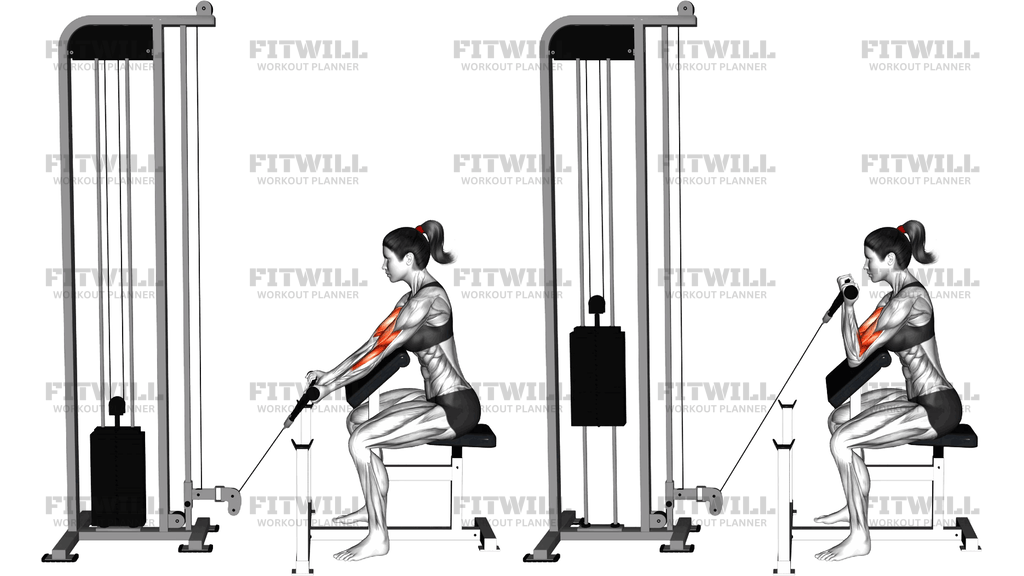
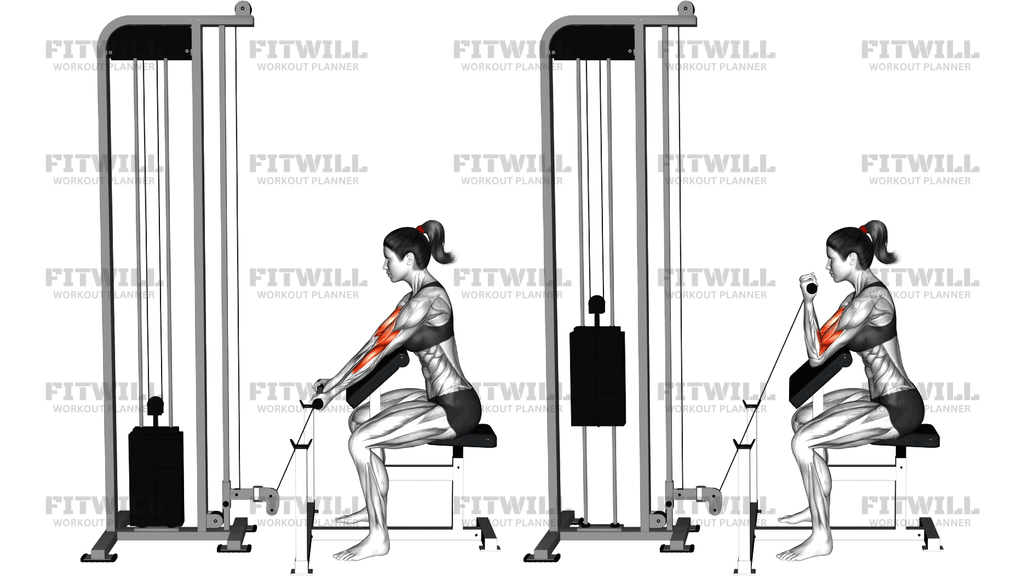
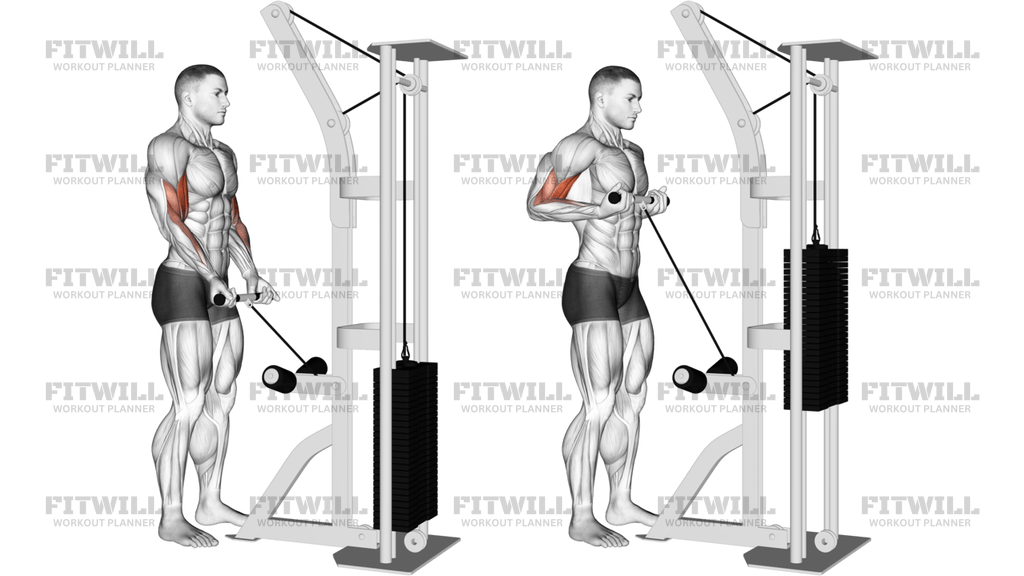
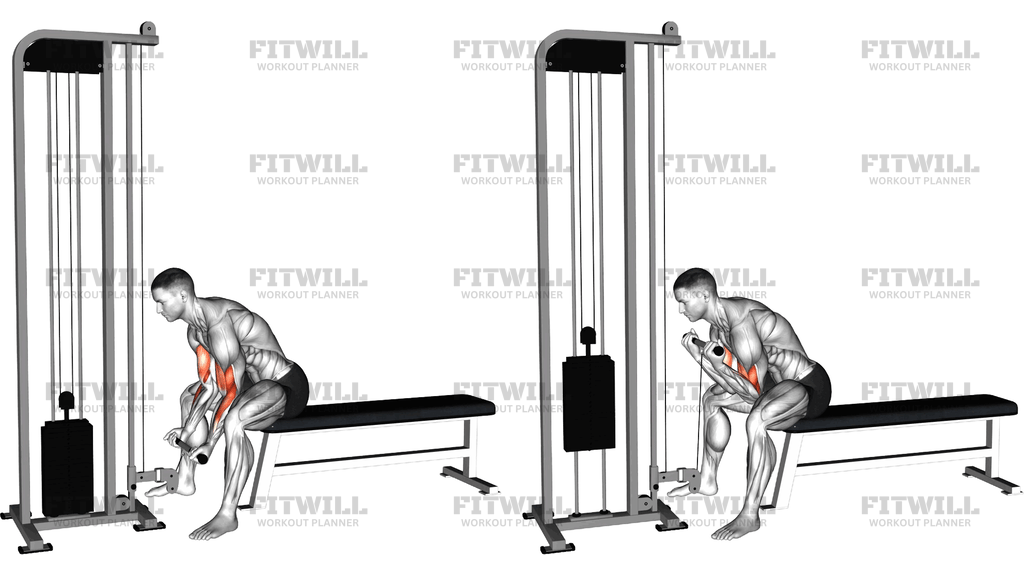
Cable Concentration Curl is a seated single-arm biceps exercise that uses a low cable and a handle attachment to keep tension on the arm from the start of the rep to the finish. The bench support and thigh brace make it easier to isolate the elbow flexion pattern, so the movement stays focused instead of turning into a swing or a shoulder-dominant curl.
The main work comes from the biceps, with the brachialis, brachioradialis, and forearm flexors helping you keep the handle stable and the wrist lined up. Because the cable pulls continuously, the bottom of the rep is not a dead stop the way a dumbbell curl can be. That makes the setup important: if the bench is too far away or your torso is too upright, the cable angle gets awkward and the curl loses its concentration feel.
Set the bench beside the low pulley so the cable reaches your working hand without dragging you forward. Sit near the front edge, plant your feet firmly, and brace the upper arm of the working side against the inside of the same-side thigh just above the knee. From there, start with the elbow nearly straight, the shoulder relaxed, and the wrist stacked so the handle sits cleanly in the hand.
Each repetition should bend at the elbow first, not by rolling the shoulder forward or leaning back to cheat the handle upward. Curl the handle toward the front of the shoulder, squeeze hard for a moment at the top, and lower it under control until the arm is almost straight again. Keep the thigh contact throughout the rep so the upper arm has a fixed anchor and the biceps do the lifting.
Cable Concentration Curl is useful when you want a strict arm-builder that rewards patience, good positioning, and clean reps over heavy loading. It works well as an accessory after compound pulling, or as a focused biceps slot when you want to minimize body momentum and keep constant tension on the arm. Beginners can use it early in training because the bench support makes the pattern easier to learn, but the load still needs to stay light enough that the elbow stays pinned and the wrist stays quiet.
The most common mistakes are letting the elbow drift off the thigh, shrugging the shoulder at the top, and yanking the handle with the torso instead of the arm. If the cable pulls your body forward, step closer to the stack and lighten the load. If the wrist bends back or the forearm takes over, shorten the range slightly and keep the knuckles and forearm lined up so the biceps stay in charge.
[ Workout Log & Planner ]
Put your next workout in Fitwill
Keep your plan and training log ready when you are.


Instructions
- Place a flat bench beside the low cable stack and sit near the front edge facing slightly toward the machine.
- Plant both feet flat and move the working-side foot a little back so the cable can pull from the floor without dragging you off balance.
- Grab a single handle from the low pulley and brace the upper arm of the working side against the inside of the same-side thigh just above the knee.
- Start with the elbow almost straight, the shoulder relaxed, and the wrist stacked so the handle sits in a firm, neutral grip.
- Exhale and curl the handle up toward the front of your shoulder by bending only at the elbow.
- Keep the upper arm pinned to the thigh and avoid rocking your torso or letting the shoulder drift forward.
- Squeeze the biceps briefly at the top when the forearm is close to the upper arm.
- Lower the handle slowly until the arm is almost straight again, then reset your breath before the next rep.
- Finish the set by guiding the handle back to the start under control and letting the cable come to rest before you stand up.
Tips & Tricks
- If the cable pulls your torso forward at the bottom, move the bench a little closer to the stack and cut the load.
- Keep the inside of the upper arm glued to the thigh; if that contact breaks, the set turns into a loose standing curl.
- Do not chase a higher top position by rolling the shoulder forward, because that shifts tension away from the biceps.
- Use a slow lowering phase so the cable stays under tension instead of snapping the handle back down.
- Keep the wrist straight and the knuckles stacked over the forearm; a bent wrist usually means the load is too heavy.
- Set the bench height and distance so your forearm can travel without scraping the thigh or the weight stack.
- Stop the rep when the elbow is nearly straight if the shoulder starts to protract or the torso starts to unwind.
- A lighter load with a hard squeeze at the top usually works better here than forcing heavy, sloppy reps.
Frequently Asked Questions
What does Cable Concentration Curl work most?
It primarily targets the biceps, with help from the brachialis, brachioradialis, and forearm flexors for control.
Why is my upper arm pressed against my inner thigh in Cable Concentration Curl?
That thigh contact locks the upper arm in place so the elbow flexes cleanly instead of the shoulder swinging the weight up.
Should I face the cable machine straight on or slightly angled?
A slight angle usually works best so the low cable can run cleanly to your hand while your torso stays braced over the bench.
Is Cable Concentration Curl better with a handle or a rope?
A single handle is the closest match to this exercise because it lets you keep one arm anchored and focus on the curl path.
What is the most common mistake on this movement?
Letting the elbow leave the thigh or leaning back to finish the rep are the two biggest form breaks.
Can beginners use Cable Concentration Curl?
Yes. The bench support makes it beginner-friendly, as long as the load is light enough to keep the shoulder quiet and the wrist straight.
How high should I curl the handle?
Curl until the forearm is close to the upper arm and the biceps are fully shortened, but stop before the shoulder rolls forward.
Why does the bottom half feel hard on this curl?
The low cable keeps tension on the arm right away, so the beginning of the rep can feel harder than a dumbbell version.