Cable Lying Bicep Curl
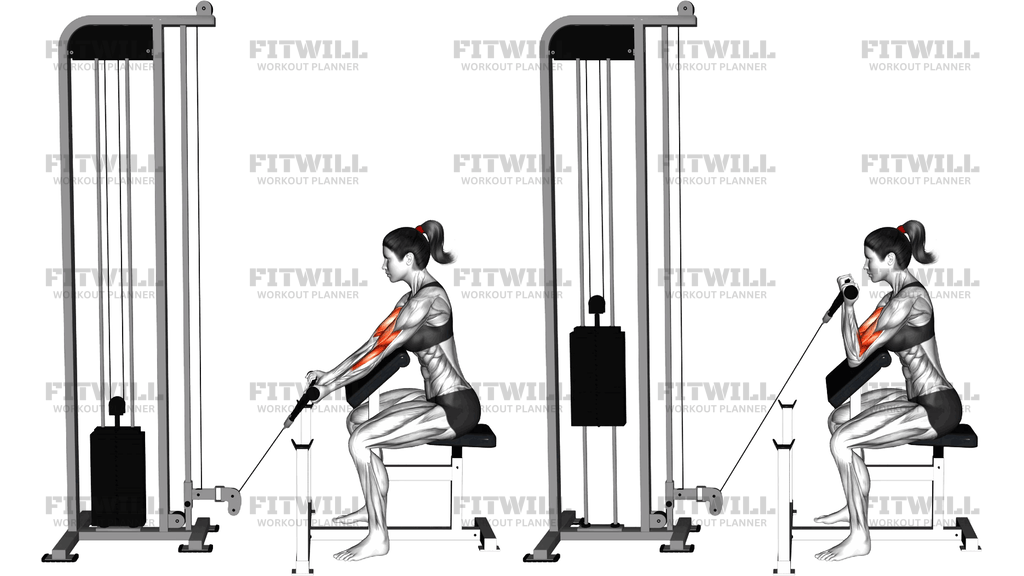
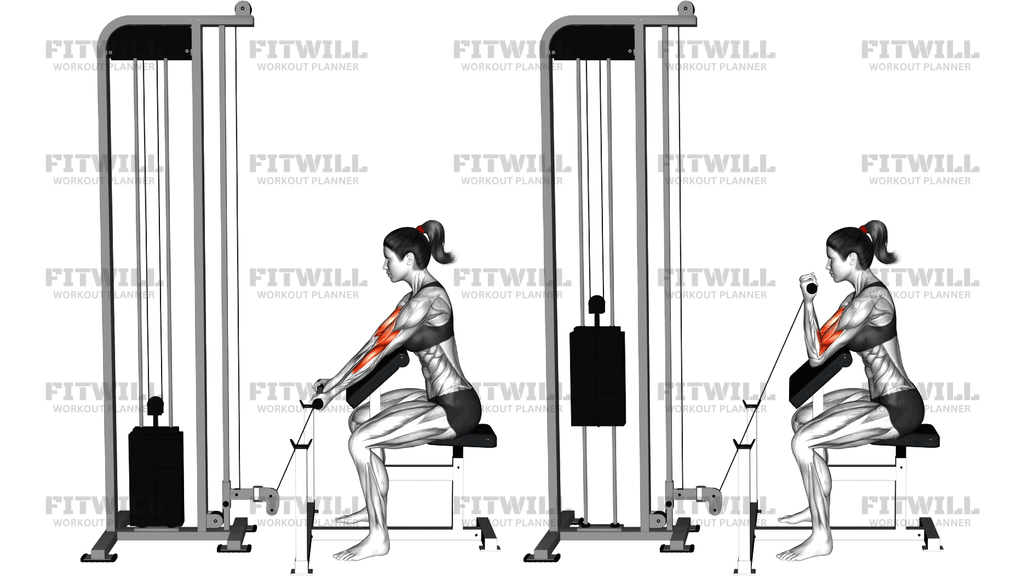
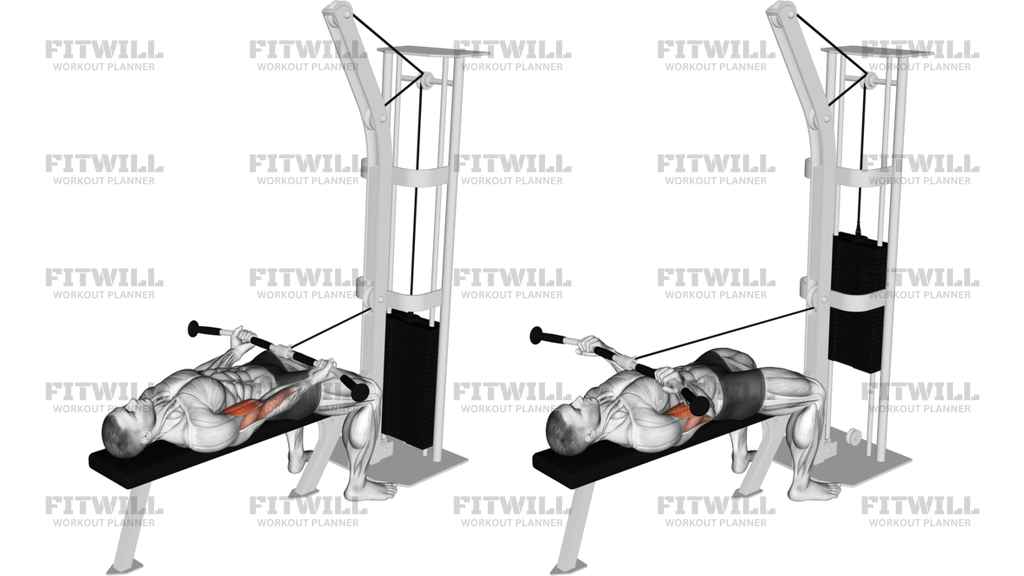
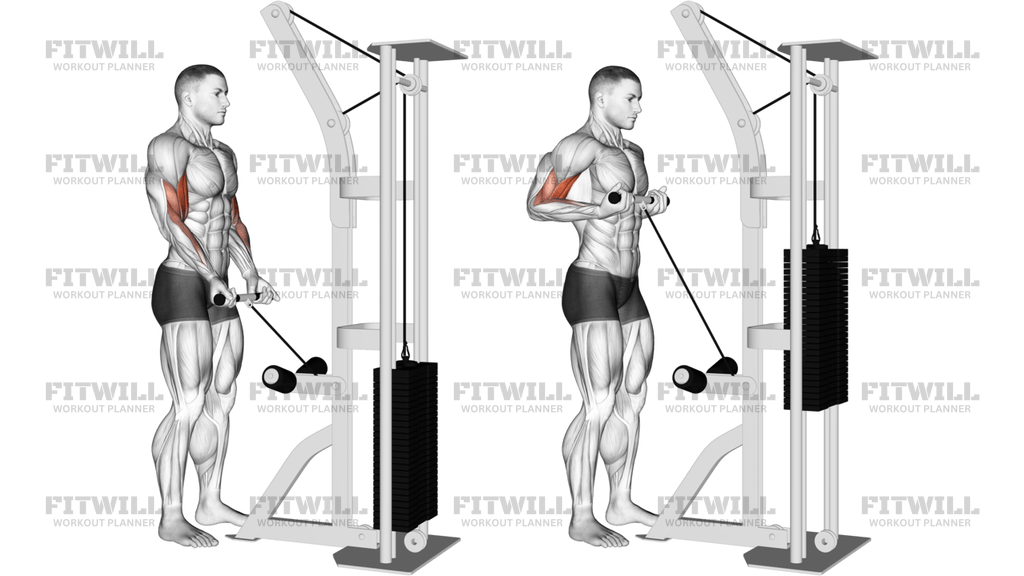
Cable Lying Bicep Curl is a cable-based isolation exercise for the upper arms. It is usually performed lying face up on a flat bench with a single handle attached to a low pulley, so the cable keeps tension on the arms through both the curling and lowering phases. That setup makes the movement feel very different from a dumbbell curl: the line of pull stays constant, the torso is pinned down, and the biceps have to do the work without help from leg drive or body swing.
The exercise primarily targets the biceps brachii and also asks the brachialis, brachioradialis, and forearm flexors to help control the handle. Because you are lying down, it is easier to notice when the elbows drift, the wrists bend back, or the shoulders take over. A good rep should feel like the upper arm stays quiet while the forearm moves smoothly through the curl path.
The bench position matters because it fixes your body and removes most momentum. Lie with your head near the pulley side, plant your feet, and keep your ribs from flaring as you curl. If the bench is too close or too far from the stack, the cable angle will feel awkward and the exercise will lose its clean loading pattern. Adjust the bench so the handle begins with enough tension to challenge the biceps without yanking the shoulder forward.
At the top of the curl, squeeze the biceps without letting the elbows drift forward. On the way down, lower the handle slowly until the arms are nearly straight and the cable still has tension. The return phase matters here because it is where many people let the weight drop or lose arm position. Controlled eccentrics build the most useful tension for this variation and keep the shoulders and elbows happier.
Use Cable Lying Bicep Curl when you want strict arm work with less cheating than a standing curl. It fits well as accessory work after compound pulling, during an arm-focused session, or whenever you want a stable curl pattern that keeps constant resistance on the biceps. Keep the reps smooth, the wrists stacked, and the shoulder blades quiet so the exercise stays focused on elbow flexion instead of turning into a whole-body lift.
[ Workout Log & Planner ]
Put your next workout in Fitwill
Keep your plan and training log ready when you are.


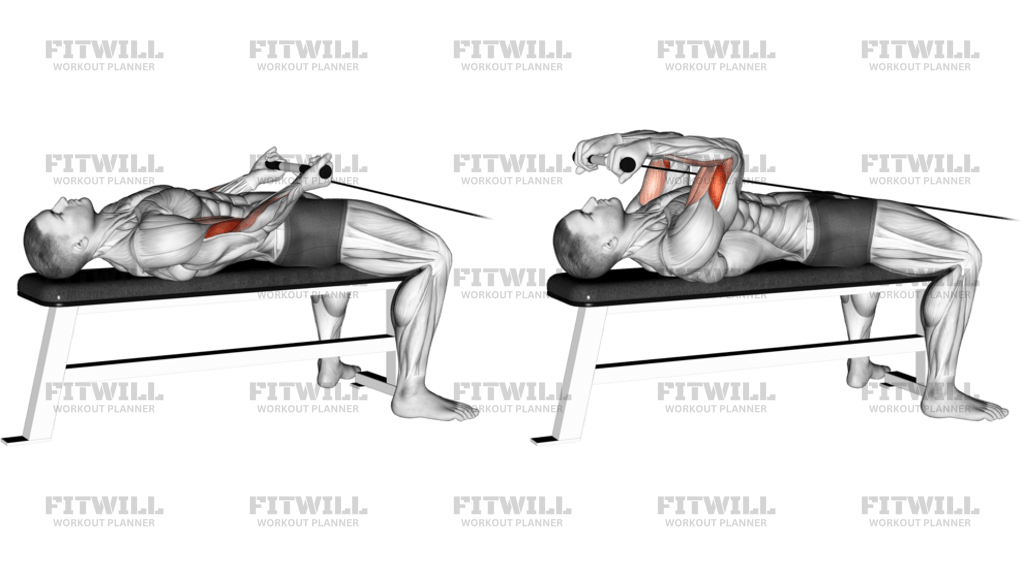
Instructions
- Place a flat bench beside the low pulley and attach a single handle to the cable.
- Lie face up on the bench with your head near the pulley, feet planted, and the working arm hanging so the cable stays taut.
- Set your shoulder down, keep your ribs stacked, and hold the handle with a neutral wrist.
- Start with the elbow pointed mostly toward the floor and the upper arm still.
- Exhale and curl the handle toward your shoulder by bending only at the elbow.
- Squeeze the biceps at the top without letting the elbow drift forward or the shoulder roll up.
- Inhale and lower the handle slowly until the arm is nearly straight and tension remains on the cable.
- Reset the shoulder and repeat for the planned reps, then set the handle down under control.
Tips & Tricks
- Set the bench far enough from the stack that the cable is already pulling on the arm before the first rep starts.
- Keep the upper arm quiet; if the elbow slides forward, the front shoulder starts helping too much.
- Use a handle that sits comfortably in the hand so the wrist can stay stacked instead of bending back.
- Treat the lowering phase as the main challenge and resist the temptation to let the stack pull you down.
- If the stack clangs or the cable goes slack at the bottom, move the bench or shorten the range slightly.
- Keep the chin relaxed and the ribs down so the torso does not arch to fake a heavier curl.
- A slightly lighter load usually works better here because the supine setup removes a lot of cheating already.
- Stop a rep short of any shoulder pinch or elbow pain; the movement should feel local to the arm.
Frequently Asked Questions
What does Cable Lying Bicep Curl work most?
It primarily trains the biceps brachii, with the brachialis and brachioradialis helping to flex the elbow.
Why lie down for a cable curl instead of standing?
The bench removes body swing and keeps the cable tension more constant, so the biceps have to do more of the work.
How should my elbows move on the bench?
They should stay mostly fixed with only small natural motion. If they keep drifting toward your ribs or shoulders, the load is too heavy.
Where should the cable start in the setup?
The cable should already have tension when your arm is hanging down, not go slack at the bottom of the curl.
Can I use both hands on the handle?
This variation is usually cleaner as a single-arm curl, because one arm at a time makes it easier to keep the shoulder and elbow position strict.
What is the most common mistake on this exercise?
People usually let the torso arch or the shoulder roll forward to cheat the handle up instead of curling strictly at the elbow.
Is this exercise good for beginners?
Yes, if the load is light and the bench setup is stable. It is easier to learn with a slow tempo and a controlled range of motion.
Should I lock out my elbows at the bottom?
No. Lower until the arm is nearly straight and tension stays on the cable, but do not slam into a hard lockout if that bothers your elbows.