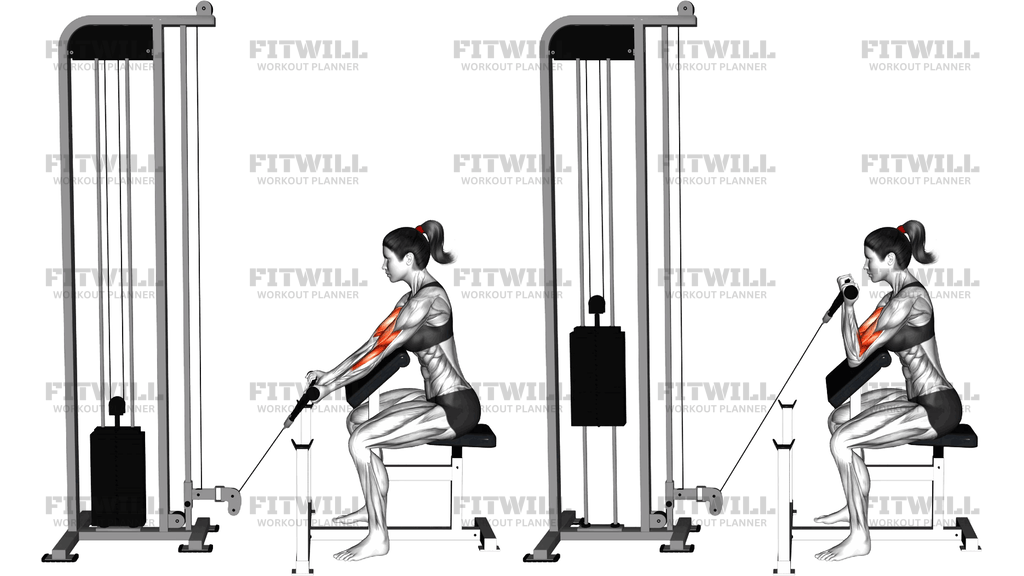
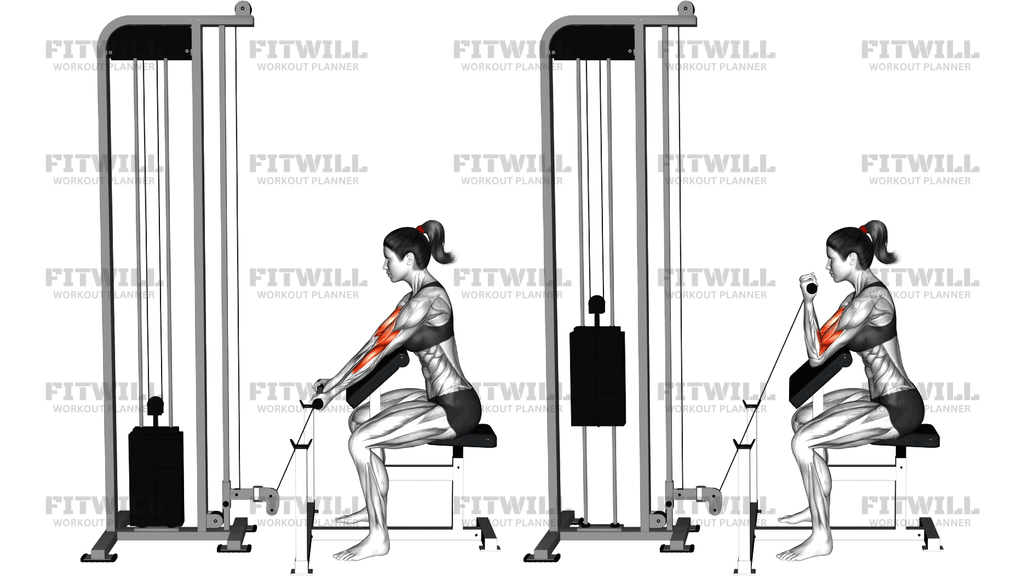
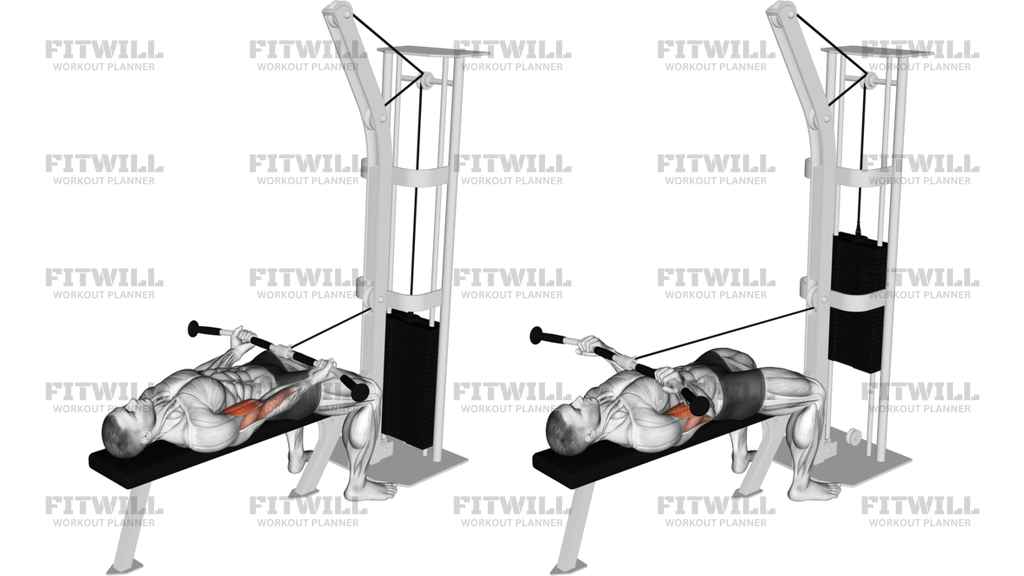
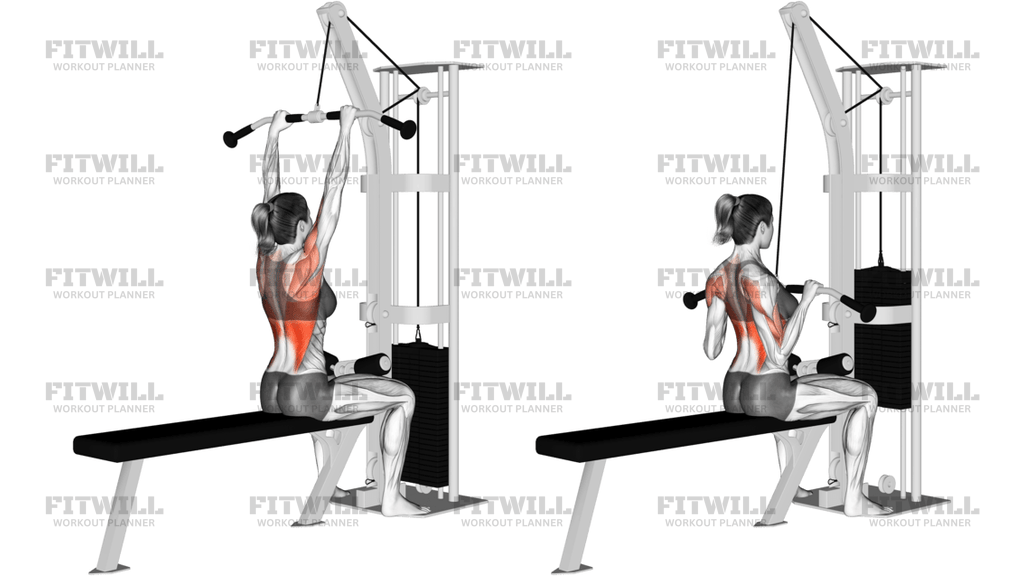
Cable Overhead Curl
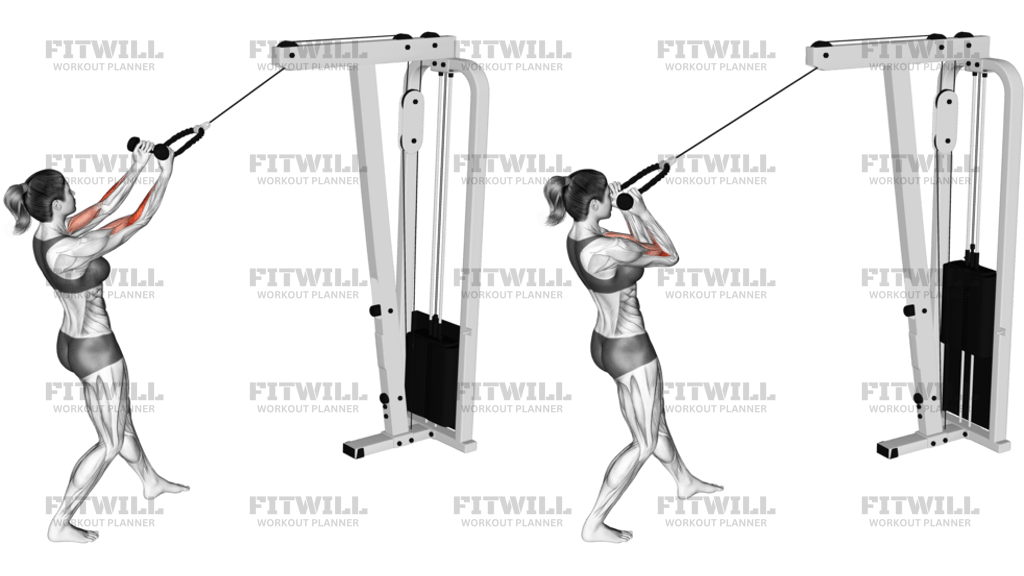
Cable Overhead Curl is a standing cable curl variation performed from high pulleys with the arms held up near shoulder height. The setup shown here keeps the biceps working through a long, constant line of tension, while the shoulders, forearms, and upper back help stabilize the body so the handles can move cleanly.
Because the cables pull from above and slightly out to the sides, the start position matters more than it does on a standard low cable curl. Stand centered between the stacks, take a balanced stance, and raise the elbows so the upper arms stay roughly level with the shoulders. That position keeps the load on the biceps and helps prevent the torso from taking over with sway or a hard lean.
The rep should look like a controlled curl toward the temples or the sides of the head, not a loose swing of the hands. Keep the elbows mostly fixed, flex the elbows to bring the handles inward, and squeeze the biceps without shrugging the shoulders. Lower the handles slowly until the arms are nearly straight and the cables are still under tension, then start the next rep from the same braced position.
This variation is useful when you want focused arm work with a strong peak contraction and a different resistance curve than a preacher curl or standing low cable curl. It is also a good choice for lighter accessory volume, because the overhead angle and high starting position make cheating easy if the load is too heavy. If the shoulders feel pinched, shorten the range, step slightly forward, or reduce the load so the motion stays smooth and pain-free.
[ Workout Log & Planner ]
Put your next workout in Fitwill
Keep your plan and training log ready when you are.


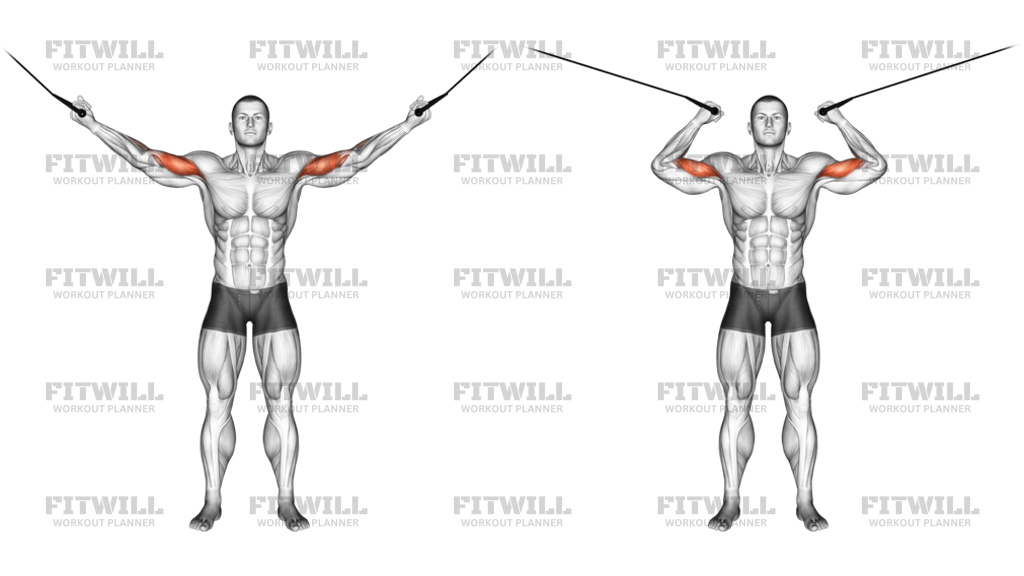
Instructions
- Set the cable pulleys high and attach a handle to each side.
- Stand centered between the stacks and grip the handles with your arms out and elbows raised near shoulder height.
- Take a balanced stance, step slightly forward if needed, and keep the cables under tension before you start.
- Lift your chest, brace your midsection, and keep your ribs from flaring as you begin the curl.
- Curl the handles inward toward your temples or the sides of your head by bending only at the elbows.
- Keep your upper arms mostly still, with the elbows held high instead of dropping forward or down.
- Squeeze the biceps briefly at the top without shrugging the shoulders or forcing the wrists back.
- Lower the handles slowly until the arms are almost straight, then repeat for the planned reps.
Tips & Tricks
- Use a lighter load than you would on a standing low cable curl, because the high arm position makes cheating easier.
- Keep the elbows level with or slightly in front of the shoulders; letting them drift down turns the movement into a different curl.
- Finish the rep by bringing the handles toward the temples or ears, not by swinging the hands over your head.
- Keep the wrists stacked so the handle sits in line with the forearm instead of bending the wrist back.
- A small staggered stance often feels steadier than standing perfectly square between the pulleys.
- Step far enough forward that the cables stay tight at the bottom, but not so far that the shoulders are yanked forward.
- Control the lowering phase for about two to three seconds so the biceps stay loaded through the return.
- If the front of the shoulder feels crowded, shorten the range slightly and lower the resistance.
Frequently Asked Questions
What muscle does Cable Overhead Curl target most?
The biceps are the main target, with the brachialis and forearms helping stabilize the curl.
Why are the handles started so high on this curl?
The high pulley position keeps tension on the biceps while the elbows stay lifted, which changes the resistance curve compared with a standard cable curl.
Should my elbows move during the rep?
They should stay mostly fixed at shoulder height. A little natural movement is fine, but dropping the elbows turns it into a different exercise.
Where should the handles travel?
Bring them toward the temples or the sides of the head, then lower them back under control without letting the shoulders take over.
Can I do this one arm at a time?
Yes. A single-arm version is useful if one side is weaker or if you want a more focused contraction.
What if I feel this more in my shoulders than my arms?
Reduce the load, step slightly forward, and keep the ribs down. If the front of the shoulder still feels pinched, use a lower cable curl instead.
Is this harder than a regular cable curl?
Usually yes. The elevated arm position and long lever make the movement more demanding even with a lighter load.
Is Cable Overhead Curl beginner-friendly?
Yes, as long as the weight is light and the elbows stay high. Beginners usually need to learn the setup before adding load.