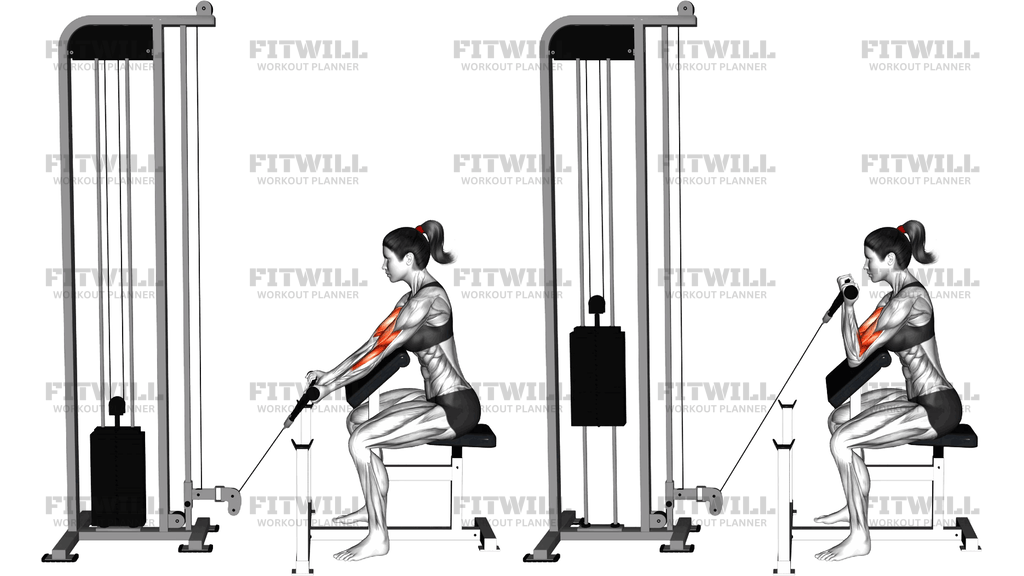
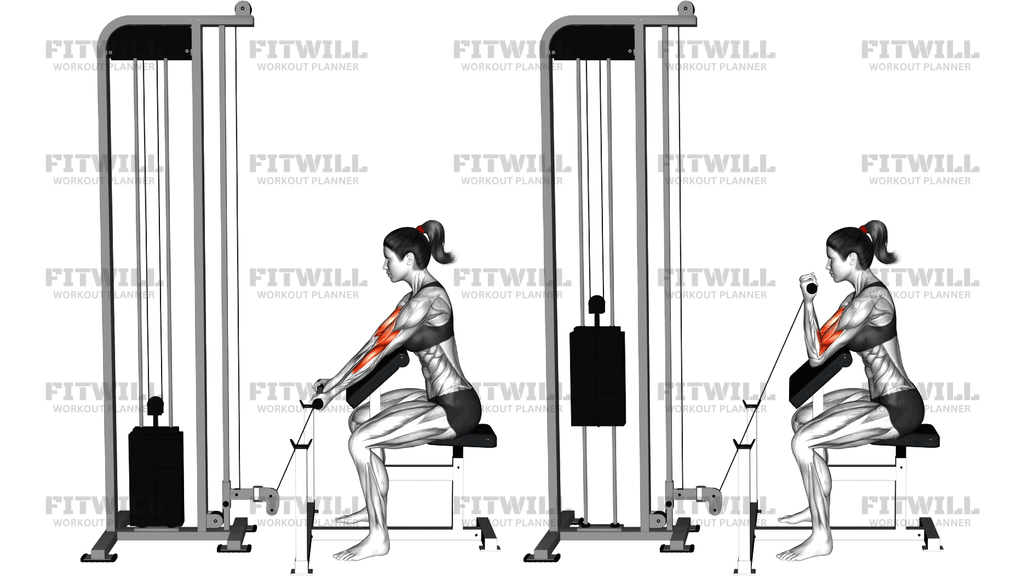
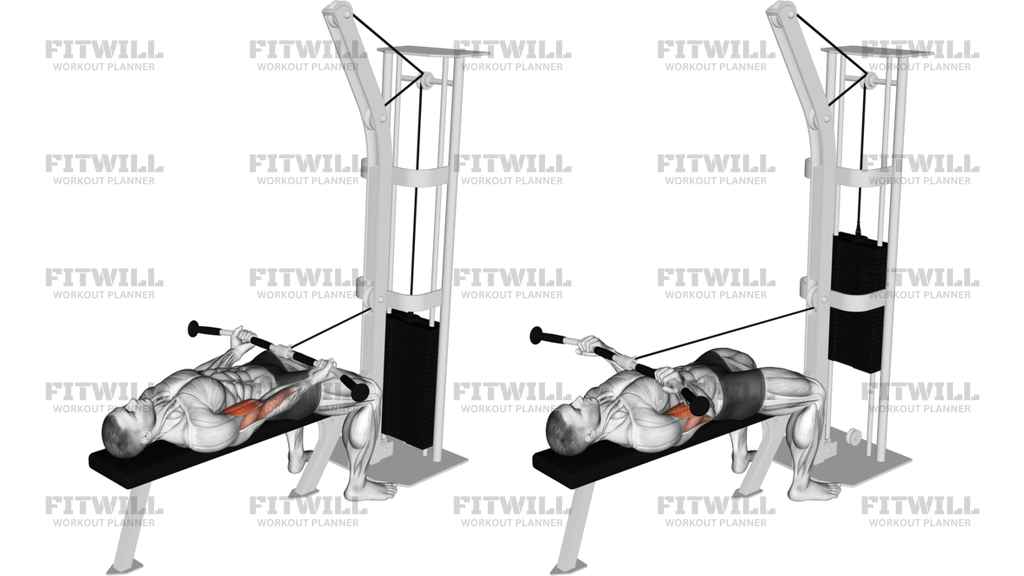
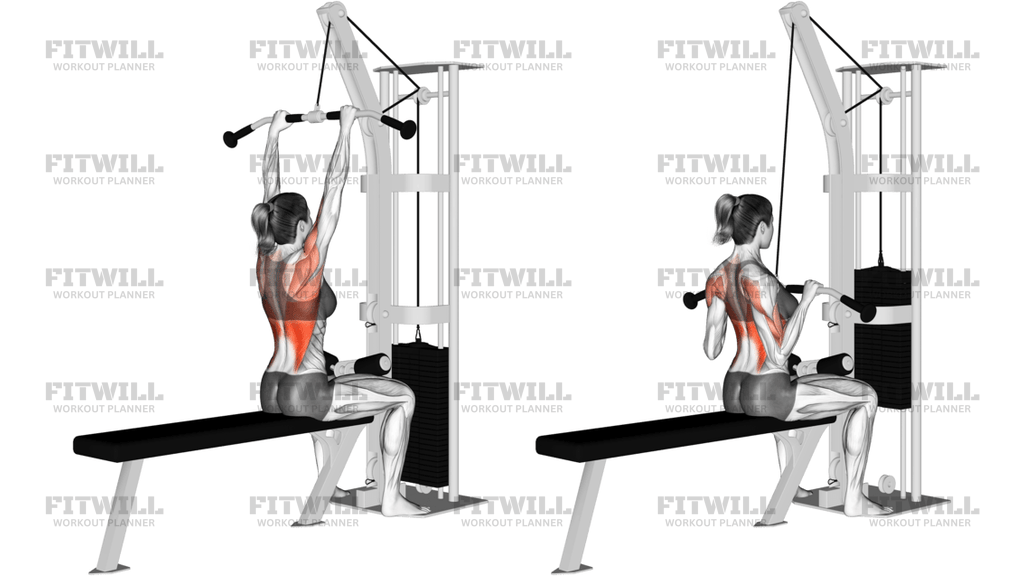
Cable Overhead Curl On Exercise Ball
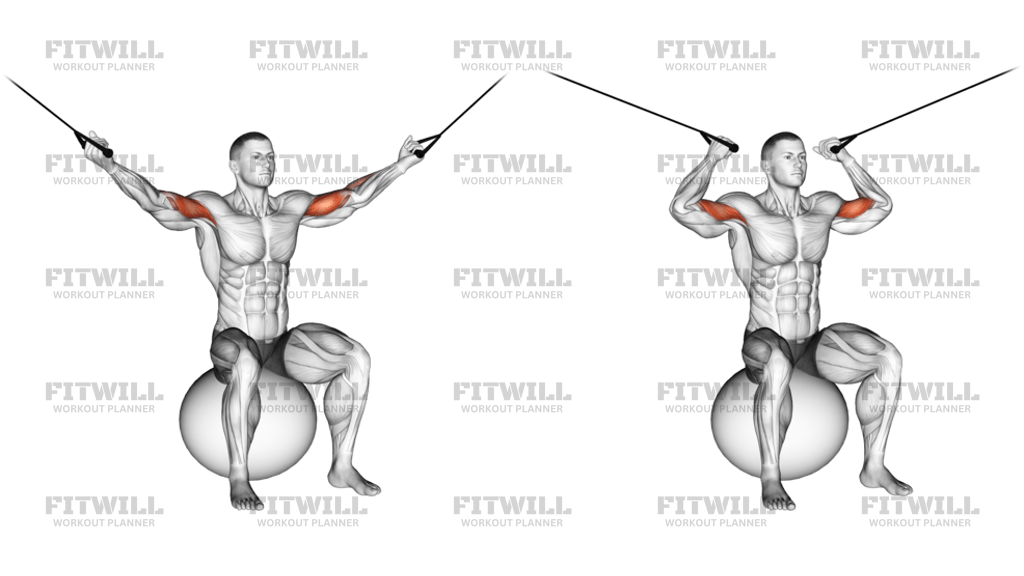
Cable Overhead Curl On Exercise Ball is a biceps-focused cable variation that adds a real balance demand by taking away the support of a bench or backrest. The exercise ball forces you to stay centered while both arms work through the same cable path, so the set is as much about clean body control as it is about arm strength. That combination makes it useful when you want strict arm work without turning the rep into a body swing.
This movement emphasizes the biceps while the brachialis, brachioradialis, and forearm flexors help manage the handle path and keep the wrists steady. Because the elbows stay lifted near shoulder height, the biceps have to work from a longer line of pull than they would in a basic standing curl. The shoulders and trunk mainly stabilize the position, so the rep stays focused on elbow flexion instead of torso movement.
The setup matters a lot. Sit on the exercise ball between the cable stacks with both feet flat and enough pressure through the floor to keep the ball from rolling. Keep the pelvis stacked under the ribs, then raise the upper arms so the elbows sit near shoulder height and the cables line up with your forearms. If the ball is too far forward or the chest collapses, the curl becomes unstable before the arms even start working.
From there, curl the handles by bending only at the elbows. Bring the handles toward the sides of your head or slightly in front of the temples, then lower them slowly until the arms are almost straight and the cables still have tension. The goal is a smooth arc with quiet shoulders, a neutral head, and no leaning back to finish the rep. Exhale as you curl, inhale as you lower, and keep the movement deliberate enough that the ball never becomes a launching pad for momentum.
Cable Overhead Curl On Exercise Ball is a good accessory choice for arm hypertrophy, cable-based upper-body sessions, or workouts that benefit from a lighter load with more positional control. It can also be a good option when you want to challenge core stability without turning the exercise into a full-body drill. Keep the load moderate, because once the ball starts wobbling or the elbows drift forward, the exercise stops training the biceps the way it should.
Fitwill
Log Workouts, Track Progress & Build Strength.
Achieve more with Fitwill: explore over 9600 exercises with images and videos, access built-in and custom workouts, perfect for both gym and home sessions, and see real results.
Start your journey. Download today!




Instructions
- Sit centered on the exercise ball between the cable stacks with both feet flat and about hip to shoulder width apart.
- Hold a handle in each hand with a neutral-to-slightly-supinated grip and bring your upper arms up so the elbows sit near shoulder height.
- Stack your ribs over your pelvis, lift your chest without arching your lower back, and keep your chin level.
- Set your shoulders down and back just enough to keep the neck long while the cables stay under tension.
- Curl both handles upward by bending only at the elbows, bringing the hands toward the sides of your head or temples.
- Keep the upper arms as still as possible so the movement comes from elbow flexion instead of shoulder motion or torso swing.
- Pause briefly at the top, then lower the handles slowly until the arms are almost straight again.
- Inhale on the way down and exhale as you curl up, keeping the ball steady and your feet planted.
- Reset the ball, grip, and elbow height before the next rep if you feel yourself drifting or losing balance.
Tips & Tricks
- Set the ball far enough between the stacks that both cables line up cleanly with your forearms at the start.
- Keep pressure through both feet; if the ball starts drifting, widen your stance before adding more weight.
- Hold the elbows at shoulder height instead of letting them sink, or the exercise turns into a lower-angle curl.
- Do not let the shoulders shrug toward the ears on the way up; that usually means the load is too heavy.
- Stop the descent before the elbows fully lock out if you want to keep constant tension on the biceps.
- Keep the wrists stacked over the knuckles so the forearms do not take over the rep.
- Choose a lighter load than you would for a seated cable curl on a bench, because the ball removes stability.
- If the torso rocks backward, shorten the range slightly and slow the lowering phase until the rep is clean again.
Frequently Asked Questions
What does Cable Overhead Curl On Exercise Ball train most?
It primarily trains the biceps, especially the biceps brachii, while the brachialis, brachioradialis, and forearm flexors help stabilize the handles.
Why do people use the exercise ball for Cable Overhead Curl On Exercise Ball?
The ball adds a balance challenge and removes back support, so you have to stay centered while the arms curl. That usually keeps the set stricter than doing the same movement seated on a bench.
Where should my elbows stay during Cable Overhead Curl On Exercise Ball?
Keep them near shoulder height and as still as possible. If they drift forward or drop, the curl becomes easier but less effective for the biceps.
How far should I curl the handles?
Bring the handles toward the sides of your head or just in front of the temples, then lower under control until the arms are nearly straight without losing cable tension.
Is Cable Overhead Curl On Exercise Ball beginner-friendly?
Yes, if the load is light and the ball feels stable. Beginners usually do better with slower reps and a narrower range before trying heavier tension.
What if my shoulders feel more active than my arms?
Lower the load and keep the upper arms fixed at shoulder height. If the shoulders are shrugging or reaching forward, the biceps are losing the line of pull.
Can I do Cable Overhead Curl On Exercise Ball one arm at a time?
Yes, but use a lighter load and keep the pelvis square on the ball. The single-arm version makes the anti-rotation demand much higher.
What is a good substitute if the ball feels unstable?
Do the same cable overhead curl seated on a bench or kneeling on the floor. Both options remove some balance demand while keeping the same arm path.