Cable Rope Hammer Preacher Curl
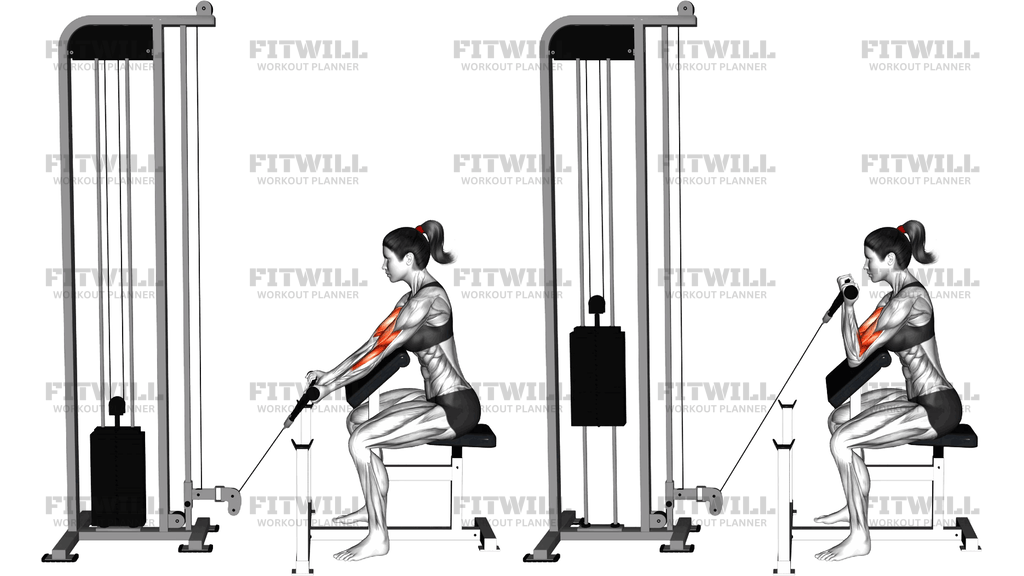
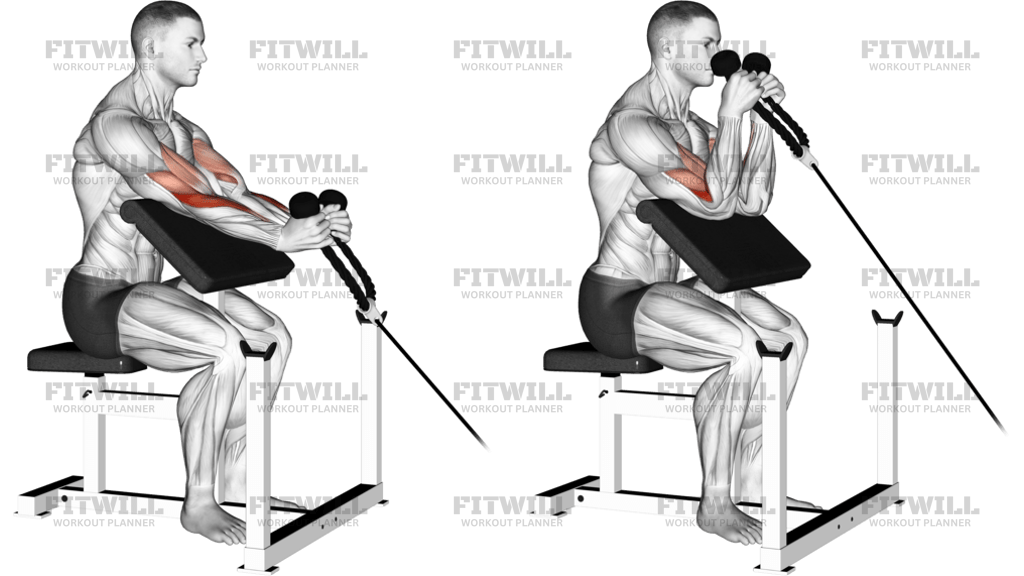
Cable Rope Hammer Preacher Curl is a cable-based arm isolation exercise that places the upper arms on a preacher pad and uses a neutral rope grip to train elbow flexion with very little body English. The preacher setup changes the feel of the curl immediately: the pad locks the shoulders and upper arms in place, which makes it easier to keep tension on the biceps, brachialis, and brachioradialis instead of swinging the torso or driving the weight with the hips.
The rope attachment gives the movement a hammer-curl hand position, so the palms stay facing each other through most of the rep. That neutral grip shifts some of the emphasis away from pure supination work and usually makes the brachialis and forearms feel more involved, while the preacher bench keeps the curl strict. Because the cable provides steady resistance, the exercise is useful when you want controlled tension through the whole range rather than a loose top-end contraction.
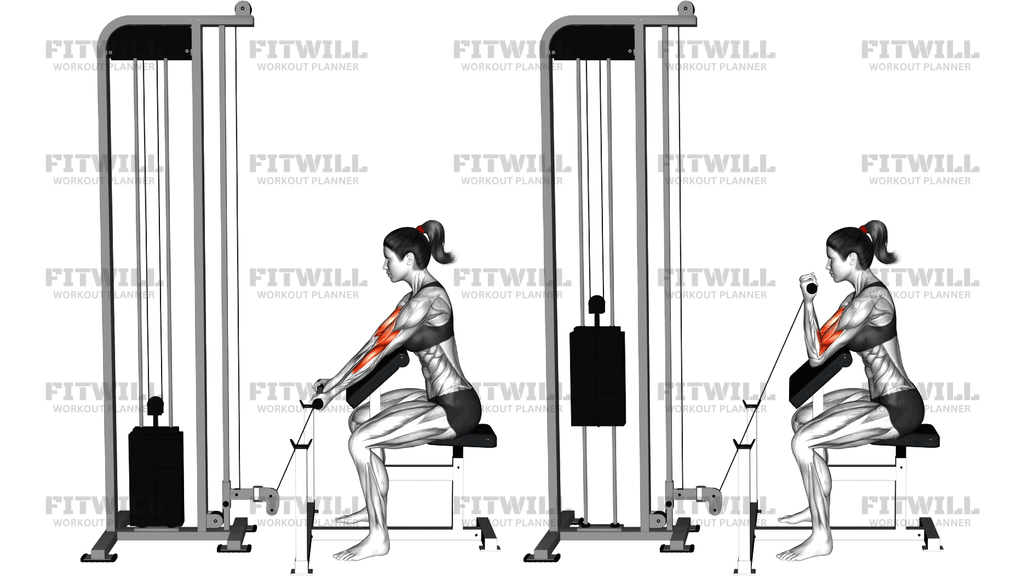
Set the pulley low in front of the bench, sit down with your chest and upper arms supported, and start with the elbows extended without locking out hard. From there, curl the rope upward by bending at the elbows only. The hands should travel toward the shoulders while the upper arms stay pressed into the pad. At the top, squeeze hard without shrugging the shoulders forward; on the way down, lower under control until the forearms are nearly straight and the elbows are still anchored to the pad.
This movement works well as a focused accessory exercise for arm size, elbow-flexion strength, or cleaner hypertrophy work when you want to remove momentum from the equation. It is also a good option for lifters who prefer cable resistance over dumbbells because the cable keeps the set smooth and predictable. The tradeoff is that the preacher position can feel intense on the elbow if you load it too heavy or drop too deep too fast, so the best results usually come from strict reps, moderate loading, and a controlled lowering phase.
If the station is set correctly, the exercise should feel like a stable curl anchored to the pad, not a full-body pulling movement. Keep the wrists stacked, the shoulders quiet, and the rope path consistent from rep to rep. That combination is what makes the exercise effective: the pad removes cheating, the rope keeps the grip neutral, and the cable keeps tension on the arm through the entire repetition.
Fitwill
Log Workouts, Track Progress & Build Strength.
Achieve more with Fitwill: explore over 9600 exercises with images and videos, access built-in and custom workouts, perfect for both gym and home sessions, and see real results.
Start your journey. Download today!




Instructions
- Set a preacher bench in front of a low cable pulley and clip on a rope attachment.
- Sit down with your chest against the pad and place your upper arms flat on the sloped support.
- Plant both feet on the floor and keep your shoulders down and away from your ears.
- Hold the rope with a neutral grip, palms facing each other, and start with your elbows nearly straight.
- Brace your torso, then curl the rope upward by bending only at the elbows.
- Keep your upper arms pressed into the pad as the rope travels toward your shoulders.
- Squeeze hard near the top without letting your shoulders roll forward or your wrists bend back.
- Lower the rope slowly until your arms are almost straight again, keeping tension on the cable.
- Reset your shoulders and breath before the next rep, then repeat for the planned set.
Tips & Tricks
- Use a lighter load than you would for a standing curl; the preacher pad removes cheating and makes the bottom position feel harder.
- Keep the rope ends slightly separated at the top so your wrists stay neutral instead of collapsing inward.
- Do not let your elbows slide off the pad when the weight gets heavy; that turns the movement into a partial cheat curl.
- Stop just short of locking the elbows if full extension irritates the front of the elbow or the biceps tendon.
- Think about pulling the rope apart as you curl up; that usually helps keep the brachialis and brachioradialis active.
- Lower the stack slowly because the eccentric phase is where the preacher setup gets most of its training effect.
- If the cable pulls you forward off the bench, move the bench closer to the pulley or reduce the load.
- Keep your chest settled into the pad instead of reaching your chin toward the rope at the top.
- Choose a rep speed you can repeat exactly; this exercise works best when every rep looks almost the same.
Frequently Asked Questions
What muscles work most in Cable Rope Hammer Preacher Curl?
The biceps still drive the curl, but the neutral grip also brings in the brachialis and brachioradialis strongly.
Why use a rope instead of a straight bar on the preacher bench?
The rope lets you keep a neutral hammer grip and separate the hands slightly, which often feels friendlier on the wrists and changes the arm emphasis.
How should my upper arms sit on the preacher pad?
They should stay planted on the pad for the whole rep so the elbows flex without the shoulders or torso taking over.
Should I fully lock out at the bottom?
Not necessarily. Straighten the arms close to full extension, but stop short of any hard lockout if the bottom position bothers your elbows.
What is the most common mistake with this curl?
The biggest issue is lifting the chest or elbows off the pad to turn the rep into a stronger-looking but less effective swing.
Can beginners use this exercise?
Yes. The preacher pad makes it easy to learn strict elbow flexion, as long as the load stays light enough to control.
What should I feel at the top of the rep?
You should feel a hard squeeze in the front of the upper arm, not a shrug in the shoulders or a pinch in the wrists.
What can I substitute if the rope attachment is unavailable?
A straight-bar or EZ-bar cable preacher curl is the closest swap, although it will change the wrist position and the feel of the rep.
Why does the bottom half of the rep feel so hard?
The preacher setup places the biceps under more stretch near the bottom, so the first part of the curl usually feels more demanding than a standing curl.