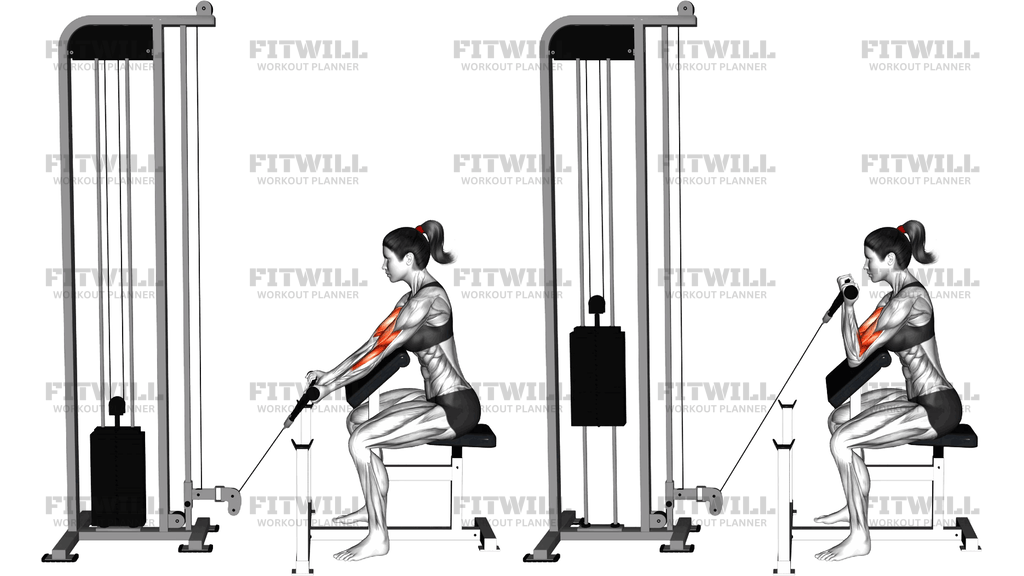
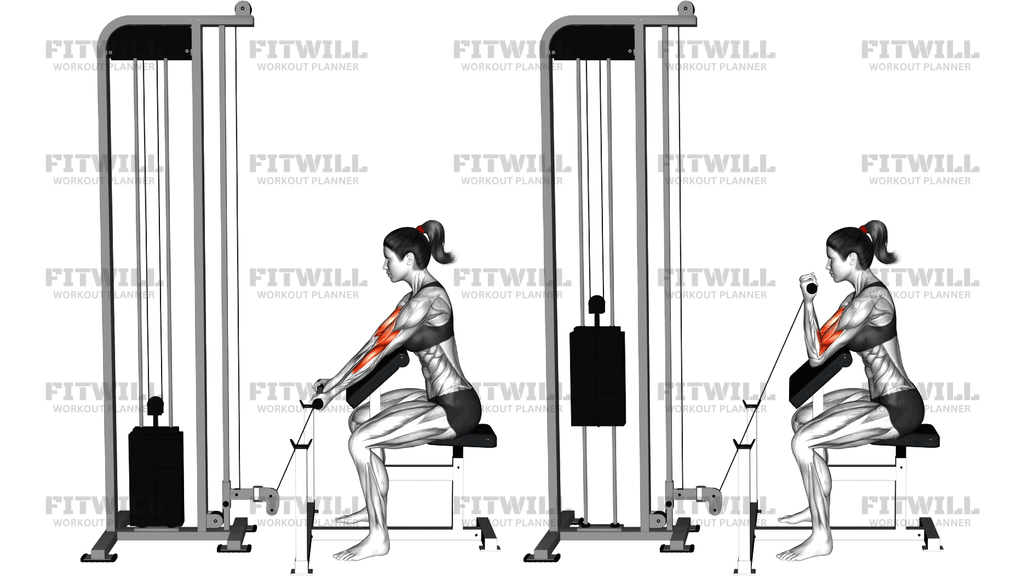
Cable Squatting Curl
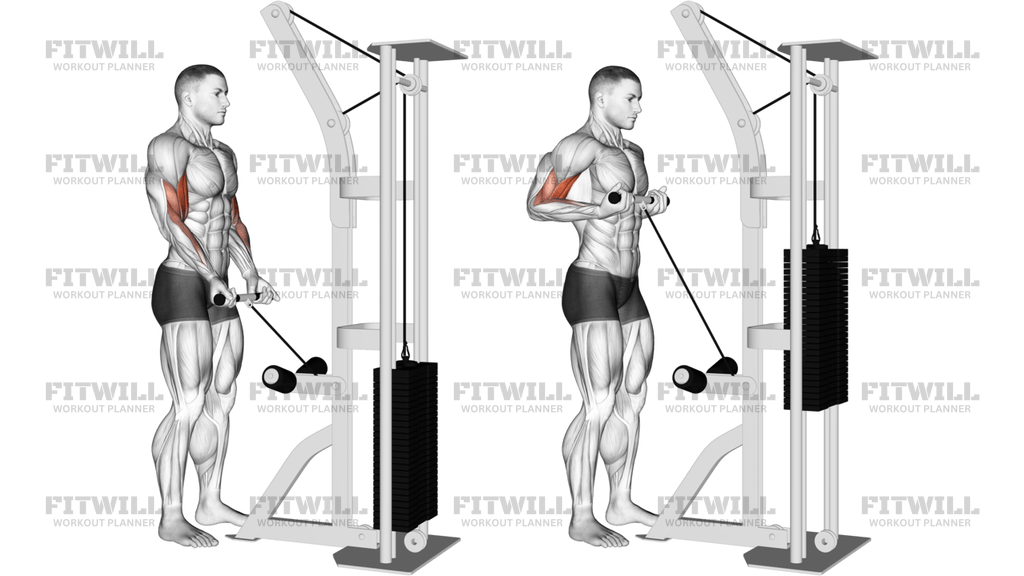
Cable Squatting Curl is a cable-based biceps exercise performed from a deep squat. The low pulley creates continuous tension while the squat keeps the torso tucked forward and the lower body fixed, so the curl has to happen without the help of standing momentum. It is a useful way to train elbow flexion when you want the cable to stay loaded through the full rep instead of only at the top.
The main target is the biceps, with the brachialis, brachioradialis, and forearm flexors helping to finish the curl and stabilize the handle. Because you stay in a squat while curling, the quads, glutes, and trunk also work isometrically to hold the position, but they should support the movement rather than drive it. The exercise is most useful when you want clean arm work with a fixed body position and a clear resistance curve from the cable stack.
Setup matters more here than in a standing curl. The handle should start low enough that your arms can hang between your knees or just in front of your shins while you keep your heels planted and knees tracking over the toes. The torso usually stays pitched forward, with the chest over the thighs and the shoulders packed down so the curl starts from a stable base instead of a loose hinge. If the cable pulls you forward or you have to rise out of the squat to move the handle, the load is probably too heavy or the pulley is set poorly.
Each repetition should look like a controlled curl from a deep seated position: brace, curl the handle toward the front shoulder or upper chest, briefly squeeze the top, then lower the handle back to the start without losing the squat. Keep the wrists stacked and the elbows from drifting wildly as the handle moves. Exhale on the curl, inhale on the return, and stop the set if the knees collapse inward, the heels lift, or the torso begins to stand up to finish the rep.
Cable Squatting Curl fits best as accessory biceps work, a technique-focused arm block, or a variation when you want more lower-body and trunk involvement than a standard curl. It is beginner-friendly if the load is light and the squat depth is comfortable, but the position can feel awkward if ankle, hip, or knee mobility is limited. Use a range you can hold without bouncing, and treat the squat position as part of the exercise, not a place to rest between sloppy curls.
[ Workout Log & Planner ]
Put your next workout in Fitwill
Keep your plan and training log ready when you are.


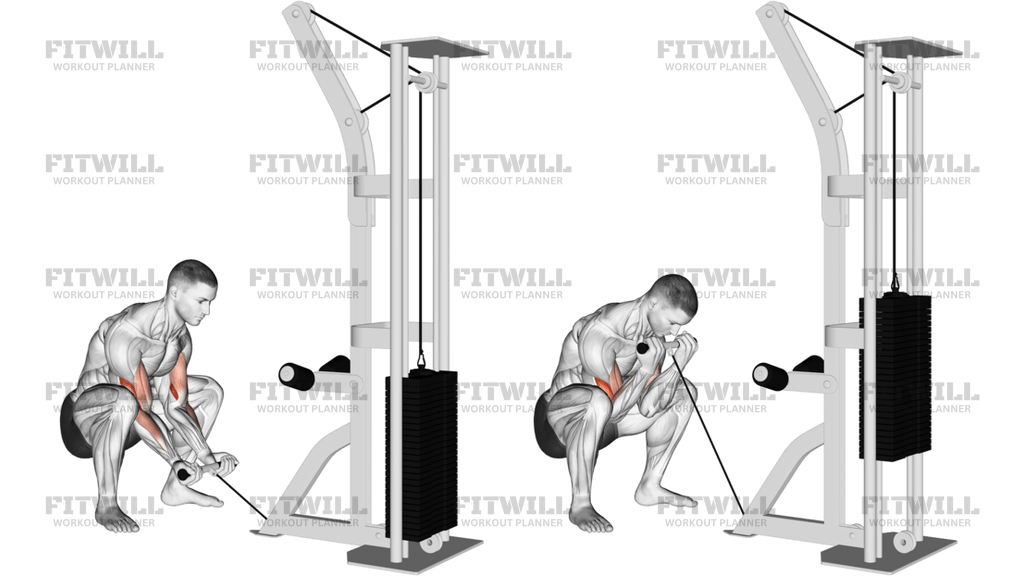
Instructions
- Set the cable to a low pulley and attach the handle you will curl with.
- Stand facing the machine, then step back until the cable has tension with your arms reaching down between your knees.
- Drop into a deep squat with your feet flat, heels grounded, chest over your thighs, and knees tracking over your toes.
- Hold the handle with both hands and keep your wrists straight, shoulders down, and elbows close to the inside of your knees.
- Brace your trunk so your torso stays fixed in the squat instead of rising as you begin the curl.
- Curl the handle up toward your front shoulder or upper chest while keeping the squat depth as steady as you can.
- Squeeze the biceps at the top without letting the elbows flare forward or the heels lift.
- Lower the handle slowly until the arms are long again and the cable is still under control.
- Breathe out as you curl up, breathe in as you lower, and repeat for the planned reps without standing out of the squat.
Tips & Tricks
- Choose a light enough stack that lets you keep the squat depth unchanged from the first rep to the last.
- If the cable yanks you forward, move farther from the stack or lower the weight before chasing more reps.
- Keep the handle close to the front of your body; letting it drift out in front usually turns the curl into a shoulder lift.
- Press the heels down hard so the squat stays stable while the arms do the work.
- Keep the elbows inside the knees and avoid letting them flare wide as the handle rises.
- Use a slow lowering phase so the cable does not pull you out of position at the bottom.
- A slightly forward torso is normal here, but the spine should stay long instead of rounding aggressively.
- Stop the set if your hips rise first and the curl turns into a partial standing biceps curl.
Frequently Asked Questions
What muscle does Cable Squatting Curl target most?
The biceps are the main target, with the brachialis, brachioradialis, and forearm flexors helping during the curl.
Why do I have to stay in a squat while curling?
The squat removes standing momentum and keeps constant tension on the cable while you train the biceps.
How should the cable and handle be set up?
Use a low pulley and step back until the handle can start near your shins or between your knees with tension already on the cable.
Can beginners do Cable Squatting Curl?
Yes, if they use a light load and can hold a comfortable squat depth without losing heel contact or posture.
What is the biggest technique mistake?
Standing up to finish the curl is the main error. Keep the hips low and let the elbows flex instead of the legs driving the rep.
Where should the handle travel?
Bring it up toward the front shoulder or upper chest, then lower it under control along the same path.
Do my knees or heels need to move?
They should stay planted and stable. If the heels lift or the knees cave in, the load is too heavy or the squat is too deep for your mobility.
What makes this different from a regular cable curl?
The deep squat limits body swing and adds an isometric leg and trunk demand, so the curl has to stay cleaner and more controlled.