Assisted Seated Pectoralis Major Stretch With Stability Ball
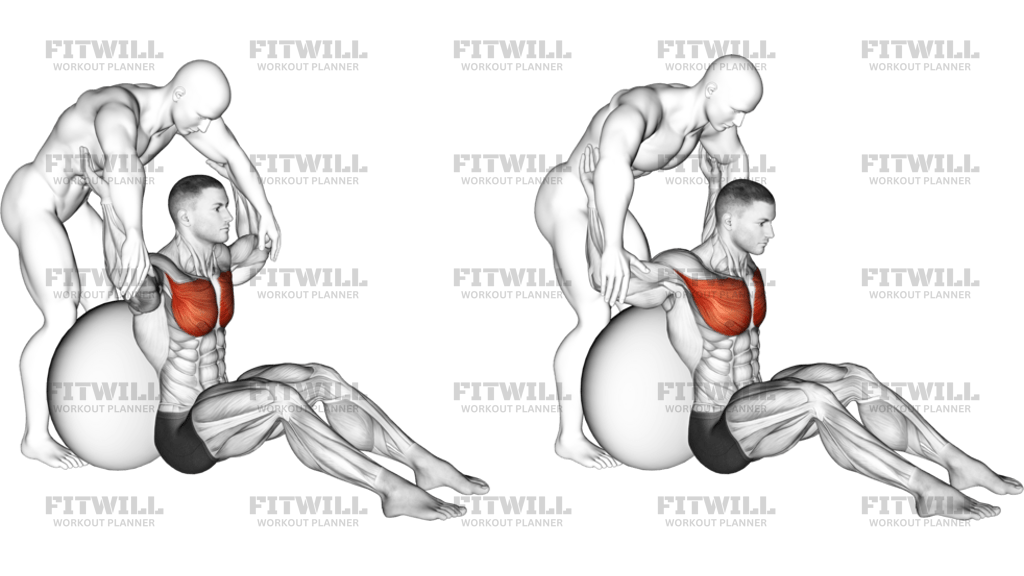
Assisted Seated Pectoralis Major Stretch With Stability Ball is a partner-assisted chest mobility drill that opens the front of the shoulders while the back of the torso is supported on a stability ball. The seated position removes a lot of lower-body demand, so the stretch can be directed into the pectoralis major without relying on a standing lean or a fast swinging motion. It is most useful when the chest feels tight after pressing work, long hours at a desk, or any session where the shoulders need a controlled opening.
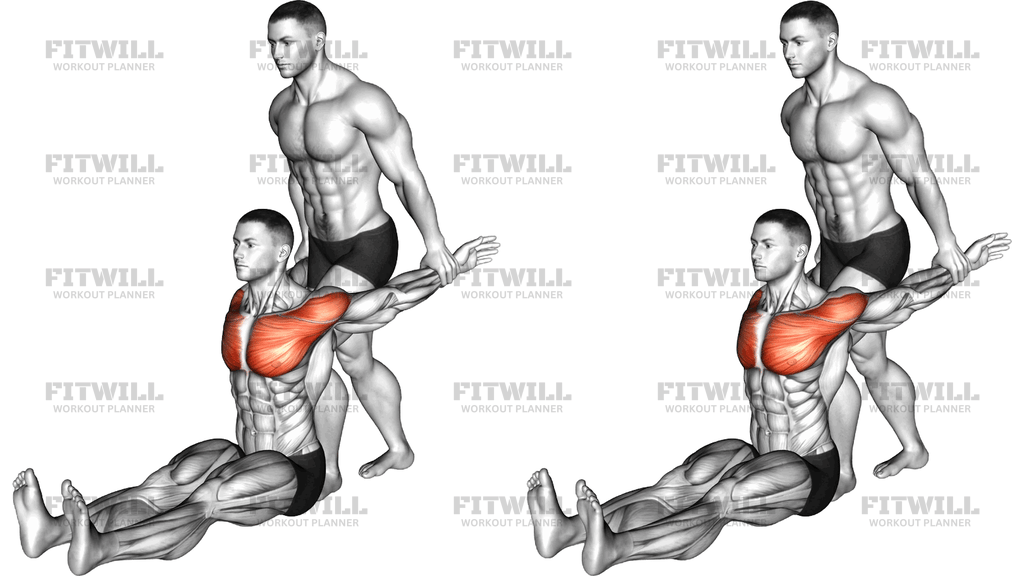
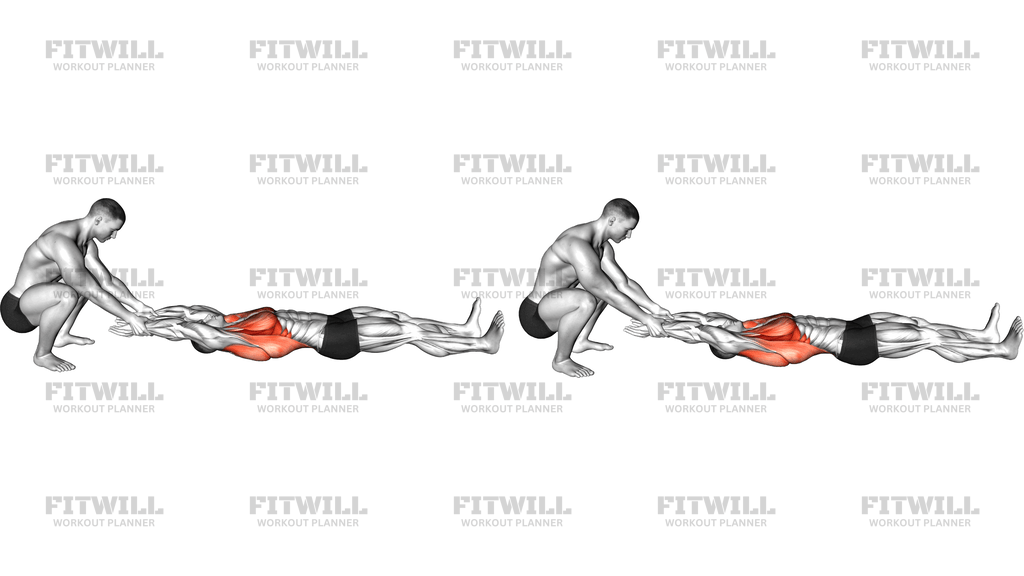
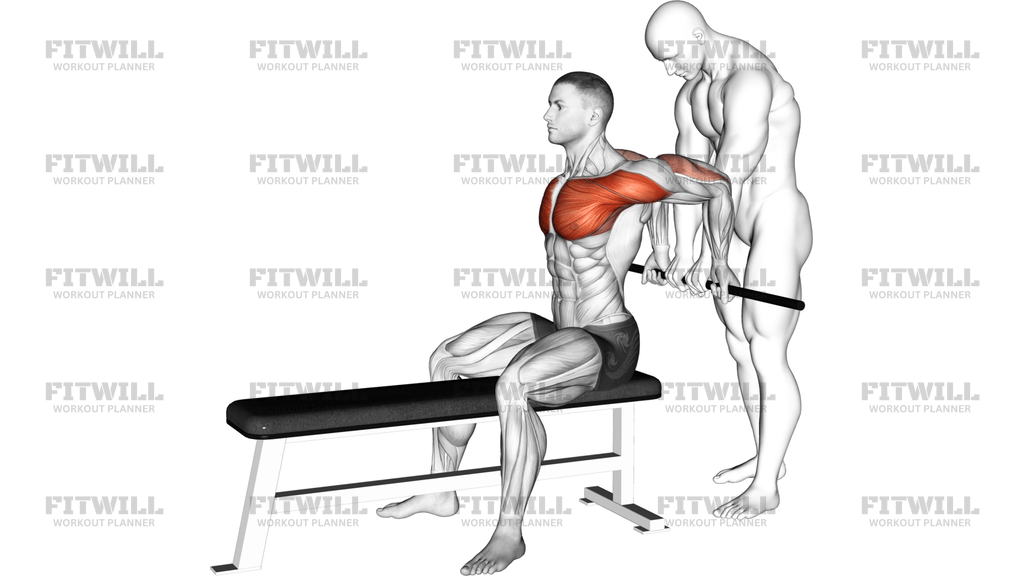
The ball matters because it supports the upper back and helps the chest stay lifted without forcing a rigid arch. In the image, the lifter sits on the floor with the ball braced behind the torso while a partner stands behind and guides the upper arms. That assistance is the key feature of the movement: the partner adds only a gentle increase in range, letting the stretch build gradually across the chest and front of the shoulders instead of yanking the arms into position.
The best version of the stretch keeps the ribs stacked, the neck long, and the shoulders relaxed away from the ears. The upper arms can open back only until you feel a strong but tolerable pull through the pectorals. If the lower back starts to arch hard, the stretch is no longer being taken where it should be. The goal is to create length across the chest while the torso stays organized and the shoulder joint stays comfortable.
Because this is a stretch, the rep quality comes from breathing, patience, and small adjustments rather than force. Hold the open position long enough to let the tissue soften, then return slowly before repeating. Use it after upper-body training, during a warmup for pressing, or in a mobility block when the chest and anterior shoulder line need attention. Avoid pushing into sharp pain, numbness, or a pinching sensation at the front of the shoulder.
[ Workout Log & Planner ]
Put your next workout in Fitwill
Keep your plan and training log ready when you are.


Instructions
- Sit on the floor with the stability ball tucked behind your upper back and your torso supported against it.
- Let a partner stand behind you and hold just above your elbows or forearms, not your wrists.
- Set your feet, lengthen your spine, and keep your ribs stacked before you start the stretch.
- Begin with your elbows slightly in front of your shoulders and your chest relaxed.
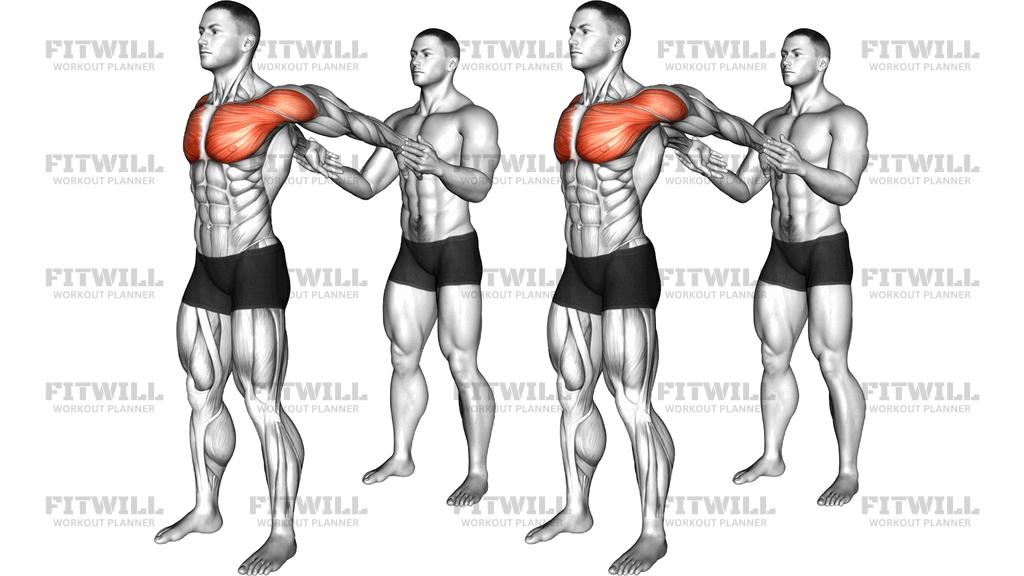
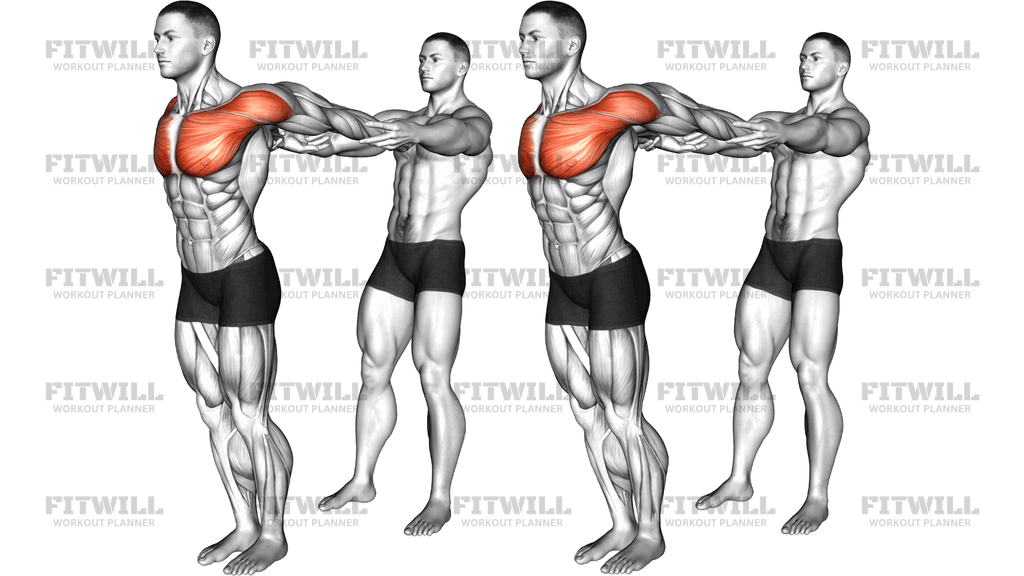
- Exhale as your partner gently opens your arms back and out until you feel a controlled stretch across the chest.
- Keep your shoulders down and avoid turning the movement into a big lower-back arch.
- Pause in the stretched position for a full breath or two while staying pain-free.
- Inhale and return to the start slowly, then reset your shoulder position before the next rep.
Tips & Tricks
- Let the ball support your upper back so you can focus on opening the chest instead of balancing.
- Keep the elbows softly bent; straight arms usually turn the stretch into shoulder strain.
- Ask the partner for only a small increase in range on each exhale, not a hard pull.
- If the front of the shoulder pinches, bring the elbows slightly forward and shorten the stretch.
- Keep the ribs down; an aggressive arch can move the stretch into the low back.
- Feet grounded on the mat help prevent sliding while the upper body opens.
- A slow exhale often lets the pectoralis major relax more than forcing the arms farther back.
- Stop the rep if you feel numbness, tingling, or sharp pain in the shoulder or arm.
Frequently Asked Questions
What does the stability ball do in this stretch?
It supports the upper back and helps you open the chest without needing a hard standing lean or a big arch.
Which muscles should I feel most?
The main stretch should run across the pectoralis major, with some tension in the front of the shoulders.
How much should the partner pull on my arms?
Only enough to deepen the stretch slightly. If the partner has to force the position, the range is too aggressive.
Should my elbows stay straight in the stretched position?
A small bend is usually better. It keeps the stretch on the chest and away from the elbow and shoulder joints.
Can beginners do this stretch?
Yes, as long as the range stays gentle and the partner applies very light pressure.
What is the most common form mistake?
Letting the ribs flare and the lower back arch too much instead of keeping the stretch in the chest.
When should I use this stretch?
It works well after pressing, during a mobility block, or anytime the chest and front shoulders feel tight.
What should I do if the shoulder feels pinchy?
Shorten the range, bring the elbows forward a little, and stop before the stretch becomes sharp or uncomfortable.