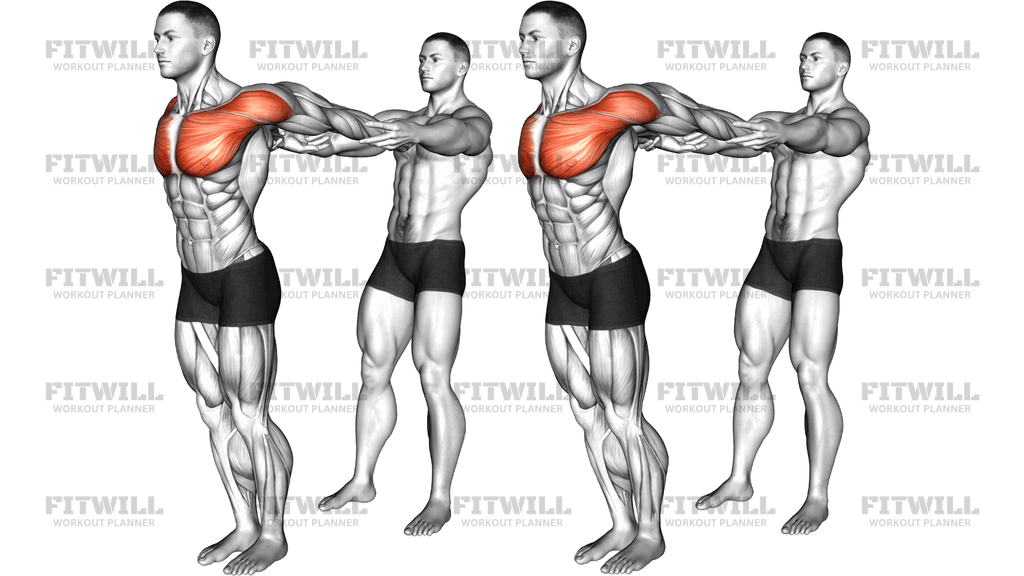
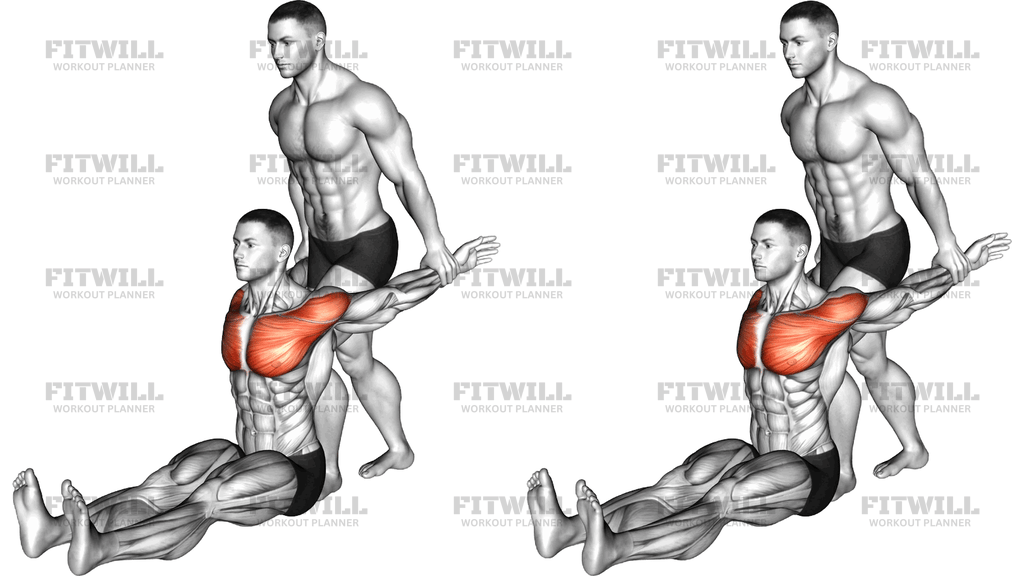
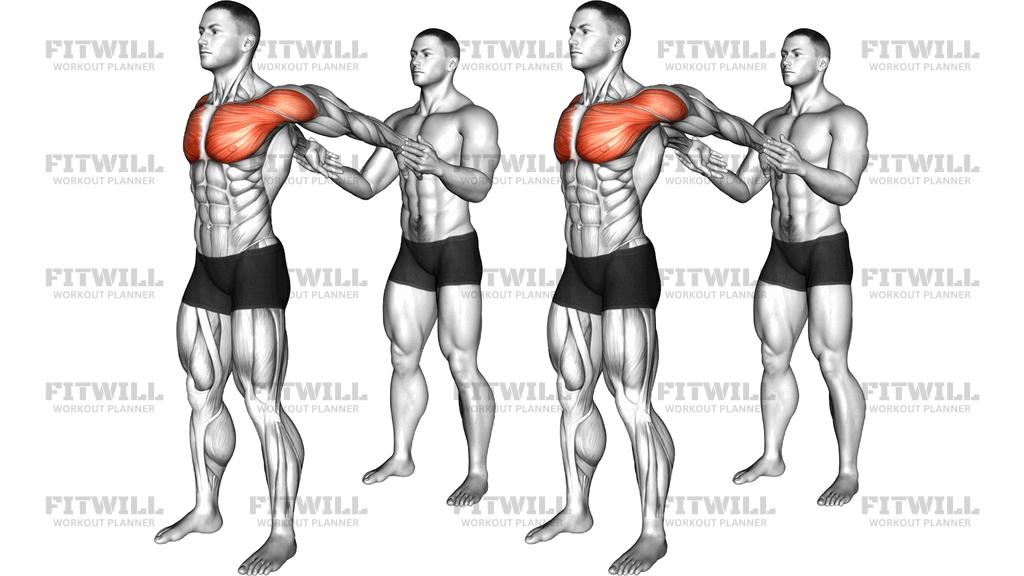
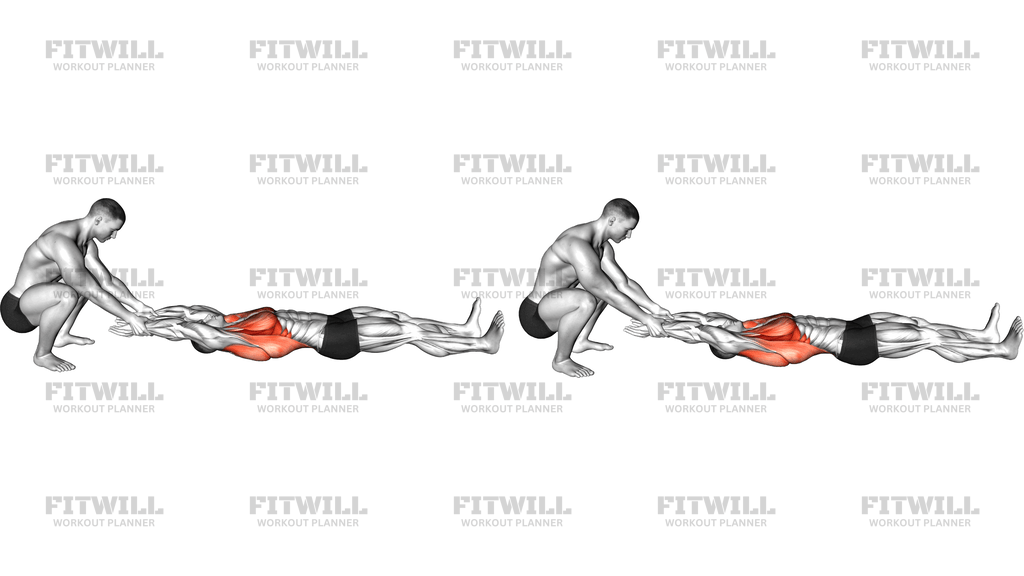
Standing Chest Stretch With Training Wall Bars
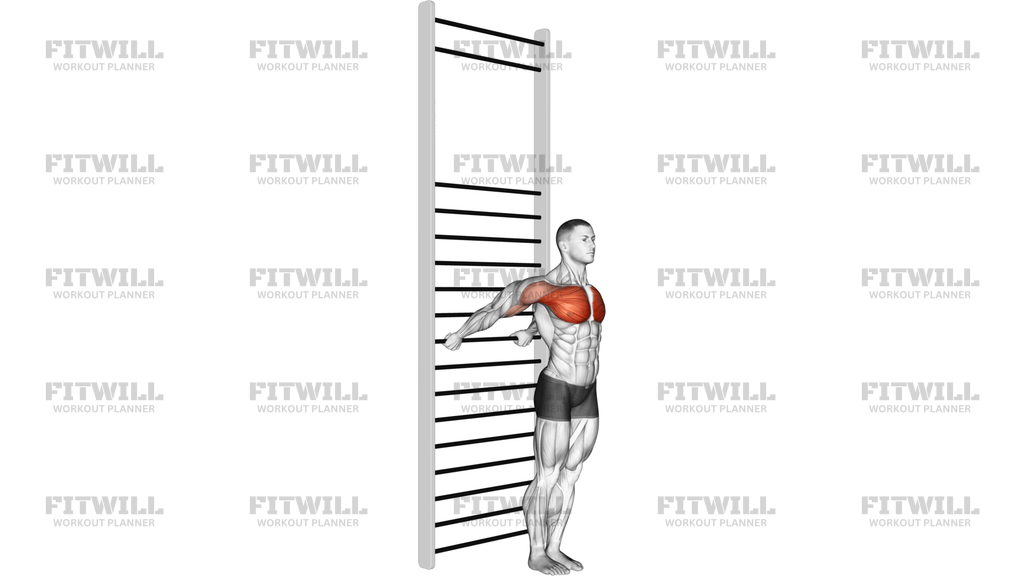
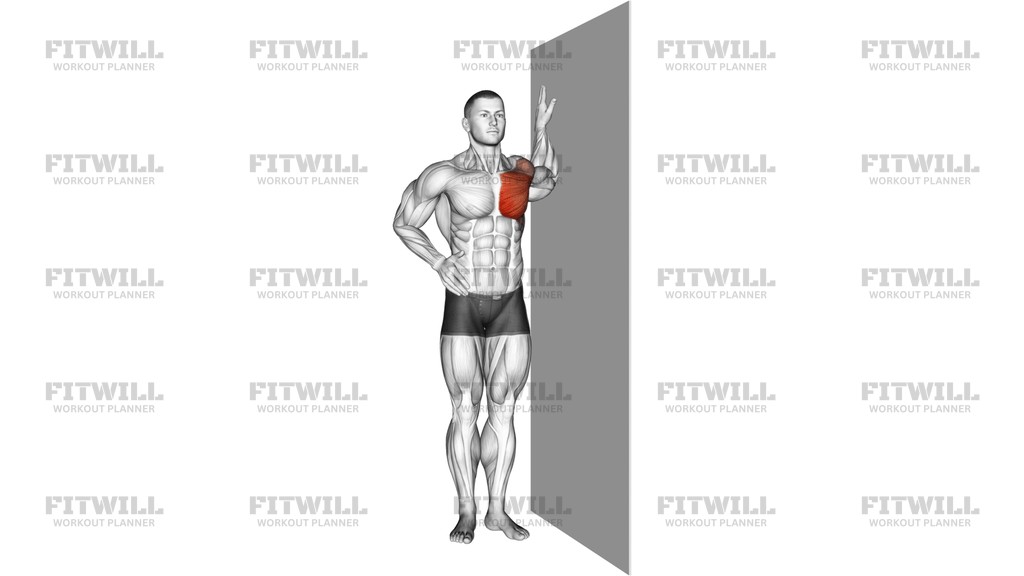
Standing Chest Stretch With Training Wall Bars is a standing mobility drill that opens the pecs by fixing one hand on a wall-bar rung and turning the body away from that arm. The wall bars give you a stable anchor, so the stretch comes from body angle and rib position instead of yanking the shoulder into range. It is useful when the front of the chest feels tight after pressing, desk work, climbing, or any training that leaves the shoulders pulled forward.
Set the hand on a rung behind you at about lower-chest to shoulder height, then stand tall with a slight stagger in the feet so you can rotate without losing balance. Keep the elbow almost straight but not locked, and keep the shoulder down away from the ear. The goal is to create a long line from the chest through the front shoulder and upper arm while the torso stays stacked over the pelvis. If the setup feels cramped, lower the hand one rung or step a little farther from the bars.
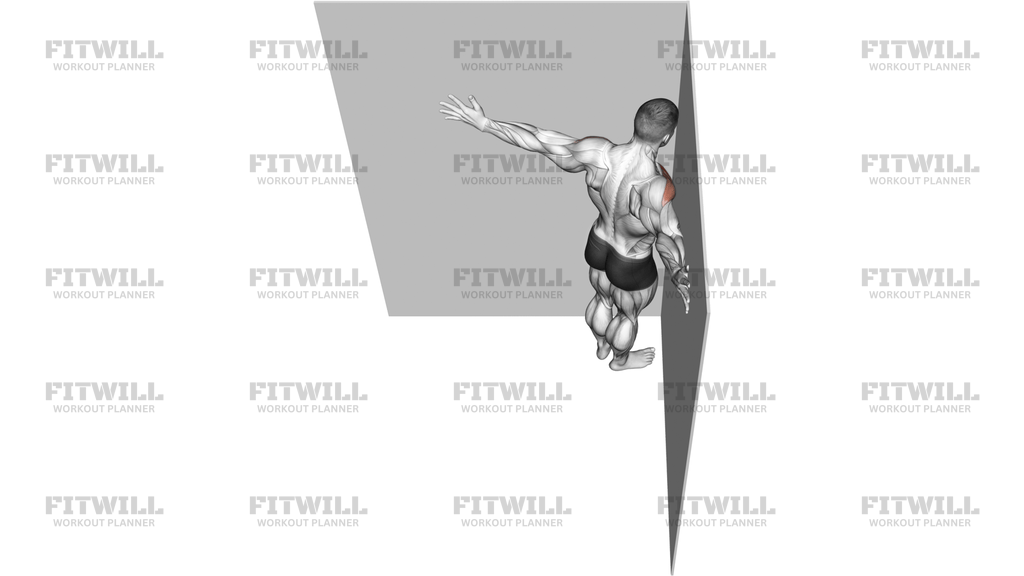
As you turn the chest away from the wall bars, let the sternum open and the arm drift behind the body only as far as you can keep the stretch smooth. Breathe out slowly, soften the neck, and avoid arching the lower back to fake extra range. The strongest sensation should stay across the pectoral tissue and front of the shoulder, not as a pinch deep in the joint. A small change in foot position or torso rotation is usually enough to find a better line.
Use the stretch before upper-body training as a light mobility opener or after lifting as a down-regulation drill. It also works well between pressing sets when the chest starts to feel stiff, provided you keep the hold brief and controlled. Progress by improving posture, easing into a slightly longer hold, or adjusting the bar height to match your shoulder tolerance. Stop if the stretch becomes sharp, numb, or unstable, because the purpose is to lengthen the front line of the body, not to force the shoulder into end-range stress.
[ Workout Log & Planner ]
Put your next workout in Fitwill
Keep your plan and training log ready when you are.


Instructions
- Stand side-on to the wall bars and grip a rung behind you with the arm closest to the bars.
- Place that hand around lower chest or shoulder height, with the elbow almost straight and the wrist neutral.
- Step the outside foot slightly forward and stack the ribs over the pelvis so you can rotate without wobbling.
- Keep the shoulder blade down as you turn the chest away from the bars.
- Let the arm travel behind the body only as far as you can keep the stretch smooth across the chest.
- Exhale slowly and pause at the end range without shrugging or arching the lower back.
- If the stretch feels cramped, lower the hand one rung or step a little farther from the bars.
- Release by turning back toward the wall bars, then repeat on the other side.
Tips & Tricks
- A lower rung usually gives a cleaner pec stretch because it keeps the shoulder out of a pinchy overhead line.
- Keep the elbow slightly bent so the tension stays in the chest instead of pulling hard on the elbow joint.
- Let the stretch deepen on the exhale; if you have to brace your breath to get more range, you are forcing it.
- A small stagger in the feet makes it easier to rotate without tipping the ribs forward.
- If the front of the shoulder pinches, reduce the turn and move the hand a little higher or closer to the body.
- Keep the neck long and the chin neutral so the stretch does not turn into a neck strain.
- Short, repeatable holds are more useful than chasing a big range on the first pass.
- Match the hand height on both sides before deciding which side is tighter.
Frequently Asked Questions
What does Standing Chest Stretch With Training Wall Bars target most?
It targets the pecs first, with the front of the shoulder and upper arm also getting a strong stretch.
Can beginners use the wall bars version of this stretch?
Yes. The fixed rung gives beginners a clear anchor and makes it easy to control how much rotation they use.
Should my elbow stay straight on the rung behind me?
Keep it almost straight with a soft bend. Locking it hard can make the shoulder feel overly pulled.
Where should I feel the stretch?
You should feel it across the chest and front of the shoulder, not as a sharp pinch deep in the joint.
How long should I hold each side?
A 15 to 30 second hold works well for most warm-ups or cool-downs, as long as the position stays comfortable.
Can I use a doorway or rack upright instead of wall bars?
Yes. Any fixed post can work if it lets you set a similar hand height and rotate away in the same way.
Why do I need to keep my ribs down?
Keeping the ribs stacked stops you from arching the lower back to fake more range.
What should I do if one side feels much tighter?
Use the same rung on both sides, then adjust only the torso rotation until the tighter side opens up without pain.