Leg Raise Hip Lift
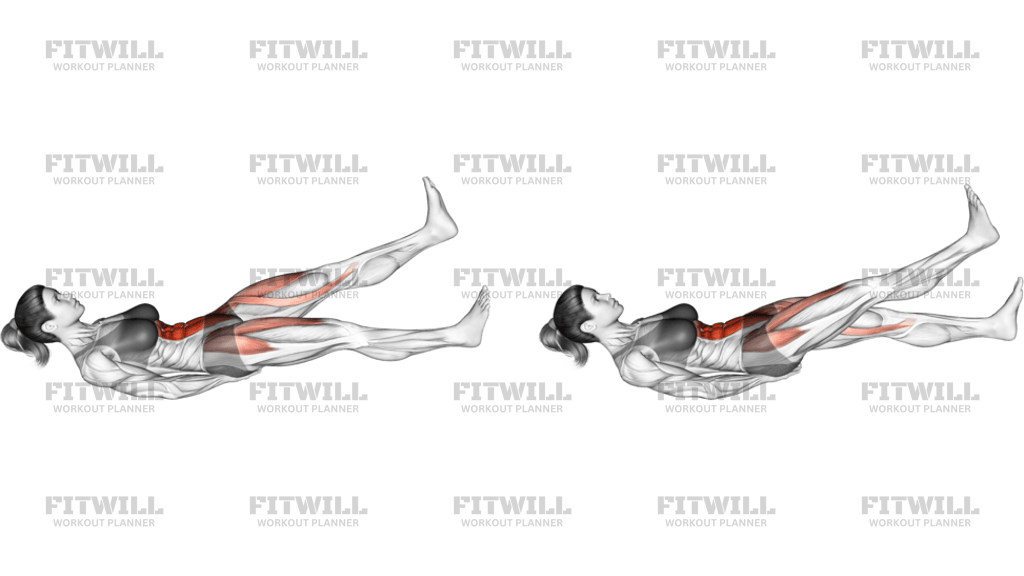
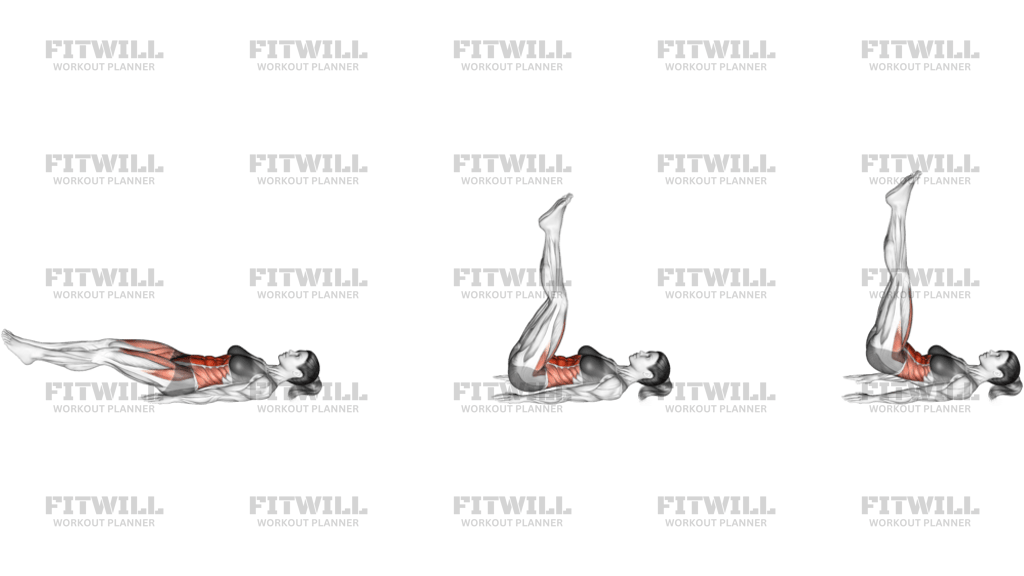
Leg Raise Hip Lift is a floor-based core exercise that combines a straight-leg raise with a posterior pelvic curl. It is designed to train the lower portion of the abdominal wall through a controlled range, while also asking the hip flexors and obliques to stabilize the pelvis as the legs move.
The movement is simple, but the setup matters. When you lie flat, press the lower back into the floor and keep the ribcage down before the first rep. That position gives the abs a clear job to do and makes it easier to raise the legs without turning the rep into a swing or a low-back arch.
What makes Leg Raise Hip Lift different from a basic leg raise is the hip lift at the top. Instead of stopping once the legs are vertical, you finish by curling the pelvis off the floor a few inches. That small extra motion increases abdominal shortening and teaches you to control the pelvis, not just the legs.
This exercise works well in core sessions, accessory blocks, warmups, and finishers when you want strict bodyweight tension instead of spinal loading. It is especially useful for people who need better trunk control for squats, deadlifts, running, or general athletic work. The goal is not to chase height; it is to keep the torso quiet while the legs and pelvis move together.
Keep the motion smooth and honest. If the lower back starts to arch or the legs drop too far, the abs lose control and the hip flexors take over. Use a shorter range, bend the knees slightly, or slow the lowering phase so every repetition stays clean, deliberate, and pain-free.
Fitwill
Log Workouts, Track Progress & Build Strength.
Achieve more with Fitwill: explore over 9600 exercises with images and videos, access built-in and custom workouts, perfect for both gym and home sessions, and see real results.
Start your journey. Download today!




Instructions
- Lie on your back on a mat with your legs straight, feet together, and arms flat by your sides for support.
- Press your lower back into the floor and keep your ribs down before you start the first rep.
- Lift both legs together until they are vertical or close to vertical without letting your pelvis tip forward.
- Exhale and curl your hips off the floor a few inches, using your lower abs to roll the pelvis upward.
- Pause briefly at the top with your legs stacked over your hips and your trunk still braced.
- Lower your hips back to the floor first, keeping tension through the abs as the pelvis unrolls.
- Continue lowering the legs only as far as you can keep the lower back anchored to the mat.
- Reset the pelvis and repeat for the planned number of controlled repetitions.
Tips & Tricks
- Keep your lower back pressed down before every rep; once it arches, the set has gone too far.
- Think about curling the tailbone upward at the top instead of just swinging the legs higher.
- A small pause at the top helps separate the hip lift from a fast leg swing and makes the abs do more work.
- If your hip flexors dominate, bend your knees slightly and keep the same pelvic curl pattern.
- Lower the legs only to the point where the back can stay flat; range of motion is limited by spinal control here.
- Keep your neck relaxed and your chin slightly tucked so you do not strain your upper body while bracing.
- Use a slower lowering phase than lifting phase to make the abs control the return instead of momentum.
- Stop the set when your legs start shaking so hard that the pelvis starts tipping forward.
- Exhale as the hips curl up, then inhale as you lower with control and keep the trunk steady.
Frequently Asked Questions
What does Leg Raise Hip Lift train most?
It mainly trains the rectus abdominis, with the obliques and deep core helping control the pelvis as the legs move.
Is the hip lift really different from a normal leg raise?
Yes. The extra pelvic curl at the top increases abdominal contraction and keeps the movement from stopping at a simple leg raise.
Should my legs stay straight the whole time?
Straight legs make the exercise harder, but a slight knee bend is fine if it helps you keep the lower back flat and the reps controlled.
How high should my hips come off the floor?
Only a few inches. The goal is a small posterior curl, not a full bridge or a big swing through the hips.
Why does my lower back arch during this exercise?
Usually the legs are dropping too low or the rep is moving too fast. Shorten the range and focus on keeping the ribs down and the pelvis tucked.
What if I feel this mostly in my hip flexors?
That usually means the abs are losing control before the top of the rep. Slow down, reduce range, and think about curling the pelvis instead of just lifting the legs.
Is Leg Raise Hip Lift beginner-friendly?
Yes, if you keep the range short and the tempo slow. Beginners often do better with bent knees until they can hold the low back against the floor.
What is the most common form mistake?
Letting the legs drop too low and turning the rep into a low-back arch. Once that happens, the abs are no longer controlling the movement.