Standing Leg Resting Hip Stretch
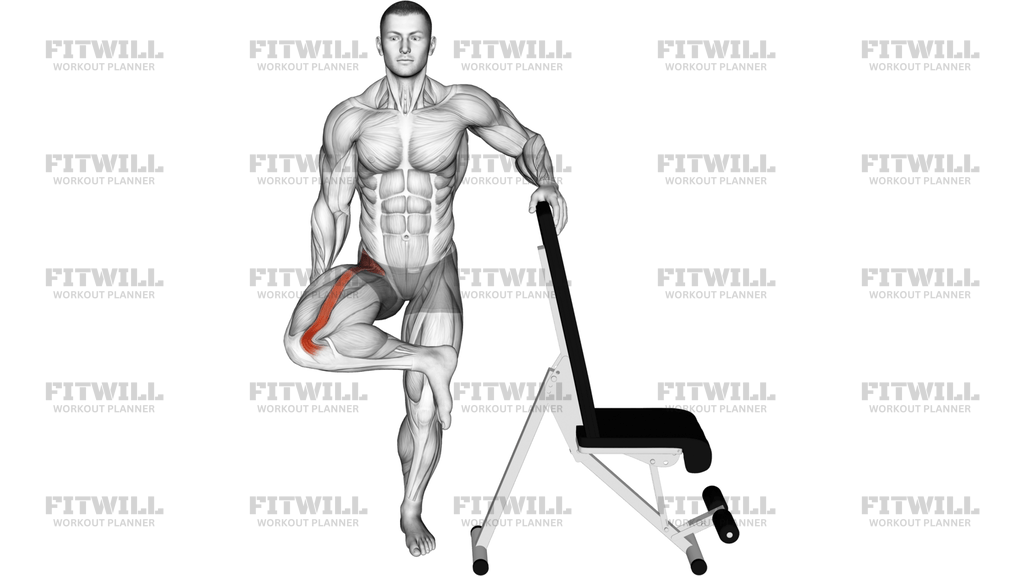
Standing Leg Resting Hip Stretch is a standing figure-four style stretch for the outer hip and glute of the lifted leg. It also asks the standing leg, ankle, and core to stabilize you while you balance beside a support. In the image, the working ankle is resting above the opposite knee and the body is using a chair for light assistance, which makes the position much safer and easier to control than trying to balance freely.
This stretch is most useful when the hips feel tight from squats, running, cycling, or long periods of sitting. The goal is not to fold as far as possible. The goal is to create a clear stretch across the glute and back of the hip while keeping the lifted knee comfortable and the pelvis square. If the support leg collapses inward or the lower back rounds hard, the stretch shifts away from the target area and becomes harder to control.
The best version starts with a tall stance, a steady hand on the chair, and the lifted foot flexed so the ankle is protected. From there, send the hips back and hinge slightly forward until the outer hip of the raised leg opens up. Keep the motion slow, breathe normally, and use only enough range to feel a strong but manageable stretch. The standing leg should stay grounded and active instead of wobbling or twisting to chase more depth.
This movement is a good fit for warm-ups, cooldowns, mobility sessions, or recovery days when you want to restore hip motion without loading the joints heavily. It can also help reveal side-to-side differences in hip openness and balance. Keep the effort calm and precise, and stop short of any knee pain, pinching in the front of the hip, or sharp pulling around the pelvis.
[ Workout Log & Planner ]
Put your next workout in Fitwill
Keep your plan and training log ready when you are.


Instructions
- Stand beside a sturdy chair, rack, or wall and place one hand on it for light support.
- Shift your weight onto the standing leg and bend that knee slightly so you can stay balanced.
- Cross the opposite ankle above the standing knee, keeping the lifted foot flexed and the ankle off the knee joint.
- Square your hips forward and keep your chest tall before you begin to fold.
- Send your hips back and hinge forward from the hips until you feel the stretch in the lifted leg's outer hip and glute.
- Keep the standing foot planted and avoid letting the support knee cave inward as you deepen the stretch.
- Breathe slowly while holding the end position for a short, controlled pause.
- Press through the standing leg, return to upright, and repeat on the other side.
Tips & Tricks
- Keep the lifted ankle above the opposite knee, not on top of the kneecap.
- Flex the raised foot hard to protect the knee and keep the stretch in the hip.
- Use the chair only for balance; if you are leaning heavily on it, the stretch is probably too deep.
- Think about sitting your hips back rather than rounding your upper back forward.
- Stay planted through the heel and midfoot of the standing leg so the pelvis does not spin open.
- A slightly smaller hinge is better if the balance gets shaky or the standing knee collapses inward.
- The stretch should be strongest in the outer glute and back of the hip, not in the front of the hip or knee.
- Exhale as you settle into the position, and do not bounce at the bottom.
Frequently Asked Questions
What does Standing Leg Resting Hip Stretch target most?
It mainly targets the glute and outer hip of the lifted leg, especially the deep rotators and nearby hip tissues.
Is the chair or support hand necessary?
It is strongly recommended, especially for beginners, because the one-leg balance makes the stretch much easier to control.
Where should I feel the stretch?
You should feel it in the lifted leg's outer glute, deep hip, or back of the hip, not in the knee joint.
Why does the lifted foot need to stay flexed?
Flexing the foot helps protect the knee and keeps the position centered on the hip instead of dumping stress into the joint.
Can I do this stretch if my balance is poor?
Yes, but keep one hand on a stable surface and use a smaller hinge until you can hold the position without wobbling.
What is the biggest form mistake?
Letting the standing knee cave inward or forcing the torso far forward usually shifts the stretch away from the hip and into poor alignment.
When is this stretch most useful?
It works well after squats, runs, cycling, or long sitting sessions when the hips and glutes feel tight.
Should I push the resting knee downward for a deeper stretch?
No. Forcing the knee down can irritate the joint; use a hip hinge and a calm breath instead.