Alternate Heel Touch Side Kick Squat
Alternate Heel Touch Side Kick Squat is a bodyweight lower-body drill that combines a squat, a side kick, and a heel touch to train the hips, glutes, thighs, and trunk together. It is useful when you want a simple standing movement that still challenges balance, coordination, and control. The alternating pattern keeps the work moving side to side instead of loading one joint path over and over.
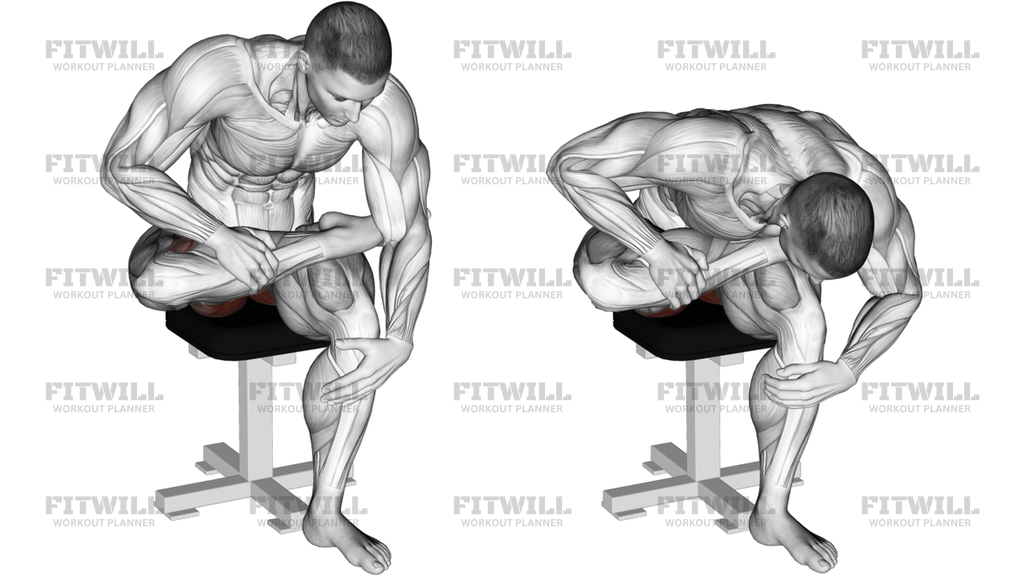
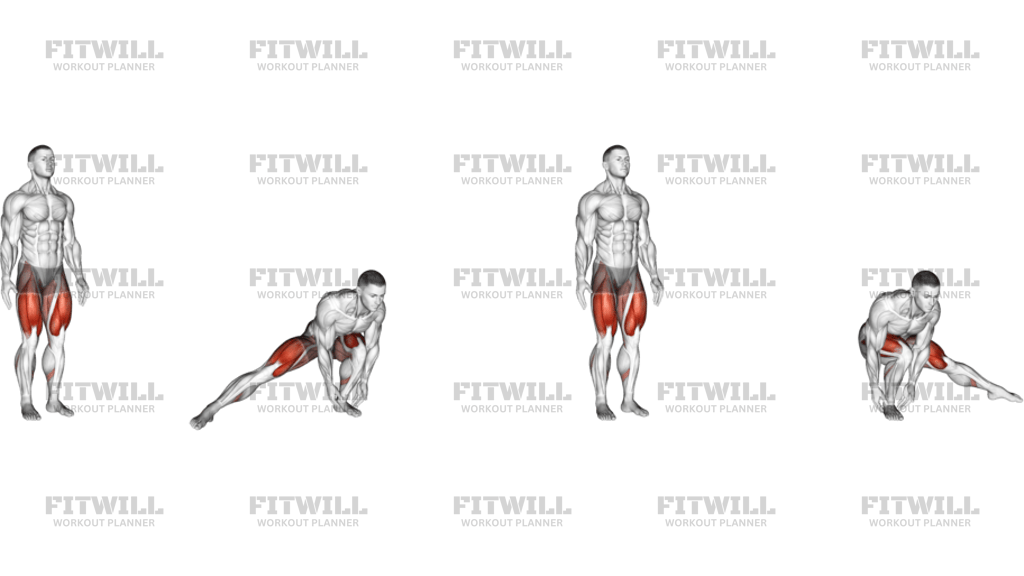
The image shows a standing start and a low, folded position where the torso drops toward one leg while the other leg reaches out to the side. That means the setup matters: you need enough space to step, squat, and extend the leg without twisting the knee or losing your stance. The working leg should stay rooted, the heel should stay down when you squat, and the torso should stay long instead of collapsing forward.
This exercise is mostly about controlled hip action and clean bodyweight tension. In anatomy terms, the main work centers on the Gluteus maximus, with support from the hamstrings, Rectus abdominis, and Erector spinae. The glutes drive the squat and side kick, while the core keeps the ribs and pelvis organized as you reach toward the heel.
Each repetition should feel deliberate: lower into the squat, touch toward the heel with control, extend the opposite leg in the side kick, then come back to standing before switching sides. The kick is a reach, not a snap. If the movement starts turning into a jump or a twist, shorten the range and slow it down so the hips keep doing the work.
This is a good choice for warm-ups, mobility-strength circuits, or conditioning blocks where you want moderate effort without external load. It is beginner-friendly when performed at a shallow depth, and it can be made harder by slowing the tempo, lowering deeper, or adding a pause in the bottom position. Keep the motion pain-free and smooth so the exercise trains coordination instead of just fatigue.
[ Workout Log & Planner ]
Put your next workout in Fitwill
Keep your plan and training log ready when you are.


Instructions
- Stand tall with your feet about shoulder-width apart and your weight centered over both feet.
- Keep your chest lifted, ribs stacked over your pelvis, and your hands ready to reach toward the working leg.
- Sit back into a squat as if you are lowering to a chair, keeping both heels planted and your knees tracking over your toes.
- At the bottom, reach down toward the heel on one side while the opposite leg begins to open out into a side kick.
- Keep the supporting foot rooted and let the kick travel out to the side under control instead of snapping the leg.
- Press through the standing leg to rise back to the top while bringing the kicking leg back under you.
- Reset at the top, then repeat on the other side so the heel touch and side kick alternate each rep.
- Breathe in as you lower and reach, then exhale as you stand and switch sides.
Tips & Tricks
- Keep the squat depth shallow enough that you can touch the heel without rounding your low back.
- Use the floor as a balance reference: the standing foot should feel tripod pressure through the big toe, little toe, and heel.
- Let the side kick come from the hip, not from twisting the knee or swinging the torso.
- If the heel touch pulls you off balance, lower your hand only as far as you can while keeping the supporting leg stable.
- Move the kicking leg on a smooth path out and back instead of holding it rigid in the air.
- Keep the standing knee lined up with the second or third toe to avoid caving inward.
- Slow the tempo if you want more glute work and less bounce through the bottom of the squat.
- Stop the set when you can no longer return to standing without wobbling or leaning.
Frequently Asked Questions
What muscle does Alternate Heel Touch Side Kick Squat target most?
The glutes do most of the work, with the quads, hamstrings, and core helping you control the squat and side kick.
Can beginners perform this exercise?
Yes. Beginners should keep the squat shallow, move slowly, and use the heel touch only as far as balance allows.
Where should my hand go during the heel touch?
Reach toward the heel on the working side without collapsing your chest or shifting all your weight off the standing leg.
Should the side kick be fast or explosive?
No. The kick should look controlled and deliberate so the hip, not momentum, moves the leg.
What are the most common form errors?
Rounding the back, letting the standing knee cave in, and swinging the leg instead of lifting it with control.
Can I hold onto something for balance?
Yes. A light fingertip hold on a wall or rack can help you learn the pattern without turning it into a balance test.
Is this more of a strength exercise or a warm-up drill?
It can serve both roles, but it usually fits best as a warm-up, activation drill, or bodyweight accessory movement.
How do I make this harder without adding weight?
Use a slower lower, pause in the squat, or increase the range only if you can keep the heel touch and kick under control.