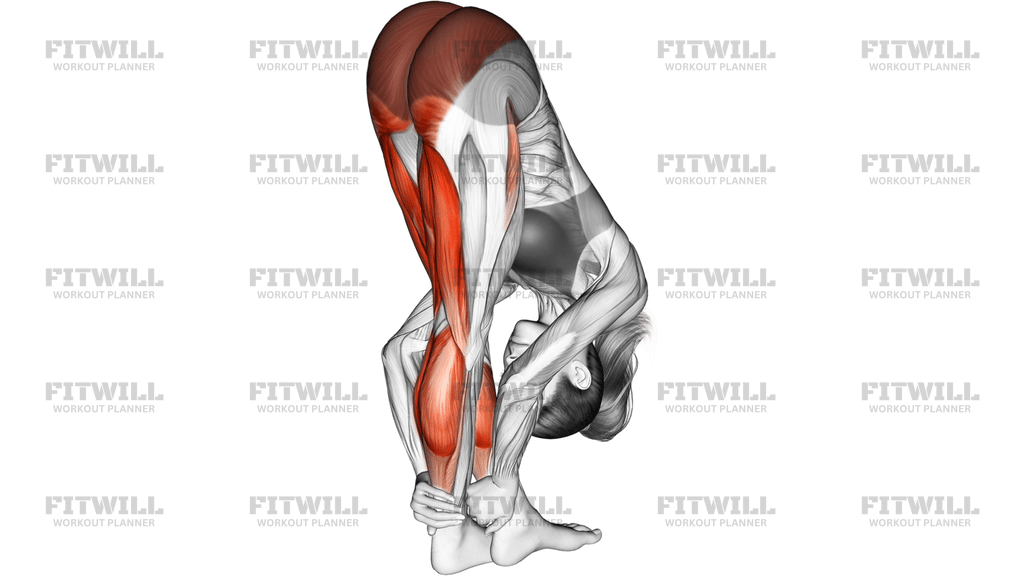
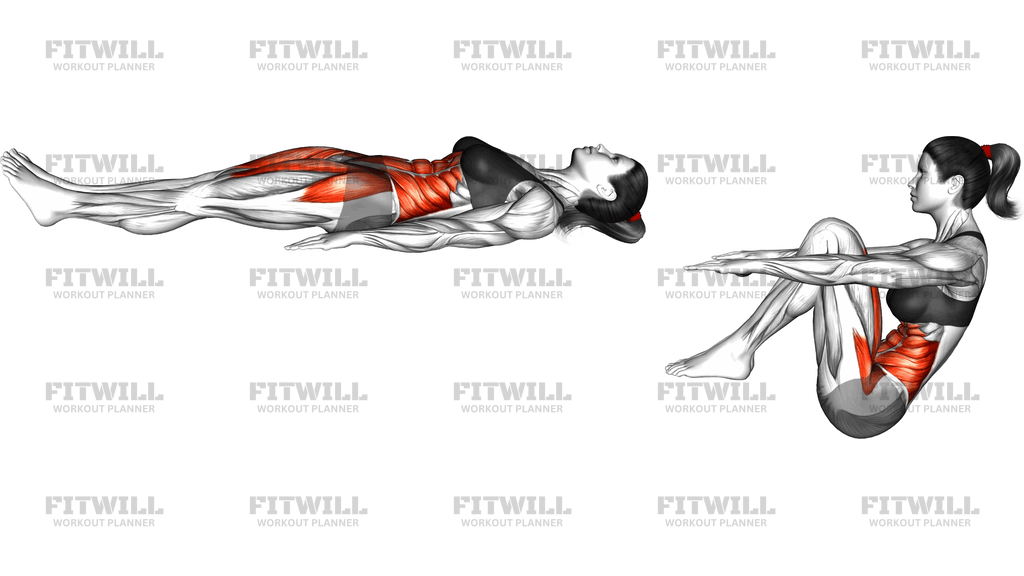
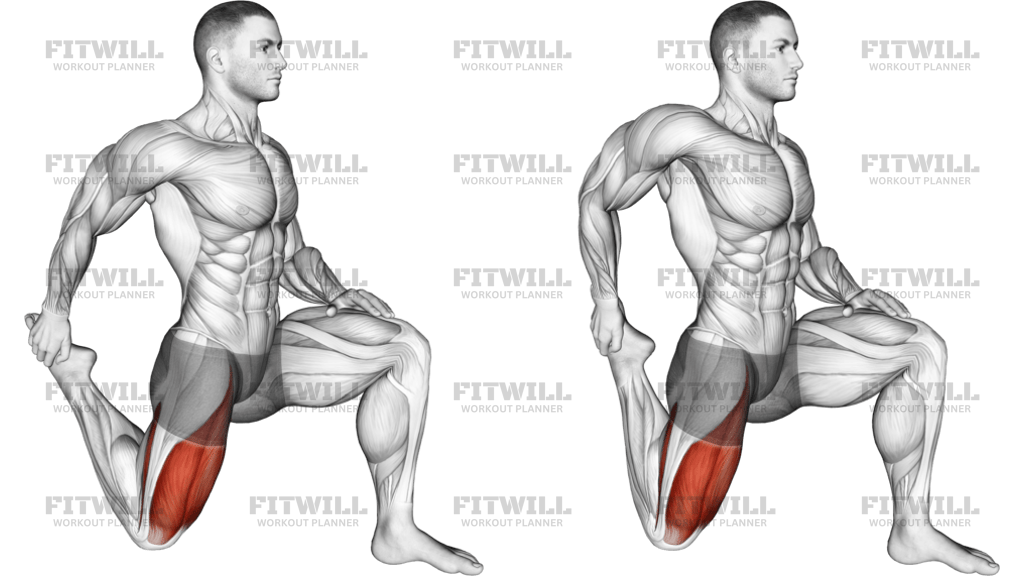
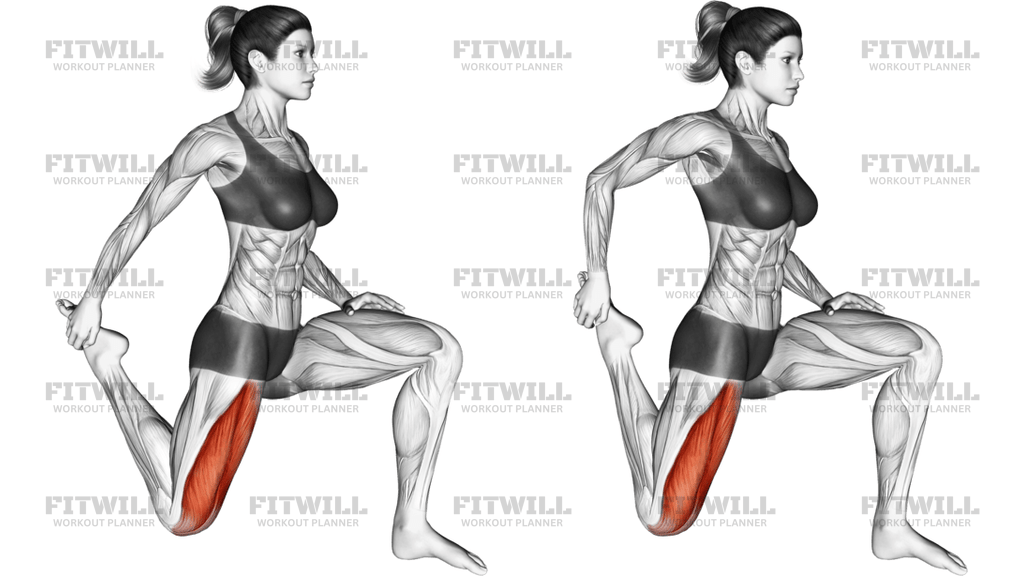
Seated Knee Flexor Stretch
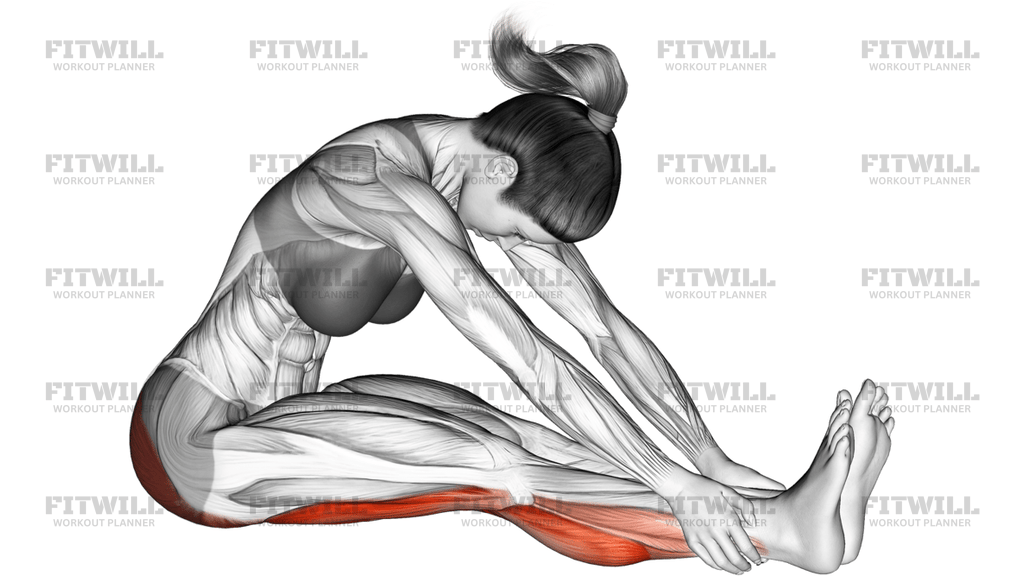
Seated Knee Flexor Stretch is a floor-based stretch for the back of the thighs, especially the hamstrings. Sit on an exercise mat, extend your legs, and fold forward from the hips so the stretch comes from a long posterior chain position rather than a hard collapse through the lower back. It is a useful reset after squats, deadlifts, running, rowing, or long periods of sitting when the hamstrings feel short and the knees do not want to straighten comfortably.
The position matters because this stretch is only as good as the way you sit into it. If you round aggressively, yank on the feet, or let the pelvis roll backward, the tension tends to shift out of the hamstrings and into the spine. A better version keeps the sit bones grounded, the chest long, and the reach controlled so the back of the legs gets a steady, recognizable pull without a sharp pinch behind the knees.
Seated Knee Flexor Stretch works best as a calm, deliberate hold rather than a forced test of flexibility. Reach toward the shins, ankles, or feet, then pause at the first strong stretch and breathe into that position. On each exhale, let the torso soften a little farther over the legs while keeping the knees as straight as your current mobility allows. If the stretch starts to feel nervous or biting, back off immediately and shorten the fold.
This movement is practical for beginners because the range is easy to scale with a bent knee, a folded towel under the hips, or a smaller forward lean. More advanced lifters can use the same shape to unwind tight hamstrings after heavy lower-body training or repeated sprint work. The goal is not to force your chest to your thighs; it is to create a clean, repeatable lengthening pattern that leaves the legs looser without irritating the lower back.
Treat Seated Knee Flexor Stretch like a technique drill for flexibility. Move in slowly, breathe steadily, and come out of the position with control instead of snapping upright. When the setup stays tidy and the reach stays honest, this stretch does what it should: it gives the hamstrings room to lengthen while helping the hips and spine settle into a more useful resting position.
[ Workout Log & Planner ]
Put your next workout in Fitwill
Keep your plan and training log ready when you are.


Instructions
- Sit on an exercise mat with both legs extended straight in front of you, heels on the floor, and toes pointed up.
- Sit tall on your sit bones and place your hands on your thighs, shins, ankles, or feet where you can reach without shrugging your shoulders.
- Hinge forward from your hips and slide your torso toward your legs, keeping your chest long instead of rounding immediately through the lower back.
- Keep both knees as straight as your current mobility allows and avoid letting them drift wide apart.
- Reach a hand position that creates a firm stretch along the back of the thighs without sharp pain behind the knees.
- Exhale and let the torso settle a little farther forward while staying relaxed through the neck and shoulders.
- Hold the end position for a controlled stretch, breathing steadily instead of bouncing or pulling harder.
- Press your hands into your legs or the floor and roll back up slowly to finish the hold with control.
Tips & Tricks
- Sit on a folded towel or thin pad if your pelvis tucks under before you feel the hamstrings.
- Keep the knees long but not forced into hyperextension; a tiny soft bend is better than yanking the joint straight.
- Pull the toes back toward your shins to bias the back of the thighs, or relax the ankles slightly if the calves take over.
- Reach from the hips first; if your head drops before your chest moves, you are folding too much through the spine.
- Use your hands as light guides on the shins or feet instead of trying to drag your torso deeper.
- If the stretch feels sharp behind the knees, shorten the fold and keep the chest a little higher.
- Breathe out slowly to let the hamstrings soften, but do not use a forceful bounce to chase more range.
- Stay in a position you can hold evenly on both sides so one tighter hamstring does not twist the torso.
Frequently Asked Questions
What does Seated Knee Flexor Stretch target most?
It mainly lengthens the hamstrings at the back of the thighs, with some calf involvement if you pull the toes up.
Can beginners do Seated Knee Flexor Stretch safely?
Yes. Beginners usually do best with a small forward fold, a slight knee bend, and a folded mat under the hips if the lower back rounds too early.
Should my knees stay straight the whole time?
Keep them as straight as your current mobility allows, but do not force them locked. A small bend is fine if it keeps the stretch in the hamstrings instead of the joint.
Why do I feel this behind my knees?
That usually comes from tight hamstrings near their lower attachment. The sensation should be a strong stretch, not a sharp, nerve-like pain.
Should I pull on my feet to go deeper?
Light contact is fine, but yanking on the feet usually just rounds the spine. Use your hands as guides and let the hinge happen from the hips.
What if I cannot reach my toes?
Reach for your shins or ankles instead. The stretch is still effective as long as you keep the torso long and breathe through the position.
When should I use Seated Knee Flexor Stretch?
It works well after lower-body training, running, rowing, or any long sitting block when the back of the legs feels tight.
How long should I hold the stretch?
A steady 20 to 40 second hold is usually enough for one round, as long as you can keep breathing and stay out of pain.