Quadriceps Stretch
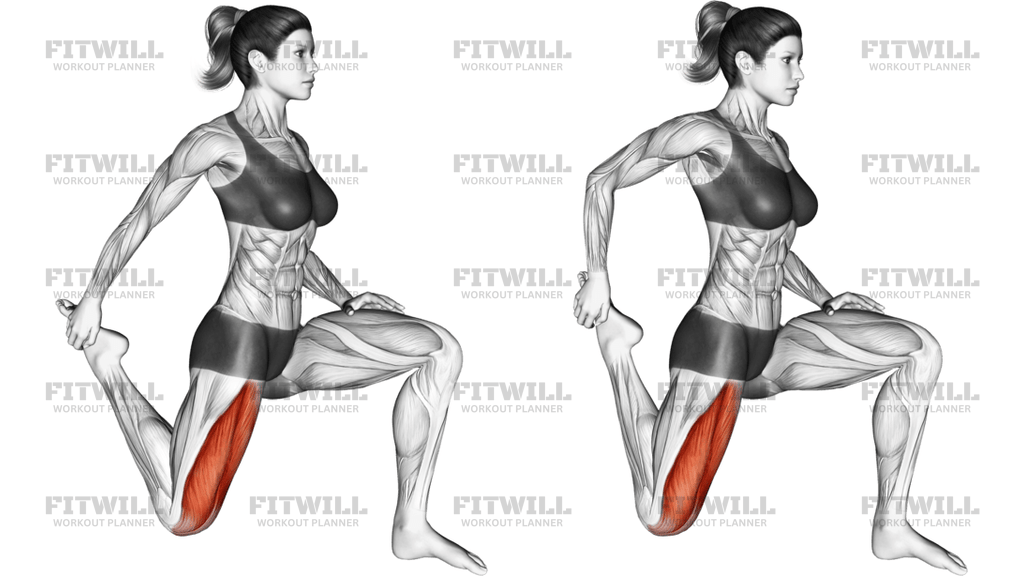
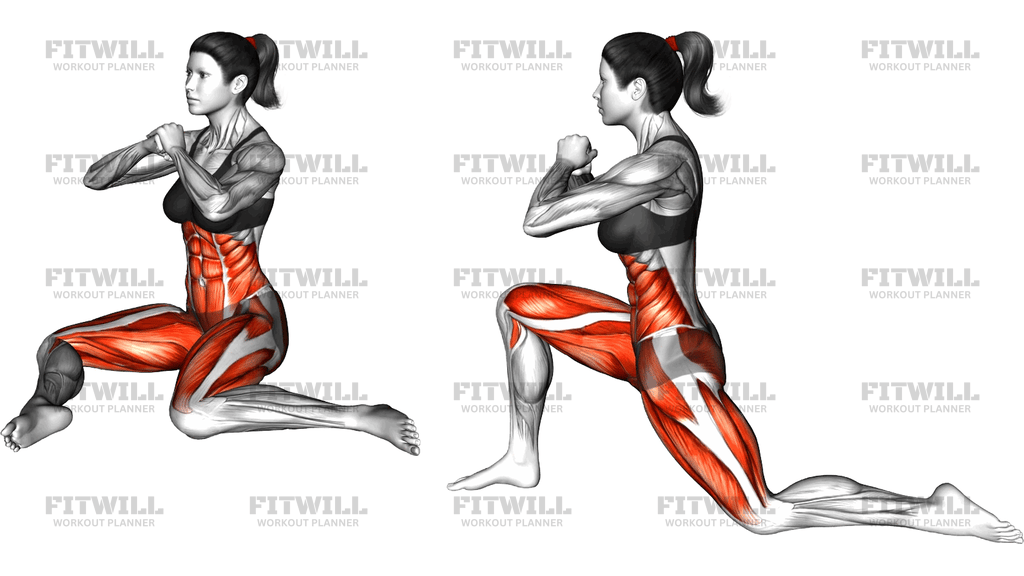
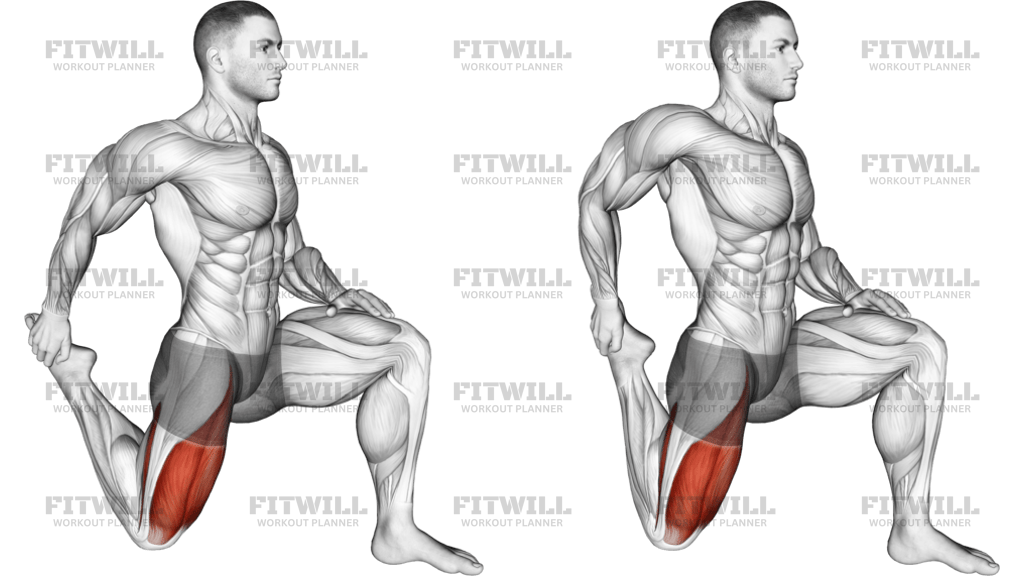
Quadriceps Stretch is a kneeling bodyweight stretch for the front of the thigh, usually performed on an exercise mat with one knee down and the other foot planted in front for balance. It is a simple-looking movement, but the quality of the setup matters because the stretch changes a lot depending on how square the hips stay and how much the lower back arches.
This version places most of the lengthening demand on the quadriceps of the kneeling leg, especially the rectus femoris, while the glutes, core, and other stabilizers help you stay tall and controlled. When the pelvis is tucked slightly and the torso stays stacked instead of leaning forward or collapsing back, the stretch stays where you want it instead of spilling into the low back or knee.
Quadriceps Stretch is especially useful after squats, lunges, running, cycling, or any session that leaves the front of the thighs feeling tight. The front leg gives you a stable base, and the hand that reaches back to the rear ankle or foot lets you control the intensity rather than forcing the range. That makes it a practical option for cooldown work, mobility blocks, and warmups when the legs need to open up without aggressive bouncing.
The best repetition is calm and deliberate: settle the back knee onto the mat, keep the front foot grounded, draw the rear heel toward the glute, and hold the hips as square as possible while breathing steadily. A small hip shift forward is usually enough; you do not need to yank hard on the ankle. If the stretch turns into pinching at the knee, a hard arch in the low back, or a twist through the pelvis, reduce the range and rebuild the position before holding again.
Because Quadriceps Stretch is a low-load mobility drill, the goal is not to chase intensity but to create a clean, repeatable line of tension through the front of the thigh. Beginners can use it safely by keeping one hand on the front thigh or a wall for balance, padding the kneeling knee, and shortening the hold until the body relaxes into the position. With consistent control, it becomes a reliable way to restore leg length and improve comfort in deeper lower-body training positions.
[ Workout Log & Planner ]
Put your next workout in Fitwill
Keep your plan and training log ready when you are.


Instructions
- Kneel on a mat with one knee under your hip and the other foot planted in front so the front shin stays mostly vertical.
- Keep the kneeling knee on the mat and stack your torso tall over your hips before you reach back.
- Reach back with the same-side hand and hold the ankle or top of the foot on the kneeling side.
- Lightly draw the rear heel toward your glute until you feel a stretch through the front of the thigh.
- Keep the front foot rooted and the front knee steady so the pelvis does not twist open.
- Tuck the pelvis slightly and keep the ribs from flaring as you settle into the stretch.
- Breathe slowly and stay at the point where the thigh stretches without knee pain or low-back compression.
- Release the foot gradually, come out of the kneeling position with control, and repeat on the other side.
Tips & Tricks
- Pad the kneeling knee if the floor is hard; pressure on the kneecap can make the stretch feel worse than it should.
- Keep the front foot far enough forward that the hips can stay square instead of forcing the lower back into an arch.
- Squeeze the glute on the kneeling side to increase the front-of-thigh stretch without yanking harder on the ankle.
- If you feel the stretch mostly in the low back, reduce the rear-foot pull and tuck the pelvis a little more.
- Hold the ankle or foot lightly; a death grip usually leads to twisting through the torso and losing balance.
- Keep the front knee pointing straight ahead and avoid letting it drift inward as you settle.
- A short hold with steady breathing is better than bouncing or forcing the heel closer to the glute.
- If you cannot reach the foot, use a strap or keep one hand on a wall until the position feels stable.
- Stop immediately if the stretch creates a sharp knee pinch rather than a front-thigh lengthening sensation.
Frequently Asked Questions
What does Quadriceps Stretch target most?
It mainly targets the quadriceps on the kneeling leg, especially the rectus femoris, with the hip flexors lengthening as well.
Why do I need the front foot in Quadriceps Stretch?
The front foot gives you a stable base so you can keep the hips square while you pull the rear heel toward the glute.
Can beginners do Quadriceps Stretch?
Yes. Beginners usually do well with a padded knee, a hand on a wall or front thigh for balance, and a shorter hold.
What should Quadriceps Stretch feel like?
You should feel a strong stretch through the front of the thigh of the kneeling leg, not a sharp pinch in the knee or a cramp in the low back.
Why does my lower back arch during Quadriceps Stretch?
That usually means the pelvis is tipping forward too much. Tuck the pelvis slightly, squeeze the kneeling-side glute, and do not yank the foot harder.
Can I hold on to something during Quadriceps Stretch?
Yes. A wall, rack, or bench can help with balance as long as you keep the torso tall and the hips facing forward.
How long should I hold Quadriceps Stretch?
A controlled 20 to 30 second hold is a good starting point, then repeat on the other side without bouncing.
What if I cannot reach my foot in Quadriceps Stretch?
Use a strap, hold the ankle instead of the foot, or reduce the rear-leg bend until you can keep the hips square and the torso steady.