Seated Hip Stretch With Opposite Leg From Behind
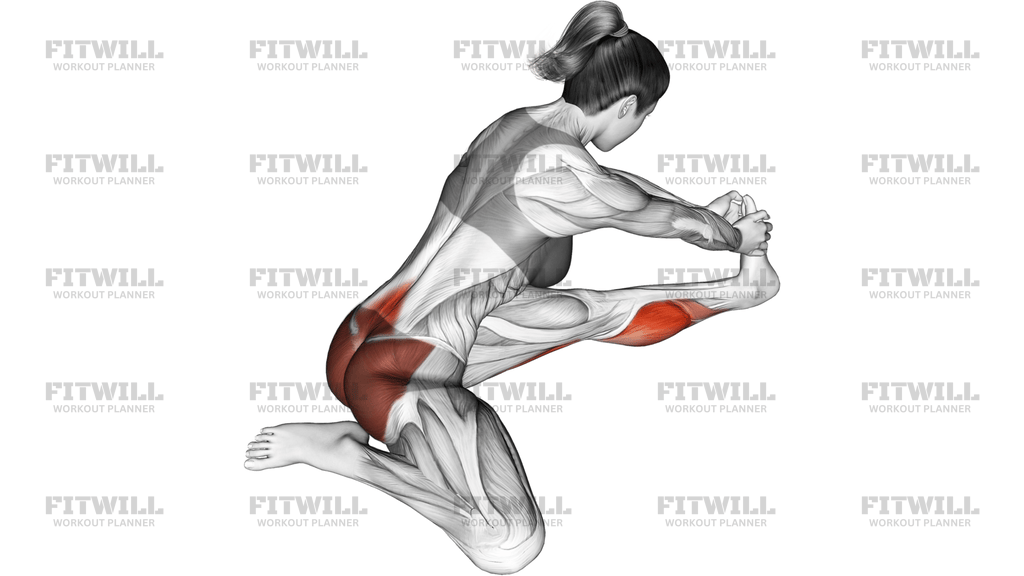
Seated Hip Stretch With Opposite Leg From Behind is a floor-based hip mobility drill where one leg is folded behind the body and the other leg reaches forward as the torso folds over the front leg. The position asks the hips, glutes, and inner thigh to open while the spine stays long enough to keep the stretch organized rather than collapsed.
The setup matters because the rear leg and front leg create two different tension lines at once. The trailing hip often feels the strongest pull when the pelvis stays square, while the extended leg limits how much you can hinge forward without rounding. That combination makes the exercise useful for restoring hip rotation, easing tight glutes, and preparing the body for squats, lunges, running, or floor work.
A good rep starts by sitting evenly on the mat, then gently drawing the chest forward from the hips instead of yanking the foot. Keep the front foot flexed, keep both sit bones grounded as much as the position allows, and use a calm exhale to settle deeper into the stretch. The goal is a steady, repeatable end range, not a forced reach or a hard twist through the low back.
Use this stretch during a warm-up, cool-down, mobility block, or recovery day when you want to open the hips without loading them heavily. Beginners can shorten the stance or keep the torso more upright. If the front knee or the back hip feels pinched, reduce the depth, adjust the angle of the front leg, or come out slightly and reset before trying again.
You should feel controlled tension through the rear hip and glute, plus a lengthening effect along the front leg and groin depending on your setup. You should not need to force through pain, bounce at the bottom, or collapse onto the front thigh. Smooth breathing and patient positioning make this stretch more effective than chasing a bigger range with momentum.
[ Workout Log & Planner ]
Put your next workout in Fitwill
Keep your plan and training log ready when you are.


Instructions
- Sit on a mat with one leg extended in front of you and the opposite leg folded behind your hip, then find a balanced seat on both sit bones as much as possible.
- Flex the front foot and keep the front knee pointed upward instead of letting it roll inward or drift outward.
- Square your pelvis and trunk toward the front leg, then lengthen through the crown of the head before you fold.
- Reach both hands toward the front foot, ankle, or shin until you feel a strong but controllable stretch.
- Hinge from the hips and let the chest travel forward over the extended leg instead of collapsing the lower back.
- Exhale slowly as you settle into the end range, keeping the trailing hip relaxed and the front leg active.
- Hold the stretch for a smooth breath or two, then make a small adjustment only if the tension stays mild and even.
- Come back up slowly, reset your posture, and repeat on the other side with the same leg position and range.
Tips & Tricks
- Keep the front foot flexed so the front leg stays active and the knee feels supported.
- If the back hip feels jammed, slide the rear knee a little farther behind you before folding forward.
- Think long spine first, chest second to avoid dumping into the low back.
- A small bend in the front knee is fine if it lets you keep the pelvis steady.
- Don't pull hard on the foot; use the hands to guide, not yank, the stretch.
- Exhale longer than you inhale to let the hips settle without forcing them.
- If you lose balance on the sit bones, come out a little and re-square before going deeper.
- Stop short of pinching in the front of the hip or any sharp pain in the knee.
Frequently Asked Questions
What does Seated Hip Stretch With Opposite Leg From Behind stretch most?
It mainly opens the rear hip and glute while also stretching the front leg, groin, and adductors depending on how far you fold.
Can beginners perform this exercise?
Yes. Beginners should keep the torso more upright, shorten the stance if needed, and only fold as far as they can stay square and relaxed.
Should the front foot stay flexed?
Yes. A flexed front foot helps keep the front leg active and usually makes the knee feel more supported during the fold.
Why does pelvic position matter in this stretch?
Keeping the pelvis as square as possible shifts the tension into the hips instead of letting the low back twist or round to fake more range.
Where should I feel the stretch?
You should feel it in the rear hip and glute, with possible length through the front leg or groin. Sharp pain in the knee or low back is a sign to reduce the range.
What can I hold if I can't reach my foot?
Use the ankle, shin, or a strap around the foot instead of forcing the reach. The goal is a controlled fold, not a hard tug.
When is this stretch most useful?
It works well in a warm-up, cool-down, mobility flow, or recovery session, especially before squats, lunges, or running.
What is the most common mistake?
Most people either collapse through the low back or force the torso forward too aggressively instead of hinging and breathing into the position.