Finger Extension Stretch
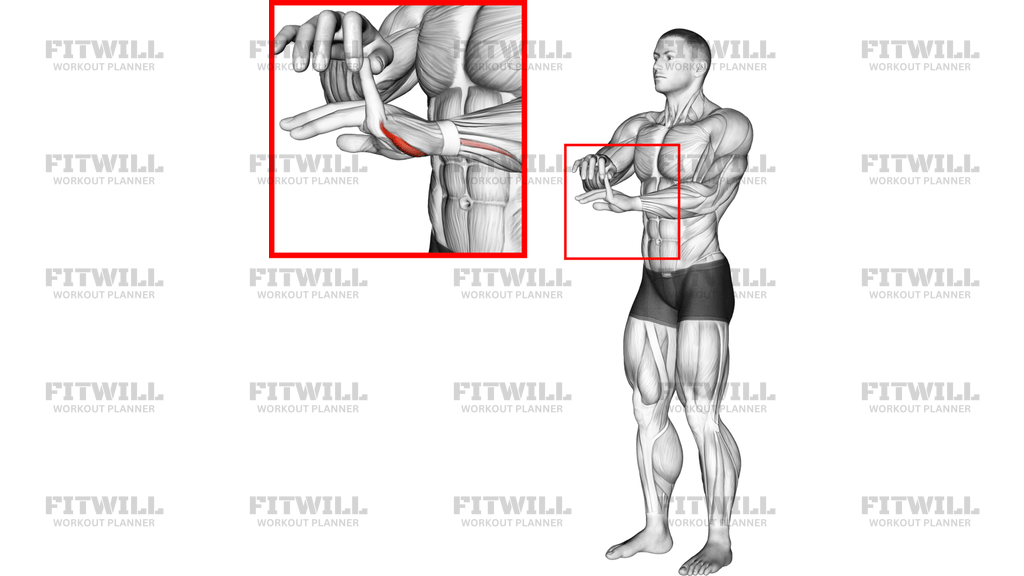
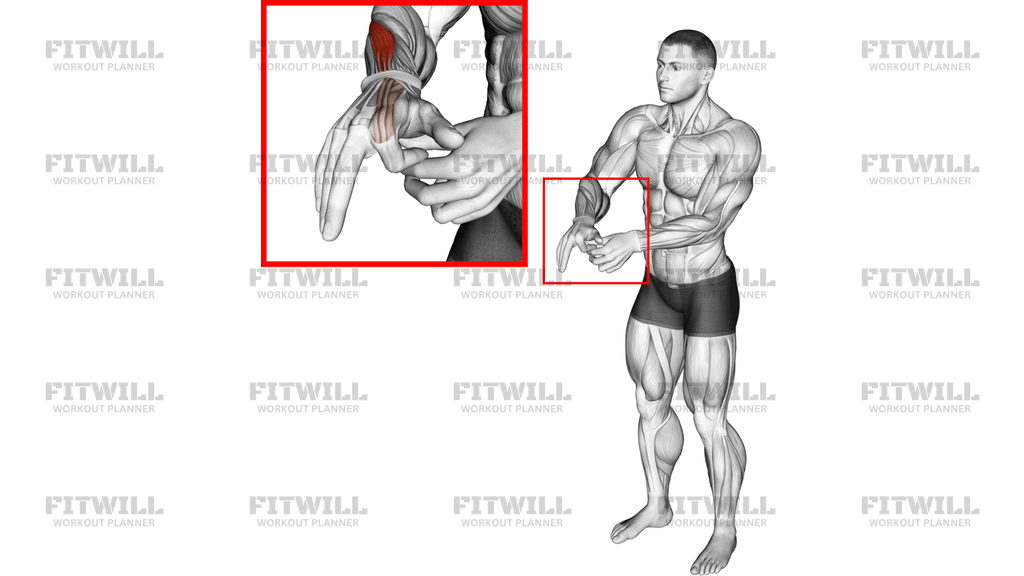
Finger Extension Stretch opens the fingers, palm, and the front side of the forearm by gently drawing the hand into extension. In the image, one arm is held out in front of the body while the opposite hand pulls the fingers back, which loads the finger flexors and the tissues that often tighten after gripping, climbing, lifting, racket sports, or long hours at a keyboard. The goal is a controlled stretch, not a hard crank on the wrist or knuckles.
The setup matters because small changes in elbow angle, shoulder height, and wrist position change where the stretch is felt. Keeping the arm mostly straight shifts the tension into the forearm instead of folding the wrist into a sloppy bend. An upright torso and relaxed shoulder help you isolate the stretch so the hand, fingers, and forearm can lengthen without the upper body twisting to fake more range.
Perform the stretch by using the opposite hand to guide the fingers back slowly until you feel a clear pull across the palm and into the forearm. The stretch should build gradually as you breathe out and let the hand soften. If you jam the fingers back aggressively, the joints take over and the stretch turns into irritation instead of useful tissue work. Calm pressure and steady breathing make the position more productive.
This movement is useful as a cool-down after grip-heavy training, as a reset between work sets that involve pulling or holding, or as a gentle mobility drill when the hands feel stiff. It can also be part of a warmup if you keep the range light and brief. Stay away from sharp pain, numbness, or tingling, and treat each side independently so you can notice asymmetry without forcing both hands to match a bad range.
[ Workout Log & Planner ]
Put your next workout in Fitwill
Keep your plan and training log ready when you are.


Instructions
- Stand tall or sit upright and extend one arm straight in front of you at about shoulder height.
- Keep the elbow mostly straight and turn the hand so the fingers are easy to reach with the opposite hand.
- Place the opposite hand over the fingers and gently secure the hand without squeezing the joints.
- Draw the fingers back into extension until you feel a stretch through the palm and the underside of the forearm.
- Keep the shoulder down and the torso still so the stretch stays in the hand and forearm.
- Breathe out slowly as you ease into the end range and let the hand relax.
- Hold the stretch without bouncing or forcing the wrist past a comfortable line.
- Release the fingers slowly, reset the arm, and repeat on the other side for the same amount of time.
Tips & Tricks
- Aim the stretch through the finger joints and palm; do not turn it into a hard wrist bend.
- A nearly straight elbow usually increases the pull through the forearm flexors, while a bent elbow makes the stretch easier.
- If the fingers cramp, back off a little and let the hand open before asking for more range.
- Keep the shoulder relaxed so the upper trap does not lift and steal tension from the forearm.
- Pull evenly across all fingers instead of yanking hardest on the index or middle finger.
- A slow exhale often lets the hand soften enough to gain a little extra range without force.
- Hold the position still for a few seconds before changing the angle; small adjustments are more useful than big jerks.
- Stop immediately if you feel tingling, numbness, or a sharp pinch at the wrist or knuckles.
Frequently Asked Questions
What does Finger Extension Stretch target most?
It mainly stretches the finger flexors and the tissues on the underside of the forearm.
Should the arm stay straight during the stretch?
Keep the elbow mostly straight, but do not slam it hard into lockout; a soft, long arm gives a better forearm stretch.
Where should I feel the stretch in my hand?
You should feel it through the palm, fingers, and the front of the forearm, not as a sharp pinch in the knuckles.
Why does my wrist hurt when I pull the fingers back?
That usually means you are forcing the wrist instead of letting the stretch spread through the fingers and forearm; back off the angle and use lighter pressure.
Is this better before or after grip work?
It is often most useful after gripping, climbing, lifting, or typing, when the hand and forearm need to open back up.
Can I stretch one finger harder than the others?
It is better to keep the pull even across the fingers so one joint does not take all the stress.
How long should I hold each side?
A short, controlled hold is usually enough; repeat or lengthen the hold only if the hand stays relaxed and pain-free.
What should I do if I feel tingling in the fingers?
Release the stretch right away and reduce the range; tingling is a sign the position is too aggressive.