Palms Out Forearm Stretch
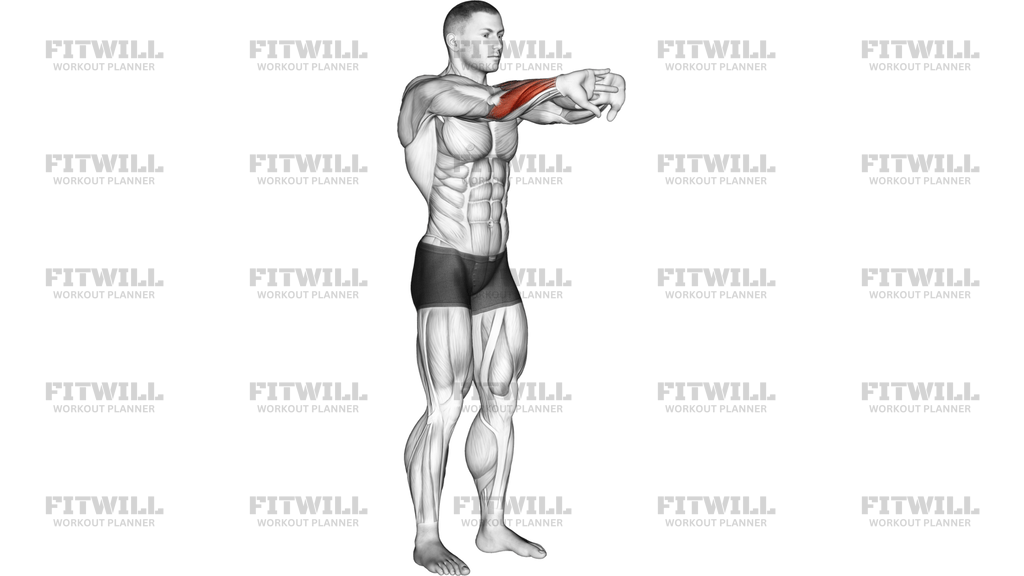
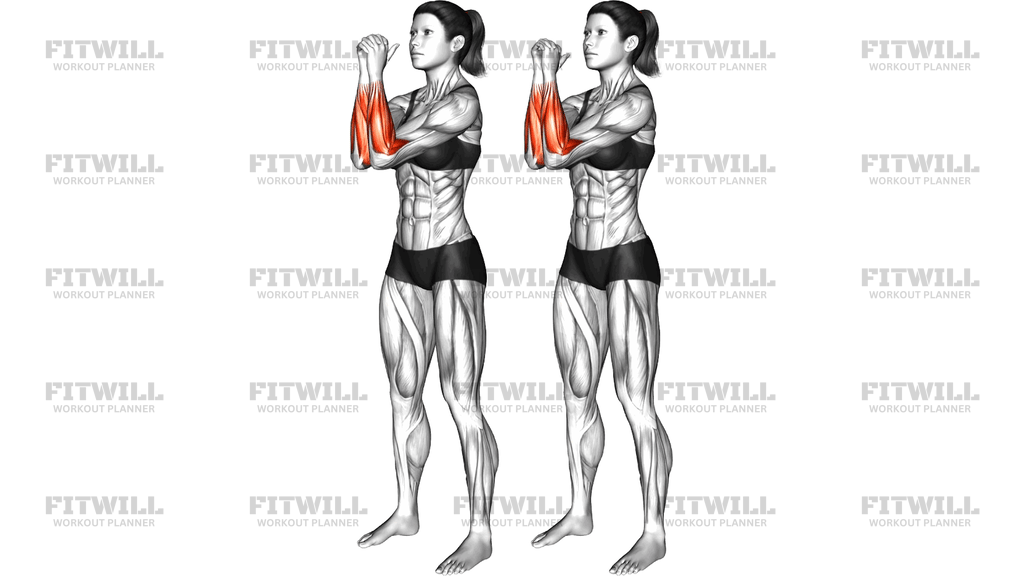
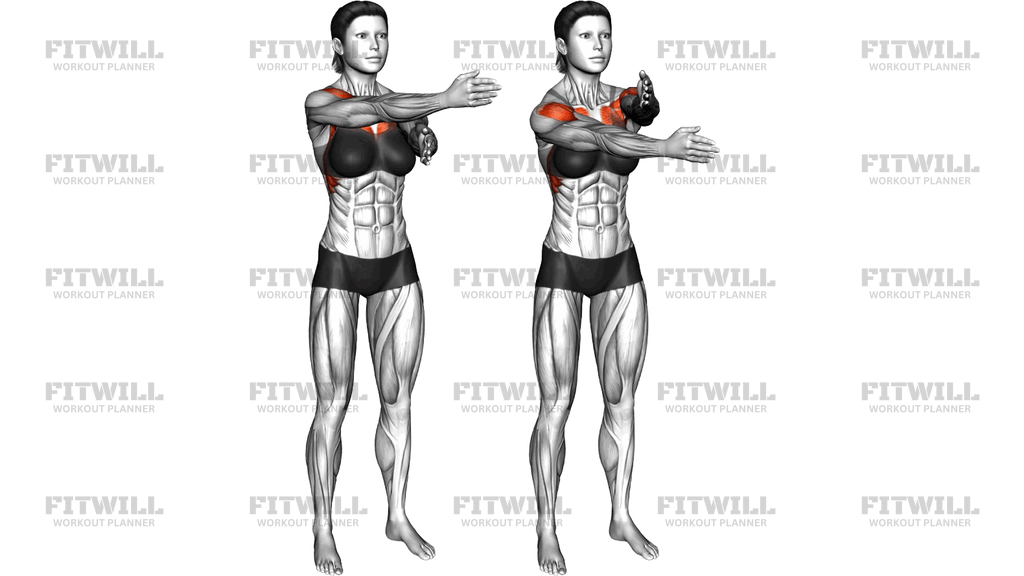
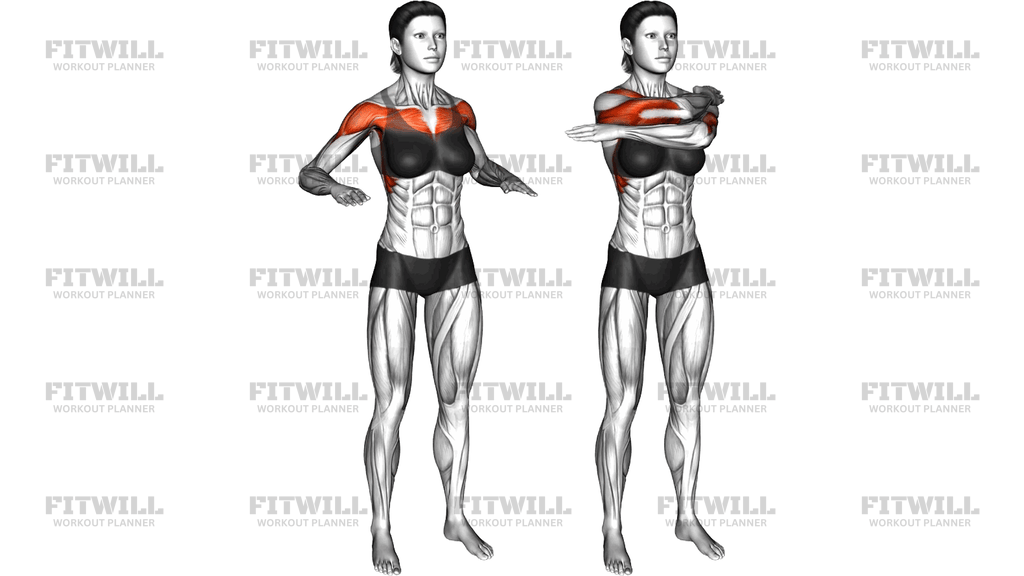
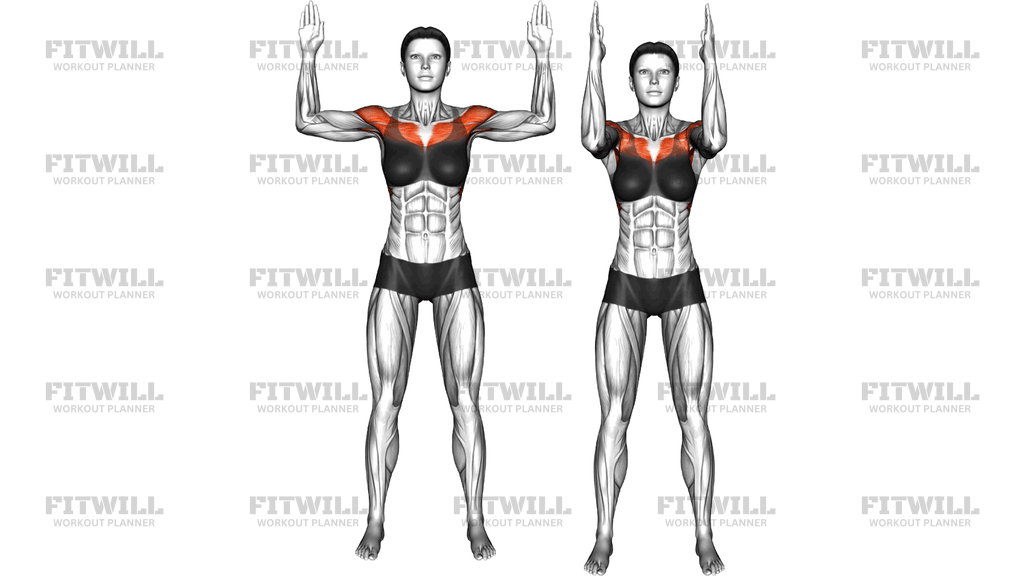
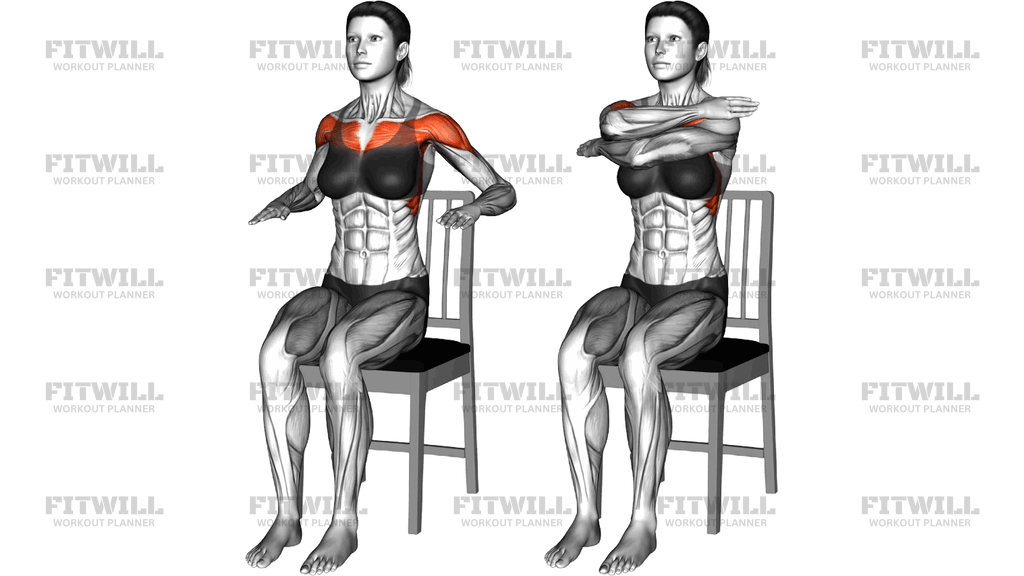
Palms Out Forearm Stretch is a standing mobility drill for the forearms, wrists, and shoulder line. The image shows both arms held out in front with the palms turned outward, which creates a long line from the shoulder through the elbow and into the wrist. That position is useful when the forearms feel tight after gripping, pulling, pressing, typing, racket sports, or bar work, because it lets you open the front of the forearm without needing any external load.
The setup matters more than people expect. If the elbows bend or the shoulders shrug up, the stretch moves away from the forearms and into the neck and upper traps. A cleaner version keeps the rib cage stacked, the neck long, and the arms reaching forward at about shoulder height while the palms stay out. Small changes in wrist angle make a big difference, so the goal is to find a position that produces a clear forearm stretch without sharp wrist strain.
This is a mobility exercise, not a strength test. You should feel a steady pull through the forearm muscles and possibly into the front of the shoulder if the arms are held high. Breathe slowly and let the tension ease as you settle into the hold. If you are using it as part of a warmup, keep the stretch brief and controlled. If you are using it after training, a slightly longer hold can help downshift the forearms after heavy gripping or repeated wrist work.
The most useful version is the one you can repeat consistently. Keep the movement smooth, avoid bouncing, and do not crank the hands back until the wrists complain. This stretch is especially helpful for lifters, climbers, desk workers, and anyone who wants to restore comfort after repetitive forearm loading. Done correctly, it should leave the forearms feeling open and the hands easier to move, not irritated or numb.
[ Workout Log & Planner ]
Put your next workout in Fitwill
Keep your plan and training log ready when you are.


Instructions
- Stand tall with your feet about hip-width apart and raise both arms straight in front of you at shoulder height.
- Turn the palms outward so the fingers point away from your body and the forearms can lengthen in a straight line.
- Keep the elbows long but not jammed back, and stack your ribs over your pelvis so the stretch stays in the forearms instead of the low back.
- Gently reach through the fingertips until you feel a steady pull along the forearm and wrist line.
- Let the shoulders stay down and away from the ears while the neck stays relaxed.
- Hold the position and breathe slowly through the nose or a soft exhale to let the forearms soften.
- If the wrists pinch, lower the arms slightly or ease the hand angle until the stretch is strong but not sharp.
- Release the hands slowly and repeat the hold, then switch to a less intense angle if one side feels tighter than the other.
Tips & Tricks
- A small change in hand angle changes the stretch a lot; you do not need to force the wrists far back to feel this exercise.
- Keep the elbows nearly straight, but avoid locking them hard because that usually shifts tension into the joint instead of the forearm.
- If the shoulders creep toward the ears, lower the arms a little and re-set the neck before holding again.
- This should feel like a controlled forearm opening, not a jammed wrist position or a sharp pull through the hand.
- Use slower breathing on the long exhale to help the forearm tissues relax without bouncing.
- After curls, rows, dead hangs, climbing, or long typing sessions, this stretch usually feels better as a cooldown than as a max-effort hold.
- If one forearm is tighter, keep the weaker side in the cleaner position rather than twisting both arms to match the tight side.
- Stop immediately if you feel tingling, numbness, or a pinch on the thumb side or pinky side of the wrist.
Frequently Asked Questions
What does Palms Out Forearm Stretch target?
It mainly targets the forearm muscles and wrist tissues, with some shoulder involvement from holding the arms out in front.
Should my elbows stay straight during the stretch?
Keep them long, but do not lock them aggressively. A soft straight arm keeps the stretch in the forearms instead of the joints.
Where should I feel the stretch most?
You should feel it through the forearms and wrists, with a possible light pull into the front of the shoulders if the arms are held high.
Why do my shoulders take over?
Usually the arms are too high or the shoulders are shrugged up. Lower the arms slightly and keep the neck long so the forearms stay the focus.
Can beginners use this stretch?
Yes. Beginners should start with a mild hold and a small wrist angle change, then build only as far as the forearms stay comfortable.
Is it better before or after training?
Both can work. Use a shorter, gentler hold in the warmup and a slightly longer hold after grip-heavy or pulling work.
What is the most common mistake?
Forcing the hands too far back or letting the shoulders shrug, which turns a forearm stretch into wrist irritation and upper trap tension.
What should I do if one side feels tighter?
Hold the tighter side in a cleaner, smaller range instead of twisting both arms to match it, then repeat the stretch on that side.