Assisted Lying Adductors Stretch
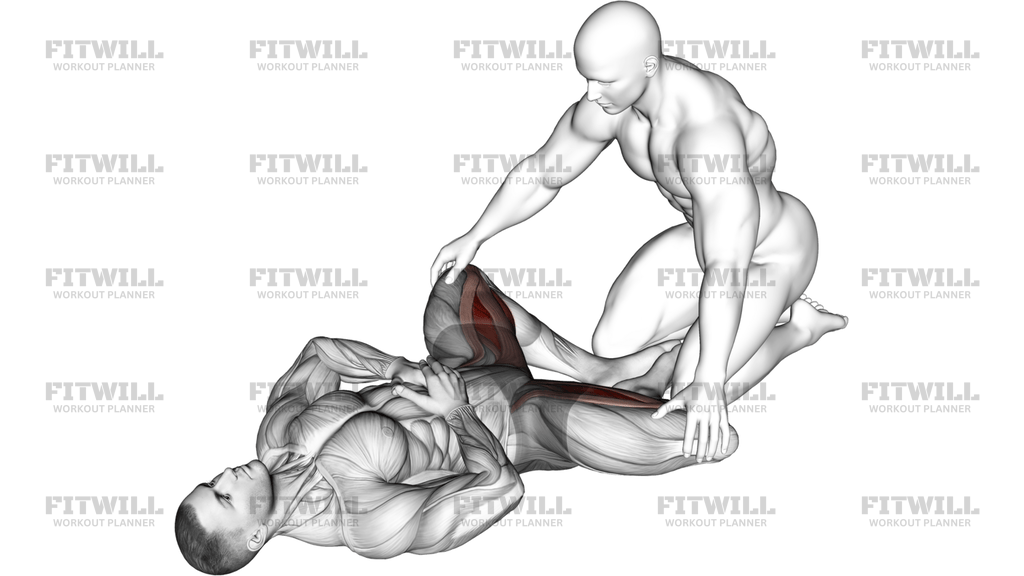
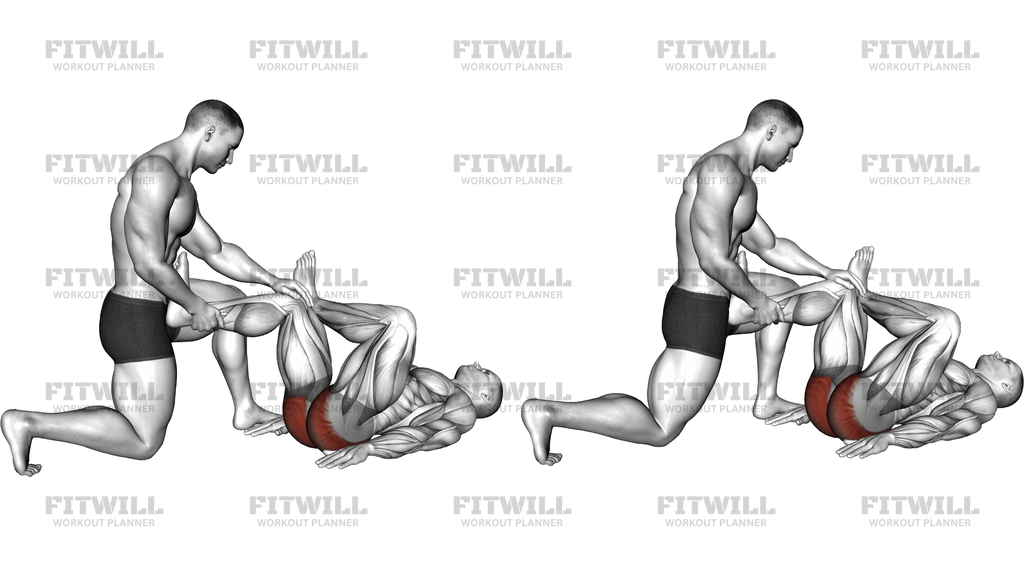
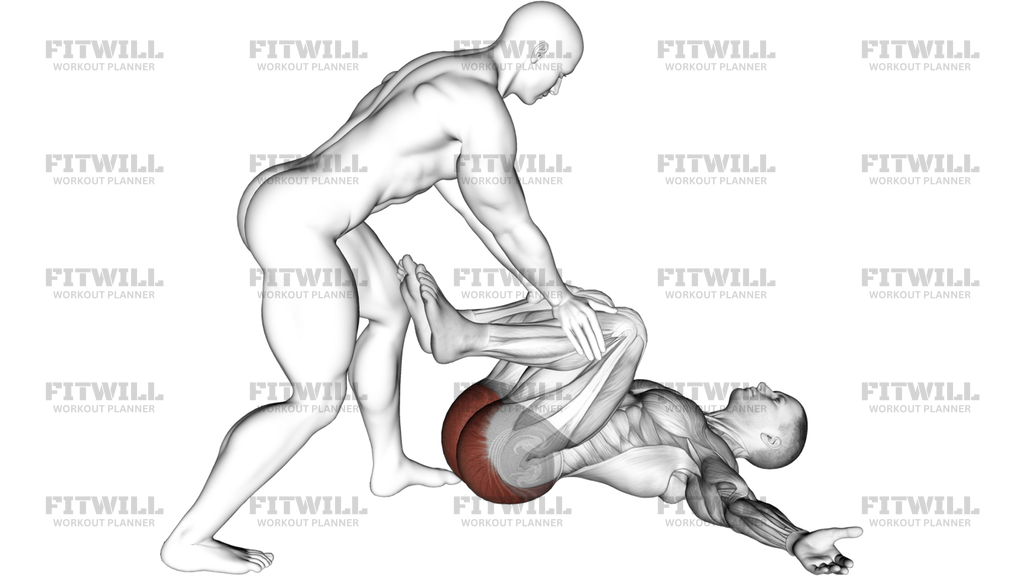
Assisted Lying Adductors Stretch is a partner-assisted groin and inner-thigh stretch performed on a mat with the athlete lying on the back while the helper guides the leg into a wider opening. The movement is not about forcing a big range. It is about using steady pressure, relaxed breathing, and a pelvis that stays anchored so the adductors lengthen without the low back or hips twisting away.
This stretch is most useful when the inner thighs feel tight after squats, lunges, lateral work, skating, martial arts, or any session that asks the legs to stabilize hard in multiple planes. Assisted Lying Adductors Stretch can also be a good choice before lower-body training when the hips feel locked up and you need a controlled opening pattern rather than a ballistic groin stretch. Because the position is supine, it is often easier to relax into than standing adductor stretches, especially for people who struggle to balance while stretching.
The setup matters because small changes in leg angle and pelvis position change where the stretch lands. Lie back on the exercise mat, keep the non-working leg long or comfortably bent, and let the working leg open while the thigh, knee, and foot stay supported by the assistant. The helper should guide the leg from the knee or lower leg with smooth pressure, not sudden pushes. The athlete should keep the shoulders heavy, ribs down, and the opposite hip from rolling off the floor.
A good rep feels like a steady opening through the inner thigh rather than a sharp pull in the groin. The stretch should build gradually as the helper eases the leg outward and the athlete exhales into the end range. If the sensation shifts into the hip joint, low back, or a pinching feeling at the front of the hip, the angle is too aggressive and should be reduced. The best version of Assisted Lying Adductors Stretch uses patient pressure, a quiet torso, and enough time in the position for the tissue to soften.
Use Assisted Lying Adductors Stretch as a targeted mobility drill, a warm-up reset, or a recovery stretch after heavy leg training. It is especially useful when you want to improve comfort in wide stances, side lunges, split squats, or sports positions that demand hip opening. Keep the movement controlled, communicate with the helper, and stop short of any sharp pain or numbness so the stretch stays useful rather than irritating.
Fitwill
Log Workouts, Track Progress & Build Strength.
Achieve more with Fitwill: explore over 9600 exercises with images and videos, access built-in and custom workouts, perfect for both gym and home sessions, and see real results.
Start your journey. Download today!




Instructions
- Lie on your back on the mat and position the leg to be stretched so the hip and knee can open comfortably while the other leg stays relaxed.
- Ask your partner to kneel beside the working leg and support the knee or lower leg with both hands before any pressure is applied.
- Keep your shoulders, ribs, and pelvis flat on the floor so the stretch stays in the inner thigh instead of rolling into the low back.
- Let the assistant guide the leg outward into abduction slowly until you feel a firm pull through the adductors.
- Exhale as the leg opens and keep the jaw, neck, and hands relaxed so the stretch can settle.
- Hold the end range for a short, steady pause without bouncing or fighting the pressure.
- If the hip starts to pinch, the pelvis lifts, or the knee twists, tell the partner to reduce the angle and reset the position.
- Bring the leg back to center under control, rest briefly, and repeat on the other side if both adductors need work.
Tips & Tricks
- Keep the pelvis heavy on the mat; once the opposite hip lifts, the stretch stops targeting the adductors cleanly.
- Pressure should build gradually from the helper's hands, not from a sudden shove into end range.
- A bent knee usually softens the stretch, while a straighter leg shifts more tension toward the inner thigh and hamstring line.
- If you feel the front of the hip more than the groin, reduce the opening angle and check that the thigh is not rolling inward.
- Use a slow exhale when the leg opens to help the inner thigh relax instead of bracing against the stretch.
- Do not let the foot turn aggressively outward unless that is the intended variation; excess rotation can make the stretch feel pinchy.
- Hold only as long as the sensation stays smooth and muscular; sharp groin tension means the range is too large.
- Communicate with the partner each rep so the pressure matches your current mobility rather than forcing through discomfort.
Frequently Asked Questions
What muscle does Assisted Lying Adductors Stretch target most?
Other is the primary target muscle group.
Can beginners perform this exercise?
Yes, beginners can use it with light resistance and controlled technique.
How heavy should I train this movement?
Choose a load that allows clean repetitions without compensating with momentum.
What is a common mistake to avoid?
The most common issue is rushing reps and losing control of posture and range.
How many repetitions are usually recommended?
Moderate to higher rep ranges are commonly used, depending on the training goal.
Should I feel this in supporting muscles too?
Some support-muscle involvement is normal, but the main effort should stay on the target area.
Can I include this in a full-body routine?
Yes, it can fit well as accessory work within full-body or split routines.
How can I progress this exercise over time?
Progress by increasing load gradually, improving control, and keeping execution quality high.