Separation Finger Stretch
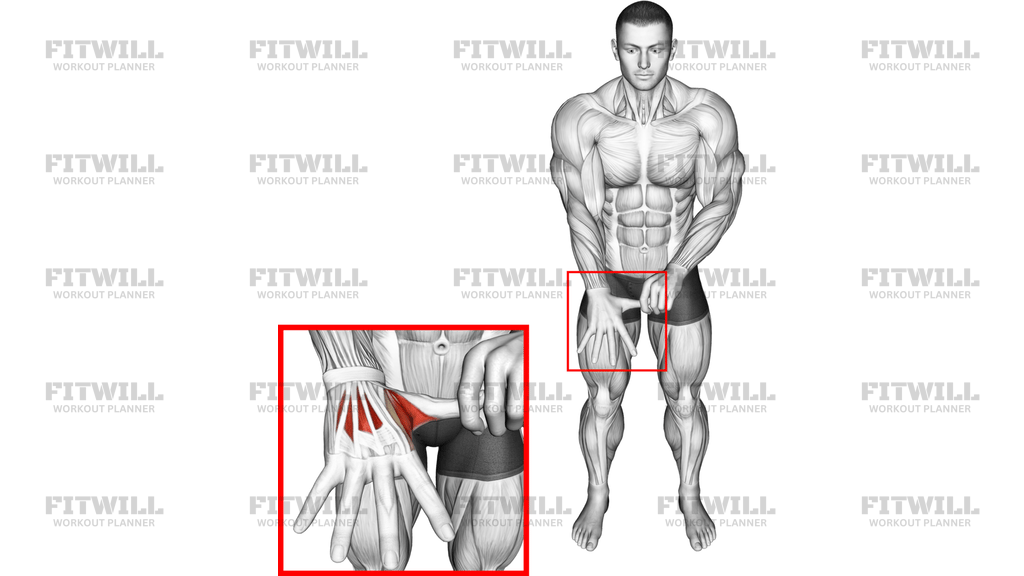
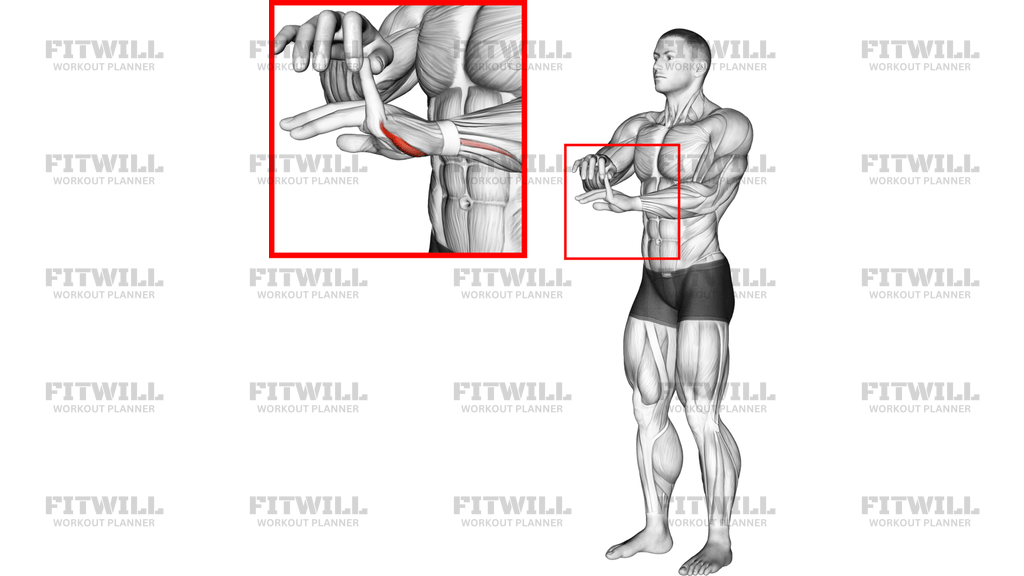
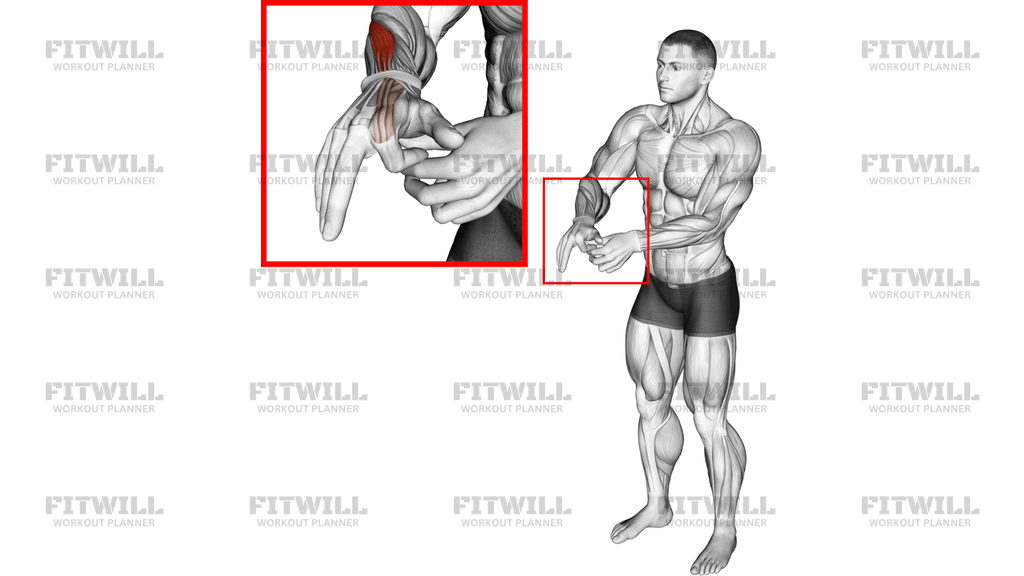
Separation Finger Stretch is a hand and finger mobility drill that opens the thumb web space and gently separates the fingers with the help of the opposite hand. It is less about loading a muscle and more about improving comfort, control, and range in the small joints of the hand, thumb, and wrist. The highlighted tissues in the image suggest a focus on the thumb side of the palm and the tissues that help the fingers spread cleanly.
This stretch is useful when the hand feels stiff after gripping, typing, climbing, racquet sports, lifting, or other work that keeps the fingers closed. A good setup matters because the stretch should come from the fingers and thumb opening, not from twisting the wrist or shrugging the shoulder. When the arm stays relaxed and the wrist stays neutral, the stretch is easier to feel and easier to control.
The movement is simple but should be deliberate. Open the hand, keep the fingers long, then use the opposite hand to gently pull the thumb away from the index finger or open the spaces between the fingers without forcing them. The sensation should stay mild to moderate and focused across the palm, thumb web, and finger bases. If the hand starts to cramp or the wrist folds back, the stretch is too aggressive.
Use Separation Finger Stretch as part of a warm-up, recovery block, or mobility circuit when you want the hand to feel looser before pressing, pulling, hanging, or gripping work. It is appropriate for beginners because the stretch can be scaled easily by changing how far the fingers are opened and how long the hold lasts. Keep the motion smooth, breathe evenly, and stop if you feel sharp pain, numbness, or tingling.
[ Workout Log & Planner ]
Put your next workout in Fitwill
Keep your plan and training log ready when you are.


Instructions
- Stand or sit tall and extend one arm in front of your torso with the elbow softly straight and the wrist in a neutral position.
- Open the working hand and spread the fingers naturally so the thumb and index finger are relaxed but not locked.
- Use the opposite hand to grasp near the thumb and index finger area, keeping the grip gentle rather than pinching hard.
- Gently pull the thumb away from the index finger to open the web space, or lightly separate the fingers farther apart if that is the variation you are using.
- Keep the shoulder down and the forearm still so the stretch comes from the hand instead of from body rotation.
- Hold the opening stretch at a mild-to-moderate tension for a controlled breath cycle or timed hold.
- Breathe out slowly as you settle into the stretch, then keep breathing without letting the hand clamp down.
- Release the tension gradually, shake out the fingers, and repeat on the other hand if you are training both sides.
Tips & Tricks
- Keep the wrist neutral; if it bends backward, the stretch shifts away from the fingers and thumb.
- Pull from the thumb web space or finger base, not from the fingertips, so the small joints are not jammed.
- The stretch should feel like an opening across the palm and thumb side, not a sharp pinch in the wrist.
- Use a smaller opening range if the fingers are stiff; the goal is clean separation, not maximum spread.
- Relax the shoulder and neck so you do not turn a hand stretch into an upper-body tension drill.
- Exhale as you increase the stretch to help the hand soften instead of bracing harder.
- If one finger is tight, work that finger more gently rather than forcing all the fingers to match it.
- Stop immediately if you feel numbness, tingling, or pain that travels into the hand or forearm.
Frequently Asked Questions
What does Separation Finger Stretch target most?
It mainly targets the thumb web space, the small muscles that separate the fingers, and the tissues across the palm and thumb side of the hand.
Is Separation Finger Stretch a strength exercise?
No. It is a mobility and flexibility drill meant to open the hand and thumb with light, controlled tension.
Should I keep my wrist bent while doing it?
No. A neutral wrist makes the stretch much cleaner and keeps the focus on the fingers and thumb instead of the forearm.
What is the most common mistake with the hand position?
People often yank on the fingertips instead of opening the thumb web space or finger bases gently, which makes the stretch feel harsh.
Can beginners do this stretch?
Yes. Beginners usually do well with a small opening range, a short hold, and a very light pull from the opposite hand.
When should I use Separation Finger Stretch?
It works well before grip-heavy training, after long periods of typing or tool use, or during a hand and forearm mobility sequence.
Can I do one finger at a time?
Yes. Isolating one finger or the thumb web space can be a good way to find the tightest area without overpulling the whole hand.
What should I do if I feel tingling or sharp pain?
Stop the stretch right away. Tingling or sharp pain means the position is too aggressive and should be reduced or avoided.