Resistance Band One Leg Glute Bridge With Straight Leg
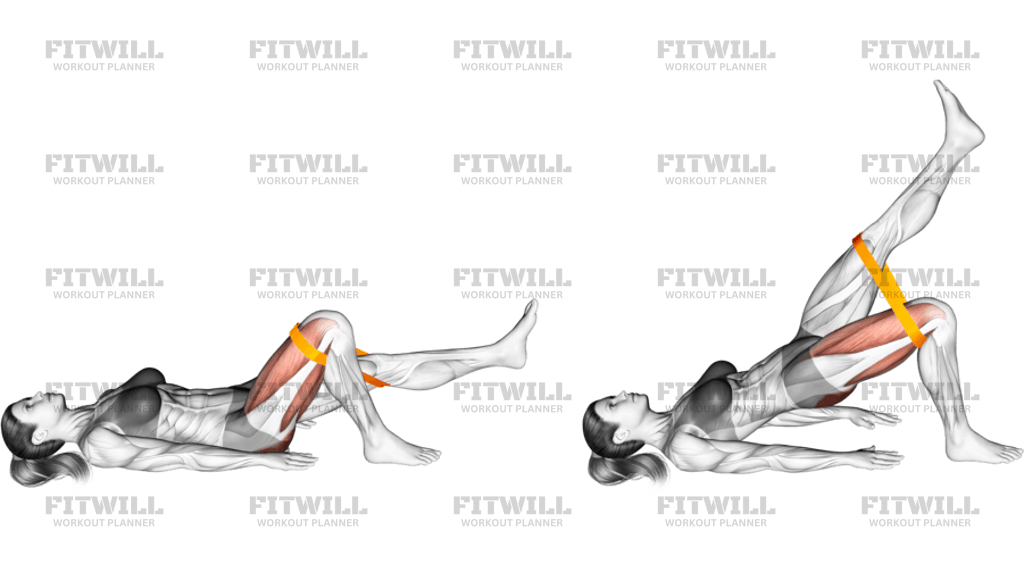
Resistance Band One Leg Glute Bridge With Straight Leg is a floor-based single-leg bridge that combines hip extension with a stability challenge from the straight free leg and the band around the thighs. It is a glute-focused strength exercise, but it also asks the hamstrings and core to keep the pelvis level while the working hip lifts and lowers under control. The band adds lateral tension so the knees stay aligned instead of collapsing inward during the bridge.
The movement is easiest to understand when you picture the working side doing the real job: one foot stays planted, the opposite leg stays long, and the hips rise until the torso and working thigh form a straight line. The straight leg increases the leverage demand on the bridge, which makes the exercise more useful than a standard two-leg glute bridge for unilateral control, pelvic stability, and glute activation.
Setup matters more here than with many bodyweight drills. Place the band above the knees, lie flat with your shoulder blades and upper back on the floor, bend the working knee, and keep the planted foot close enough that the heel can drive the floor without cramping the hamstrings. The non-working leg should stay straight and active, with the foot flexed or pointed forward so it does not swing and steal tension from the hips.
During each rep, lift by squeezing the glute of the planted side and keeping the ribs down, not by arching the lower back. The top position should feel like hip extension, not lumbar extension. Lower slowly until the glute almost touches the floor, keep the band gently pressed apart, and repeat with the same path every time. That makes the exercise valuable for warmups, accessory work, unilateral glute training, and rehab-style strengthening when you want clean hip drive without loading a bar.
Use it when you want a simple but demanding bridge variation that teaches one-sided glute control. Light resistance and perfect positioning matter more than chasing height or speed. If the pelvis twists, the lower back takes over, or the straight leg starts drifting, the set is already too hard for the current load.
[ Workout Log & Planner ]
Put your next workout in Fitwill
Keep your plan and training log ready when you are.


Instructions
- Loop the resistance band above your knees and lie on your back with your arms by your sides.
- Bend one knee so that foot is flat on the floor close to your glute, and keep the other leg straight with the heel hovering or the leg extended in line with your torso.
- Set your shoulders and upper back on the floor, then brace your ribs down so your low back stays neutral.
- Press the planted knee slightly out against the band before you start the bridge.
- Drive through the planted heel and lift your hips until the working thigh, hip, and shoulder form a straight line.
- Keep the straight leg long and quiet so the pelvis stays square instead of rotating.
- Pause for a moment at the top while keeping tension on the band and glute.
- Lower your hips slowly until you are almost back on the floor without fully relaxing the working side.
- Reset your breath and repeat for the planned number of reps before switching sides.
Tips & Tricks
- Keep the band high enough on the thighs that you can press the knees out without sliding it into the joint line.
- Think of lifting the pelvis with the planted glute, not pushing the ribs upward with your lower back.
- If the hamstring on the working side cramps, move the planted foot a little closer to your hips and shorten the range.
- Hold the straight leg at hip height instead of letting it drop, which helps keep the pelvis from twisting.
- Drive through the heel and midfoot of the planted leg; if you feel pressure in the toes, your foot is too far away.
- Keep the top position short and crisp rather than turning the bridge into a low-back arch.
- Use a small pause at the top to make the glute finish the rep instead of bouncing out of the bottom.
- Exhale as the hips rise and inhale on the controlled way down so the torso stays braced.
- Stop the set when the straight leg starts to drift or the pelvis starts rolling to one side.
Frequently Asked Questions
What muscle does Resistance Band One Leg Glute Bridge With Straight Leg target most?
The glute on the planted-leg side does most of the work, with help from the hamstrings and core to keep the pelvis level.
Where should the resistance band sit during the bridge?
Place the band above the knees so you can gently press the thighs outward without it slipping into the knee joint.
Which leg is actually working in this exercise?
The bent, planted leg is the working side; the straight leg stays long to challenge pelvic control and make the bridge more demanding.
Why is the free leg kept straight?
Keeping it straight increases the leverage demand on the bridge and makes it harder to rotate or dump the pelvis during the lift.
Can beginners do this version of the glute bridge?
Yes, but many people should start with a two-leg bridge or a smaller range first if they cannot keep the hips level.
What is the biggest form mistake to avoid?
Do not arch the lower back to reach a higher bridge; the top position should come from the hip, not from spinal extension.
Why do my hamstrings cramp during this movement?
Your foot may be too far from your hips or you may be lifting too high; shorten the setup and focus on squeezing the glute instead of pulling with the hamstring.
How should I make the exercise harder?
Increase the band tension, add a longer pause at the top, or slow the lowering phase while keeping the pelvis square.