Resistance Band Duck Walk
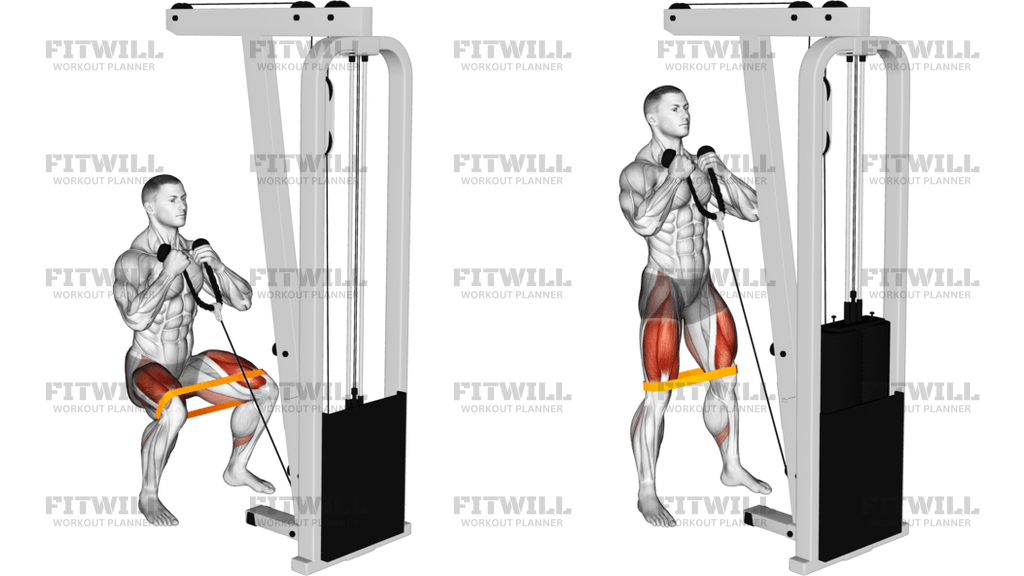
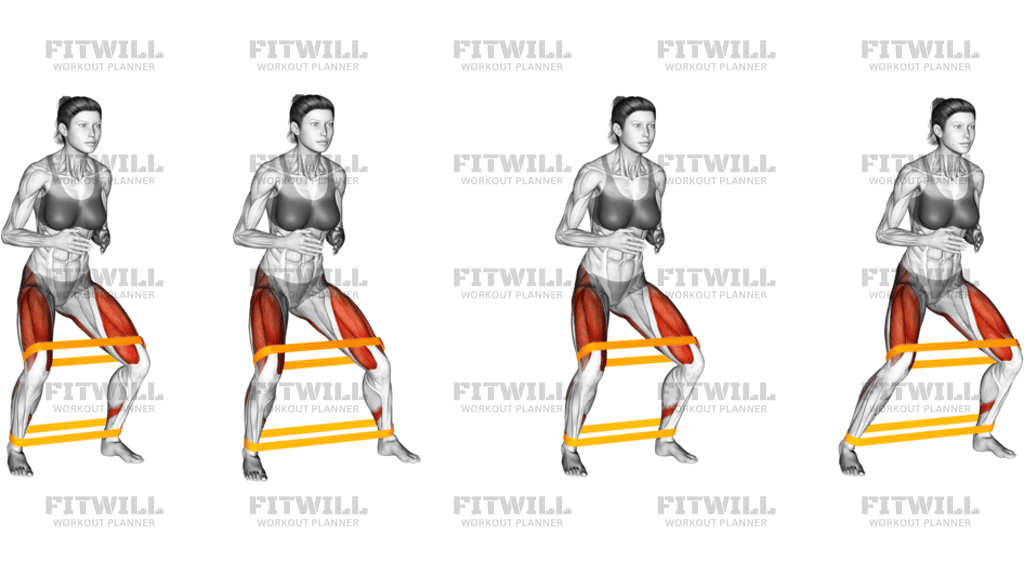
Resistance Band Duck Walk is a lateral lower-body drill that uses a loop band to keep tension on the hips while you stay in a partial squat. The image shows the band positioned above the knees, with the feet turned slightly out and the torso held tall as you step side to side. That setup matters because the band is trying to pull the knees inward, so the exercise only works well when you actively press the knees out and keep constant tension through the glutes and outer hips.
Resistance Band Duck Walk is especially useful when you want to wake up the glute medius, improve hip stability, and build better control in a squat stance. It is not a max-strength lift in the same way as a barbell squat; instead, it rewards steady posture, short controlled steps, and clean knee tracking. Because the legs stay bent throughout the set, the quads and adductors also stay involved, which makes the exercise useful as a warm-up, accessory drill, or rehab-friendly patterning movement.
The starting position should feel athletic and deliberate. Keep the band just above the knees, sit into a shallow quarter squat, and set your feet about shoulder-width apart or slightly wider. From there, load the stance evenly through both feet, brace the trunk, and keep the chest open while the pelvis stays level. If you stand up too tall, the band tension disappears; if you drop too low, you turn the drill into a tiring squat hold instead of a controlled walk.
Each step should be small enough that the band stays taut the entire time. Shift your weight first, then move the lead foot sideways without letting the trailing knee collapse inward. After the trail foot follows, reset the stance width and repeat in the same low athletic position. The goal is to feel the outer hips work continuously, not to take big traveling steps or bounce through the reps.
Use Resistance Band Duck Walk when you want a simple but specific glute activation exercise before squats, lunges, deadlifts, running, or field work. It also works well in circuits where you want low-impact lower-body tension without loading the spine. Keep the set smooth and stop once your knees start caving, your torso rises, or the band rolls down the legs.
[ Workout Log & Planner ]
Put your next workout in Fitwill
Keep your plan and training log ready when you are.


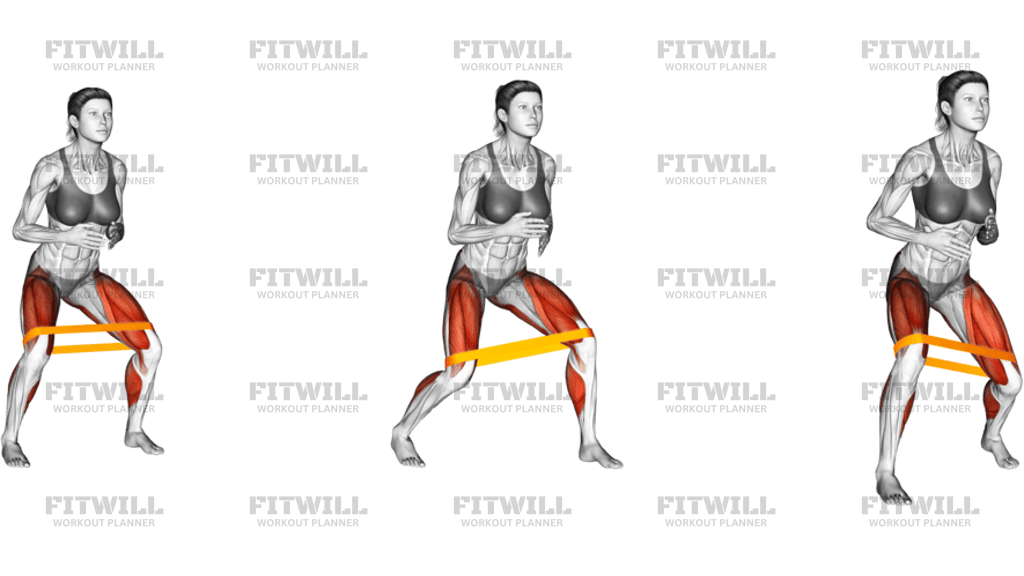
Instructions
- Place a loop resistance band just above your knees and stand with your feet slightly wider than hip width.
- Sit into a shallow squat so your hips stay back, your chest stays lifted, and your knees remain bent.
- Turn your toes out slightly and press both knees gently outward to put tension into the band before you move.
- Shift your weight to one leg without rising out of the squat or letting the torso lean forward.
- Step the lead foot sideways a short distance while keeping the band stretched and the knees tracking over the toes.
- Bring the trailing foot in only enough to re-establish your stance width, then stay low and ready for the next step.
- Continue walking sideways for the planned reps or distance, keeping each step smooth and controlled.
- Breathe steadily through the set and reset by standing tall only after the band is off and your feet are together.
Tips & Tricks
- Keep the steps small; oversized steps usually let the band slack off and reduce glute tension.
- If the band slides down, place it higher on the thighs or use a lighter loop before you increase distance.
- Think about pushing the floor apart with your feet so the knees do not cave inward on each step.
- Stay in the same shallow squat height for the whole set instead of bobbing up and down between steps.
- A slight toe-out position usually makes it easier to keep the knees open and the hips working.
- Use a band strength that lets you keep the pelvis level; if you sway side to side, the band is too heavy.
- Pause for a split second after each lateral step if you tend to rush and lose the squat position.
- Stop the set when the outer hips stop burning and your knees start collapsing inward on the landing.
Frequently Asked Questions
What does Resistance Band Duck Walk work?
It mainly trains the glutes, especially the outer hip muscles that help keep the knees from collapsing inward. The quads and inner thighs assist because you stay in a bent-knee squat position.
Where should the band sit during Resistance Band Duck Walk?
The band should sit just above the knees, not on the shins or ankles. That position makes it easier to keep tension on the hips without overloading the knees.
How low should I squat in Resistance Band Duck Walk?
A shallow quarter squat is enough for most people. If you sink too low, the movement turns into a squat hold and you lose the continuous side-step pattern.
Is Resistance Band Duck Walk good for beginners?
Yes, as long as the band is light and the steps stay short. Beginners should focus on keeping the knees open and the torso steady before adding more resistance.
Why do my knees hurt during Resistance Band Duck Walk?
Pain usually means the band is too heavy, the squat is too deep, or the knees are collapsing inward. Reduce the resistance, shorten the range, and keep the knees tracking over the toes.
How far should I step in Resistance Band Duck Walk?
Only step far enough to keep the band stretched and the hips under control. Big steps often make the trailing leg drag and break the squat position.
What are the most common mistakes with Resistance Band Duck Walk?
Standing too tall, letting the knees cave in, taking huge side steps, and letting the band roll down are the most common problems. Each one reduces the tension on the hips.
When should I use Resistance Band Duck Walk in a workout?
It works well in the warm-up or as accessory work before squats, lunges, deadlifts, or sprint training. It is best used when you want glute activation and hip control, not maximal loading.