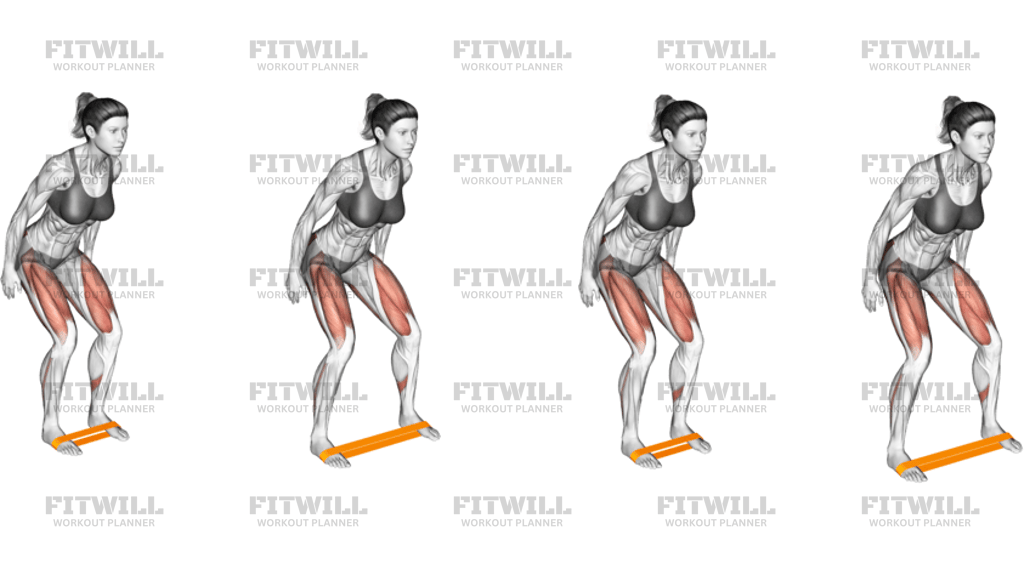
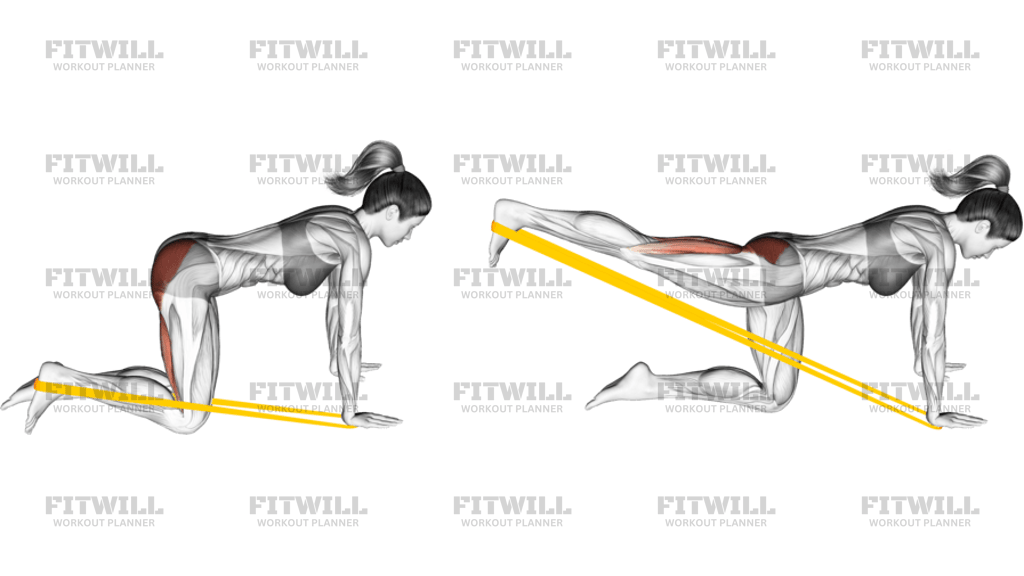
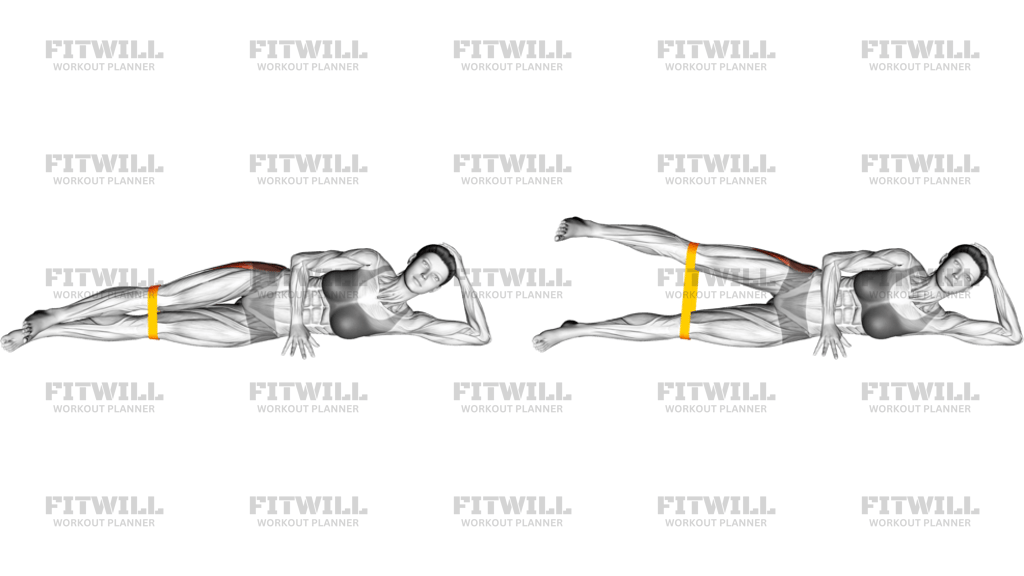
Resistance Band One Leg Kickback Bent Position
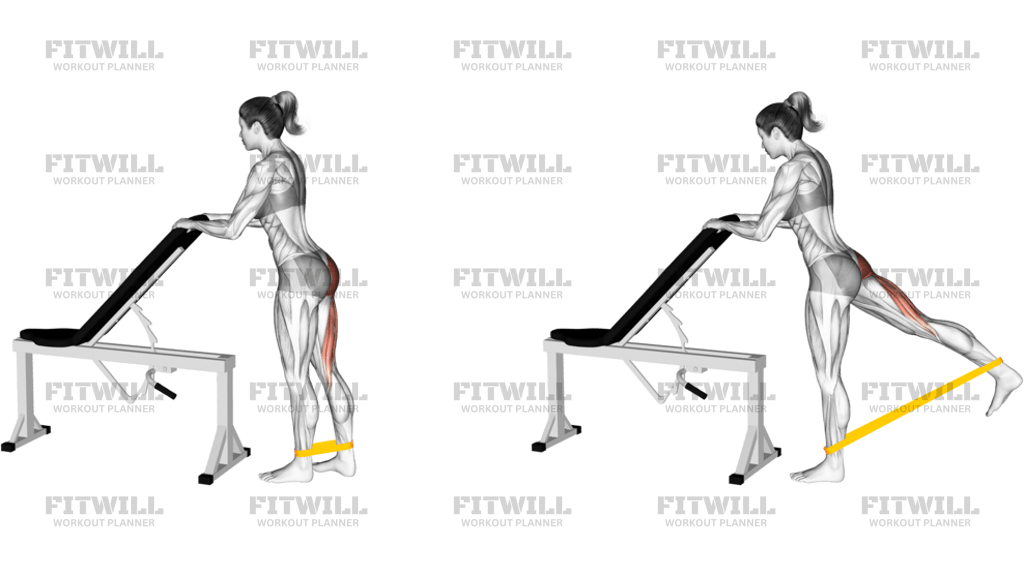
Resistance Band One Leg Kickback (Bent Position) is a bent-over glute isolation exercise that uses band tension to train hip extension without loading the spine heavily. The torso stays hinged forward while one leg works through a straight-back kick, so the movement is easy to feel in the working glute when the setup is stable and the rep stays deliberate.
The exercise primarily targets the glutes, with the hamstrings, core, and lower back contributing to balance and posture control. In anatomy terms, the main demand falls on the gluteus maximus, with help from the biceps femoris, rectus abdominis, and erector spinae. The bent position makes the exercise more specific than an upright kickback because it asks the hips to extend while the trunk resists rotation and sway.
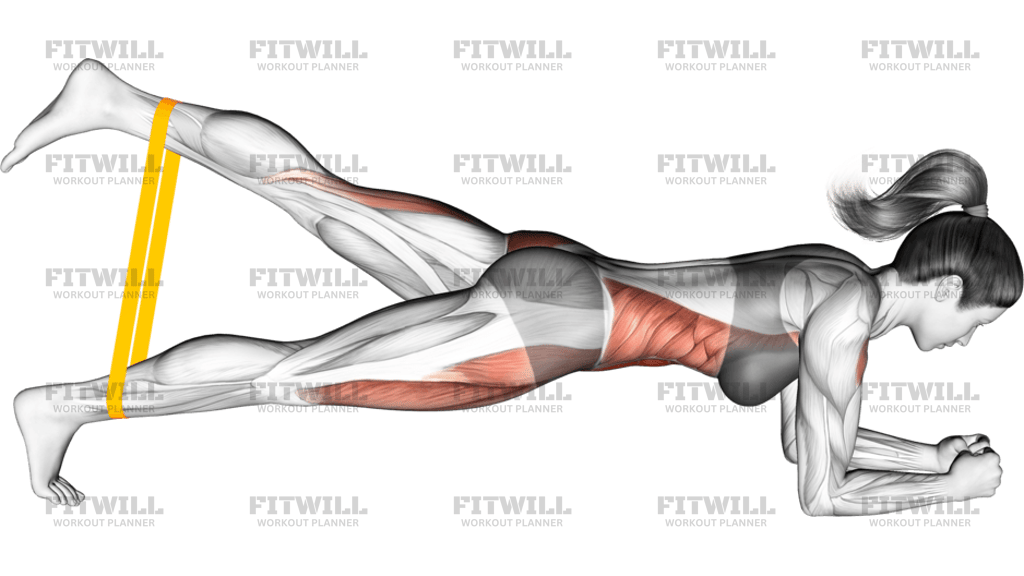
Set the band so it has tension before the first rep, then hinge forward until your torso is close to parallel with the floor. In the image, the free hand is supported on a bench, which helps you keep the pelvis square and the standing leg steady. That support matters: if the trunk drifts or the hips open, the band will start to pull the body around instead of making the glute do the work.
Each repetition should travel in one clean line. Drive the working leg back and slightly up, stop before the low back arches, and squeeze the glute at the top without twisting the pelvis. The return should be slow enough that the band keeps tension on the working side the entire time. This is a useful accessory movement when you want glute activation, unilateral hip control, or a lighter lower-body finisher that still demands good mechanics.
Use a resistance level that lets you hold the hinge, keep the standing knee soft, and repeat the same path on every rep. The exercise is beginner-friendly when the band is light and the range stays compact, but it gets sloppy quickly if you chase height with the kicking leg or let the lower back take over. If the movement stops feeling like a glute kick and starts feeling like a back extension, reduce the band tension or shorten the range.
[ Workout Log & Planner ]
Put your next workout in Fitwill
Keep your plan and training log ready when you are.


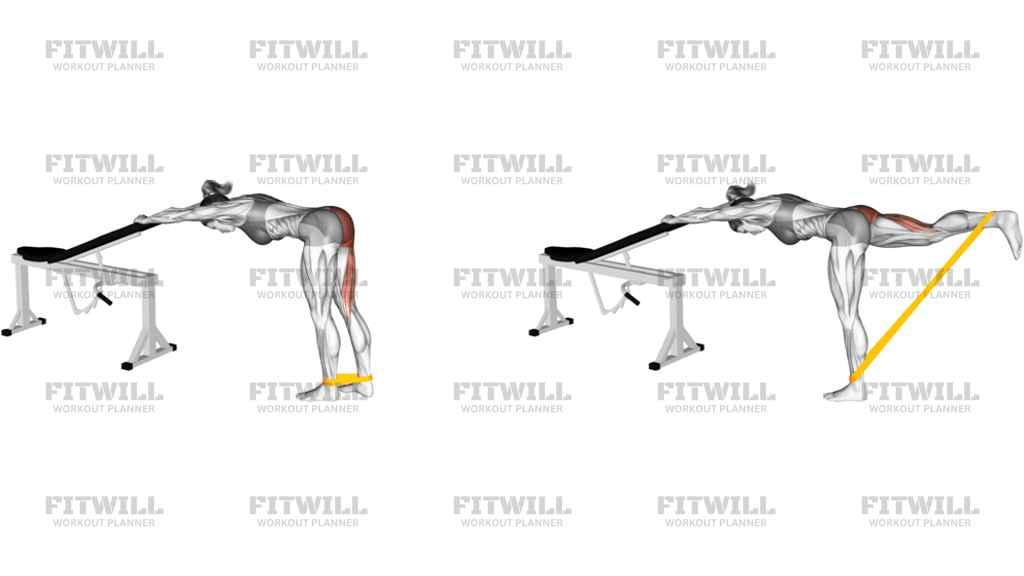
Instructions
- Place the band so it is under tension before you start, then hinge forward with one hand braced on a bench or support and your torso nearly parallel to the floor.
- Stand on the working-side leg with a soft knee and keep the pelvis square to the floor, not opened toward the kicking leg.
- Set the non-working leg behind you with the band attached or looped so the kickback starts from a stretched position.
- Brace your midsection and keep your ribcage from flaring as you begin the rep.
- Drive the working leg straight back and slightly up using the glute, not by swinging the hip or arching the low back.
- Pause briefly at the top when the leg is fully extended and the pelvis is still level.
- Lower the leg under control until you are back at the start with constant band tension.
- Exhale on the kickback, inhale on the return, and repeat for the planned reps before switching sides.
Tips & Tricks
- Keep the hinge set before the first rep; if you keep standing up and re-hinging between reps, the glute tension drops off.
- Use the bench or support hand to keep the pelvis square, especially when the band starts to pull the working leg outward.
- Kick back in a straight line behind you instead of sweeping the leg out to the side, which shifts tension away from the glute max.
- Stop the rep when your low back begins to arch; extra height usually means lumbar extension, not more glute work.
- Choose a band that lets you keep the standing ankle and knee steady without wobbling across the floor.
- Keep the non-working foot planted with pressure through the midfoot so the standing hip does not collapse inward.
- Use a short pause at the top to remove momentum and make each rep start from a dead stop.
- If you feel the hamstring cramp or the back tighten first, shorten the range and slow the return.
Frequently Asked Questions
What does Resistance Band One Leg Kickback (Bent Position) work most?
It mainly trains the glutes, especially the gluteus maximus, with the hamstrings and core helping stabilize the body.
Why is the torso bent forward in this kickback?
The forward hinge puts the glute in a better working position and makes it easier to keep the leg moving straight back instead of turning the movement into a back extension.
Should I hold onto something during the set?
Yes, a bench, rack, or other support helps you keep the hips square and stops the torso from swinging as the band gets tighter.
How high should the working leg go?
Only as high as you can lift it without arching the lower back or twisting the pelvis. A smaller, cleaner kickback is usually better.
Where should I feel the movement most?
You should feel the working-side glute doing most of the work. Some hamstring involvement is normal, but the set should not feel like a low-back exercise.
Is this a good beginner glute exercise?
Yes. A light band and a short range make it a good starter movement for learning glute engagement and hip control.
What if the band starts pulling me off balance?
Reduce the resistance, brace harder through the support hand, and slow the return so the standing leg can stay quiet.
How do I progress this movement over time?
Use a stronger band, add a brief squeeze at the top, or increase the reps only if you can keep the torso fixed and the kick path clean.