Resistance Band Supine Hip Bridge March
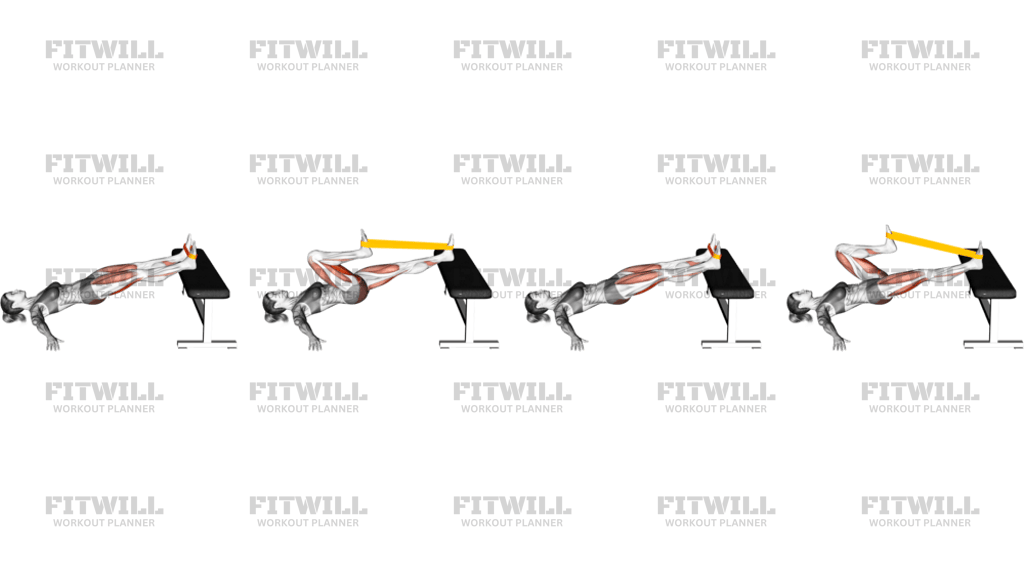
Resistance Band Supine Hip Bridge March is a bridge variation that builds glute strength, pelvic control, and anti-rotation stability at the same time. You stay on your back with the hips lifted while one leg marches at a time, so the trunk has to keep the pelvis level instead of letting the body twist or sag. That makes the exercise especially useful when you want hip work that carries over to running, walking, lunging, and single-leg strength patterns.
The main work comes from the glutes, with the hamstrings helping keep the hips extended and the core controlling the ribs and pelvis. The band adds extra tension so the working side has to stay active even when one foot briefly leaves the bench. When this is done well, the movement looks quiet and controlled, not big and dramatic, and the lower back stays out of the way.
The setup matters because the whole exercise starts from the position of the feet and the height of the bridge. Lie on your back with your shoulders and head on the floor, place your heels on a bench or box, and bend the knees enough to keep the shins close to vertical. Raise the hips until the torso and thighs form a clean line, then lock in that shape before the first march. If the feet are too close, the hamstrings will usually cramp; if they are too far away, the low back often takes over.
From there, march one leg at a time without letting the pelvis tilt, shift, or drop. The planted heel should stay heavy, the lifted foot should come off the bench only as far as you can control, and the ribs should stay stacked instead of flaring. Exhale as the knee lifts, pause long enough to own the top position, then set the foot back down with the same control. The goal is not a high knee or a flashy bridge, but a stable hip position that can survive each alternating lift.
Resistance Band Supine Hip Bridge March works well as a warm-up, accessory drill, or core-and-glute finisher when you want more single-leg control without heavy loading. It is also useful for people who need to learn how to keep the hips level under movement, because the march exposes weak links very quickly. Keep the range honest, stop the set when the hips start to rotate, and lower out of the bridge under control when the rep quality starts to fade.
[ Workout Log & Planner ]
Put your next workout in Fitwill
Keep your plan and training log ready when you are.


Instructions
- Lie on your back with your shoulders and head on the floor, and place your heels on a bench or box so your knees are bent and your shins are nearly vertical.
- Set the resistance band in the version used for your program so it creates light tension before you lift into the bridge.
- Press through both heels, squeeze your glutes, and raise your hips until your knees, hips, and shoulders form a straight line.
- Keep your ribs down, chin slightly tucked, and pelvis level before you start the march.
- Shift your weight into one heel and lift the opposite foot just off the bench without letting the hips twist.
- Bring the marching knee up only as far as you can keep the bridge steady, then hold the top position briefly.
- Set the foot back down softly and reestablish the bridge before switching sides.
- Alternate legs for the planned reps while keeping the same hip height, then lower your hips to the floor with control.
Tips & Tricks
- If your hamstrings cramp, move your heels slightly farther from your hips before you start marching.
- Keep the pelvis square to the floor; if one side drops, shorten the march and slow the tempo.
- Think about driving the bench away through the planted heel instead of arching through the lower back.
- The lifted foot only needs to clear the bench by a small amount; a bigger march usually creates more twist.
- Keep the band tension light enough that the bridge stays stable instead of turning into a fight to hold position.
- Pause for a second before each foot swap so the planted side has time to take the load cleanly.
- If your ribs flare, reset with a smaller bridge height and exhale before each march.
- Stop the set as soon as the hips start bobbing side to side instead of waiting for a full breakdown.
Frequently Asked Questions
What muscles does Resistance Band Supine Hip Bridge March work most?
The main emphasis is on the glutes, with the hamstrings and core helping keep the bridge steady and level.
Where should my feet be for Resistance Band Supine Hip Bridge March?
Place your heels on a bench or box with the knees bent enough that your shins stay close to vertical when you bridge.
Should my hips stay up the whole time?
Yes. Keep the hips lifted and level while each leg marches, then lower only after the set is finished.
What is the biggest mistake in this exercise?
Letting the pelvis rotate or sag when one foot leaves the bench is the most common issue. Make the march smaller and slower if that happens.
Is Resistance Band Supine Hip Bridge March good for beginners?
Yes, as long as the person can already hold a basic bridge. Start with a short march range and light band tension.
How is this different from a regular hip bridge?
The march adds single-leg demand, so the core and glutes have to resist rotation while the hips stay elevated.
What should I do if I feel it mostly in my lower back?
Lower the bridge a little, move the feet slightly farther away if needed, and keep the ribs from flaring as you march.
How can I make Resistance Band Supine Hip Bridge March harder?
Use a slower tempo, longer pauses at the top, or stronger band tension, but only if the pelvis stays level.