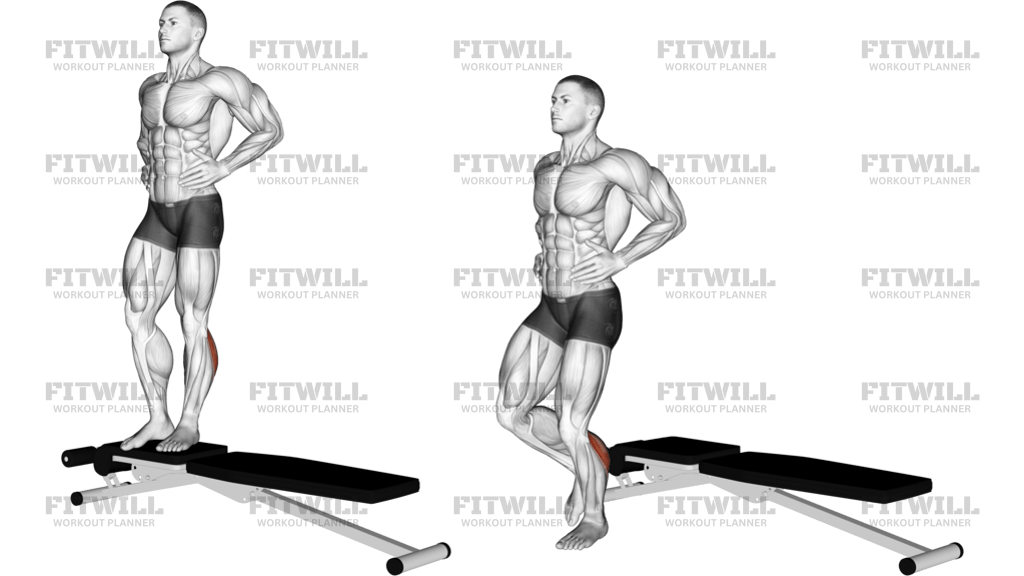
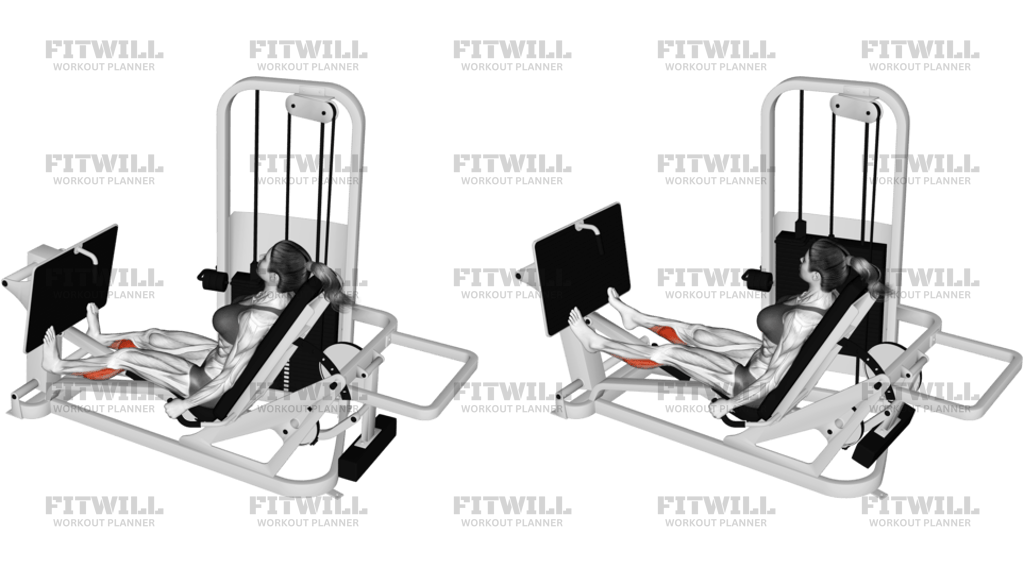
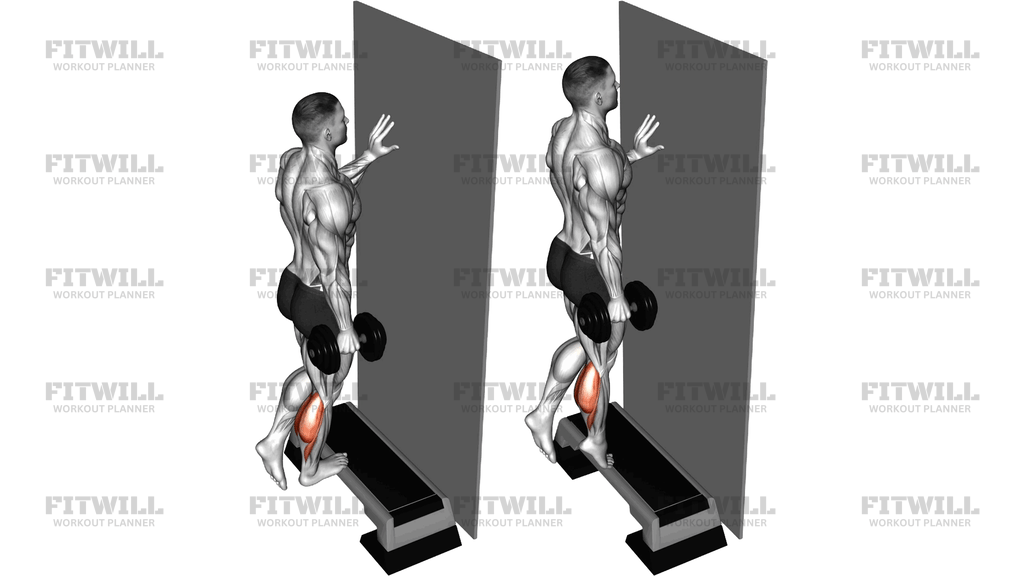
Lever Standing Calf Raise
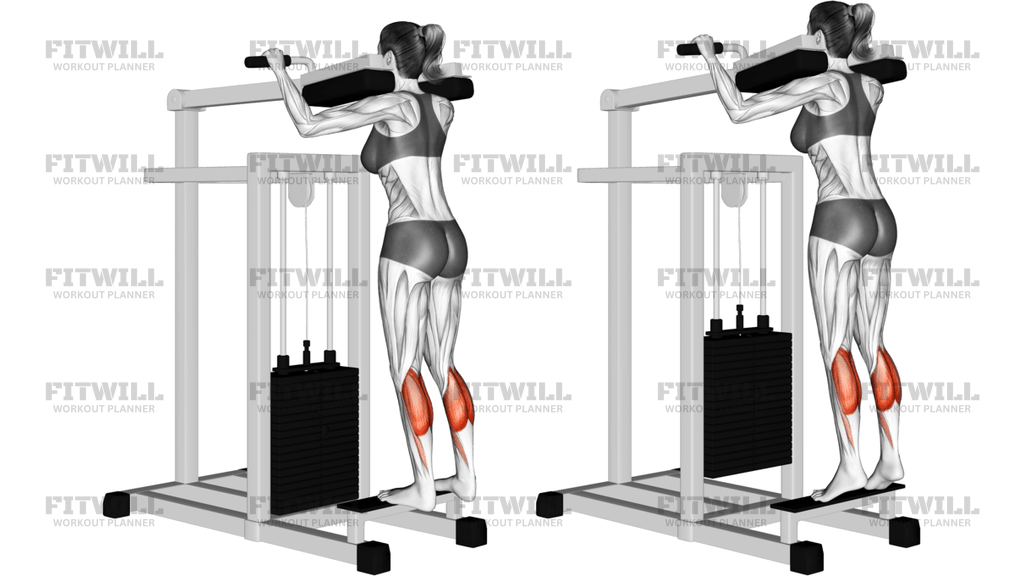
Lever Standing Calf Raise is a machine-based calf exercise that loads the ankles through a fixed lever while your shoulders stay under the pads and your hands hold the handles for balance. The movement is simple, but the setup matters: your feet need to sit on the edge of the platform so the heels can drop freely, and your torso needs to stay tall so the calves do the work instead of your hips or lower back.
This exercise mainly trains the calves, especially the gastrocnemius and soleus, with the machine taking most of the balance challenge out of the equation. That makes it useful when you want direct calf work without having to stabilize a barbell on your back or worry about losing position under load. Because the machine fixes the path, you can focus on clean ankle motion, a full stretch, and a strong contraction at the top.
Start by setting the shoulder pads comfortably on the upper traps, not the neck, then place the balls of your feet on the platform so your heels are free to travel below the edge. Keep a soft bend in the knees, but do not turn the movement into a squat. A tall posture, even foot pressure, and a light grip on the handles help keep the load centered through the ankles.
Each repetition should travel through a deliberate range: lower the heels under control until you feel a deep calf stretch, then drive up through the balls of the feet and finish high on the toes. Pause briefly at the top, keep the ankles from rolling outward or collapsing inward, and lower again without bouncing off the bottom. Exhale as you rise and keep the descent smooth so the calves stay under tension instead of the stack doing the work for you.
Lever Standing Calf Raise fits well as accessory work, a lower-body finisher, or part of a calf-focused session where strict execution matters more than moving big weight. It is especially useful when you want repeatable reps with a clear stretch-and-squeeze pattern, but you still need to respect the Achilles tendon and the foot arch. If the bottom position feels sharp or unstable, reduce the range, slow the tempo, and choose a load that lets you keep every rep controlled from start to finish.
Fitwill
Log Workouts, Track Progress & Build Strength.
Achieve more with Fitwill: explore over 9600 exercises with images and videos, access built-in and custom workouts, perfect for both gym and home sessions, and see real results.
Start your journey. Download today!




Instructions
- Adjust the shoulder pads so they sit on the tops of your shoulders or upper traps, then grip the handles lightly for balance.
- Step onto the platform with the balls of both feet on the edge and your heels hanging free behind it.
- Stand tall with a soft bend in the knees, ribs stacked over the pelvis, and most of your pressure centered through the big toe and second toe.
- Unlock the lever and let the weight settle before starting the first repetition.
- Lower your heels slowly until you feel a strong calf stretch, keeping the arches lifted and the ankles tracking evenly.
- Drive through the balls of your feet to raise the heels as high as you can without leaning forward or bouncing.
- Pause briefly at the top and squeeze the calves before beginning the next descent.
- Keep the lowering phase controlled for every rep, and step off only after the lever is safely re-racked or settled.
Tips & Tricks
- Keep the shoulder pads on the upper traps; if they ride up into the neck, the setup will feel unstable and uncomfortable.
- Use the handles only for balance. Pulling on them too hard turns the exercise into a partial upper-body brace instead of a calf raise.
- Keep the knees soft, but do not turn the movement into a squat. The visible motion should come from the ankles.
- Let the heels drop far enough to load the calves, but stop before the bottom position becomes a sharp pull through the Achilles tendon.
- Press through the big toe and second toe on the way up so the arches stay organized and the ankles do not roll outward.
- A short pause at the top makes the peak contraction more honest than bouncing through quick reps.
- Use a slower lowering phase if your calves cramp early or if the stack wants to slam into the stop at the bottom.
- Choose a load that lets you keep the torso quiet. If your hips sway, the set is too heavy for strict calf work.
Frequently Asked Questions
What muscles does Lever Standing Calf Raise work?
It mainly targets the calves, especially the gastrocnemius and soleus, with the feet, ankles, and trunk helping stabilize the machine.
Where should my feet sit on the platform?
Place the balls of your feet on the edge so your heels can drop below the platform on the way down.
How should the shoulder pads feel?
They should rest on the upper traps or tops of the shoulders, not press into the neck.
Should my knees stay straight during the set?
Keep a soft, unlocked knee position, but avoid bending enough that the movement turns into a squat pattern.
Why use the handles if the machine already supports me?
The handles help you stay centered. They should steady you, not carry the load or let you rock through the reps.
How deep should I lower my heels?
Lower until you feel a strong calf stretch, but stop before the stretch becomes a painful tug on the Achilles tendon.
How can I make the exercise harder without adding a lot of weight?
Use a longer pause at the top and a slower lowering phase so the calves stay under tension longer.
What is the most common mistake on this machine?
Most people rush the reps, bounce out of the bottom, or let the ankles roll inward instead of keeping the movement clean and even.