Barbell Seated Calf Raise
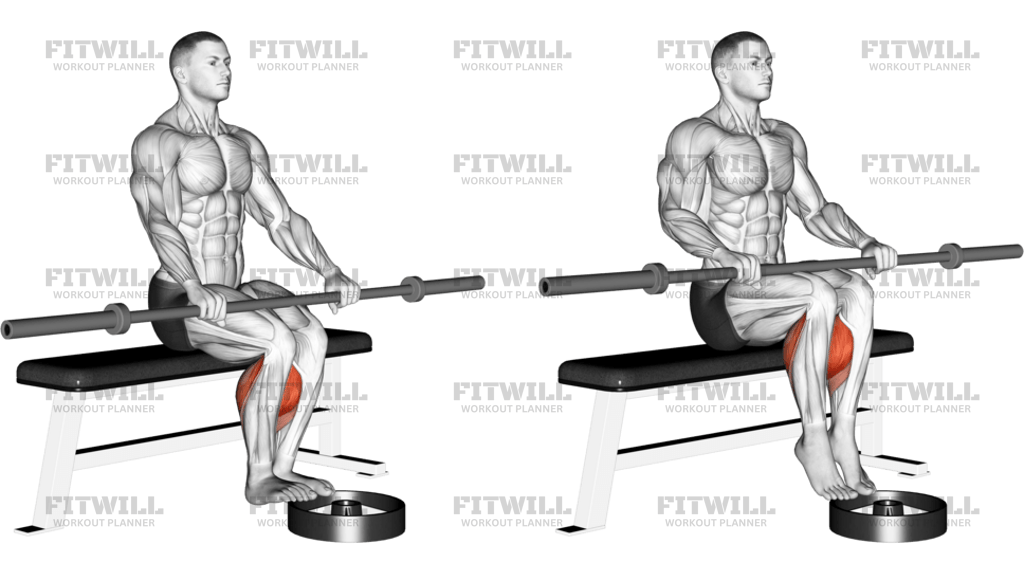
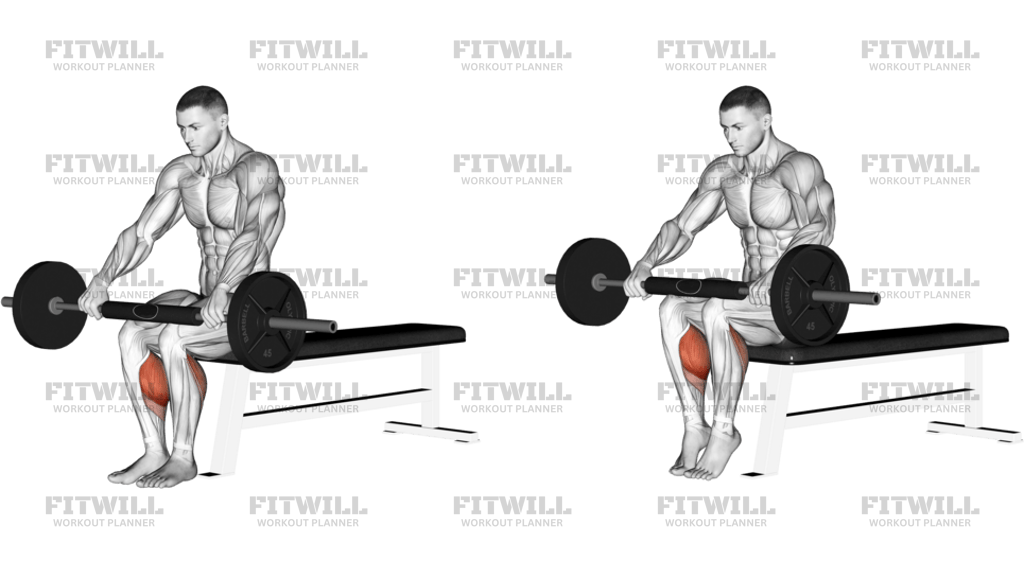
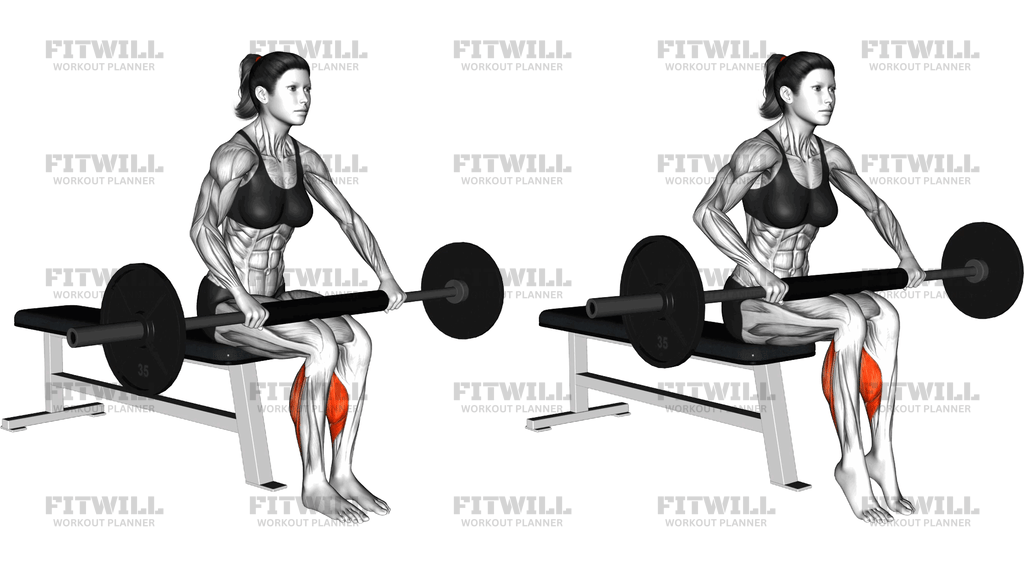
Barbell Seated Calf Raise is a seated lower-leg strength exercise that loads the calves while the knees stay bent and the feet work through ankle plantarflexion. In this variation, the barbell rests across the thighs while you sit on a flat bench, so the calves move against resistance without needing a machine. The bent-knee position changes the emphasis from a standing calf raise and is one reason this movement is often used to build the soleus and improve lower-leg strength and endurance.
The setup matters because the bar must sit securely on the thighs before the first rep starts. A stable bench, firm foot placement, and a neutral torso keep the load from bouncing or sliding as you lift the heels. If the bar is too far down the thighs or the feet are not set evenly, the set turns into a balancing problem instead of a clean calf exercise.
A good rep starts by letting the heels drop under control, then driving the balls of the feet into the floor to raise the ankles as high as possible. The top position should feel like a strong calf contraction rather than a jerk. The descent should be slow enough that the heels return to a full stretch without losing contact or letting the knees collapse inward. Breathing should stay calm and repeatable so the torso does not help the lift.
This exercise is useful as accessory work after squats, leg presses, running, jumping, or any training that needs stronger calves and better ankle stiffness. It also works well for higher-rep calf training because the seated position makes it easier to keep the movement strict and to target the calves without much assistance from the hips or back.
The biggest form limits are bouncing at the bottom, shortening the range, and using the upper body to shift the bar instead of moving only at the ankles. Keep the motion smooth, keep pressure through the forefoot, and stop the set if the bar starts to roll or the torso begins to heave. Done well, the exercise gives the calves a clear, direct load with a simple and repeatable setup.
[ Workout Log & Planner ]
Put your next workout in Fitwill
Keep your plan and training log ready when you are.


Instructions
- Sit on a flat bench and place the barbell across the upper thighs, just above the knees.
- Plant the balls of both feet on the floor with the heels free to rise and the feet about hip-width apart.
- Keep your chest tall, grip the bar lightly for balance, and let the ankles start in a controlled stretch.
- Brace your torso so the bar stays still while the heels are allowed to drop.
- Drive through the balls of the feet and lift the heels as high as you can without rocking the knees or hips.
- Squeeze briefly at the top of the calf raise and keep the shins quiet.
- Lower the heels slowly until you feel a full calf stretch again.
- Match each rep with steady breathing and keep the bar centered on the thighs throughout the set.
Tips & Tricks
- Use a pad or folded towel under the bar if the load digs into the thighs, but keep it thin enough that the bar still feels stable.
- Let the heels sink into a noticeable stretch at the bottom instead of bouncing off the floor.
- Keep pressure on the big toe, little toe, and heel side of the forefoot so the foot does not roll outward.
- Pause for a second at the top if you want a stricter calf contraction and less momentum.
- Do not turn the movement into a hip thrust by leaning back or driving through the seat.
- Choose a load that lets you keep the same ankle path for every rep, especially on the last few reps.
- Move a little slower on the lowering phase if your calves tend to cramp or if the bar shifts on the thighs.
- Stop the set if the knees start bouncing or the bar starts sliding forward.
Frequently Asked Questions
What muscle does Barbell Seated Calf Raise target most?
The calves are the main target, with the bent-knee position putting extra emphasis on the soleus.
Where should the bar sit during the seated calf raise?
It should rest across the upper thighs, just above the knees, so the load stays centered while the ankles move.
Should my heels touch the floor at the bottom?
They should lower into a full stretch, but the exact bottom position depends on your ankle mobility and the bench height.
Why is the seated version different from a standing calf raise?
Bending the knees reduces the gastrocnemius contribution and shifts more of the work to the soleus.
Can I use a barbell without a calf machine?
Yes. This version is specifically useful when you only have a bench, a barbell, and a small amount of floor space.
What is the most common mistake with this exercise?
Most people bounce out of the bottom or let the bar roll on the thighs, which reduces calf tension and stability.
Is this exercise good after leg day or running?
Yes, it fits well as accessory work when you want direct calf loading after squats, presses, jumps, or running sessions.
How do I make the set harder without just adding weight?
Slow the lowering phase, add a pause at the top, or increase the range of motion while keeping the bar steady.