Wide-Grip Chest Dip On High Parallel Bars
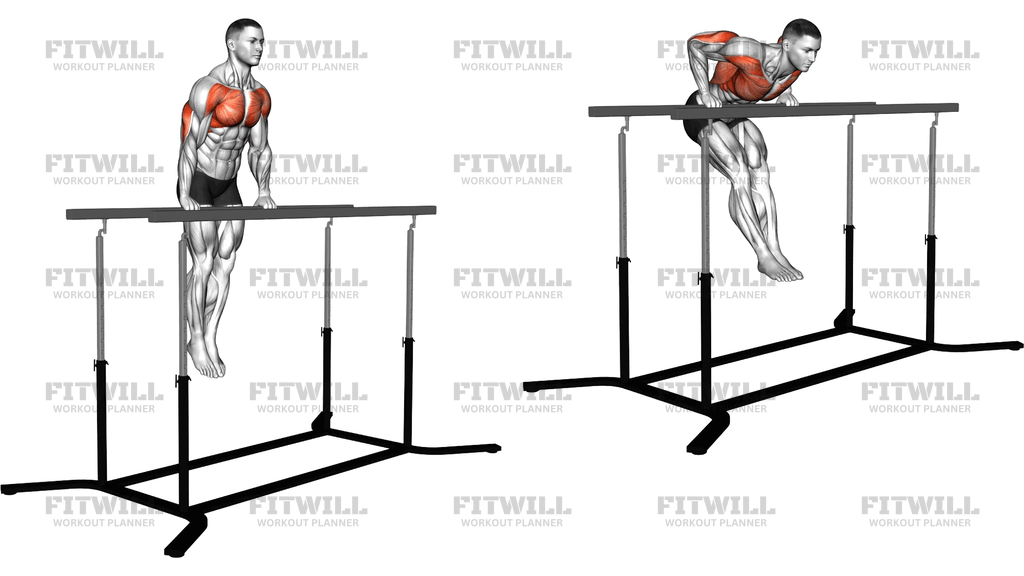
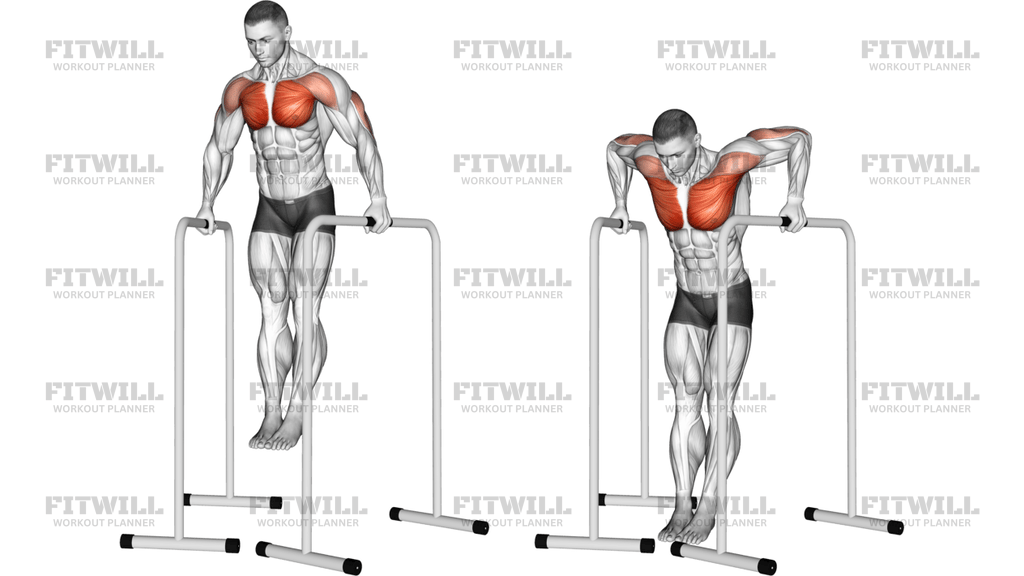
Wide-Grip Chest Dip On High Parallel Bars is a bodyweight dip variation that shifts emphasis toward the chest by using a wider bar position, a forward torso lean, and a controlled descent between the bars. In the image, the shoulders stay above the hands at the top, the elbows angle out rather than tucking tightly, and the chest leads the movement as the body lowers.
This exercise primarily trains the pectoralis major, with the front delts and triceps assisting through the lowering and pressing phases. The core, upper back, and scapular stabilizers keep the torso steady so the shoulders do not collapse forward or drift into an uncontrolled bottom position. Because it is still a dip, the shoulders must tolerate deep extension, so the setup and depth matter as much as the pressing effort.
A good rep begins by locking the arms at the top, keeping the chest lifted, and leaning the torso slightly forward before the first descent. From there, bend the elbows and lower until the upper arms approach parallel or until the shoulders, chest, and wrists can still stay organized. The range should feel powerful and repeatable, not jammed into the front of the shoulder. The return should come from driving the bars down while keeping the torso angle steady.
Use this variation when you want a heavy chest-focused bodyweight press without a bench or machine. It works well in strength blocks, push-focused sessions, or upper-body accessory work, especially for lifters who already control standard dips. It is less suitable if you cannot maintain scapular control, if your shoulders dislike deep extension, or if you tend to bounce out of the bottom.
The best results come from strict repetitions with a smooth tempo and a consistent lean. If the shoulders roll forward, the elbows collapse inward, or the body swings to create extra range, the chest tension drops and the risk rises. Keep the movement honest, stay within a pain-free depth, and stop the set when the chest can no longer lead the dip cleanly.
Fitwill
Log Workouts, Track Progress & Build Strength.
Achieve more with Fitwill: explore over 9600 exercises with images and videos, access built-in and custom workouts, perfect for both gym and home sessions, and see real results.
Start your journey. Download today!




Instructions
- Grip the high parallel bars firmly, support your body at the top, and lock the elbows with the shoulders depressed and away from the ears.
- Lean the torso slightly forward before the first rep so the chest stays involved instead of staying perfectly upright.
- Cross the ankles or hold the feet still behind you so the lower body does not swing between reps.
- Inhale, brace the midsection, and start lowering by bending the elbows while keeping the chest open.
- Let the elbows drift out at a wide angle as you descend, but keep them controlled rather than flared aggressively.
- Lower until the upper arms are near parallel to the floor or until the deepest pain-free chest stretch you can control.
- Drive the bars down to press back up, keeping the torso angle and shoulder position steady as you rise.
- Finish each rep by returning to a strong top lockout without shrugging the shoulders upward.
- Exhale through the press and reset your brace before the next repetition.
Tips & Tricks
- A wider bar position usually increases the chest demand, but only use it if your shoulders can still sit comfortably at the bottom.
- Keep the torso slightly forward; staying too upright shifts the work toward the triceps and can make the chest feel less loaded.
- Do not chase an extra-deep bottom if the front of the shoulder feels pinched or unstable.
- Lower under control for about two to three seconds so you can own the stretch across the pecs instead of dropping into it.
- Think about driving the hands down and slightly back on the way up, which helps the chest stay engaged through the press.
- If you start shrugging at the top, reduce the range or stop the set before the shoulders take over.
- Keep the wrists stacked over the bars and avoid letting them fold backward under fatigue.
- Use a bodyweight-assistance band or a dip machine if you cannot keep the torso steady through the full range.
- Wide-grip chest dips are usually better as a strength or hypertrophy movement than as a high-rep endurance test.
Frequently Asked Questions
What muscle does Wide-Grip Chest Dip On High Parallel Bars target most?
The chest is the main target, especially the lower and outer fibers of the pectoralis major, with the front delts and triceps assisting.
Can beginners perform this exercise?
Yes, but only if they can control the shoulder position and lower without pain. Many beginners do better with assisted dips or a shorter range first.
Why is the torso leaned forward on this dip?
The forward lean helps bias the chest and keeps the press from becoming a more upright triceps-dominant dip.
How deep should I go on the parallel bars?
Go only as deep as you can while keeping the shoulders organized and the chest open. A controlled bottom with the upper arms near parallel is enough for most lifters.
What is the most common mistake with chest dips?
Letting the shoulders dump forward at the bottom or bouncing out of the stretch instead of controlling the descent and press.
Are wide-grip chest dips hard on the shoulders?
They can be if you go too deep or lose shoulder control. If the front of the shoulder feels irritated, shorten the range or switch to a more shoulder-friendly press.
What can I use instead of this exercise?
Assisted chest dips, ring-assisted dips, decline push-ups, or a chest press variation can be useful substitutes if the bars or shoulder position are a problem.
How do I progress the movement?
Add reps first, then add external load with a belt or vest, while keeping the same forward lean and smooth bottom position.