Bench Dip With Knees Bent
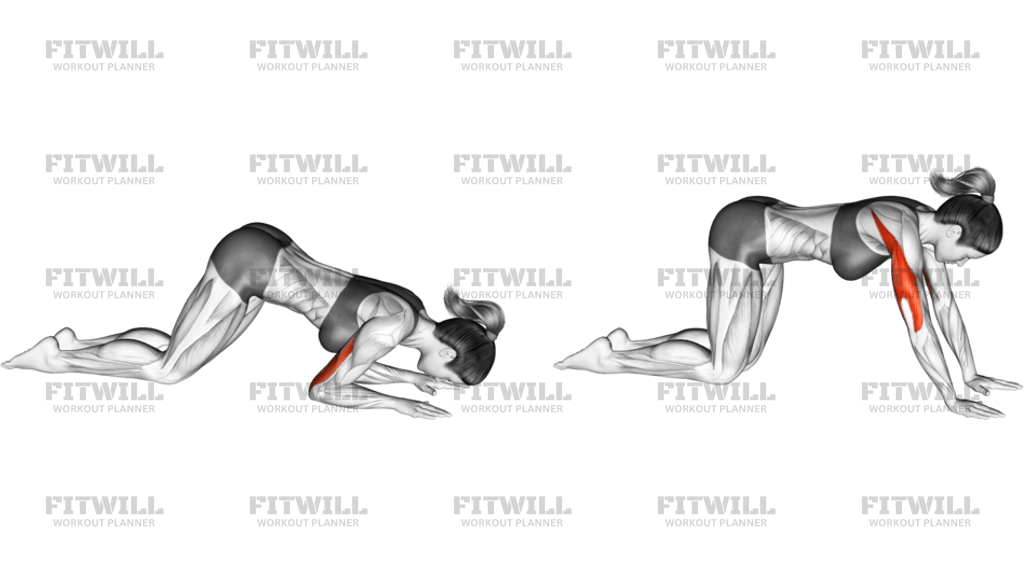
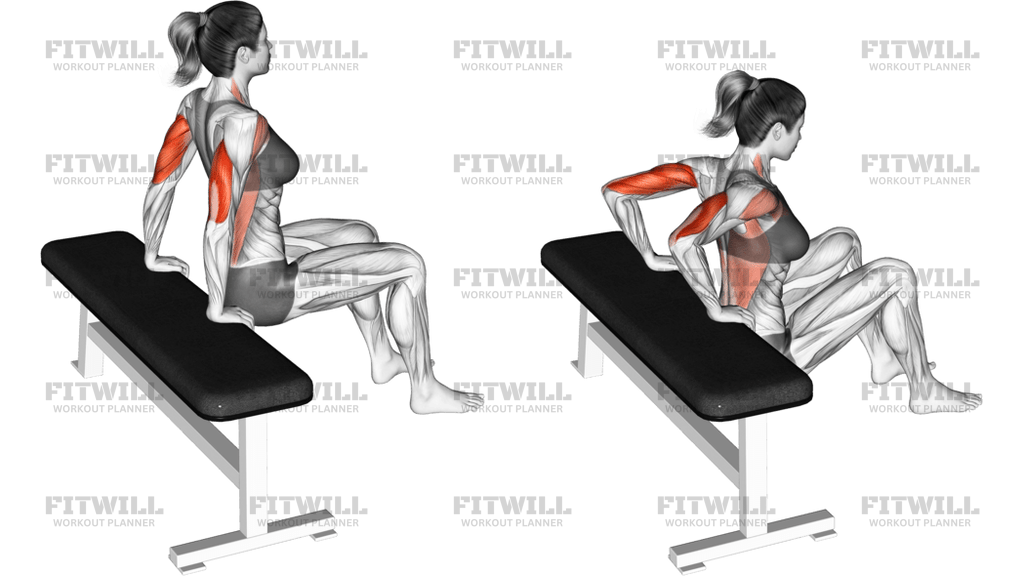
Bench Dip With Knees Bent is a body-weight triceps exercise performed with the hands on a bench behind the body, knees bent, and feet planted on the floor. The bent-knee position shortens the lever and makes the dip easier to control than a straight-leg version, which is why it is often used as a simpler entry point for pressing strength and arm hypertrophy work.
The movement primarily trains the triceps, with the front of the shoulders and the muscles around the shoulder blades helping stabilize the descent and press back up. In anatomy terms, the main work centers on the triceps brachii, with assistance from the anterior deltoid, forearm flexors, and rectus abdominis. The exact setup matters because the hands, shoulder position, and torso angle determine how much load the shoulders and elbows absorb.
A good bench dip starts with the hands anchored on a stable bench edge and the torso close enough to keep the shoulders organized. The chest stays lifted, the elbows point mostly backward, and the shoulders stay down rather than shrugging toward the ears. From there, you lower under control until the elbows bend to a comfortable depth, then press the bench away to return to the top without bouncing or kicking through the feet.
This exercise is useful as an accessory movement when you want direct triceps work without needing a machine or dumbbells. It also works well in home training, finishers, and upper-body circuits because the load comes from your own body position. The bent-knee stance makes it easier to keep the rep smooth, but it should still feel strict: if the shoulders drift forward, the elbows flare hard, or the range becomes painful, the setup or depth needs to change.
Keep the motion pain-free and controlled, especially at the front of the shoulder. A shorter range with clean mechanics is better than forcing a deep dip that collapses the shoulders. Use the bench height, hand width, and knee bend to find a position where the triceps do the work and the joints stay steady from the first repetition to the last.
[ Workout Log & Planner ]
Put your next workout in Fitwill
Keep your plan and training log ready when you are.


Instructions
- Sit on the bench edge and place your hands beside your hips with fingers pointing forward, then slide your hips off the bench so your arms support your body.
- Bend your knees and plant your feet flat on the floor a comfortable distance in front of you.
- Keep your chest lifted, shoulders down, and elbows aimed mostly behind you rather than flaring wide.
- Straighten your arms to start at the top with your hips just in front of the bench and your weight supported by your hands.
- Lower your body by bending the elbows until your upper arms are near parallel to the floor or you reach a pain-free depth.
- Keep the torso close to the bench and the neck long as you descend; do not let the shoulders roll forward.
- Press through your palms to extend the elbows and drive yourself back to the top without bouncing off the bottom.
- Exhale as you press up, inhale as you lower, and keep the knees bent and feet planted throughout the set.
Tips & Tricks
- Keep your hands on the bench edge beside your hips so the wrists stay stacked under the shoulders instead of drifting too far behind you.
- A slightly narrower hand position usually keeps the triceps working more cleanly and reduces extra shoulder stress.
- Stop the descent before the front of the shoulder feels pinched; depth should come from elbow bend, not from dumping the shoulders forward.
- Think about moving your torso straight down and up next to the bench, not sliding forward away from the seat.
- Keep the elbows tracking mostly backward so the triceps share the load instead of turning the rep into a shoulder-dominant press.
- Use the feet only as light support; if you push hard through the legs, the set turns into a partial standing assist.
- If your hips drift far from the bench, reset the foot position so the knees stay bent and the torso remains close to the edge.
- Use a slower lowering phase to keep tension on the triceps and avoid dropping into the bottom position.
Frequently Asked Questions
What muscles work most in a bench dip with knees bent?
The triceps do most of the work, with the front shoulders and upper back stabilizing the torso and shoulder position.
Why are the knees bent instead of straight?
Bent knees shorten the lever, so less body weight is loaded through the arms and the dip is easier to control.
How far should I lower on the bench?
Lower only until the upper arms are close to parallel or you reach a pain-free depth; going deeper is not necessary if the shoulders lose position.
Where should my hands go on the bench?
Place your hands beside your hips on a stable bench edge so you can press straight down and keep the wrists under control.
What is a common mistake with this exercise?
Letting the shoulders roll forward and dropping too deep is a common problem; that usually shifts stress away from the triceps.
Can I do this if my shoulders feel sensitive?
Only if you can keep the motion pain-free and shallow; if the front of the shoulder pinches, reduce depth or choose another triceps exercise.
How can I make the bench dip harder?
Slow the lowering phase, pause briefly near the bottom, or straighten the legs gradually only if your shoulders and elbows stay comfortable.
Is this a good beginner triceps exercise?
Yes, the bent-knee version is often more approachable than a straight-leg bench dip because it reduces the amount of body weight you have to press.