Cable Seated Neck Extension With Head Harness
Cable Seated Neck Extension With Head Harness is a seated neck-strength exercise that uses a low cable and a harness around the head to load controlled cervical extension. The setup matters because the cable is trying to pull the head forward while you resist by extending the neck, so the exercise only works well when the torso stays quiet and the motion stays small and deliberate.
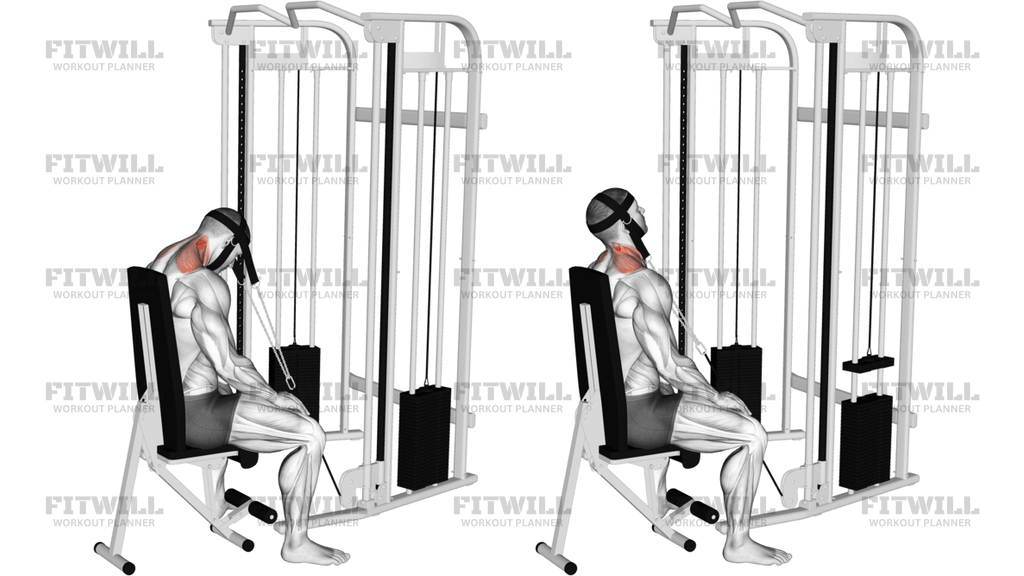
The image shows the lifter seated upright on the machine with the cable running from a low pulley to the head harness. The start position is the chin tucked slightly and the head flexed forward, then the rep finishes with the neck extended back toward a tall, neutral-to-slightly-raised head position. That makes this a direct training tool for the muscles at the back of the neck rather than a whole-back movement.
Because the range is short and the lever arm is awkward, load choice is important. Light to moderate resistance usually gives the best result, especially if you want clean reps without jerking, leaning back, or turning the exercise into a torso swing. The goal is to move the head and upper neck while the chest, ribs, and pelvis stay stacked on the seat.
This movement is commonly used as accessory work for athletes, wrestlers, combat-sport training, or anyone trying to build stronger neck extensors. It can also be useful as a controlled neck-strengthening drill when the goal is better posture tolerance and more robustness around the cervical spine. Keep the range pain-free, stop if symptoms travel into the arms, and avoid forcing end range just to make the stack move farther.
[ Workout Log & Planner ]
Put your next workout in Fitwill
Keep your plan and training log ready when you are.


Instructions
- Sit on the bench facing the cable stack and attach the low cable to the head harness so the line of pull comes from in front of you.
- Plant both feet flat, sit tall, and keep your hips and ribs stacked on the seat with no backward lean.
- Start with your chin slightly tucked and your head flexed forward so the cable already has tension before the first rep.
- Brace lightly through your midsection so the movement stays in your neck instead of turning into a whole-body rock.
- Extend your neck by lifting your chin and bringing the back of your head upward and slightly back against the cable.
- Stop when you reach a tall, neutral-to-slightly-extended head position without cranking the chin high or arching the upper back.
- Lower the head back into flexion under control until you feel the harness pull the neck forward again.
- Breathe out as you extend and inhale as you return to the start position.
- Reset your posture before the next rep so every repetition starts from the same seated position.
Tips & Tricks
- Keep the cable line of pull consistent; if the stack is tugging from above or behind, the exercise stops behaving like a neck extension.
- Use a small range of motion. A few controlled degrees of extension are enough when the harness is set up correctly.
- Do not drive the rep by leaning your torso back. The seat should stay quiet while the neck does the work.
- Let the chin travel smoothly instead of snapping up at the top. Jerky movement puts the load into the wrong structures.
- Choose a weight that lets you reverse the rep without losing the head-harness position.
- Keep your jaw relaxed and your shoulders down so you do not turn the drill into a shrugging motion.
- If the back of the neck feels compressed or pinched, shorten the range and reduce the load immediately.
- This works well for higher-rep accessory sets, but only if each rep still starts from the same chin-tucked setup.
Frequently Asked Questions
What does Cable Seated Neck Extension With Head Harness train?
It primarily trains the neck extensors at the back of the cervical spine, especially when you keep the torso still and extend only through the neck.
How should I set up the harness and cable?
Sit facing the stack, clip the harness to a low pulley, and start with the cable already pulling forward so you can begin from a controlled chin-tucked position.
What should move during the rep?
Only the neck should move. Your chest, ribs, pelvis, and feet should stay planted while the head travels from flexion toward a tall, extended position.
What is the biggest mistake with this exercise?
The most common error is leaning the torso back or yanking the head upward, which shifts the work away from the neck and makes the set less controlled.
Is this a safe exercise for beginners?
Yes, if the load is very light and the range stays pain-free. Beginners should keep the motion small and stop before the neck feels strained.
Where should I feel the effort most?
You should feel the effort mostly through the back of the neck, with only light stabilization from the upper back and trunk.
How heavy should the load be?
Use a light to moderate load that lets you control both the extension and the return without losing the harness position or cheating with momentum.
What if I feel pinching or pain in my neck?
Shorten the range, reduce the resistance, and stop if the discomfort persists. This exercise should feel like controlled muscular work, not a sharp pinch.