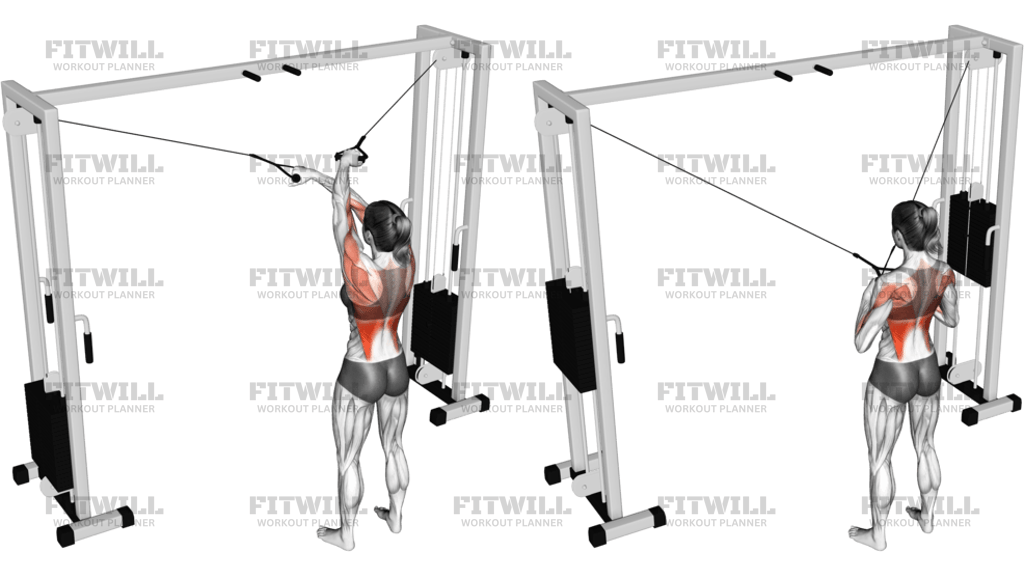
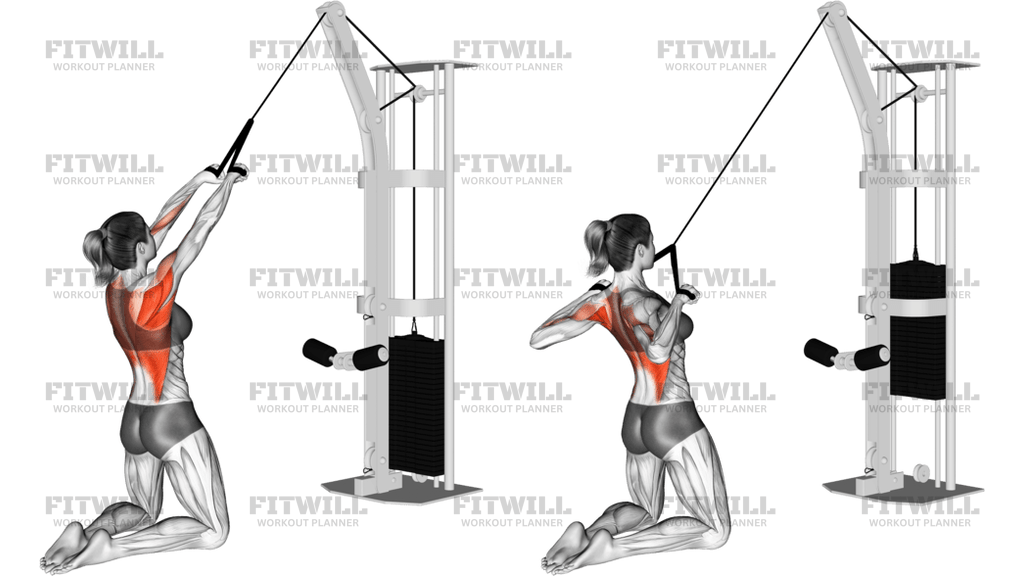
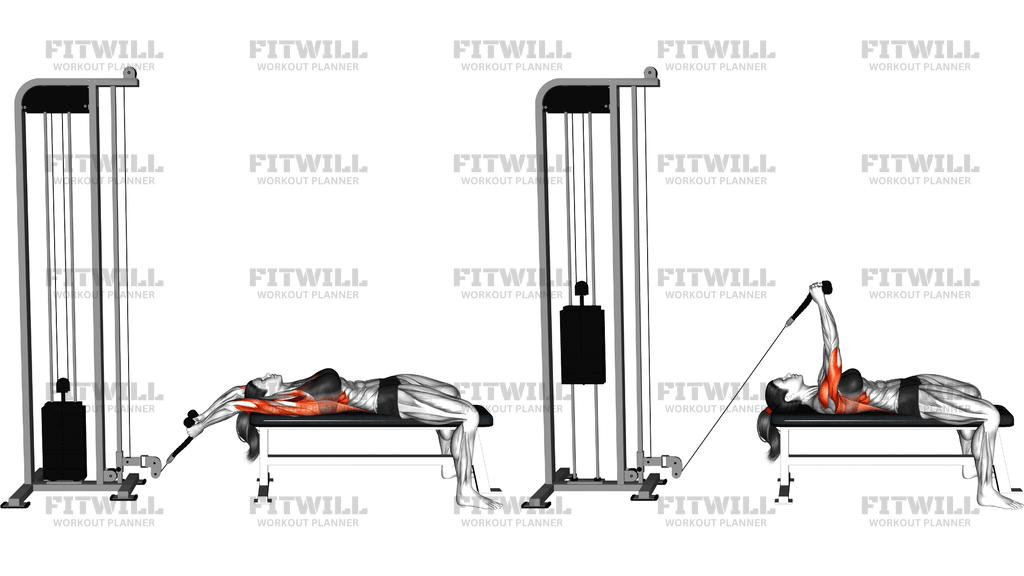
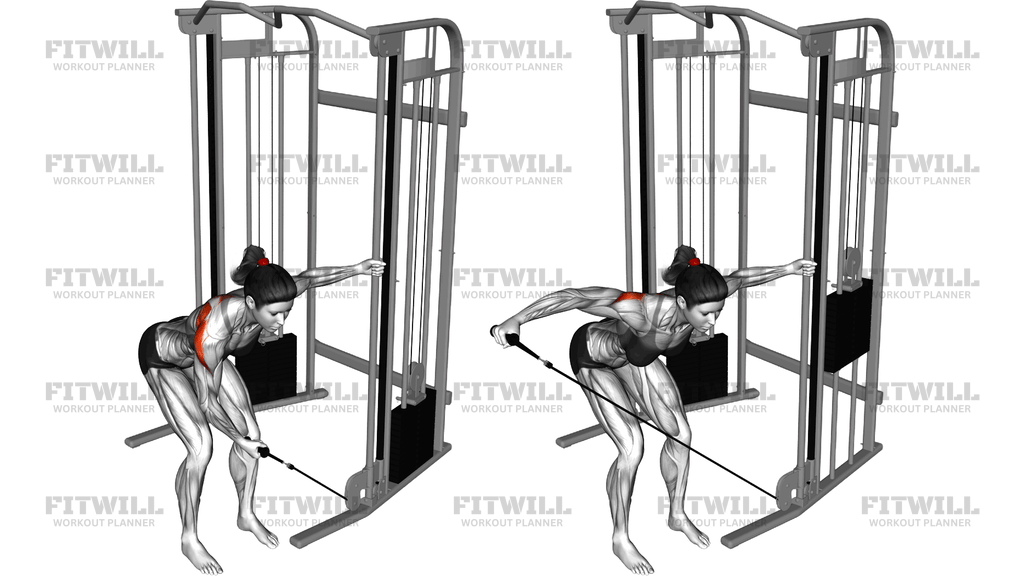
Cable Low Row With Rope Attachment
Cable Low Row With Rope Attachment is a standing low-cable pulling exercise that trains the back with help from the shoulders, arms, and trunk. The rope lets you pull with a neutral hand position and finish the rep by driving the elbows back without forcing the shoulders to flare. It is useful when you want rowing work that still feels controlled and joint-friendly, especially for lifters who want to build back strength without lying on a bench or using a chest-supported machine.
The setup matters because the cable line of pull can quickly turn the movement into a body-swing if the stance is loose. Hinge at the hips, keep a soft bend in the knees, and lean the torso forward just enough to keep tension on the cable from the start. Let the arms extend long at the bottom, but keep the chest proud and the spine neutral so the pull starts from the back instead of from rounding the shoulders.
Each repetition should travel from a stretched reach to a strong squeeze near the lower ribs or upper waist. Pull the rope in by driving the elbows behind the torso, then let the shoulder blades move back and down as the handles come close to the body. The rope ends can separate slightly at the finish, but the torso should stay fixed and the wrists should stay neutral. Return slowly until the arms are long again without letting the weight yank you forward.
Cable Low Row With Rope Attachment fits well in back training, upper-body accessory work, or any session where you want a row with steady tension and clear scapular control. It is often a good choice for beginners because the cable path is guided, but the light load still has to be earned with posture and tempo. If the low back starts doing the work, shorten the range, reduce the weight, and reestablish the hip hinge before continuing.
Use the exercise to reinforce clean rowing mechanics rather than to chase momentum or maximum load. A good set should feel like the back is doing the work while the trunk stays organized and the shoulders stay out of your ears. When done well, Cable Low Row With Rope Attachment builds useful pulling strength that carries over to other cable rows, machine rows, and general upper-back training.
[ Workout Log & Planner ]
Put your next workout in Fitwill
Keep your plan and training log ready when you are.


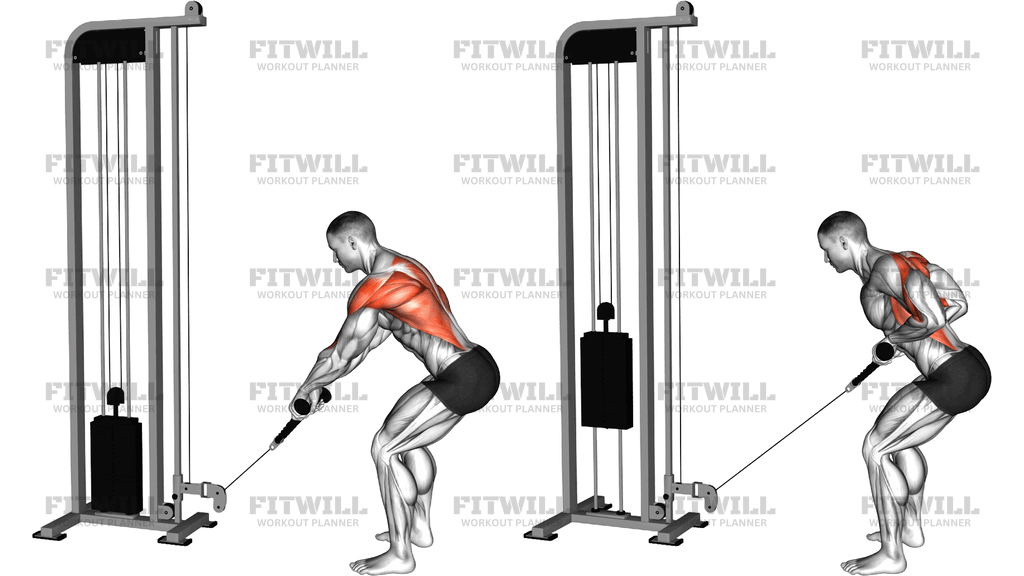
Instructions
- Set the cable to a low position, attach the rope, and stand facing the stack with your feet about hip-width apart.
- Hinge at the hips, bend your knees slightly, and lean your torso forward until the cable stays tight with your arms hanging straight down.
- Hold the rope handles with a neutral grip and let your shoulders stay down away from your ears.
- Brace your trunk and keep your chest open before you start the pull.
- Drive your elbows back alongside your body as you pull the rope toward your lower ribs or upper waist.
- Squeeze your shoulder blades back and down at the top without leaning farther forward or backward.
- Lower the rope slowly until your arms are long again and the cable tension stays smooth.
- Reset your stance and breath, then repeat for the planned reps before stepping away from the stack.
Tips & Tricks
- Keep the knees softly bent and the hips back so the cable starts the set under tension, not slack.
- If the stack is pulling you upright, step a little farther from the machine instead of yanking the rope with your lower back.
- Think of the elbows as the drivers of the rep; the hands only connect you to the rope.
- Pull the rope toward the lower ribs or top of the waistband, not up toward the chest.
- Let the shoulder blades glide back and down at the finish, but do not crank the neck forward to look for the rep.
- Use a slower lowering phase so the cable does not snap your torso toward the stack.
- Keep the wrists straight and avoid curling the rope with your forearms at the top.
- Choose a load that lets you keep the same torso angle on every rep.
- Stop the set if you start shortening the pull and leaning into the weight.
Frequently Asked Questions
What muscle does Cable Low Row With Rope Attachment target most?
It mainly works the back, especially the lats and mid-back, with the rear shoulders and arms helping on each pull.
How should I hold the rope on Cable Low Row With Rope Attachment?
Use a neutral grip with one hand on each rope end and keep the wrists straight. At the top, the hands can separate slightly, but the pull should still come from the elbows.
Where should the rope finish on Cable Low Row With Rope Attachment?
Aim the pull toward your lower ribs or upper waist. If the rope rises too high, the shoulders usually take over and the torso starts to drift.
Is Cable Low Row With Rope Attachment good for beginners?
Yes, because the cable path is guided and the rope feels natural in the hands. Start light and learn to hold the hip hinge before adding load.
Why do my lower back and hips take over this row?
Usually the stance is too upright or the weight is too heavy. Hinge a little more, brace before each pull, and keep the torso angle fixed.
Can I use this instead of a seated cable row?
Yes, it is a solid alternative when you want a standing row with a similar pulling path. Expect more demand on the trunk because you are not supported by a bench.
How do I avoid turning Cable Low Row With Rope Attachment into a shrug?
Keep your shoulders down as the elbows travel back and stop the rep before you start lifting the traps. The finish should feel like a squeeze across the back, not a shrug.
How many reps work best for Cable Low Row With Rope Attachment?
Most people do well in the 8-15 rep range, where the back can work hard without losing the hinge or turning the set into a swing.