Cable Seated Neck Flexion With Head Harness
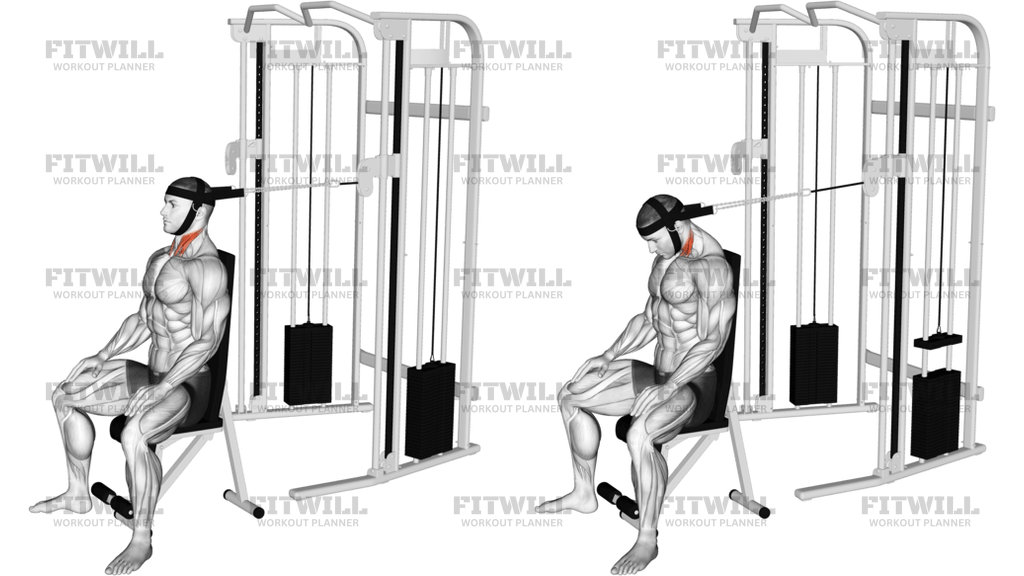
Cable Seated Neck Flexion With Head Harness is a direct neck-strength exercise that loads cervical flexion through a cable attached to a head harness. The cable pulls from behind you, so the movement is small and controlled rather than explosive. That setup makes it useful for building strength in the front of the neck while keeping the torso fixed and the rep path easy to repeat.
The setup matters because the harness, bench position, and cable line determine whether the exercise feels clean or awkward. Sit upright on the bench with both feet planted, keep the chest tall, and fasten the harness snugly so it sits stable on the head. The cable should run behind you and stay aligned so it creates steady tension as you nod the chin forward.
Each repetition should come from the neck, not from leaning the trunk or jerking the head. Start in a neutral neck position or a very slight backward tension, then flex the neck by bringing the chin toward the throat. Hold the end position briefly if you can keep it smooth, then return slowly until the neck is neutral again without letting the weight stack pull you into a sloppy rebound.
This variation is commonly used as accessory work for athletes who need more neck strength and control, especially in sports with contact, bracing, or repeated head position demands. It is not a movement to rush, and it is not a place to chase a big range of motion. Keep the load light enough to move cleanly, stop if you feel pinching or dizziness, and treat every rep as a precise neck-strength drill rather than a whole-body lift.
[ Workout Log & Planner ]
Put your next workout in Fitwill
Keep your plan and training log ready when you are.


Instructions
- Sit on a bench with the cable machine behind you and the head harness secured snugly around the head.
- Plant both feet flat, sit tall, and keep the cable line aligned so it pulls from behind the back of the head.
- Set the torso still, relax the shoulders, and keep the neck long before the first rep.
- Inhale to brace lightly, then begin by flexing the neck and bringing the chin toward the throat.
- Keep the chest and rib cage from drifting forward while the head moves on its own.
- Pause briefly at the strongest flexed position without shrugging or tensing the jaw.
- Lower the head slowly back to neutral, letting the cable control the return instead of yanking it.
- Reset the neck position between reps and keep the breathing steady for the full set.
Tips & Tricks
- Start with a very light stack; the neck flexors fatigue fast and do not need much load to work hard.
- If the harness shifts on your head, stop and tighten it before the next set so the cable does not rub or twist.
- Keep the motion small and precise; a short clean nod is better than forcing a bigger range with the upper back.
- Do not hinge at the hips or lean backward to create momentum, because that turns the rep into a body swing.
- Let the cable pull you only into the start position, not through the whole rep, or you will lose tension and control.
- Keep the jaw relaxed and the throat soft so the front of the neck can do the work without extra facial tension.
- Use a slower lowering phase than lifting phase to keep the cervical muscles under control the whole time.
- Stop the set if you feel pressure, pinching, or dizziness, since neck work should feel localized and stable.
- If the first rep already feels awkward, move the pulley height or bench position instead of forcing the angle.
- Pair this movement with neck extension or lateral flexion work on other days if you want balanced neck training.
Frequently Asked Questions
What does Cable Seated Neck Flexion With Head Harness train most?
It primarily trains the neck flexors, especially the muscles that bring the chin toward the chest.
Can beginners perform this exercise?
Yes, as long as they start very light, keep the harness secure, and use a short, controlled range.
How should the head harness fit?
It should sit snugly and evenly on the head so the cable stays stable and does not slide during the set.
What is the biggest form mistake?
The main mistake is moving the torso instead of isolating the neck, which turns the rep into a cheat.
Why do I feel this near my jaw or traps?
That usually means you are tensing the jaw, shrugging, or using too much weight for a clean neck flexion rep.
How heavy should I train this movement?
Use a load that lets you keep the head path smooth and the return slow; this is usually lighter than most people expect.
Can I do this without a head harness?
Not this exact variation. If you need a substitute, use a neck flexion band drill or another harness-based neck exercise.
Is this safe for a sore neck?
Only if the soreness is mild and the motion is pain-free. Skip it if you have sharp pain, dizziness, or a recent neck injury.
Where does this fit in a workout?
It works best as accessory neck work after your main lifts, or in a dedicated neck-training block.