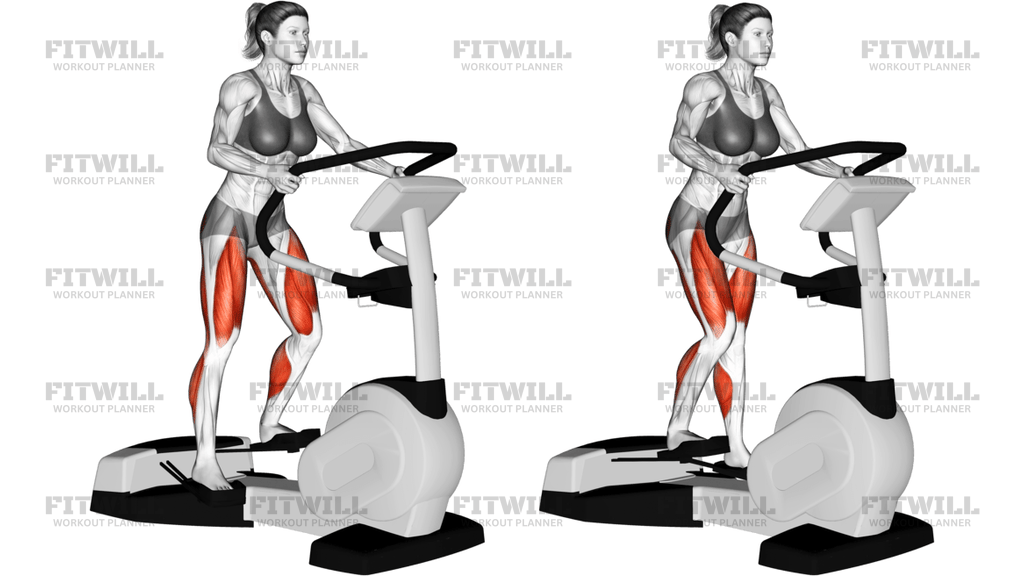
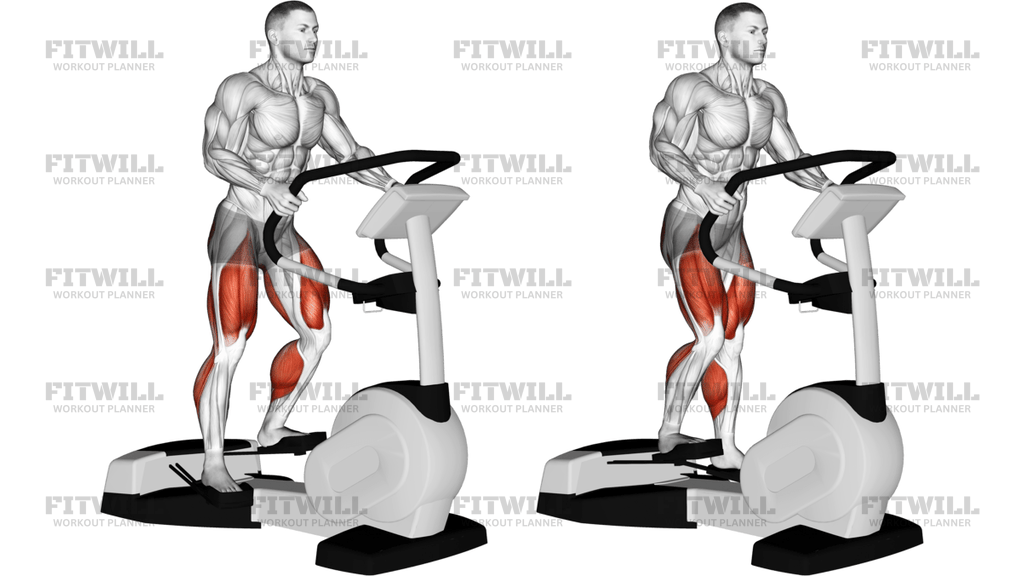
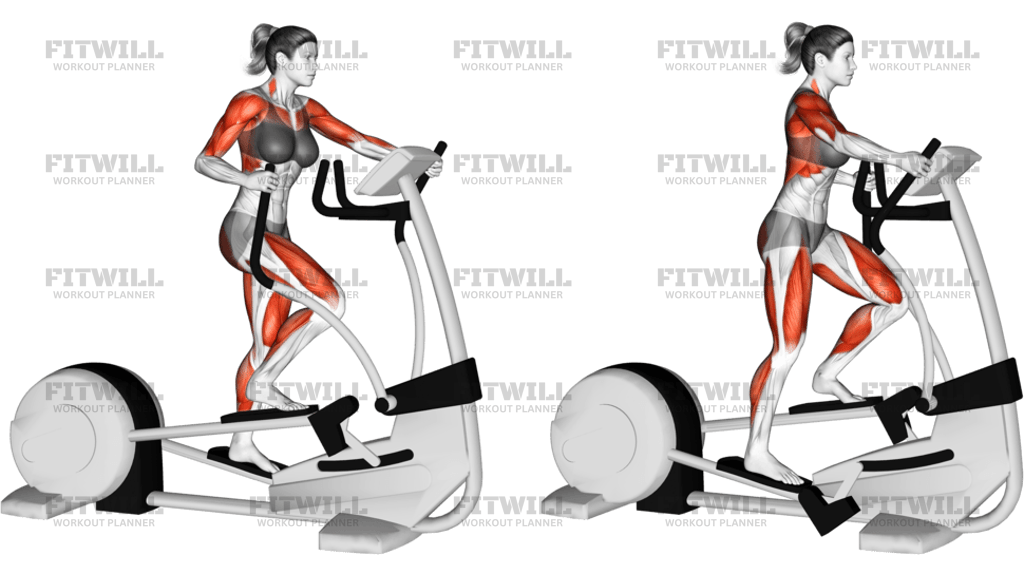
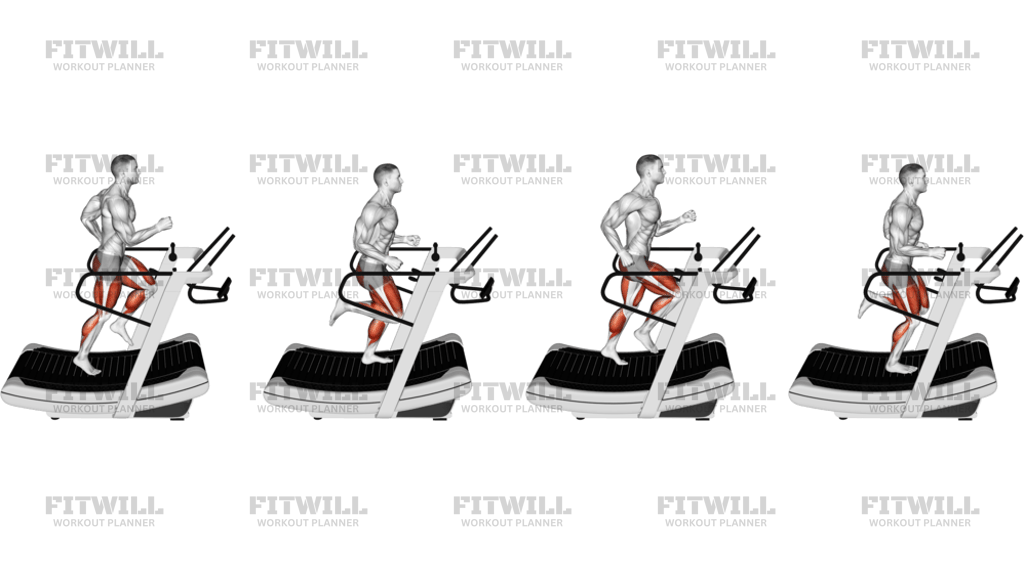
Bicycle Recline Walk
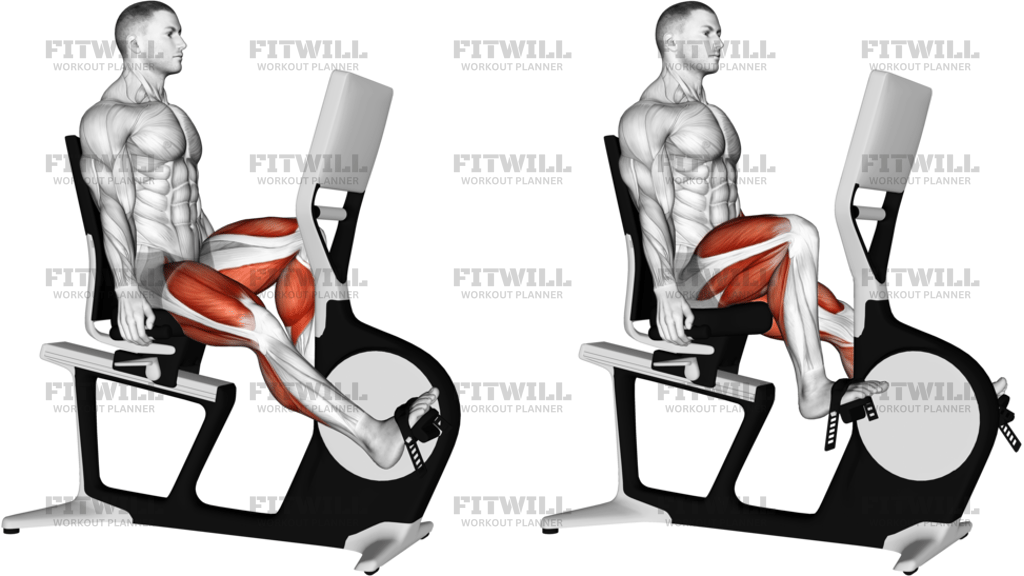
Bicycle Recline Walk is a seated recumbent-bike cardio exercise that places your back against a support while your legs drive the pedals through a smooth, repeating cycle. The setup matters because the seat distance, back support, and foot placement determine whether the effort stays on the legs or turns into hip rocking and rushed cadence. When the fit is right, the movement is easy to repeat, low impact, and useful for building steady conditioning without loading the joints like running or jumping.
This exercise emphasizes the quads most strongly, with the glutes, hamstrings, calves, and core helping stabilize the pelvis and keep the pedal stroke smooth. In practical terms, the work comes from alternating knee and hip extension while the torso stays quiet against the seat back. That makes it a good option when you want lower-body effort with less balance demand, or when you need a cardio movement that is easier to control than standing drills.
Begin by sitting tall with your back and hips fully supported, then place the feet on the pedals so the balls of the feet and midfoot can drive evenly. The knees should have a slight bend at the farthest point of the stroke, not a hard lockout or an over-compressed start. From there, press one pedal away, let the opposite leg come back under control, and keep the knees tracking in line with the toes instead of flaring outward or collapsing inward.
The best reps feel smooth rather than forceful. A steady cadence with light to moderate resistance is usually more useful than grinding hard against the pedals, especially if the goal is warmup, aerobic work, recovery, or a longer conditioning block. Keep the hands light on the side supports if available, breathe steadily, and avoid yanking through the upper body to create speed.
Use Bicycle Recline Walk when you want a low-impact cardio option that still challenges the legs and breathing. It fits well in general conditioning sessions, warmups, cooldowns, or intervals where you want repeatable work and easy recovery between bouts. Beginners can usually learn it quickly because the machine guides the path, but the seat adjustment and pedal control still matter if you want clean mechanics and consistent output.
[ Workout Log & Planner ]
Put your next workout in Fitwill
Keep your plan and training log ready when you are.


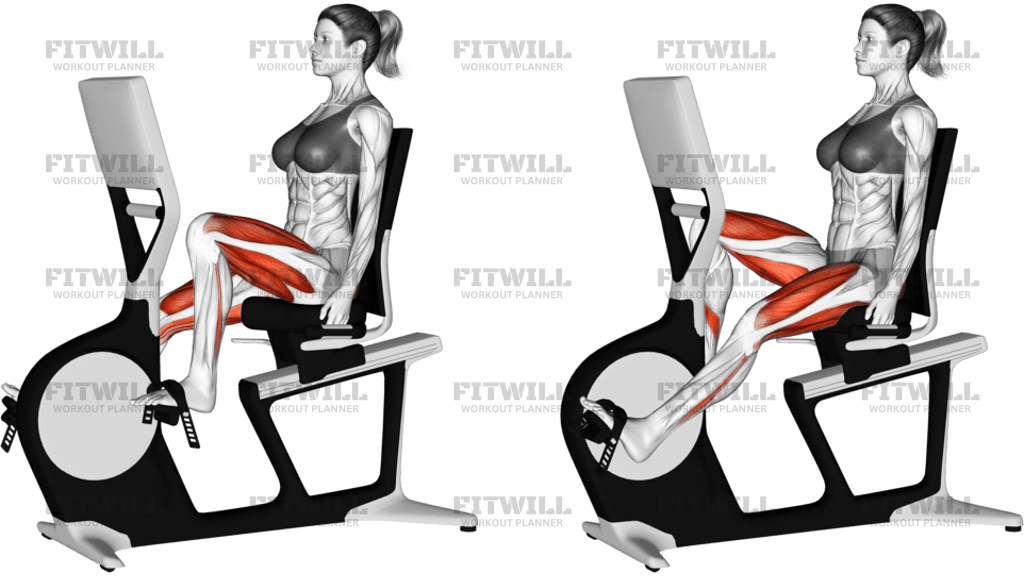
Instructions
- Sit back against the recumbent seat and adjust the seat so one knee still has a slight bend when that foot is farthest from your body.
- Place the balls of your feet over the pedal centers and secure the straps if the machine uses them.
- Hold the side handles or rest your hands lightly on the seat supports so your torso stays still.
- Brace your midsection and keep your lower back in contact with the seat back before you start pedaling.
- Press one pedal forward and down while the opposite leg returns smoothly through the top of the stroke.
- Keep both knees tracking in line with your toes and avoid letting them flare outward or cave inward.
- Maintain a smooth, even cadence instead of stomping the pedals or bouncing your hips off the seat.
- Breathe rhythmically for the full set and keep the effort controlled enough that you can finish without losing posture.
- Slow the pedals down under control before stepping off the machine.
Tips & Tricks
- If your knees feel jammed at the front of the stroke, move the seat back one notch before increasing resistance.
- A slight knee bend at full extension usually protects the joints better than reaching for a longer pedal stroke.
- Keep pressure through the whole foot rather than curling the toes and letting the heels pop off the pedals.
- Use the seat back to stay tall; if you have to rock your hips to push harder, the resistance is too high.
- Set the resistance light enough that the cadence stays smooth for the entire interval, not just the first minute.
- Let the return phase happen under control instead of snapping the pedals back with the hip flexors.
- If the machine has handles, use them for balance, not for pulling your body forward on every stroke.
- When the goal is conditioning, a steady breathing pattern matters more here than chasing a maximal grind.
- Stop the set if the knees start drifting inward or the lower back loses contact with the backrest.
Frequently Asked Questions
What muscle does Bicycle Recline Walk target most?
The quads do most of the work, with the glutes, hamstrings, calves, and core helping stabilize each pedal stroke.
Can beginners perform this exercise?
Yes. The recumbent position makes it beginner-friendly because the machine supports your back and guides the path of the legs.
How should the seat be adjusted on the recumbent bike?
Set the seat so your knee stays slightly bent when the foot is farthest away. If the leg is fully straight or the knee feels compressed, adjust the seat before starting.
Should I lock my knees at the end of the pedal stroke?
No. Keep a soft bend at full extension so the stroke stays smooth and the joint is not forced into lockout.
Do I need to grip the handles tightly?
No. Light contact is enough. If you are pulling hard on the handles, the resistance is probably too high or the seat fit needs adjustment.
What is the biggest form mistake on this machine?
Letting the hips rock and the knees cave inward is the most common issue. Both usually mean the load is too heavy or the seat position is off.
Is this a good warmup exercise?
Yes. A light, smooth set raises body temperature and gets the legs moving without a lot of impact or coordination demand.
How do I make the exercise harder without losing form?
Increase resistance gradually or extend the working time while keeping the cadence smooth and the torso quiet against the seat back.