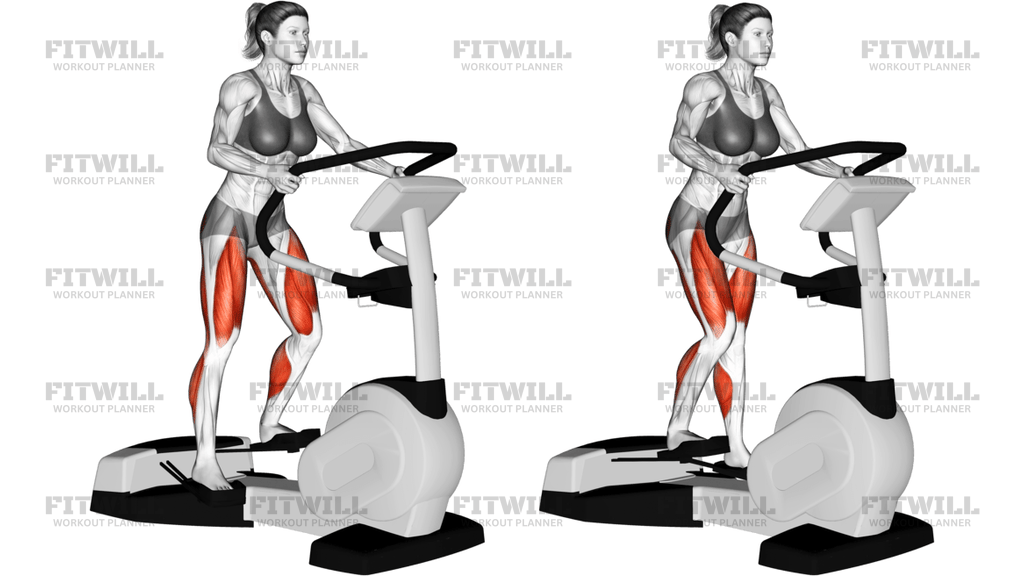
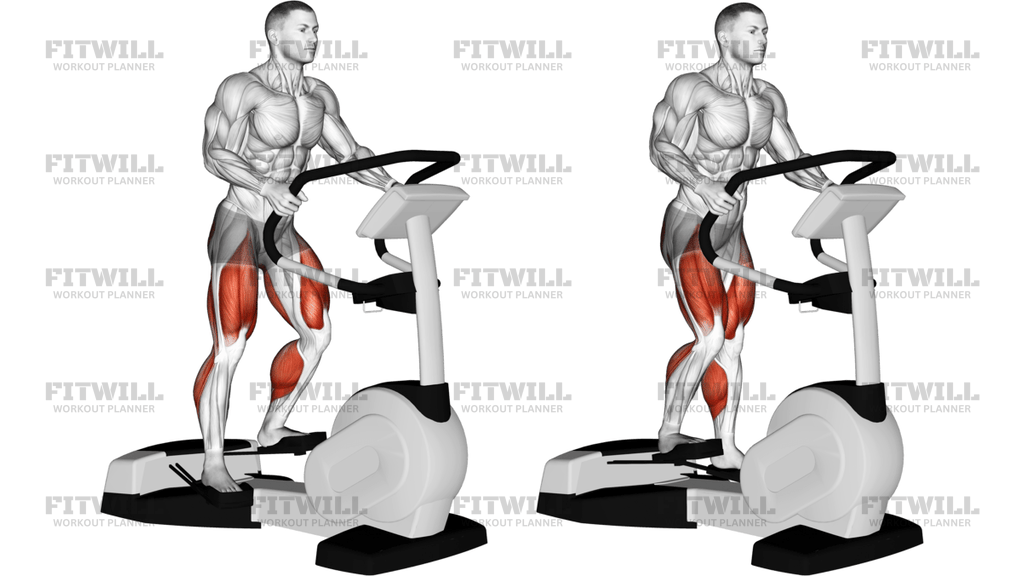
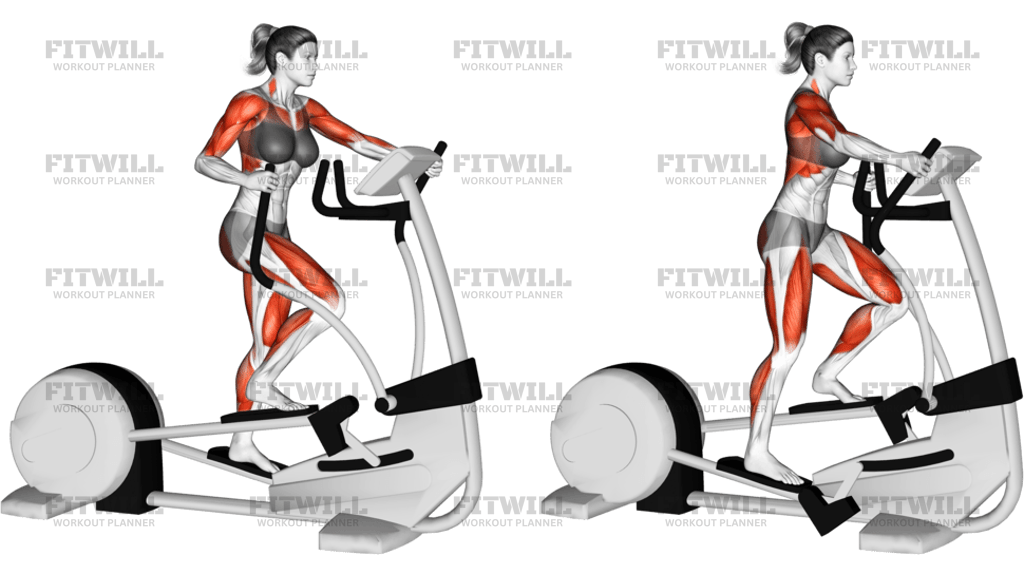
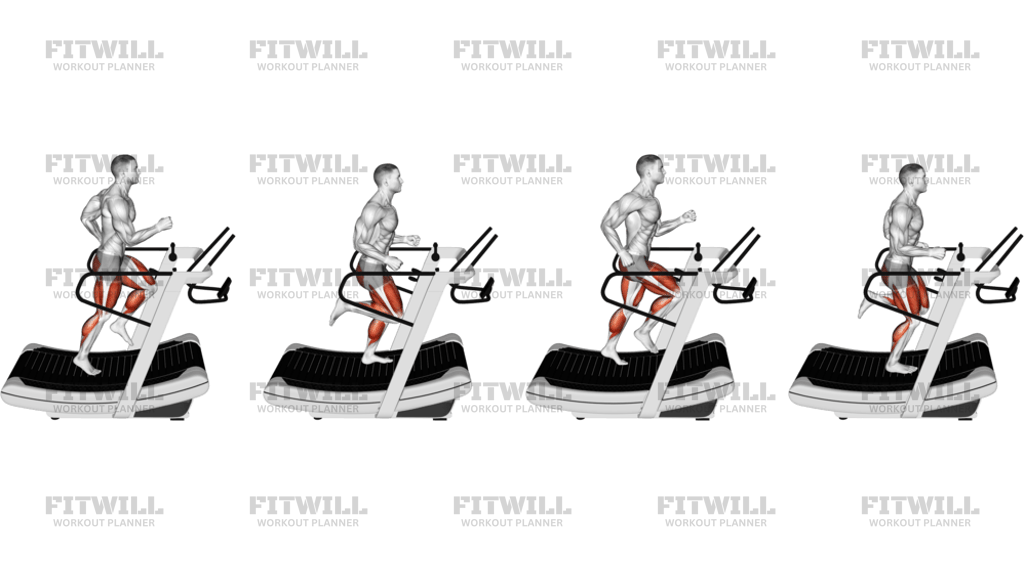
Walking On Treadmill
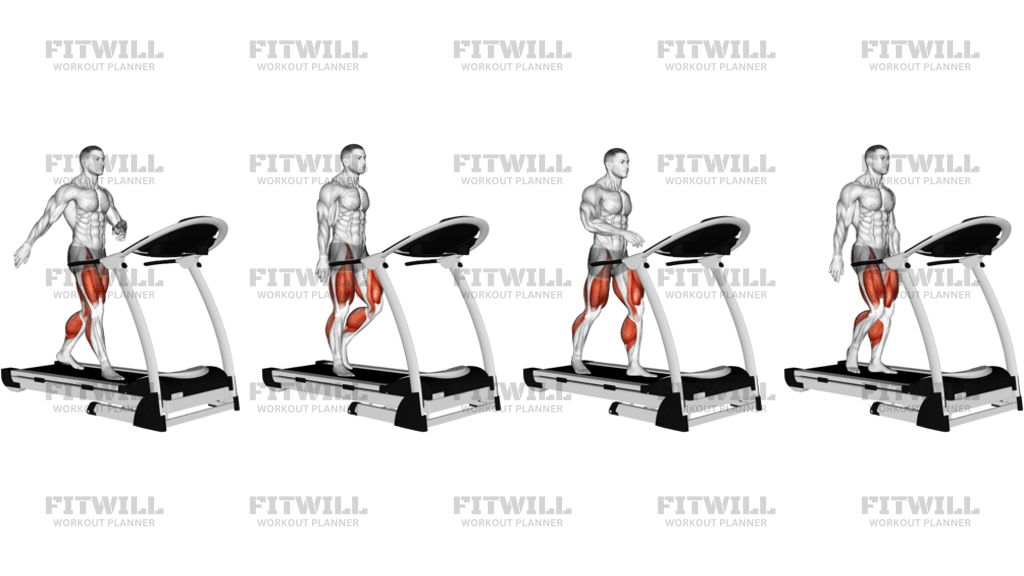
Walking On Treadmill is a steady treadmill cardio exercise built around efficient, repeatable walking mechanics. The belt provides a consistent surface, so the training focus is less about overcoming resistance and more about maintaining posture, rhythm, and clean foot placement for the full duration of the set.
The main demand is on the quads, with help from the calves, glutes, hip stabilizers, and core to keep each step organized. In practice, that means you are training a controlled gait pattern: one foot loads while the other swings through, the torso stays tall, and the arms help balance the stride without wasting motion. When the stride stays compact and smooth, the working muscles do the job instead of momentum.
Setup matters because treadmill walking is easy to turn into a sloppy shuffle if the belt speed, incline, or posture are wrong. Start with a pace you can control, step onto the moving belt only when you are balanced, and keep your head, ribcage, and pelvis stacked over your feet. A small incline can increase the demand on the legs and glutes, but too much incline usually causes leaning, gripping the rails, or overreaching with the step.
Use the exercise to build warm-up capacity, general conditioning, recovery between harder sessions, or low-impact cardio volume. The best reps feel smooth and boring in a good way: even breathing, relaxed shoulders, and consistent cadence from start to finish. If your steps become loud, your torso starts swaying, or you need the handrails to keep up, the speed is probably too high for the quality you want.
[ Workout Log & Planner ]
Put your next workout in Fitwill
Keep your plan and training log ready when you are.


Instructions
- Set the treadmill to a slow walking pace and, if desired, a very small incline of 0-3%. Stand on the side rails, attach the safety clip if the machine has one, and wait for the belt to come up to speed before stepping on.
- Step onto the belt with your feet under your hips, then stand tall with your ribs stacked over your pelvis. Keep your gaze forward, soften your knees, and let your arms hang naturally by your sides.
- Begin walking with a short, controlled stride so each foot lands under your center of mass rather than far in front of it.
- Let the heel touch down smoothly, roll through the midfoot, and push the belt back until the trailing leg finishes behind you.
- Swing the opposite arm naturally with each step, keeping the elbows bent and the shoulders relaxed.
- Keep your torso quiet and avoid leaning on the handrails or twisting side to side as the pace increases.
- Breathe in a steady rhythm that matches your cadence instead of holding your breath or gasping between steps.
- When the set is over, walk the speed down gradually, step back onto the side rails, and stop the belt only after your feet are clear of the moving surface.
Tips & Tricks
- Choose a speed that lets you keep your head steady and your shoulders relaxed for the entire interval.
- If you need the handrails to balance for more than a few seconds, lower the pace or incline until you can walk hands-free.
- Keep the step length short enough that your front foot lands under you; reaching too far ahead is what usually causes shin and knee irritation.
- Use a modest incline to raise the effort, but avoid cranking it so high that you have to bend at the waist or climb onto your toes.
- Let the heel-to-midfoot roll happen naturally instead of slapping the belt with a flat, noisy foot strike.
- Swing the arms in the same direction as your legs without crossing them hard in front of your chest.
- If your calves or Achilles start taking over, shorten the stride and slow the belt before increasing volume.
- Keep your eyes forward rather than down at your feet so your neck and upper back stay stacked.
- Finish each session by slowing the belt down gradually; jumping off a moving treadmill is a bad habit and an avoidable risk.
Frequently Asked Questions
What muscles does treadmill walking work most?
The quads do a lot of the work, with the calves, glutes, hip stabilizers, and core helping you stay balanced and move efficiently.
Can beginners perform this exercise?
Yes. Treadmill walking is one of the easiest cardio options for beginners because the speed and incline can be adjusted very precisely.
Should I hold the handrails while I walk?
Only briefly if you need help getting started or balancing. If you are leaning on the rails, the speed or incline is too aggressive for clean walking mechanics.
How much incline should I use?
A small incline is usually enough to make walking harder without changing your posture. If you have to lean forward or bounce, reduce it.
What is the most common form mistake on a treadmill?
Overstriding. Landing too far in front of your body makes the step feel jarring and usually causes the belt to pull you instead of you controlling the pace.
Is treadmill walking better as a warm-up or a workout?
It works as both. Keep it short and easy for a warm-up, or increase the duration, incline, or pace for a dedicated cardio session.
What should my stride look like?
Think short and smooth, with each foot landing under your center of mass and pushing back behind you rather than reaching far forward.
Why do my shins or calves get tired first?
That usually happens when the stride is too long, the pace is too fast, or the incline is higher than your walking mechanics can handle cleanly.
Can I use treadmill walking for fat-loss cardio?
Yes. It is easy to sustain for longer periods, which makes it useful for steady calorie burn without the impact of running.