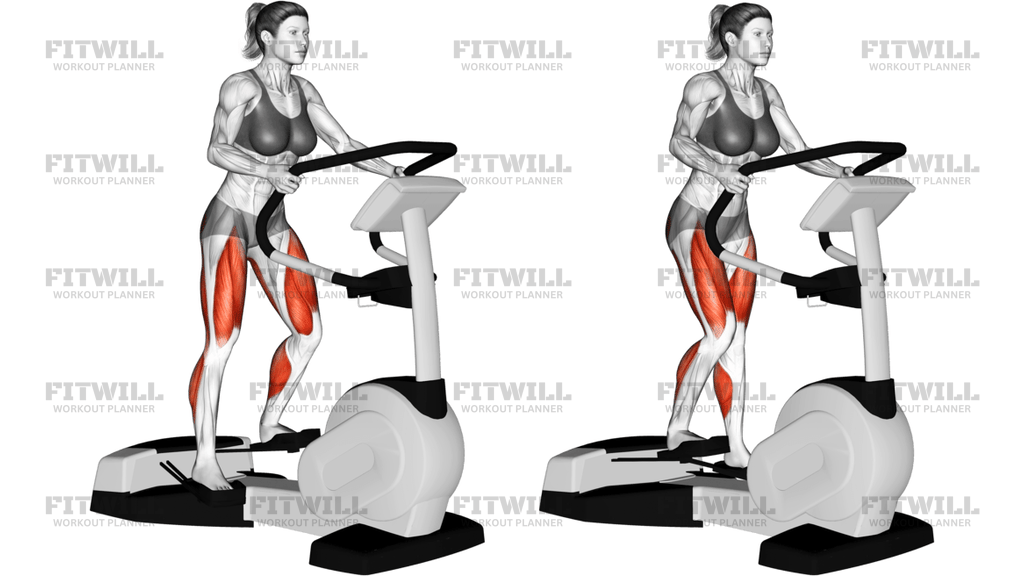
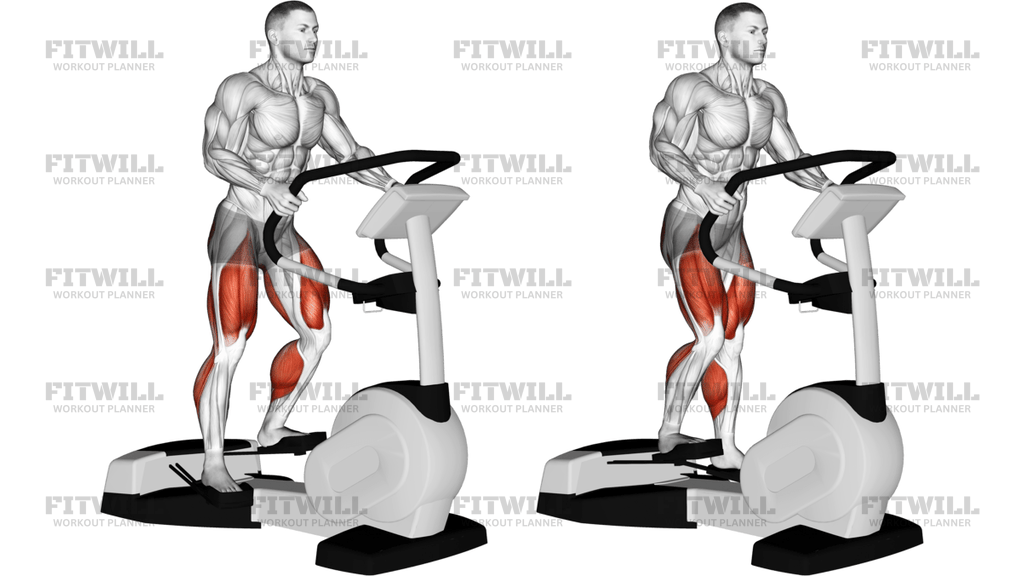
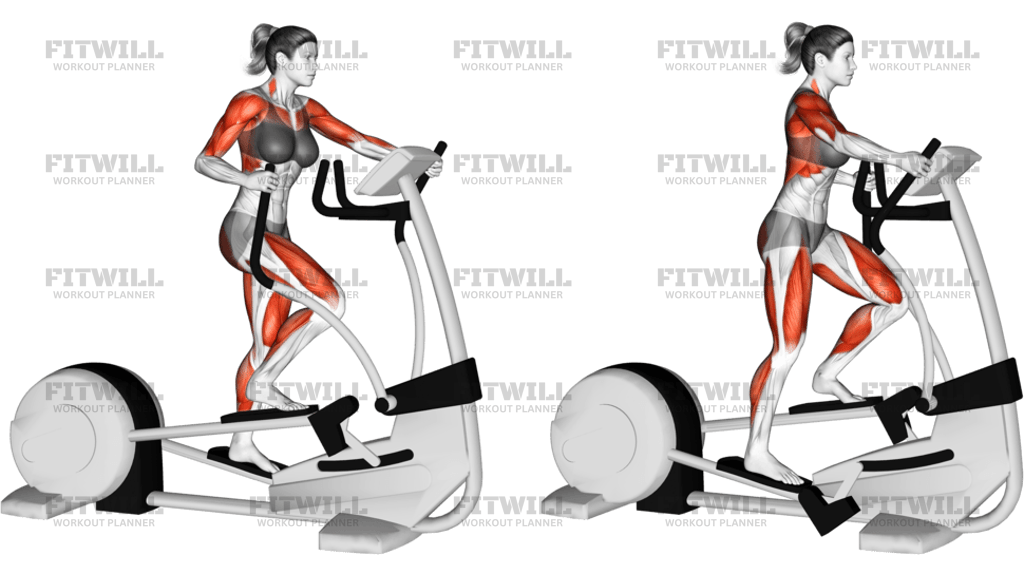
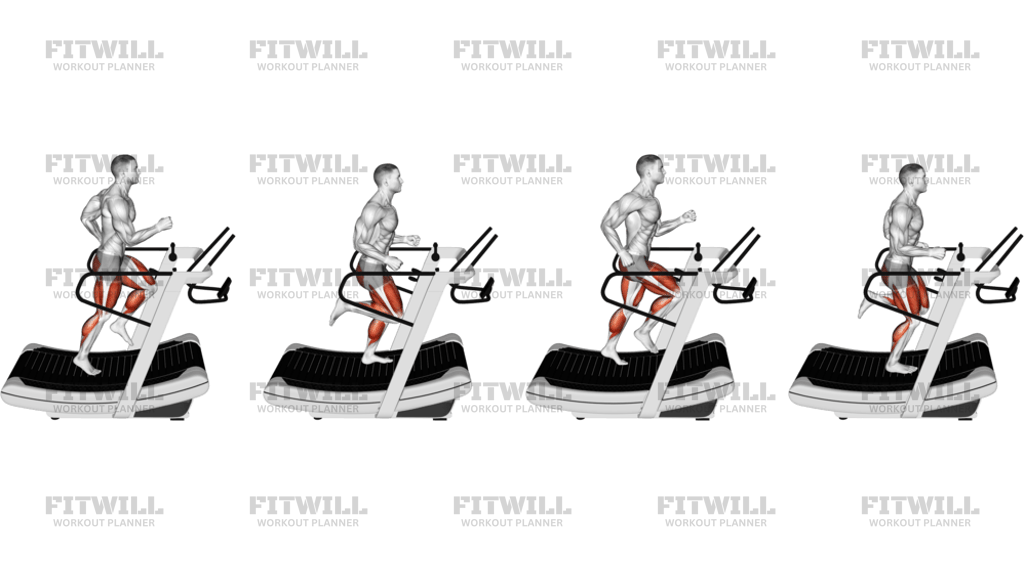
Walking On Treadmill
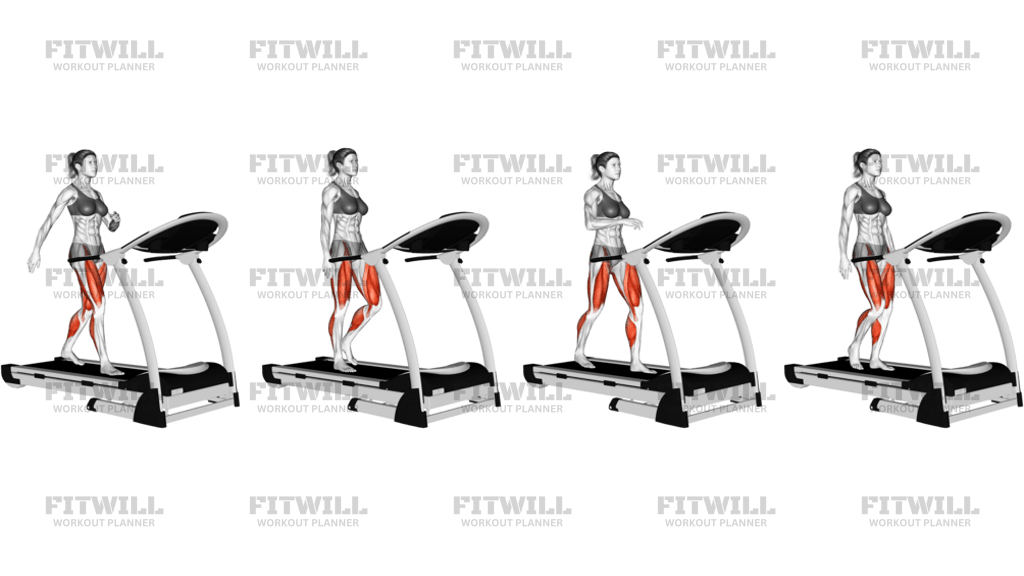
Walking On Treadmill is a steady treadmill walking exercise built around clean, repeatable steps and controlled posture. It is most useful for low-impact conditioning, warmups, recovery work, incline walking intervals, and aerobic base training. The main training effect comes from sustained rhythm rather than explosive force, so the pace should be fast enough to raise your heart rate without breaking your stride pattern.
This movement places the greatest emphasis on the quads, with the calves, glutes, hamstrings, hip flexors, and core helping to keep each step organized. The treadmill belt and incline make setup matter more than people expect: if your stride is too long, you will brake on every landing; if the speed is too high, your posture will collapse and the walk becomes a shuffle. A clean treadmill walk keeps the torso tall, the pelvis level, and the foot strike under the body instead of way out in front.
Start by setting the speed and incline before you commit to the belt. If the treadmill is starting from a stop, straddle the side rails, clip in the safety key, bring the belt to a gentle pace, and then step on with short, even steps. Once you are moving, keep your gaze forward, ribs stacked over the pelvis, and shoulders relaxed. Let the arms swing naturally or keep a very light touch on the rails only if you need balance.
During the walk, think about rolling through each foot instead of bouncing from step to step. Land softly, push the belt back with the stance leg, and keep the feet moving under your center of mass. Breathing should stay steady and unforced, especially on incline. If you want more lower-body demand, raise the incline a small amount before you raise speed; that usually keeps the walk smoother and more quad-dominant.
This exercise works well as a warm-up before leg training, a standalone conditioning block, or a safer option when running is not appropriate. It is also beginner-friendly because the intensity is easy to control with speed and incline. Finish the set by slowing the treadmill down gradually, then step onto the side rails before stopping completely. That simple exit routine matters as much as the walk itself for safety and consistency.
[ Workout Log & Planner ]
Put your next workout in Fitwill
Keep your plan and training log ready when you are.


Instructions
- Set the treadmill speed and incline before stepping on, and clip in the safety key if the machine has one.
- If the belt is starting from a stop, stand on the side rails first so you can step onto a moving belt safely.
- Step onto the belt with a tall posture, feet under your hips, soft knees, and eyes looking forward.
- Take short, even steps instead of reaching far in front of your body.
- Let your arms swing naturally and keep your grip on the handrails light or unused if balance is stable.
- Roll through each foot from landing to push-off without bouncing or shuffling.
- Keep your torso stacked over your pelvis and avoid leaning into the console.
- Breathe at a steady rhythm for the full walk.
- Slow the treadmill down before stepping back to the side rails and stopping.
Tips & Tricks
- Pick a speed that lets you keep a natural arm swing and upright posture; if you start shuffling, the pace is too high.
- A small incline is often better than a big speed jump when you want more cardiovascular demand without losing walking mechanics.
- Hold the handrails only for balance at startup or on a steep incline; leaning on them reduces the work your legs are doing.
- Keep your steps under your center of mass so you are not braking on every landing.
- If your hips start rocking side to side, shorten the stride and lower the incline.
- Keep your eyes forward rather than looking down at the belt, which usually rounds the upper back.
- For a more quad-focused walk, use a moderate incline and a controlled pace instead of trying to walk faster.
- Cool the treadmill down gradually before stepping off so the belt does not surprise you when you dismount.
Frequently Asked Questions
What muscles does walking on a treadmill work most?
It mainly trains the quads, while the calves, glutes, hamstrings, hip flexors, and core help control each step.
Can beginners perform this exercise?
Yes. It is one of the most beginner-friendly cardio exercises because speed and incline are easy to scale.
Should I use the handrails while walking?
Only lightly if you need balance during startup or on a steeper incline. Hanging on changes your posture and reduces leg work.
What is the most common treadmill walking mistake?
Overstriding is the big one. Reaching too far in front makes you brake each step and can irritate the shins or hips.
Is incline walking better than flat walking?
A small incline usually raises heart rate and lower-body demand without forcing you to speed up, so it is useful when you want more work from the legs.
How do I know if the treadmill is set too fast?
If your steps get noisy, your posture leans forward, or your arms stop swinging naturally, slow the belt down.
Can I use this exercise for a warm-up?
Yes. Five to ten minutes of easy treadmill walking is a practical way to raise temperature before leg training or other conditioning work.
How should I stop safely after the set?
Reduce speed gradually, wait until the belt is moving slowly, then step to the side rails before stopping completely.