Frog Crunch
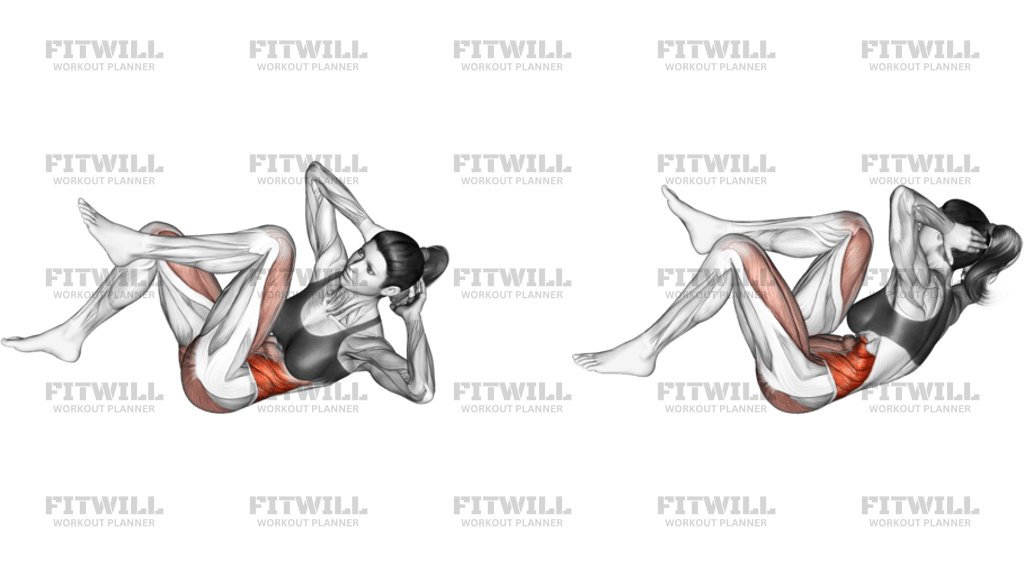
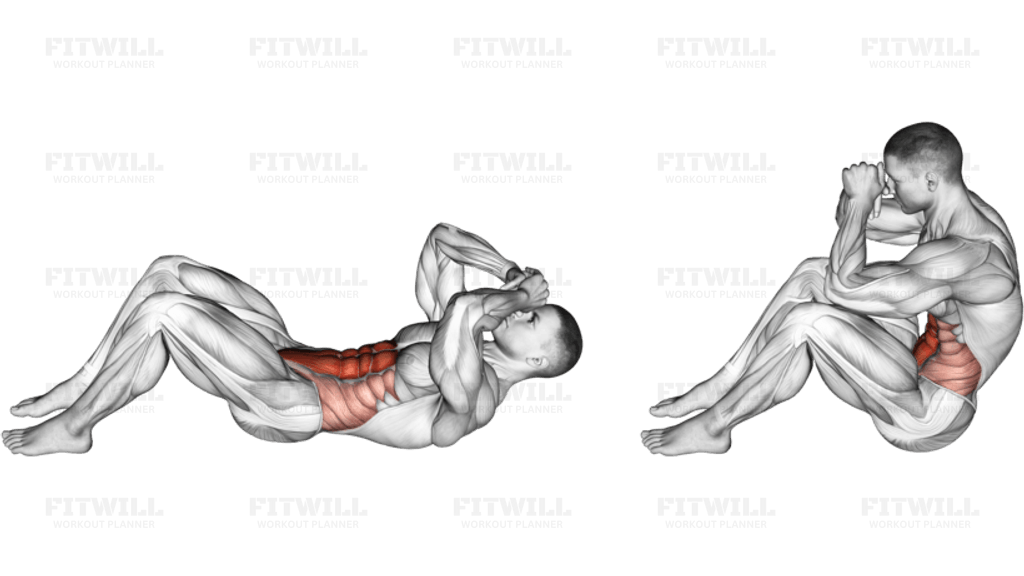
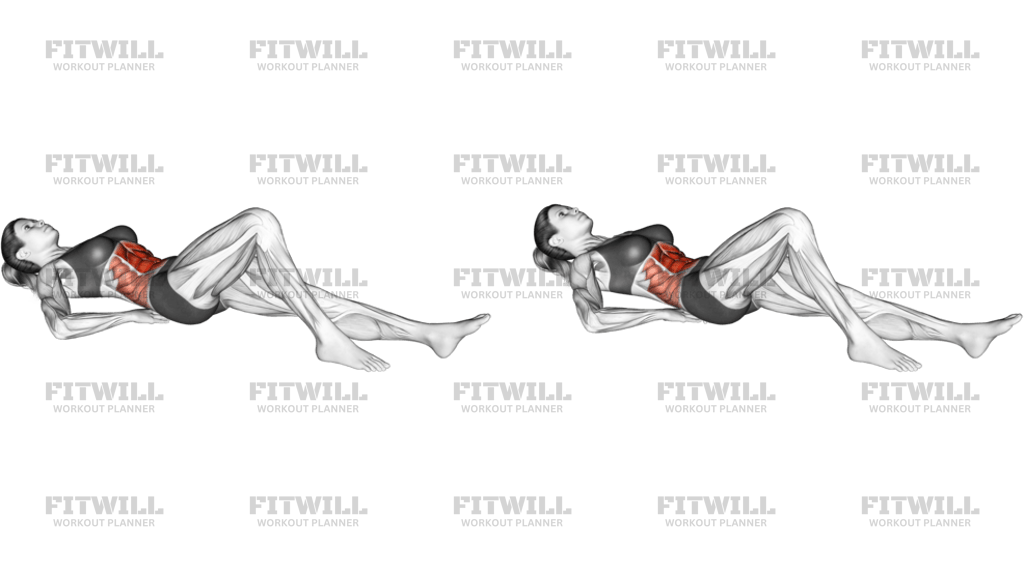
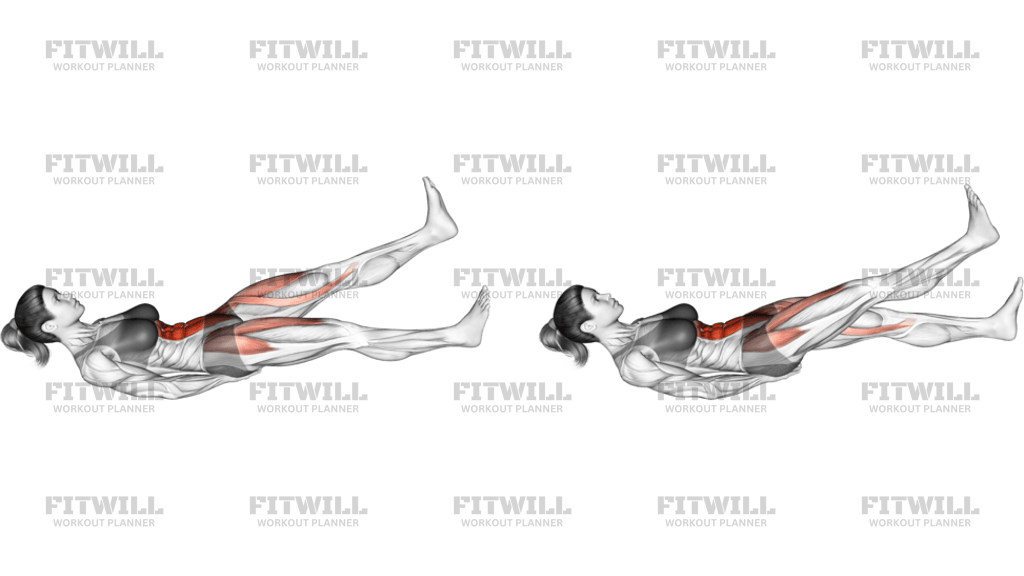
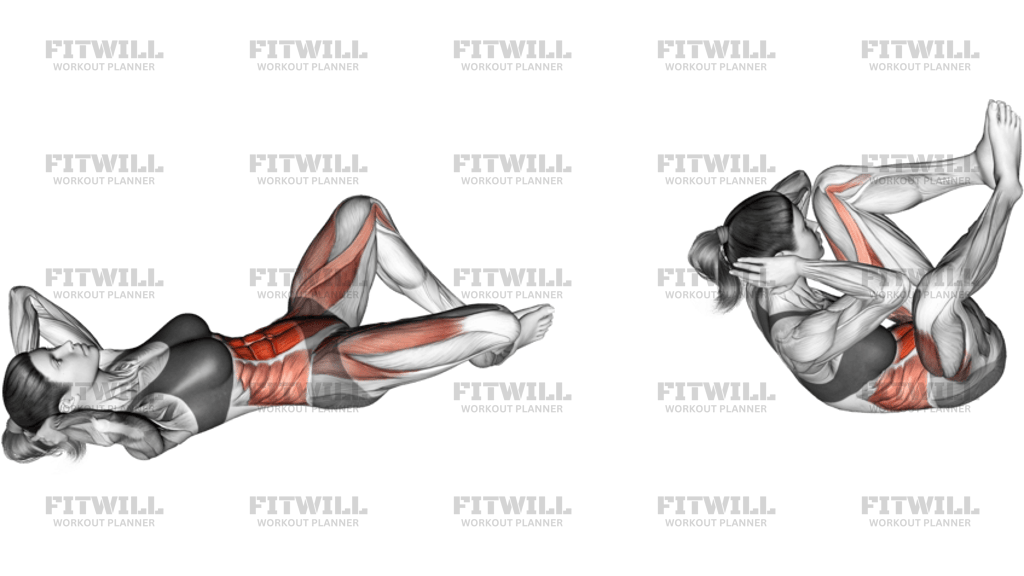
Frog Crunch is a floor-based abdominal exercise that uses the frog-leg position to keep the hips open while the trunk does the work. It is a bodyweight movement that targets the abs first, with the obliques and hip flexors helping to steady the position as you curl up. The bent-knee, soles-together setup shortens the range enough to make the crunch more focused than a full sit-up, which is why it is often used for controlled core work rather than brute-force repetition.
The shape matters. Lying on your back with the soles of your feet together and the knees turned out creates a stable lower-body position so the movement stays centered through the torso. That position also makes it easier to keep the lower back grounded while you lift the shoulder blades off the floor. If the legs start drifting, the exercise usually turns into a hip-flexor drill instead of a clean abdominal curl.
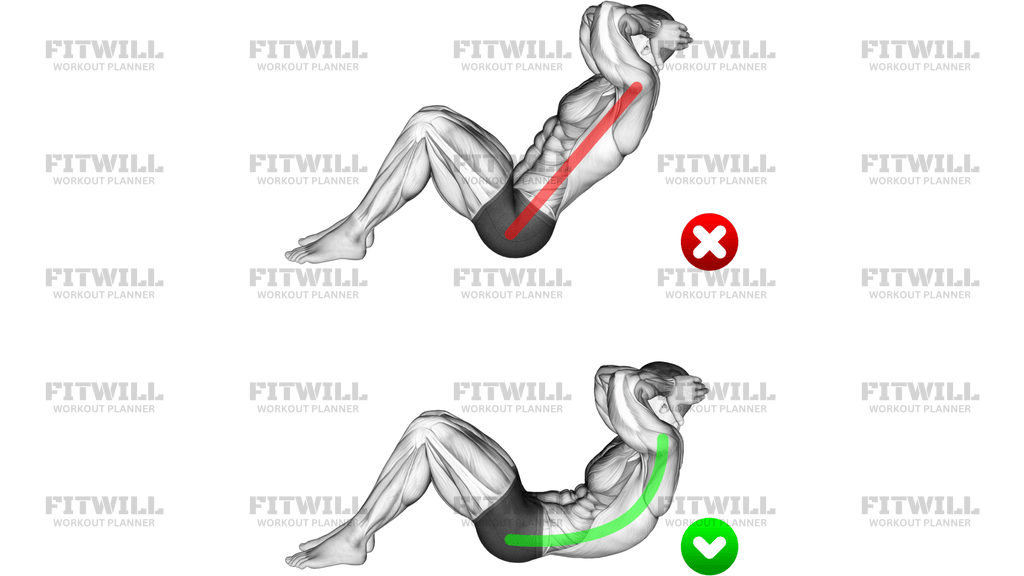
A good Frog Crunch is small, deliberate, and strict. Exhale as you curl the ribs toward the pelvis, lift the shoulder blades, and keep the elbows wide instead of pulling the head forward. The top of the rep should feel like a strong contraction through the midline, not a hard yank through the neck or a swing from the legs. Lower back down slowly until the shoulder blades touch the floor again, then reset before the next rep.
This movement works well as accessory core training, as part of a warm-up circuit, or as a controlled finisher when you want abdominal work without loading the spine. Because the frog-leg position reduces the temptation to arch and bridge, it can be a useful option for people who want to practice clean trunk flexion and breath control. Beginners can usually learn it quickly, but the quality standard should stay high: if the neck tightens, the legs move, or the torso bounces, the set is too fast.
Frog Crunch is not about getting as high as possible. It is about keeping the pelvis quiet, the knees open, and the abdominal wall doing the shortening. When the rep is done well, the abs finish the work and the lower body simply provides the position that makes that work easier to feel and control.
Fitwill
Log Workouts, Track Progress & Build Strength.
Achieve more with Fitwill: explore over 9600 exercises with images and videos, access built-in and custom workouts, perfect for both gym and home sessions, and see real results.
Start your journey. Download today!




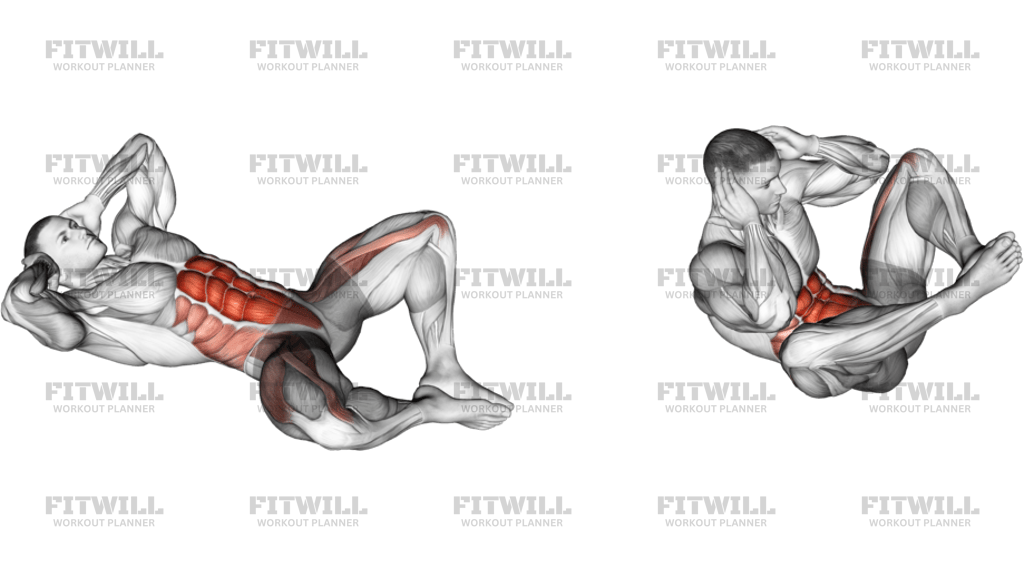
Instructions
- Lie on your back on a mat and bring the soles of your feet together so the knees fall open like a frog.
- Place your fingertips lightly behind your head, keep the elbows wide, and let the lower back settle toward the floor.
- Draw your heels in close enough that the knees stay comfortably open without forcing the hips or groin.
- Exhale and curl the ribs toward the pelvis, lifting your shoulder blades off the floor without yanking the neck forward.
- Keep the chin slightly tucked and the elbows wide as you continue the short crunch upward.
- Squeeze the abs at the top for a brief pause, with the torso doing the work rather than the legs kicking.
- Lower your shoulders back to the mat under control, keeping the feet together and the knees open as you descend.
- Reset your breath at the bottom, then repeat for the planned number of repetitions.
Tips & Tricks
- Keep the soles of your feet pressed together; if the feet separate, the frog position loses its purpose.
- Think about lifting the ribs toward the pelvis, not about sitting all the way up.
- Leave room between the chin and chest so the neck does not take over the rep.
- If your hip flexors cramp, move the feet a little farther from the hips and slow the tempo.
- Stop the lift when the shoulder blades clear the floor; a bigger range usually turns into momentum.
- Keep the knees open and still so the lower body does not start helping with a leg swing.
- Exhale through the crunch to help the abs finish the shortening phase of the rep.
- Use a mat and a controlled lowering phase so the tailbone and lower back stay comfortable.
- If the torso starts rocking, shorten the range and keep each rep identical instead of chasing height.
Frequently Asked Questions
What does Frog Crunch train most?
Frog Crunch primarily trains the rectus abdominis, with the obliques and hip flexors helping to stabilize the position.
Why are my feet together and knees open in Frog Crunch?
That frog-leg position keeps the lower body fixed and makes the crunch more about the abs instead of turning into a leg-driven sit-up.
How high should I come up in Frog Crunch?
Lift until the shoulder blades leave the floor and the abs are fully shortened; there is no need to sit upright.
Should I pull my head forward during Frog Crunch?
No. Keep the hands light, the elbows wide, and let the ribs curl toward the pelvis without tugging on the neck.
Is Frog Crunch good for beginners?
Yes. It is usually easier to learn than a full sit-up because the frog position shortens the range and makes the rep easier to control.
What if I feel Frog Crunch mostly in my hip flexors?
Move the feet slightly farther away, slow the lowering phase, and focus on curling the ribs down instead of driving the thighs inward.
Can I use Frog Crunch instead of a regular crunch?
Yes, it is a solid alternative if you want a shorter, more controlled crunch position with less tendency to swing through the hips.
What is the most common mistake in Frog Crunch?
The most common mistake is turning it into a fast, neck-led sit-up instead of a small abdominal curl.
How many reps should I do?
Use moderate to higher reps if the movement stays strict; stop the set as soon as the neck, hips, or momentum start taking over.