Oblique Crunch Version 2
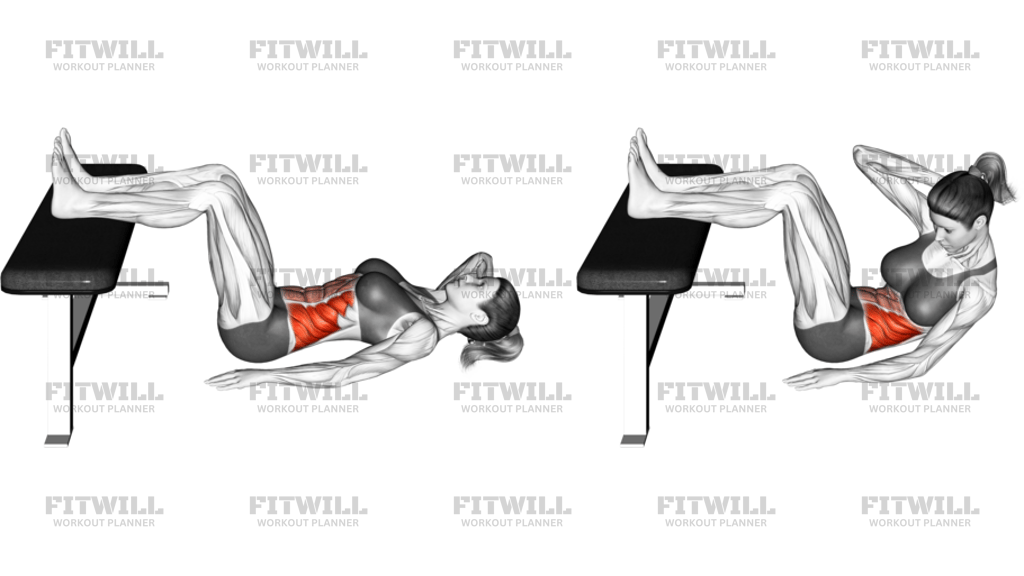
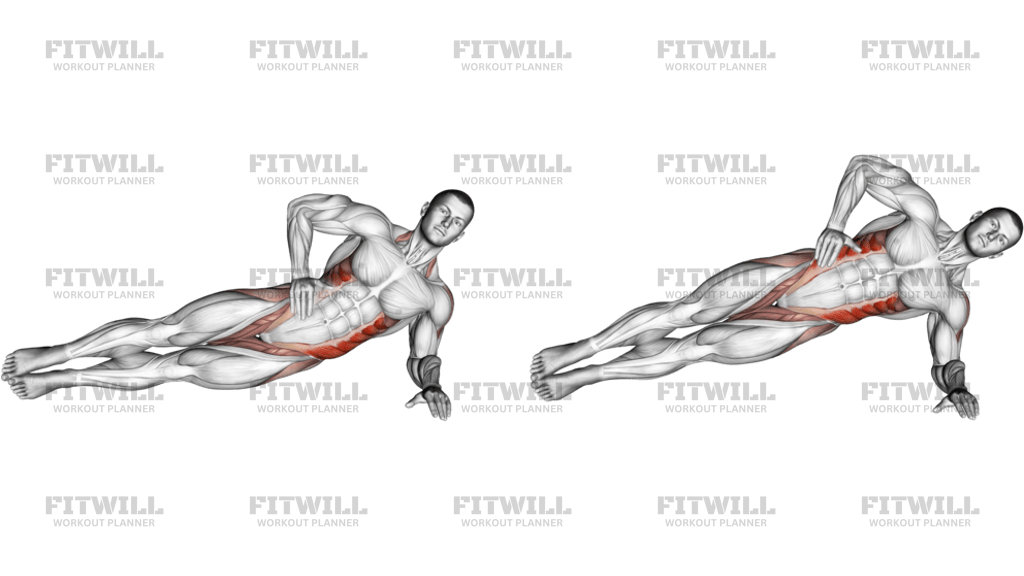
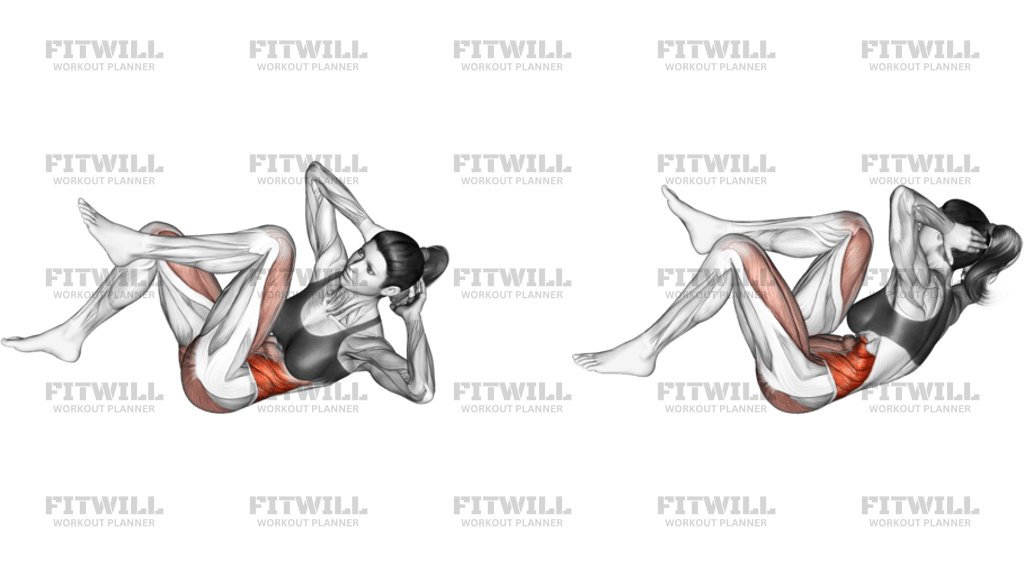
Oblique Crunch Version 2 is a bench-supported bodyweight crunch that trains the side wall of the trunk through a short, controlled curl and slight torso rotation. In the image, the lower legs are supported on a bench while the torso stays on the floor, which changes the leverage and lets you focus on the ribs, waist, and control of the pelvis instead of on a full sit-up pattern. The movement is small on purpose: the goal is to shorten the distance between the lower ribs and the hip on the working side without letting the legs swing or the neck take over.
The bench position matters because it sets the angle of the hips and keeps the lower body quiet. Lie on your back with your lower legs supported on the bench, knees bent, and feet relaxed. Keep your pelvis heavy on the floor and your rib cage stacked before the first rep. If your lower back arches or your hips start to drift as you curl, move your feet or bench position until the setup feels stable. A good start should let you brace without tension leaking into the neck or hip flexors.
Each repetition should begin with an exhale and a deliberate curl of the shoulder blades off the floor. Rotate the torso slightly toward the working side as you crunch, but keep the motion compact and controlled so the side waist does the work. Think about bringing the lower ribs toward the top of the hip rather than trying to sit all the way up. At the top, pause briefly, then lower under control until the shoulder blades and upper back return to the floor.
This exercise fits well in accessory core work, trunk-control circuits, or warm-up blocks where you want a cleaner oblique stimulus than a fast, momentum-driven crunch. It can be done for one side at a time or alternated from side to side, depending on the program. Beginners can use it because the floor limits cheating, but the same simplicity also exposes sloppy head movement, rushed tempo, and poor setup very quickly.
Treat the bench as support, not as a place to push from. Keep the range of motion honest, the neck long, and the breathing steady. If the repetition gets bigger only because the knees swing or the elbows pull hard, the set has drifted away from the obliques. Use smooth reps, equal work on both sides, and a tempo that keeps the torso in charge from start to finish.
[ Workout Log & Planner ]
Put your next workout in Fitwill
Keep your plan and training log ready when you are.


Instructions
- Lie on your back with your lower legs supported on a flat bench and your knees bent so your hips and knees are comfortable.
- Set your feet or calves so the bench holds the lower body still and your pelvis can stay heavy on the floor.
- Place one hand lightly beside your head or across your chest and keep the other arm relaxed for balance.
- Draw your ribs down, lightly brace your midsection, and keep your neck long before the first rep.
- Exhale and curl your shoulder blades off the floor while turning your rib cage slightly toward the working side.
- Keep the legs quiet and let the crunch come from the ribs closing toward the top hip, not from swinging the knees.
- Pause for a brief squeeze at the top without pulling hard on the head or arching the lower back.
- Lower yourself under control until your shoulder blades return to the floor, then reset the brace before the next rep.
- Complete all reps on one side or alternate sides if that is how your program is written.
Tips & Tricks
- Keep the crunch small; if you are sitting all the way up, the set has turned into a sit-up instead of an oblique crunch.
- Think about bringing the lower ribs toward the same-side hip rather than driving the elbow across the body.
- If the neck feels busy, shorten the range and let the hands stay light instead of pulling on the head.
- The bench should support the lower legs without encouraging you to push or swing through the feet.
- A slow lowering phase keeps the torso under tension and prevents the shoulders from dropping back to the floor too fast.
- Keep the pelvis heavy; if your low back starts to arch, reset the brace before the next rep.
- Use the exhale to start the crunch so the rib cage closes cleanly instead of forcing the movement on the inhale.
- If one side feels much easier, check that both shoulders start from the same position and that the bench height is not uneven.
Frequently Asked Questions
What muscle does Oblique Crunch (Version 2) target most?
It mainly targets the obliques, with the upper abdominals helping finish the curl and the hip flexors only stabilizing the legs.
Why are my lower legs on a bench for this crunch?
The bench supports the legs so the torso has to do the work without the feet driving momentum into the rep.
Should I lift all the way into a full sit-up?
No. Keep the rep short and controlled so the lower ribs and side waist do the work instead of the hip flexors.
Do I need to rotate my torso on every rep?
A slight rotation is useful here, but it should stay small and smooth. The goal is a controlled oblique crunch, not a hard twist.
What should I feel if the setup is right?
You should feel the side waist shorten as the ribs move toward the hip, with very little effort from the neck or lower back.
Can I do Oblique Crunch Version 2 on one side only?
Yes. Many people perform all reps on one side and then switch, which makes it easier to keep the rotation and range consistent.
What is the most common mistake with the bench position?
Letting the legs push into the bench or letting the hips drift. The bench should stabilize the lower body, not become a lever for momentum.
Is this a good beginner core exercise?
Yes, as long as the range stays small and the neck stays relaxed. The floor and bench both help limit cheating.