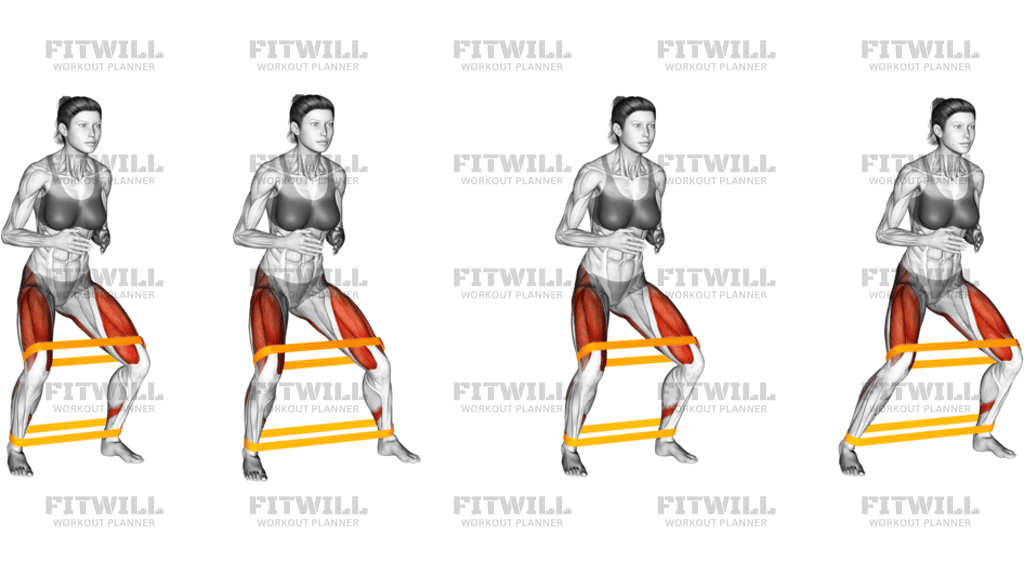
Resistance Band Jumping Jack
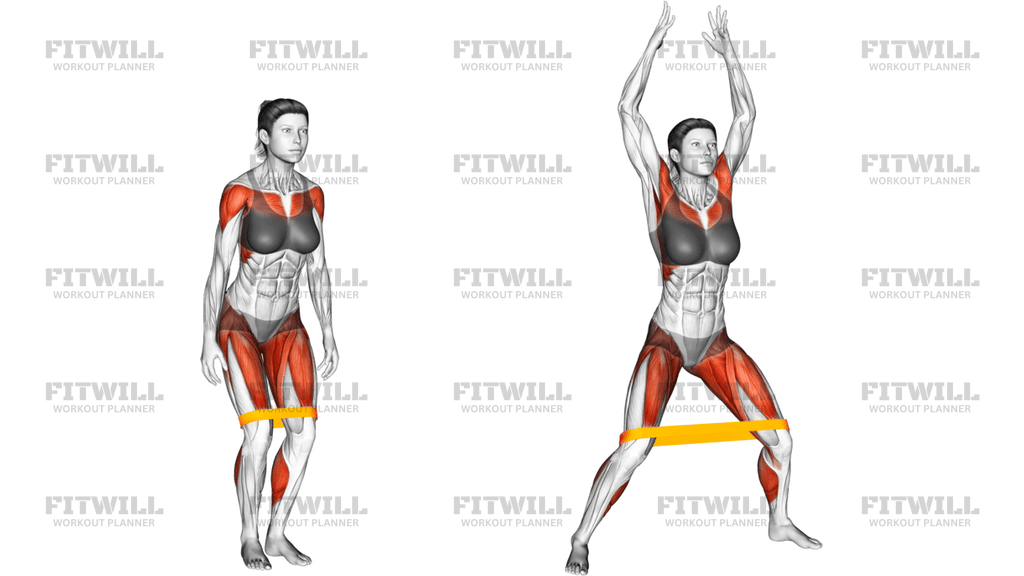
Resistance Band Jumping Jack is a dynamic conditioning drill that uses the familiar jumping-jack rhythm to load the hips, glutes, and core a little more than the bodyweight version. With the band looped around the ankles or feet, every opening and closing rep has to be controlled instead of simply bounced through, so the exercise works well when you want a faster-paced movement that still demands clean lower-body mechanics.
The band changes the feel of the jack immediately. As the feet separate, the hips have to abduct against the band, and when the feet come back together the inner thighs and glutes have to manage the return without letting the legs snap inward. That makes Resistance Band Jumping Jack useful for warm-ups, athletic prep, circuits, and home conditioning sessions where you want a simple movement that still challenges coordination and posture.
The setup matters because the band needs to stay secure and the torso needs to stay stacked while the legs move quickly. Stand tall with the feet together, keep the ribs over the pelvis, and choose a band that adds tension without forcing you to lean forward or take a giant jump. The movement should look springy, but the landings should stay quiet and controlled, with the knees tracking in line with the toes instead of collapsing inward.
Each repetition should feel like one smooth pattern rather than a frantic series of jumps. Open the feet and raise the arms at the same time, then return under control and keep breathing steady so the tempo does not outrun your mechanics. If the band pulls your feet together too aggressively, the resistance is too high; if the motion feels identical to a bodyweight jack, the band is too light.
This exercise is usually best in moderate-to-high reps or short timed intervals, especially when you want a conditioning block that still includes some lower-body resistance. Beginners can use it with a light band or step out one foot at a time, while more advanced lifters can make it more demanding by tightening the rhythm, shortening the rest, or using a slightly stronger band without losing alignment.
[ Workout Log & Planner ]
Put your next workout in Fitwill
Keep your plan and training log ready when you are.


Instructions
- Loop a light resistance band around your ankles or the arches of your feet and stand tall with your feet together.
- Let your arms hang at your sides, stack your ribs over your pelvis, and soften your knees before the first rep.
- Shift your weight evenly across both feet and brace lightly so the torso stays steady when the band tightens.
- Jump your feet apart to about shoulder width or slightly wider while raising your arms overhead at the same time.
- Land softly on the balls of your feet and keep your knees tracking over your toes as the band stretches.
- Hold the open position for a brief moment only if you can keep the hips level and the chest tall.
- Jump your feet back together while lowering your arms to your sides under control.
- Keep the return smooth and rhythmic, breathing out as you open and in as you close.
- Finish the set, step out of the band carefully, and reset before your next set.
Tips & Tricks
- Choose the lightest band that still pulls the feet inward at the closed position; too much tension makes the return sloppy.
- If the band twists or rolls, move it slightly higher on the lower leg or switch to a flatter loop.
- Keep the jump width modest. A wider landing usually turns into knee collapse and an ugly snap-back from the band.
- Land quietly. Loud landings usually mean you are dropping too hard or letting the ankles absorb everything.
- Keep the chest stacked over the pelvis. If you start leaning forward, the band is probably too heavy or the tempo is too fast.
- Let the arms and legs move together. If the arms lag behind, the rhythm is too rushed for the band tension.
- Use step-out reps instead of jumps if your knees cave in or the band makes the closing phase jerky.
- Stop the set as soon as the feet stop opening evenly or the torso starts swaying side to side.
Frequently Asked Questions
What muscle does Resistance Band Jumping Jack target most?
It mainly loads the hips and glutes as the legs open against the band, while the core helps keep the torso from tipping or twisting.
Should the band go around my ankles or my feet?
Both work. Around the arches or feet is usually harder, while around the ankles is easier to control and less likely to twist.
Is Resistance Band Jumping Jack good for beginners?
Yes, if the band is light and the pace stays controlled. Beginners can also step one foot out at a time instead of jumping.
How wide should my feet go?
Wide enough to feel the band working, but not so wide that your knees cave in or your landings get noisy. Shoulder width to slightly wider is usually enough.
Why do my feet snap back together too fast?
The band is probably too strong or the tempo is too fast. Use a lighter band and control the closing phase so the legs do not get yanked inward.
Can I use Resistance Band Jumping Jack for cardio?
Yes. It fits well in warm-ups, HIIT intervals, and circuit training because it keeps the heart rate up while still challenging the lower body.
What should I do if the band rubs or rolls up?
Move it slightly higher on the lower leg, switch to a flatter loop, or reduce the jump width. A band that twists usually means the setup is too tight or too strong.
What is the main mistake to avoid?
Letting the torso lean forward or the knees collapse inward as the feet open. Keep the chest tall and land with the knees tracking over the toes.