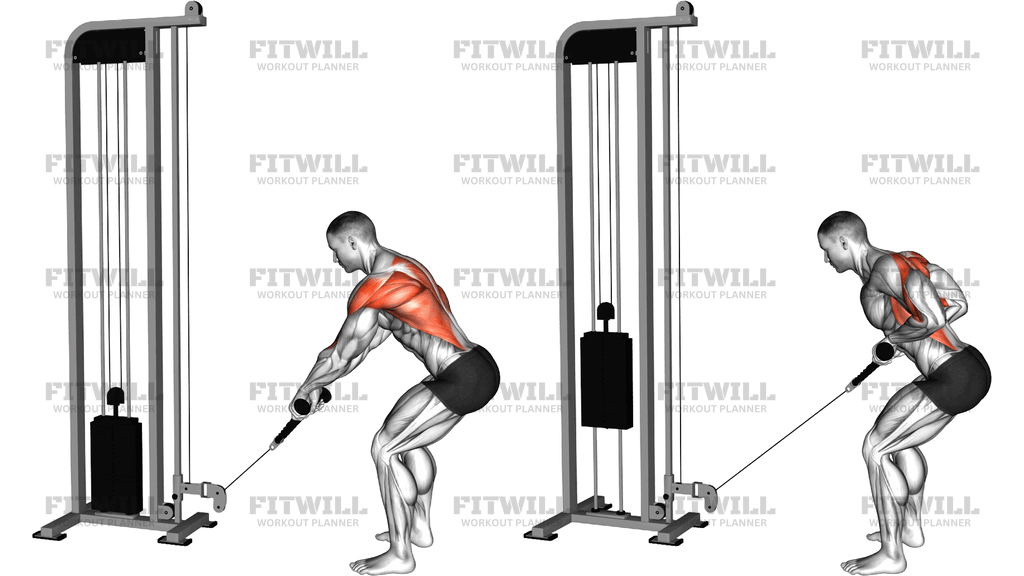
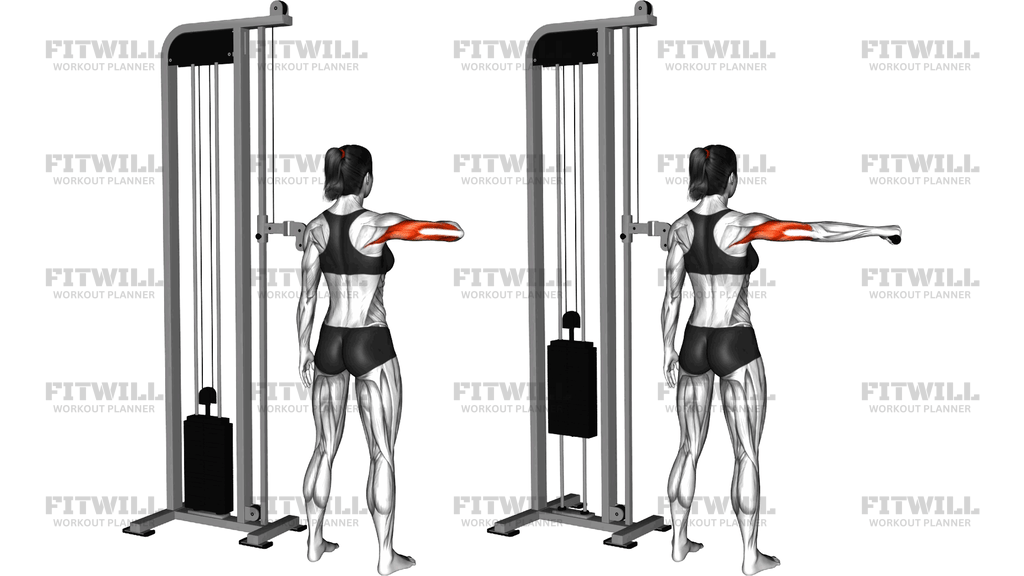
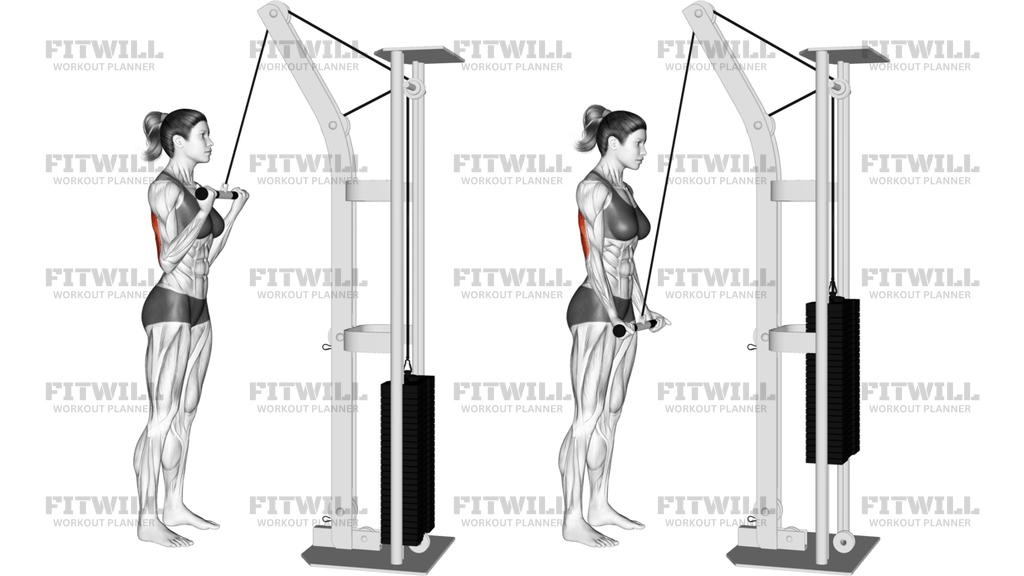
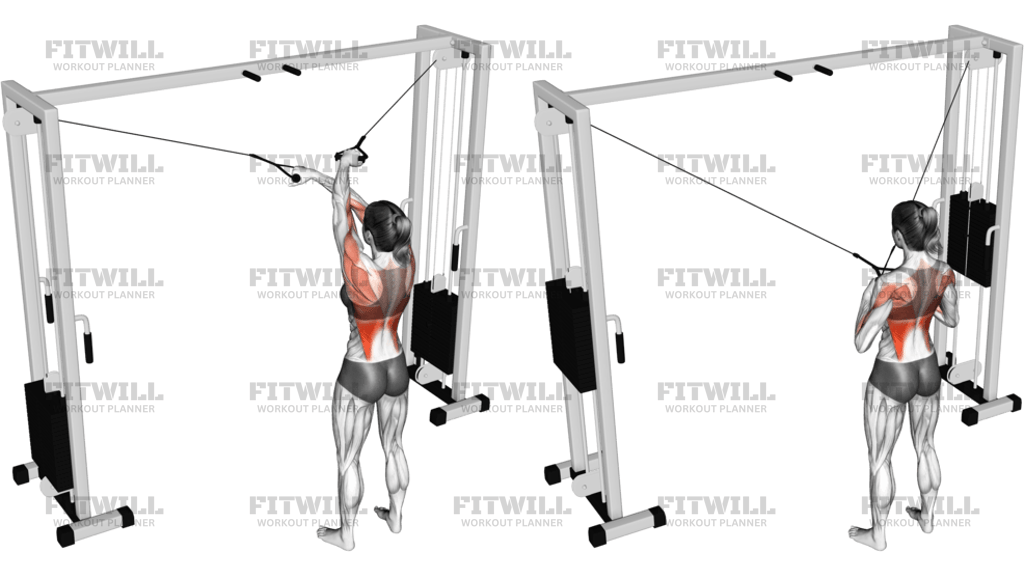
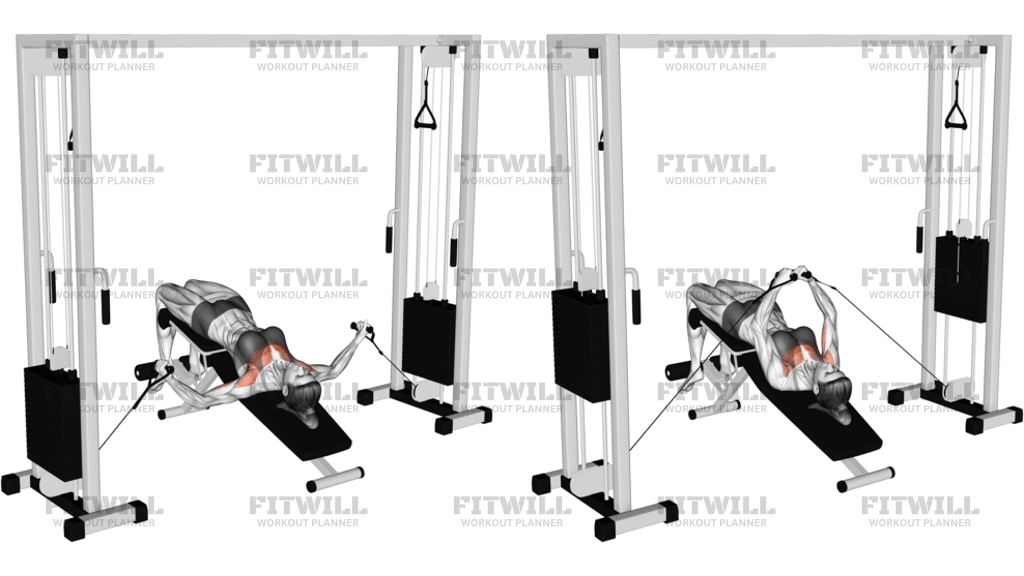
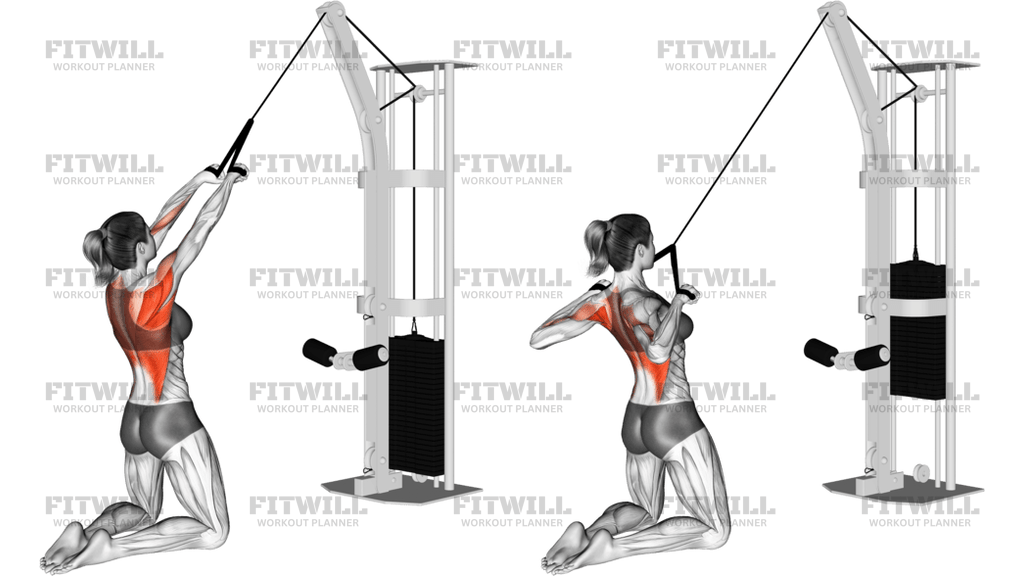
Cable Cross Over Reverse Fly
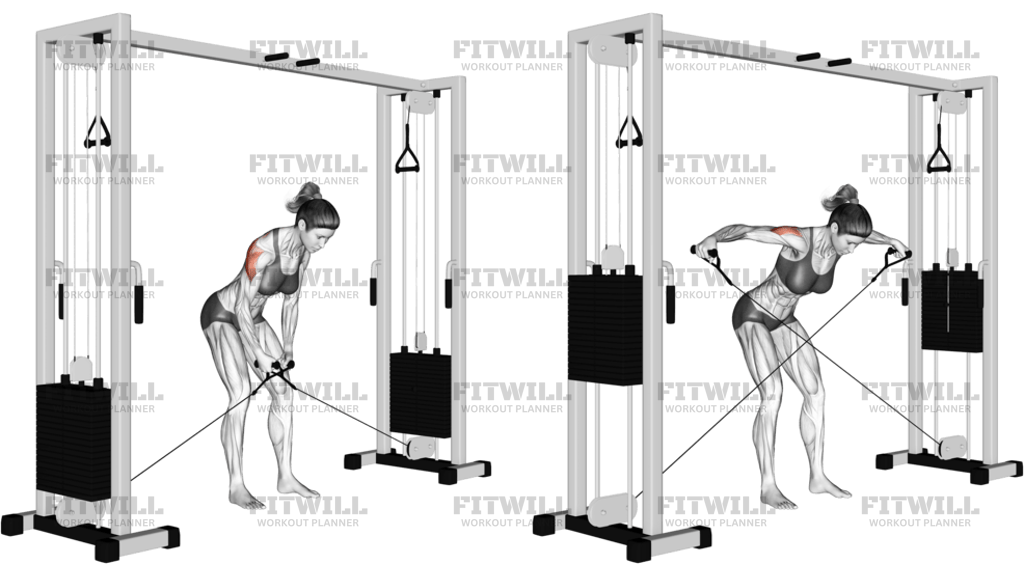
Cable Cross Over Reverse Fly is a cable-based rear-delt and upper-back isolation exercise that uses two handles to train horizontal abduction and scapular control. It is usually performed standing between the pulleys with a slight hip hinge, soft knees, and the cables crossing in front of the body before each rep. The fixed path of the cables makes it a good choice when you want to keep tension on the shoulders and upper back without having to swing or use a lot of body momentum.
The movement is most useful for building the rear deltoids, rhomboids, and mid-trap area while also asking the rotator cuff and arm stabilizers to keep the shoulders organized. Because the load comes from the cable angle rather than a free weight, the setup matters a lot: where you stand, how far you hinge, and how much elbow bend you keep all change which part of the shoulder complex does the work. If you stand too upright, it turns into more of a trap-heavy shoulder shrug. If you hinge too far or chase too much weight, the lower back usually starts helping.
A clean repetition starts with the chest open, ribs stacked, and the handles slightly crossed in front of you. From there, drive the hands out and back in a wide arc until the arms line up with or just behind the shoulders, keeping the elbows softly bent and the wrists quiet. The motion should feel like opening the chest and spreading the handles apart rather than pulling with the hands. At the top, pause long enough to feel the rear delts and upper back working, then return slowly until the cables cross again and the shoulders stay in control.
This exercise fits well in upper-body accessory work, shoulder-friendly hypertrophy training, or as a lighter corrective movement after pressing. It is also a useful option when you want to strengthen the rear delts without needing a bench or a machine pad. Use a load that lets you keep the torso still and the shoulder blades moving smoothly. If the motion turns into a jerking pull, a shrug, or an overextended swing behind the body, reduce the resistance and shorten the range until the rep stays crisp.
[ Workout Log & Planner ]
Put your next workout in Fitwill
Keep your plan and training log ready when you are.


Instructions
- Set the cable pulleys to about chest height and stand centered between them with a handle in each hand.
- Take a small step forward or stagger one foot, hinge slightly at the hips, and keep a soft bend in both knees.
- Start with the handles crossed in front of your chest, palms facing in, elbows unlocked, and shoulders down away from your ears.
- Brace your torso and keep your rib cage stacked over your pelvis before you begin the pull.
- Sweep both hands out and back in a wide arc until your upper arms line up with your shoulders or slightly behind them.
- Keep the elbows softly bent and let the shoulder blades move without shrugging the traps.
- Pause briefly at the open position and squeeze the rear delts and upper back without leaning farther forward.
- Return the handles slowly until they cross in front of you again, keeping tension on the cables the whole way.
- Exhale as you open the arms, inhale as you control the return, and stop the set if you need to swing or arch the lower back.
Tips & Tricks
- A slightly lighter load usually hits the rear delts better because the exercise is meant to be controlled, not explosive.
- Keep the elbows softly bent the whole set; locking them turns the movement into a long lever and often pulls the shoulders out of position.
- If your upper traps take over, lower the pulleys a little and think about reaching wide instead of shrugging up.
- Use the cable crossover so the handles are already under tension at the start; a dead slack start usually makes the first rep jerky.
- Stop the open phase when the arms are roughly in line with the shoulders; forcing them farther back often shifts stress into the joints and lower back.
- Keep the chest proud without flaring the ribs, especially when you are squeezing at the top.
- Move at a steady tempo and let the return take a little longer than the opening phase so the rear delts stay loaded.
- If you feel the biceps or forearms more than the shoulders, relax your grip slightly and focus on leading with the elbows.
Frequently Asked Questions
What muscles does Cable Cross Over Reverse Fly work?
It primarily trains the rear delts and upper back, especially the rhomboids and mid traps, while the rotator cuff and arm stabilizers help control the cables.
Is this exercise good for beginners?
Yes, as long as the load stays light and the torso remains steady. It is easier to learn when the pulleys are set at chest height and the range stays small and controlled.
Where should the handles start at the bottom?
Start with the handles crossed in front of the chest or upper sternum, not hanging loose at the sides. That keeps tension on the cables and makes the first rep smoother.
Should my elbows stay straight or bent?
Keep a small bend in the elbows from start to finish. That keeps the reverse fly pattern on the shoulder complex instead of turning it into a straight-arm swing.
How far back should I pull the handles?
Pull until your upper arms are in line with your shoulders or just slightly behind them. Going farther usually adds body English rather than better rear-delt work.
Why does my neck or upper traps take over?
The load is probably too heavy or the shoulders are creeping upward. Use a lighter setting and think about reaching wide while keeping the shoulders down.
Is this the same as a bent-over dumbbell reverse fly?
The target muscles are similar, but the cable version keeps more constant tension and lets you control the line of pull more precisely.
How should I breathe during the set?
Exhale as you open the arms and inhale as you return under control. The key is to keep the torso braced so the breath does not turn into a body swing.