Push-Up Wall
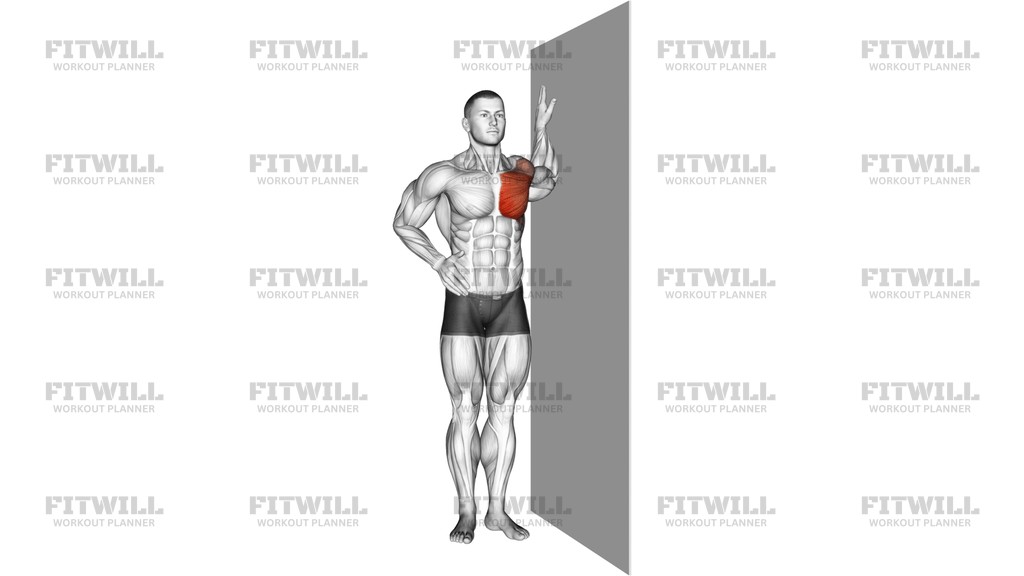
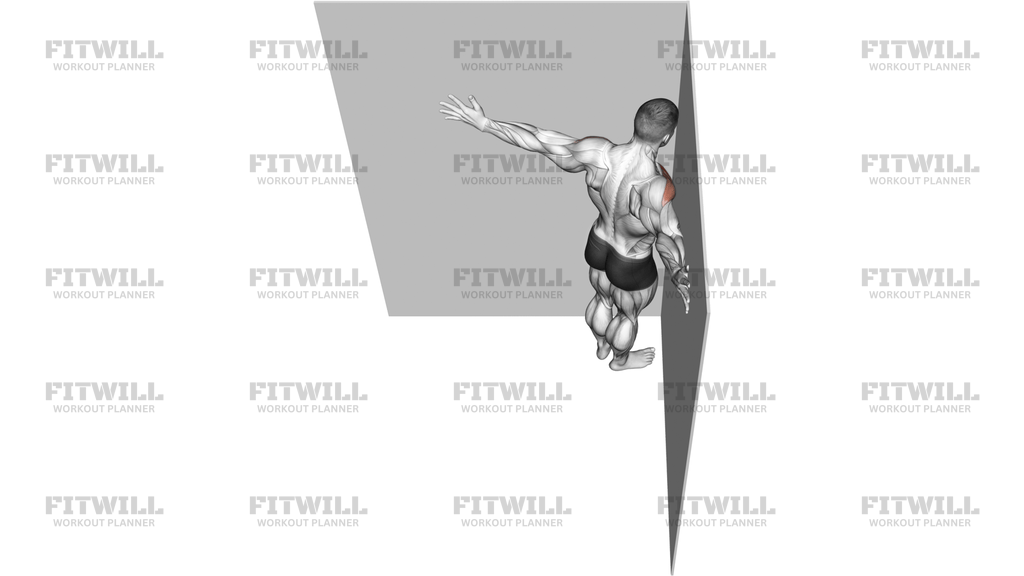
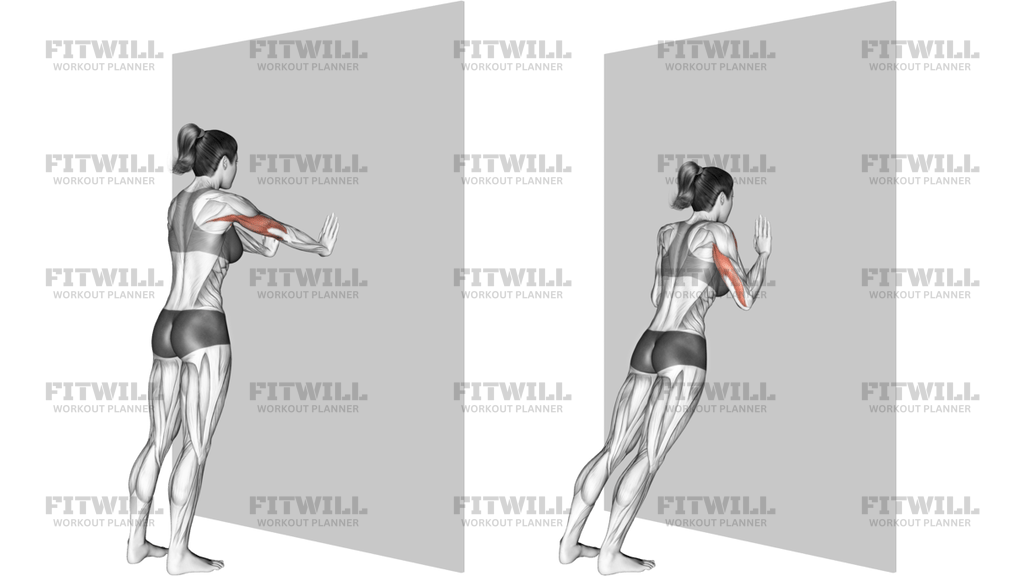
Push-Up Wall is a standing pressing variation that uses a wall instead of the floor to reduce the load on the chest, shoulders, and triceps. That makes it useful for beginners, people returning to pressing work, or anyone who wants a controlled upper-body pattern before moving to an incline or floor push-up. The wall angle is the key variable: the more upright you stay, the easier the rep feels; the farther your feet travel back, the more strength and control the set demands.
The main training focus is the chest, especially the Pectoralis major, with the anterior deltoids and triceps helping to press the body away from the wall. The core also has to stay organized so the body moves as one line instead of hinging at the hips. In practical terms, Push-Up Wall is less about moving a heavy load and more about learning how to keep the ribs, shoulders, and elbows working together through a clean pressing path.
Setup matters because the hands, feet, and body angle determine how the movement feels and which muscles take over. Place the palms on the wall at about chest height, keep the fingers pointing up, and step the feet back until the body forms a straight line from head to heels. If the feet are too close, the set becomes too easy to teach much; if they are too far back, the shoulders and lower back may compensate before the chest finishes working.
Each repetition should travel toward the wall in a smooth arc rather than a collapse. Lower the chest toward the wall with the elbows angled slightly away from the torso, keep the neck long, and press back until the arms are straight again without snapping the elbows. The return should feel controlled and repeatable, with the torso staying rigid and the heels staying grounded so the movement stays centered over the wall contact.
Push-Up Wall is a good choice for warm-ups, technique work, rehab-style reintroduction to pressing, and high-quality volume when floor push-ups are not yet appropriate. It also gives you a simple way to scale difficulty: step the feet farther from the wall for a harder set, or move closer if the shoulders or wrists start to complain. If the chest, front shoulder, or triceps feel the work while the body stays aligned, the exercise is doing exactly what it should.
Fitwill
Log Workouts, Track Progress & Build Strength.
Achieve more with Fitwill: explore over 9600 exercises with images and videos, access built-in and custom workouts, perfect for both gym and home sessions, and see real results.
Start your journey. Download today!




Instructions
- Stand facing a wall and place your palms on it at chest height, slightly wider than shoulder width, with fingers pointing up.
- Walk your feet back until your body makes a straight line from head to heels and your weight is balanced through both feet.
- Tighten your glutes and ribs so your torso stays stiff before you begin the first rep.
- Inhale and bend your elbows to bring your chest toward the wall in one smooth line.
- Keep your elbows angled about 30 to 45 degrees from your sides as you descend.
- Lower until your chest or nose is close to the wall without letting your shoulders shrug up.
- Exhale and press the wall away until your arms are straight again, finishing with control rather than a snap.
- Reset your stance, adjust your foot distance if needed, and repeat for the planned number of reps.
Tips & Tricks
- Move your feet closer to the wall to make the set easier; step them back to increase the pressing load.
- Keep the hands around chest height so you can press through the chest instead of drifting into a shoulder-dominant angle.
- If your wrists feel strained, place the hands a little lower on the wall so the wrist angle opens up.
- Think about bringing the sternum toward the wall, not the forehead, so the chest stays involved through the whole rep.
- Keep the heels down and the legs active; the wall push-up works best when the body stays in one long line.
- Do not let the elbows flare straight out to the sides, or the front of the shoulders will take over too early.
- Use a slower lowering phase if you want more chest and triceps tension without needing a harder stance.
- Stop the set if your hips fold or your ribs pop forward, because that usually means the angle has become too difficult.
Frequently Asked Questions
What muscles does Push-Up Wall work most?
The chest is the main driver, with the front shoulders and triceps helping to press the body away from the wall.
Is Push-Up Wall good for beginners?
Yes. It is one of the easiest ways to learn a pressing pattern because the wall reduces how much body weight you have to move.
How far should my feet be from the wall?
Start close enough that you can keep a straight line from head to heels, then step back only as far as you can lower and press without losing that line.
Where should my hands go on a Push-Up Wall?
Place them around chest height, slightly wider than shoulder width, so the press path feels natural and the shoulders do not get jammed upward.
What is the most common mistake with Push-Up Wall?
Most people step too far from the wall and start arching or hinging at the hips instead of keeping a solid body line.
How can I make Push-Up Wall harder?
Walk your feet farther back from the wall. That increases the percentage of body weight you press and makes the chest and triceps work harder.
Should my elbows flare out on this exercise?
Keep them slightly tucked, about 30 to 45 degrees from your sides. That keeps the shoulder position cleaner and usually feels better on the joints.
What if my wrists hurt during Push-Up Wall?
Bring the hands a little lower on the wall and reduce the lean angle. If the pain continues, use a gentler pressing variation before loading this one again.
Can Push-Up Wall be used as a warm-up?
Yes. It works well before floor push-ups or bench pressing because it wakes up the chest, shoulders, and triceps without much joint stress.