One Leg Floor Calf Raise
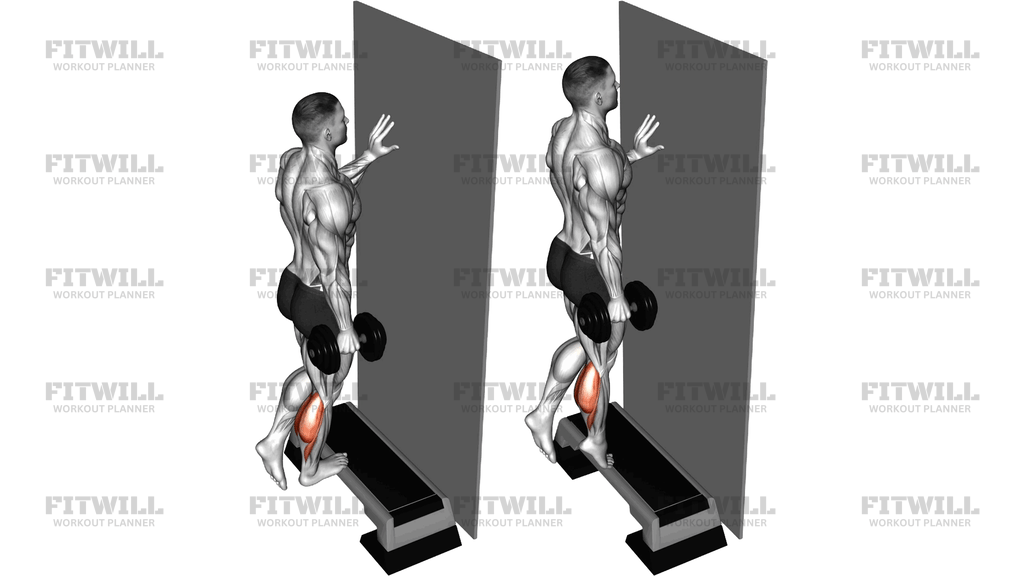
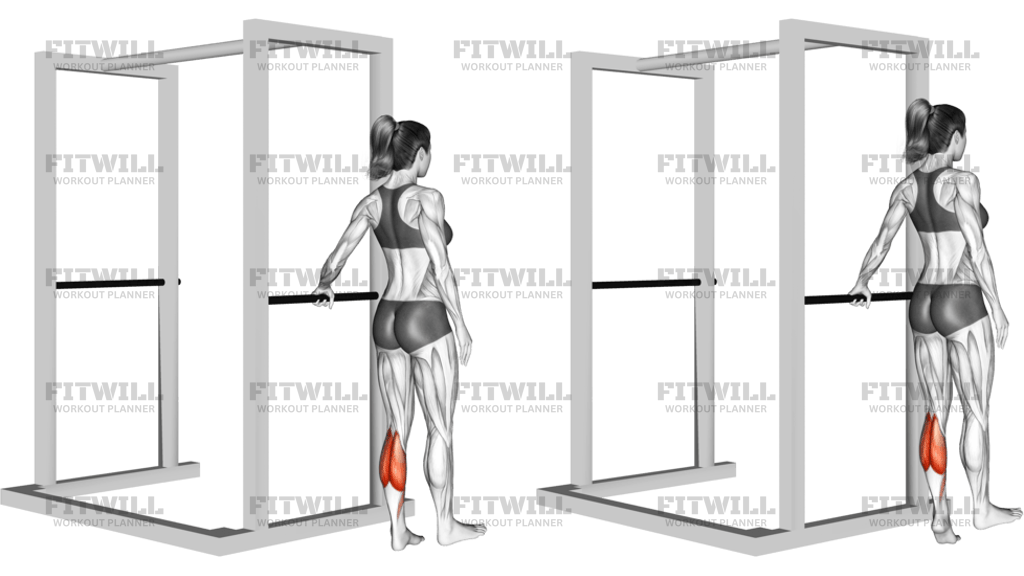
One Leg Floor Calf Raise is a simple unilateral lower-leg exercise done on the floor with one foot supporting your body and the other leg out of the way. In the image, the working side is balanced with a light hand on a rack upright, which is a useful setup because it lets you focus on the ankle and calf instead of fighting for balance. The lift is small, but the single-leg demand makes each repetition much more exact than a two-leg calf raise.
The main training effect is on the calf muscles of the standing leg, especially the gastrocnemius and soleus, with the foot and ankle stabilizers helping keep the heel path clean. It also teaches better control through the arch, big toe, and ankle line, which matters for running, jumping, court sports, and any program that needs stronger lower-leg endurance. Because the exercise is done on flat ground, it is easy to repeat, easy to load, and easy to use as accessory work.
The setup matters more than people expect. Stand tall on one foot, keep the support hand light, and keep the working foot planted straight ahead so the heel rises and lowers on the same line. A stable torso lets the calf do the work, while leaning, twisting, or driving hard into the support point steals tension from the target side. If the free leg floats behind you, keep it relaxed so it does not swing or kick for momentum.
Each rep should look smooth from the bottom stretch to the top squeeze. Raise the heel as high as you can without rolling onto the outside edge of the foot, pause briefly, then lower under control until you feel the calf lengthen again. A slow descent and a quiet landing at the bottom usually build better tension than bouncing through quick reps. If Achilles, forefoot, or arch discomfort shows up, shorten the range and keep the movement controlled rather than forcing height.
One Leg Floor Calf Raise works well in warm-ups, lower-body accessories, and calf-specific finishers because it trains strength, balance, and ankle control at the same time. Beginners can use the rack or wall for balance, and more advanced lifters can add tempo, pauses, or load in the free hand. The goal is not a huge jump; it is a clean heel raise that repeats the same path every time.
[ Workout Log & Planner ]
Put your next workout in Fitwill
Keep your plan and training log ready when you are.


Instructions
- Stand on one foot on a flat floor and place one hand lightly on a rack upright, wall, or sturdy post for balance.
- Keep the working foot pointing forward with the heel fully on the floor and the non-working leg bent or lifted so it does not help you push.
- Stack your ribs over your hips and keep the standing knee mostly straight but not locked.
- Shift your weight onto the ball of the working foot without rolling to the inside or outside edge.
- Drive the heel as high as possible by squeezing the calf of the standing leg.
- Pause for a moment at the top and keep the support hand light instead of hanging on it.
- Lower the heel slowly until you feel a controlled calf stretch near the bottom of the range.
- Keep the ankle tracking straight and avoid bouncing off the floor between repetitions.
- Reset both feet on the floor after the set, then switch to the other side.
Tips & Tricks
- Use the support hand only for balance; if you press hard into the rack, the working calf loses tension.
- Keep pressure through the big toe mound and second toe so the arch does not collapse when the heel rises.
- Raise the heel straight up instead of letting the ankle drift outward or inward.
- A slower lower is usually more useful than a faster rise on this movement.
- If you want more gastrocnemius emphasis, keep the standing knee nearly straight; a small bend shifts some work lower into the calf.
- Do not chase extra height by leaning your torso forward or swinging the free leg.
- If the free foot taps the floor for balance, shorten the set and clean up the rep path before adding more reps.
- Stop when the top position gets shorter, because half-reps on the last few reps usually mean the set is done.
Frequently Asked Questions
What muscles does One Leg Floor Calf Raise work?
It mainly trains the calf muscles of the standing leg, especially the gastrocnemius and soleus, with the ankle and foot stabilizers helping control the lift.
How much should I hold the rack or wall during One Leg Floor Calf Raise?
Use only a light touch for balance. If you lean heavily on the support, the calf on the working side does less of the work.
Should my knee stay straight during One Leg Floor Calf Raise?
Keep it mostly straight but not locked if you want the classic standing-calf emphasis. A small bend is fine if it feels better on the ankle or Achilles.
How high should I raise my heel in One Leg Floor Calf Raise?
Lift as high as you can without shifting your weight onto the outside edge of the foot or leaning your torso forward. The top should feel like a hard calf squeeze, not a hop.
Why do I feel One Leg Floor Calf Raise in my arch or toes?
Some foot work is normal, but if the arch cramps or the toes start gripping, reduce the tempo and keep pressure centered through the big toe mound.
Is One Leg Floor Calf Raise good for beginners?
Yes, as long as you use a wall, rack, or post for light balance support. Start with short sets and clean control before adding load or more reps.
What is the most common mistake in One Leg Floor Calf Raise?
Bouncing through the bottom and cutting the stretch short. A controlled lower and a brief pause at the top usually make the set more effective.
How can I make One Leg Floor Calf Raise harder?
Add a dumbbell or plate in the free hand, slow the lowering phase, or add a pause at the top before increasing reps.